
- Release Year: 2016
- Platforms: Macintosh, Windows
- Publisher: RogueWare
- Developer: RogueWare
- Genre: Simulation, Strategy, Tactics
- Perspective: Third-person
- Game Mode: Single-player
- Gameplay: Business simulation, City building, construction simulation, Managerial simulation, RPG elements, Turn-based strategy
- Setting: Classical antiquity
- Average Score: 77/100
Description
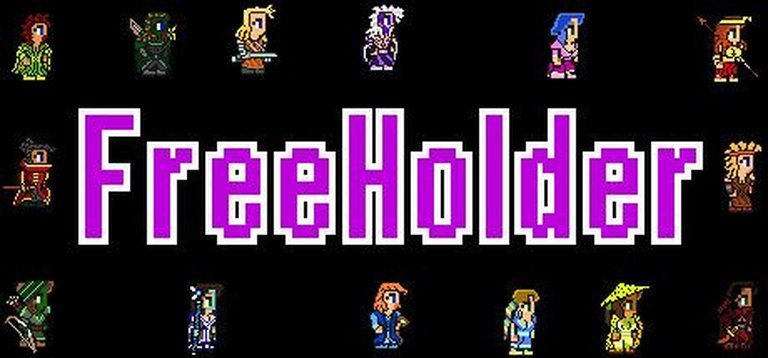
FreeHolder is a strategic survival game set during the Roman Republic era, blending roguelike elements with RPG-style character progression. Players guide three escaped slaves as they navigate the challenges of building a life on the fringes of society. Engage in farming, hunting, crafting, and cooking to survive, while managing resources and facing dynamic events in a procedurally generated world. The game combines turn-based strategy, city-building mechanics, and a rich historical setting to create a challenging, replayable experience.
Where to Buy FreeHolder
PC
FreeHolder Guides & Walkthroughs
FreeHolder Reviews & Reception
steambase.io (77/100): FreeHolder has earned a Player Score of 77 / 100.
FreeHolder: An Archeological Excavation of Roman Ambition and Unfinished Revolutions
Introduction
In the fertile soil of 2010s indie experimentation, FreeHolder (2016) germinated as a daring hybrid—part agricultural simulator, part survival roguelike, part anti-imperialist RPG—rooted in the bloodied earth of the Roman Republic’s frontier. Developed by sibling duo Chris and Matt Crooks under their studio RogueWare, this Early Access relic promised a subversive twist on historical strategy games, casting players as escaped slaves negotiating survival under the bootheel of a corrupt Roman bureaucracy. Yet like many insurgent narratives it remains tragically incomplete, abandoned three years post-launch as RogueWare vanished into digital obscurity. This review posits that FreeHolder embodies both indie ambition’s zenith and its most cautionary tale: a genre-blending manifesto hamstrung by unrealized systems, yet whose radical DNA echoes in later titles like Frostpunk and Wildermyth.
Development History & Context
The RogueWare Rebellion
Founded in 2015 as a vehicle for the Crooks brothers’ iconoclastic vision, RogueWare positioned FreeHolder as a corrective to what they deemed sanitized historical sims. Inspired by Syd Field’s screenwriting manuals and the emergent roguelike renaissance (FTL: Faster Than Light, Don’t Starve), the duo sought to merge agrarian management with systemic narrative consequences. Their 2015 Patreon pitch framed the project as “alchemical gaming”—distilling survival mechanics into a proletarian uprising simulator.
Technological & Commercial Trenches
Built in Unity with placeholder assets, FreeHolder’s Early Access launch on July 5, 2016, priced at $9.99, revealed its DIY scaffolding. Procedural generation governed weather, crop yields, and Roman official behaviors, but reliance on alpha funding via Patreon proved fatal. Despite plans for a “military/political phase” and Caesar’s Gaul conquest endgame, RogueWare’s final update predated 2020, leaving the game mechanically fossilized at 40% completion. This half-life reflects indie development’s era-defining paradox: crowdfunding’s democratization versus its capacity to fracture scope.
Narrative & Thematic Deep Dive
Shackled by History
FreeHolder’s prologue thrusts players into visceral desperation: three fugitive slaves (customizable via classes like Agronomist, Witch, or Gladiator) discover a ransacked farm moments before a Roman census-taker arrives. In a literal devil’s bargain, he offers conditional freedom—produce wheat quotas plus bribes—or face re-enslavement. This Kobayashi Maru premise channels Spartacus via Kafka: every choice destabilizes the illusion of autonomy.
Thematic Machinery
- False Agency: The census-taker’s “flexibility” mirrors real colonial extortion systems, where compliance perpetuates oppression. Player actions—sabotaging Roman supply lines or bribing officials—unfold as performative resistance against deterministic systems.
- Intersectional Class Warfare: Skills like “Efficient Rancher” or “Master Sculptor” weaponize labor against capital, while alliances with northern tribes critique imperialism’s unsustainable logic.
- Thermodynamic Tragedy: Survival mechanics (starvation, frostbite) serve as narrative engines. Hoarding grain invites raids; altruism risks communal collapse. The game’s tagline—“roguelike, not roguelite”—betrays its grim reaper calculus: failure means permadeath, erasing hours of incremental progress.
Characterization as Class Ontology
Each companion embodies Marxist archetypes:
– The Opportunist (Engineer): Exploits Roman infrastructure for personal gain.
– The Idealist (Witch): Seeks magical/diplomatic routes to liberation.
– The Revolutionary (Gladiator): Advocates violent insurrection.
Yet absent deeper relationship arcs—cut due to scope—their potential remains largely theoretical.
Gameplay Mechanics & Systems
Seasonal Suffering Loop
FreeHolder operates on a turn-based seasonal cycle, evoking Oregon Trail via Agricola:
1. Spring Planting: Allocate labor to till soil, hunt, or craft tools.
2. Summer Negotiation: Barter surplus crops for Roman favor or black-market weapons.
3. Autumn Harvest: Defend against bandits while rationing food.
4. Winter Survival: Manage warmth, morale, and dwindling reserves.
Innovation & Instability
- Skill Synergy: A Ranger’s tracking ability reduces hunting time, freeing laborers for construction. Paired with an Engineer’s irrigation knowledge, yields improve—but one frost event destroys equilibrium.
- Procedural Corruption: Officials demand escalating bribes, dynamically altering difficulty.
- Jank as Feature: Clunky UI turns inventory management into tension—misclicks could accidentally burn winter firewood.
Unfinished Architectures
Planned systems like “Military Phase” (raising rebel armies) or “Gaul Conquest” never materialized, leaving mid-game progression barren. Crafting lacks depth; magic (Witch class) feels tacked-on. Combat, described by players as “rock-paper-scissors with gladiuses,” exemplifies unrealized potential.
World-Building, Art & Sound
Austerity Aesthetics
RogueWare’s placeholder art—muted 2D isometric fields, rudimentary pixel figures—accidentally conjures a minimalist solemnity. Roman watchtowers loom like malevolent chess pieces; snowstorms swallow the screen in white noise. This bleakness reinforces themes of insignificance against empire.
Auditory Resistance
Composer Blue Mage’s chiptune score—plucked lyres over Hellström-esque synth drones—subverts retro nostalgia. Winter themes drone with atonal unease; harvest songs mutate into militaristic marches as Rome’s grip tightens. Sound design’s masterstroke: the census-taker’s knocking, a heartbeat-loud punctuation of dread.
Reception & Legacy
Critical Burial Grounds
Launch reviews (73% Steam positivity) praised its “nerve-shredding winters” and “subversive historicity” but lambasted bugs and abandoned roadmaps. With zero mainstream press coverage and RogueWare’s radio silence, FreeHolder became a cult artifact—discussed in Reddit threads dissecting “lost indie gems.”
Proto-Influencer
Its DNA resurfaces in:
– Systemic Narratives: Wildermyth’s procedurally-generated hero arcs.
– Survival Strategy: Frostpunk’s ethical calculus under duress.
– Historical Revisionism: Pentiment’s class-conscious medievalism.
Yet unlike those titles, FreeHolder’s unfinished state renders it a cautionary blueprint—a Soviet Lunokhod of game design, pioneering but stranded.
Conclusion: The Unharvested
FreeHolder is gaming’s Achilles in Exile—a work of radical potential eternally mid-struggle. Its systems, though frayed, dissect empire-building’s corrosive machinery with rare ferocity. For historians, it offers a vital case study in indie development’s Faustian bargains; for players, an achingly human portrait of resistance amidst algorithmic oppression. While RogueWare’s abandonment leaves its revolution frozen in time, FreeHolder endures as a testament to the genre’s unexplored frontiers. Verdict: A flawed monument—best played not for fulfillment, but as an interactive ruin whispering what might have been.