
- Release Year: 2010
- Platforms: Windows
- Publisher: S.A.D. Software Vertriebs- und Produktions GmbH
- Genre: Action
- Perspective: Diagonal-down
- Game Mode: Single-player
- Gameplay: Time management
- Setting: Deserted Island, Tropical Island
- Average Score: 76/100
Description
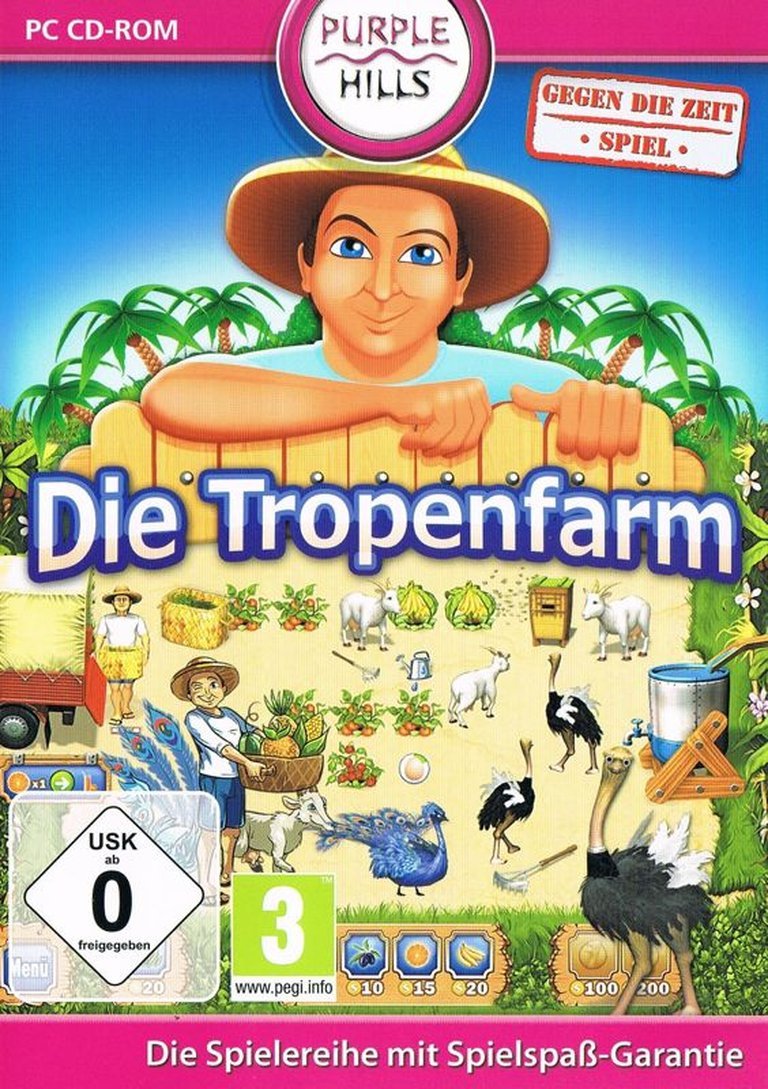
Tropical Farm is a time management game set on a tropical island devastated by a tornado. Players must rebuild the island by planting and harvesting fruits and vegetables, selling products to earn money, and reinvesting profits into new items and upgrades. The game features 45 levels, offering a mix of strategy and resource management in a vibrant, fixed-screen environment.
Tropical Farm Cracks & Fixes
Tropical Farm Guides & Walkthroughs
Tropical Farm Reviews & Reception
gamezebo.com : Tropical Farm unfortunately lacks real innovation or charming uniqueness. We have seen most of the features in a dozen similar games, so that it feels like a mixture between Ranch Rush and Farm Frenzy.
Tropical Farm: Review
Introduction
In the crowded landscape of casual farming simulators, Tropical Farm (2010) stands as a charming yet unremarkable entry. Developed by Rionix and published by S.A.D. Software and Alawar Entertainment, the game tasks players with rehabilitating a storm-ravaged archipelago through meticulous resource management. While its vibrant visuals and accessible mechanics offer fleeting enjoyment, Tropical Farm ultimately succumbs to repetition and a lack of innovation. This review dissects its merits and flaws, positioning it as a quaint relic of early 2010s time-management games—pleasant but overshadowed by genre giants like Farm Frenzy and Ranch Rush.
Development History & Context
A Niche Studio in a Booming Genre
Rionix, a lesser-known developer specializing in casual titles, crafted Tropical Farm during the peak of the farming sim boom. The late 2000s saw a surge in time-management games targeting casual audiences, driven by the success of Diner Dash and FarmVille. Alawar Entertainment, known for distributing mid-tier casual games, provided publishing muscle, yet the title lacked the marketing heft to compete with AAA counterparts.
Technological Constraints and Ambitions
Built for low-spec Windows PCs (requiring just a 600 MHz processor and 256 MB RAM), Tropical Farm prioritized accessibility over technical ambition. Its fixed isometric perspective and flip-screen navigation reflected the limitations of its target hardware, yet the art team leveraged these constraints to deliver crisp, colorful visuals. The game’s CD-ROM release in 2010 felt anachronistic amid the rise of digital storefronts like Steam, cementing its status as a budget-tier offering.
Narrative & Thematic Deep Dive
A Hurricane and a Competition
The game’s premise is simple: A tornado devastates the Greenfield Islands, prompting the government to host a rebuild-off. Players assume the role of a contestant who discovers a “rapid-growth formula,” enabling crops to mature in seconds. This framing justifies the game’s breakneck pace but lacks narrative depth—characters are nonexistent, and the “competition” is merely a backdrop for escalating objectives.
Themes of Resilience and Capitalist Optimism
Beneath its cheerful exterior, Tropical Farm subtly reinforces capitalist ideals. Success hinges on optimizing production chains to maximize profit, with little regard for ecological balance or community needs. The ultimate reward—a 50-year island lease—frames land ownership as the pinnacle of achievement, a poignant reflection of post-recession escapism in 2010.
Gameplay Mechanics & Systems
Core Loop: Speed Farming 101
The gameplay revolves around four pillars:
1. Crop Management: Plant, water, weed, and harvest eight crops (e.g., bananas, pineapples).
2. Animal Husbandry: Tend to ostriches (eggs), goats (milk), bees (honey), and peacocks (feathers).
3. Production Chains: Convert raw goods into higher-value products (e.g., grapes → wine via three steps).
4. Infrastructure Upgrades: Construct schools, shops, and statues between levels (cosmetic only).
Strengths and Flaws
- Skill Upgrades: Players invest earnings into attributes like “Weeding Speed” or “Basket Capacity,” adding light RPG elements.
- Order System: Random mid-level orders (e.g., “Sell 12 corn”) demand adaptive planning but feel punitive due to tight timers.
- Repetition: By Level 20, strategies become formulaic, with minimal new mechanics introduced.
- Difficulty: Dubbed “Easy/Just Right” by 85% of players (GameFAQs), the game lacks challenge for veterans.
UI and Controls
The point-and-click interface is responsive, allowing action chaining (e.g., harvest → deliver → plant). However, the static camera angles sometimes obscure clickable objects, leading to frustrating misclicks.
World-Building, Art & Sound
Aesthetics: Bright but Generic
Tropical Farm’s visuals evoke a cartoonish tropics, with palm trees swaying in perpetual sunshine. Animals are adorably exaggerated—bees bumble comically, while peacocks strut with pride. Yet the art lacks a distinct identity, blending into the sea of early 2010s farm sims.
Sound Design: Functional but Forgettable
The soundtrack blends calypso rhythms with elevator music, suffusing the game with relaxed energy. Sound effects—a squelch for watering, a cluck for harvesting—are serviceable but unmemorable.
Reception & Legacy
Launch Reception: A Whisper, Not a Roar
Upon release, Tropical Farm garnered little critical attention. Gamezebo’s 60/100 review praised its “intuitive controls” but lamented its “lack of innovation,” a sentiment echoed by casual audiences. User scores averaged 3.79/5 (GameFAQs), with players citing its “charming simplicity” as both a strength and weakness.
Lasting Influence: A Footnote in Farming Sim History
While Tropical Farm didn’t revolutionize the genre, it exemplified the era’s appetite for low-stakes, time-management gameplay. Its legacy lies in preserving the template of later mobile farming games—quick sessions, incremental upgrades, and vibrant aesthetics.
Conclusion
Tropical Farm is a comfortable pair of slippers: warm, familiar, and utterly uninspiring. Its cheerful presentation and pick-up-and-play mechanics make it a decent entry point for casual gamers, while its lack of depth and challenge leave genre enthusiasts wanting. For historians, the game serves as a time capsule of early 2010s casual gaming trends—modest, accessible, and quietly forgettable.
Final Verdict: A middling effort that’s neither groundbreaking nor offensively bad. Worth a nostalgic playthrough for farming sim completists, but easily overshadowed by genre titans.