
- Release Year: 2019
- Platforms: Windows
- Publisher: Station437
- Developer: Station437
- Genre: Action
- Perspective: 1st-person
- Game Mode: Single-player
- Gameplay: Hunger, Mining, Open World, Sandbox, Survival, Thirst
- Setting: Medieval
- Average Score: 43/100
Description
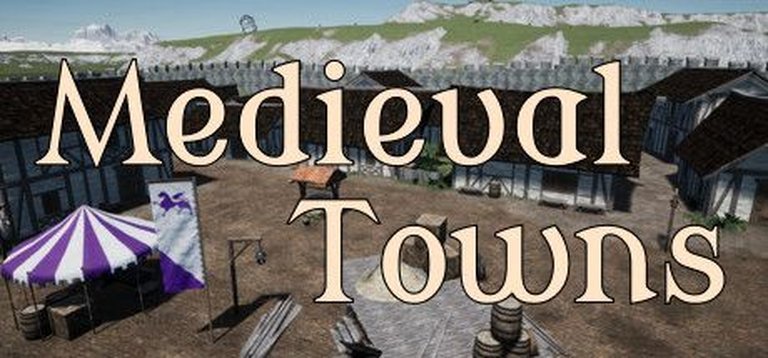
Medieval Towns is a multiplayer action-survival game set in a medieval open-world environment where players must gather resources, craft tools, and build or join guilds to establish thriving towns. Emphasizing sandbox gameplay, survival mechanics like hunger and thirst, and strategic elements of diplomacy and conquest, players navigate a dynamic world filled with challenges ranging from wildlife threats to territorial disputes. The game blends cooperative town-building with competitive elements, allowing for both alliances and conflicts as players vie for resources and glory.
Where to Buy Medieval Towns
PC
Medieval Towns Patches & Updates
Medieval Towns Reviews & Reception
steambase.io (43/100): Medieval Towns has earned a Steambase Player Score of 43 / 100. This score is calculated from 23 total reviews on Steam — giving it a rating of Mixed.
raijin.gg (43.48/100): Medieval Towns holds a 43.48% positive rating on Steam, based on 23 player reviews. This places the game in the mixed category, indicating a divided player base.
Medieval Towns: Review
Introduction
In the crowded landscape of survival sandbox games, Medieval Towns (2019) dared to marry grand ambitions with medieval grit. Developed by Station437, this Early Access title promised a multiplayer experience blending survival, town-building, and conquest—all set against a backdrop of feudal politics and environmental chaos. Yet, its journey from aspirational vision to fragmented reality reveals a cautionary tale about the perils of overpromising and underdelivering. This review unpacks Medieval Towns as a game of unrealized potential, examining how its lofty goals clashed with technical shortcomings and player expectations.
Development History & Context
The Studio & Vision
Station437, a relatively obscure developer, positioned Medieval Towns as a passion project inspired by genre titans like Minecraft and Mount & Blade. Their vision hinged on creating a dynamic medieval sandbox where players could “survive, gather, build, and fight” in a persistent multiplayer world. The studio’s 2019 Steam Early Access launch aimed to crowdsource feedback while iterating on core systems, but this approach soon backfired as players grew frustrated with slow updates and abandoned features.
Technological Constraints & Industry Landscape
Released amidst the survival-crafting boom (Valheim was still two years away), Medieval Towns leveraged Unity Engine to carve out a niche. However, technical limitations plagued the project: rudimentary netcode caused desynchronization, while procedural terrain generation often clashed with static structures (evidenced by screenshots of trees growing through buildings). The studio’s decision to segment the world into 1x1km zones, revealed in a 2024 devlog, attempted to mitigate performance issues but arrived too late to salvage its reputation.
Narrative & Thematic Deep Dive
Emergent Stories vs. Structural Absence
Medieval Towns lacks a traditional narrative, relying instead on player-driven drama. Guild rivalries, taxation disputes, and raids on Townhalls fostered emergent tales—like one group’s failed rebellion against a player-named despot, “Zagan,” whose fortified base required “six hours” to breach. Yet, without scaffolding—NPCs, quests, or lore—these moments felt fleeting. The game’s tagline, “a war for resources, towns, and glory,” rang hollow when systems like NPC mercenaries and diplomacy remained perpetually “planned.”
Themes of Power & Survival
Thematically, the game flirted with feudal inequality—players could tax others or hoard resources—but depth was undercut by imbalance. Without mechanics to enforce cooperation (e.g., hunger or temperature systems, repeatedly postponed), the experience devolved into repetitive grinding for flint and stone. The promise of “non-target” combat, suggesting skill-based duels, never materialized, reducing PvP to clumsy hitbox spamming.
Gameplay Mechanics & Systems
Core Loop: Grind, Build, Repeat
The gameplay revolved around three pillars:
1. Survival: Barebones hunger/thirst mechanics (unimplemented at launch) left players scrounging mushrooms or dying arbitrarily.
2. Crafting: Tedious resource gathering—e.g., crafting 30 stone hatchets individually—deterred all but the most patient.
3. Building: Modular structures like walls and Townhalls showed promise, but floating objects and clipping issues undermined immersion.
Innovation vs. Frustration
The Townhall system, where taxes funded guild wars, was a standout idea. However, raiding these structures proved futile due to excessive durability (one player lamented a four-player team couldn’t breach a door in 30 minutes). Meanwhile, UI oversights—like missing inventory keys—left newcomers stranded, unable to eat collected mushrooms.
World-Building, Art & Sound
Aesthetic Ambition vs. Execution
Medieval Towns straddled realism and minimalism. The 2024 devlog teased wind-responsive grass and customizable characters (including gendered models and warpaint), but these arrived years post-launch. Early environments relied on generic biomes—forests, mountains—rendered in flat textures that clashed with the game’s “realistic” aspirations.
Sound Design: A Whisper in the Wind
Audio offerings were sparse. Ambient sounds (rustling leaves, distant wildlife) were functional but forgettable, while the absence of a dynamic soundtrack left exploration feeling sterile. Combat lacked visceral feedback—strikes echoed with all the menace of a wet noodle.
Reception & Legacy
Launch & Player Backlash
Medieval Towns launched to a tepid reception, earning a “Mixed” 43/100 Steam rating (23 reviews). Players praised its ambition but skewered its jank: bugs like “floating sleepers” and login crashes dominated discussions. By 2023, updates had stalled, prompting one reviewer to note, “No update since [2020].”
Industry Impact
While the game failed to leave a meaningful legacy, its pitfalls echo in broader industry conversations about Early Access accountability. Its roadmap—scattered across 2019-2024 devlogs—serves as a case study in mismanaged player expectations.
Conclusion
Medieval Towns is a tapestry of unrealized dreams. Its vision—of a living feudal sandbox—was noble, but hobbled by technical shortcomings, glacial development, and a lack of focus. For every flicker of brilliance (the Townhall economy, emergent guild politics), there were hours of frustration (broken progression, absent features). While hardcore survivalists might find nuggets of fun in its cooperative building, most players will rightly view it as a relic of what-could-have-been. In the pantheon of medieval survival games, Medieval Towns stands not as a titan, but as a cautionary marker—a reminder that even the grandest castles crumble without a solid foundation.
Final Verdict: A flawed experiment in emergent medieval storytelling, best remembered for its ambition rather than its execution.