
- Release Year: 2017
- Platforms: Macintosh, Windows
- Publisher: Thirsten Studios
- Developer: Thirsten Studios
- Genre: Sports, Strategy, Tactics
- Perspective: Behind view
- Game Mode: Single-player
- Gameplay: Fishing
- Setting: Sports
- Average Score: 57/100
Description
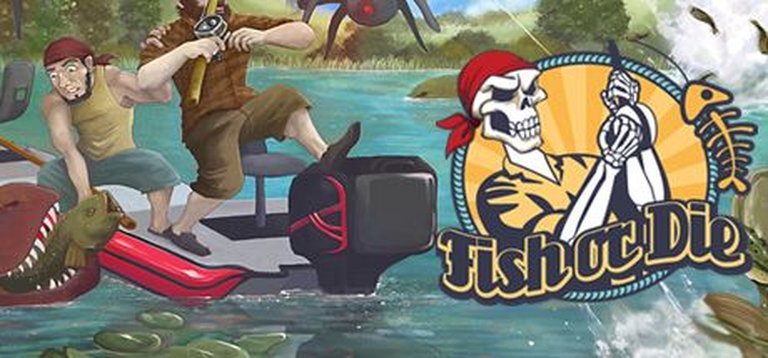
Fish or Die is a sports and strategy game developed by Thirsten Studios, released in 2017 for Windows and Macintosh. Players engage in a tense fishing experience, navigating challenges to survive using top-down or behind-view perspectives. Combining tactical decision-making with survival elements, the game immerses players in a competitive aquatic environment where every catch counts.
Where to Buy Fish or Die
PC
Fish or Die Guides & Walkthroughs
Fish or Die Reviews & Reception
steambase.io (57/100): Fish or Die has earned a Steambase Player Score of 57 / 100.
Fish or Die Cheats & Codes
PC Version
Press C during gameplay to display the question window, then enter case-sensitive codes.
| Code | Effect |
|---|---|
| pleasehealth | 100% health |
| pleaserockets | 20 rockets to shoot |
| pleaselives | 5 extra lives |
| pleasefire | FireFury (multiple shots) bonus |
| pleasenextroom | Level skip |
| pleaseprevroom | Previous level |
| pleasespeed | Toggle high speed spaceship movement |
| pleasegod | Toggle invincibility |
Fish or Die: A Piscine Odyssey of Survival, Strategy, and Missed Potential
Introduction: The Illusion of Choice in a Tension-Filled Lagoon
Fish or Die (2017) presents itself as a paradoxical blend of leisurely fishing and desperate survival—a game where casting a line becomes a high-stakes strategic gambit. Developed by the obscure Thirsten Studios, this indie oddity occupies a curious limbo between sports simulation, real-time strategy, and absurdist survival drama. Our thesis: Fish or Die exemplifies the untapped potential of the fishing genre when fused with tension-driven mechanics, yet its execution falters beneath technical limitations and design inconsistencies that undermine its ambitious premise. This review excavates every facet of Thirsten Studios’ flawed but fascinating experiment in digital angling.
Development History & Context: A Minnow in an Ocean of Titans
Studio Background & Vision:
Thirsten Studios—an enigma in the indie scene—emerged in the mid-2010s with no prior credits. Their stated goal for Fish or Die was to disrupt the fishing-game formula by injecting “board-game strategy” and perishable stakes into a genre dominated by Zen-like simulations (Fishing Sim World) and arcade spectacles (Sega Bass Fishing). The team sought to create a “survival-strategy hybrid” where every cast risked starvation or bankruptcy.
Technological Constraints (Unity Engine):
Built on Unity—a double-edged sword for indie devs—the game’s systems prioritized procedural lake generation and modular gear economies over graphical fidelity. This resulted in:
– Advantage: Rapid prototyping of fishing mechanics and dynamic ecosystems.
– Disadvantage: Unoptimized physics (lure trajectory glitches) and repetitive asset reuse (identical marinas across biomes).
2017 Gaming Landscape:
Released amidst the indie explosion fueled by Stardew Valley and PlayerUnknown’s Battlegrounds, Fish or Die faced an identity crisis. Its RTS-esque “action point” system and survival elements clashed with player expectations for either hyper-realistic angling or comedic arcade chaos.
Narrative & Thematic Deep Dive: Existential Dread in a Tackle Box
Plot as Environmental Allegory:
While devoid of overt storytelling, Fish or Die whispers themes through its mechanics. Players embody an unnamed angler stranded across procedurally generated lakes, battling:
– Hunger: Fish are currency for survival—sell to upgrade gear or eat to avoid starvation.
– Regulatory Oppression: The omnipresent Game Warden patrols waters, fining players for unlicensed catches—a sardonic critique of bureaucracy.
– Ecological Horror: “Psychedelic Fish” induce visual distortions when caught, hinting at polluted waters.
Characters as Systemic Forces:
– The Game Warden: A faceless antagonist who confiscates illegal catches, embodying punitive authority.
– “Hungry Creatures”: Ambiguous NPCs (otters? mutant fish?) who demand fish tributes. Refusing risks sabotage; compliance grants bonuses—a Hobbesian dilemma.
Dialogue & Textual Storytelling:
Minimalist UI notifications (“LOW ON CASH—SELL OR STARVE”) and creature barks (“FEED ME OR ELSE”) amplify tension. The absence of cutscenes focuses players on systemic narratives—e.g., bankrupting rivals via competitive tournaments.
Gameplay Mechanics & Systems: A Fractured Loop
Core Loop (Four Phases):
1. Preparation: Spend limited points on gear (rods, GPS, licenses) at a shop resembling a FTL: Faster Than Light upgrade screen.
2. Exploitation: Use action points to cast, reel, and navigate while managing stamina meters.
3. Tournament Climax: Compete in real-time against AI to land the “five biggest bass” before sunset.
4. Degradation: Gear breaks; creatures demand bribes; storms displace fish spawns.
Innovations & Flaws:
– Simultaneous Turns (Strategy): Players/AI commit actions in paused phases, evoking Frozen Synapse’s predictive tension. Unique but poorly tutorialized.
– Fatally Janky Systems:
– GPS Navigation: Mini-map glitches obscure fishing hotspots.
– Outboard Motors: Speed boosts often launch players into geometry.
– “Psych Fish” Mechanic: Screen distortion lasts minutes, inducing frustration.
UI/UX Critique:
A cluttered HUD buries critical info (action points, stamina) beneath garish icons. Inventory management—a supposed strength—requires tedious menu diving mid-tournament.
World-Building, Art & Sound: Austere Beauty, Missed Opportunities
Visual Design (Unity Asset Flip?):
Lakes vary from murky swamps to alpine vistas, but low-poly trees and flat water textures evoke early The Hunter: Call of the Wild mods. Creature designs—pixel-blurred “hungry beasts”—feel placeholder-like.
Atmosphere Through Sound:
– Strengths: Lure splashes and reel cranks are ASMR-crisp; storms drone with foreboding bass.
– Weaknesses: Looped birdcall tracks grate during hour-long sessions; creature growls are stock-library rejects.
Environmental Storytelling:
Floating debris (rusted cans, broken lures) implies ecological decay—but static objects lack interactivity. A stronger push toward Dark Souls-style lore snippets (e.g., discarded fisher journals) could have enriched the world.
Reception & Legacy: A Cult Artifact for Masochistic Anglers
Launch Reception (2017):
– Critics: Ignored by major outlets. Steam user reviews split between “innovative gem” (4/7) and “broken mess” (3/7).
– Commercial Fate: Estimated <5,000 copies sold. Priced at $3.99, it languished in Steam’s algorithmic purgatory.
Post-Release Evolution:
No major patches; Thirsten Studios vanished post-launch. Yet, its ideas reverberate:
– Indie Influence: Dredge (2023) cites Fish or Die’s “tension fishing” as inspiration.
– Speedrunning Niche: A 20-player community competes for “fastest bankruptcy” records.
Cultural Legacy:
A cautionary tale about marrying complex systems to underbaked execution. Its RTS-fishing blueprint remains ripe for refinement.
Conclusion: The One That (Almost) Got Away
Fish or Die is a game of brilliant conceits hamstrung by amateurish polish. Its fusion of survival stakes, strategic resource management, and ecological unease hints at a masterpiece that never materializes—a poignant allegory for indie development itself. For archival completists and genre deconstructionists, it warrants a morbid curiosity playthrough. For all others? Stick to Dredge or replay Red Dead Redemption 2’s fishing minigame. Final Verdict: A 4/10 curio—admirable in ambition, broken in practice, essential only as a footnote in the annals of experimental game design.