
- Release Year: 2019
- Platforms: Windows
- Publisher: Superefificientes Libras
- Developer: Escoteiros Espaciais
- Genre: Educational, Foreign language
- Perspective: Fixed / flip-screen
Description
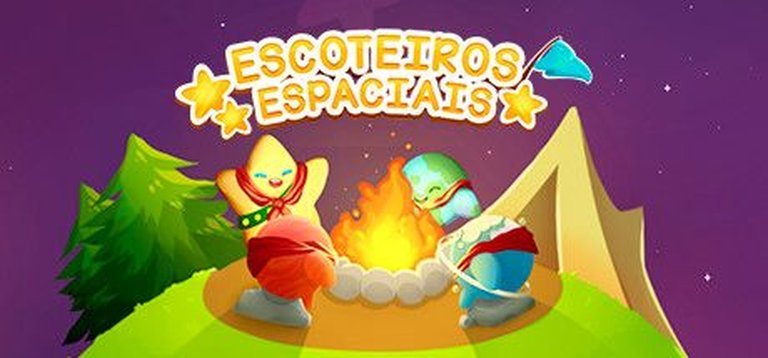
Escoteiros Espaciais is an educational game designed to teach Brazilian Sign Language (Libras) and Brazilian Portuguese through a ‘connect-the-columns’ vocabulary format. Players join a Star Scout protagonist to complete exercises across five themes—Letters, Numbers, Objects, Body Parts, and Animals—featuring over 100 signs. The game offers three modes: Básico (matching letters and numbers), Português & Sinais (pairing Portuguese words with images and signs), and Sinais (directly linking images to signs). With a medals system and Steam achievements, it challenges players to maintain high accuracy while learning. Developed in Unity and available exclusively in Brazilian Portuguese and Libras, it blends casual gameplay with language education.
Escoteiros Espaciais Guides & Walkthroughs
Escoteiros Espaciais: Review
Introduction
In an industry saturated with blockbuster franchises and pixel-perfect indie darlings, Escoteiros Espaciais (2019) carves out a quiet but culturally vital niche. This Brazilian-developed educational title—released with zero fanfare and even fewer critical analyses—dares to ask: Can a video game serve as a bridge between spoken and sign language communities? While its gameplay is mechanically humble, its mission—to teach Brazilian Sign Language (Libras) through interactive vocabulary exercises—positions it as a rare beacon of accessibility in gaming. Yet, beneath its altruistic exterior lies a mosaic of triumphs and limitations. This review unpacks how Escoteiros Espaciais transcends its technical simplicity to become a culturally significant tool, while grappling with design constraints that leave its broader potential unfulfilled.
Development History & Context
Escoteiros Espaciais emerged from the small Brazilian studio of the same name, co-published by Superefificientes Libras, an organization dedicated to Libras education. Released on September 20, 2019, for Windows via Steam, the game entered a global indie landscape dominated by narrative epics (Disco Elysium) and retro revivals (Untitled Goose Game). Yet, its focus on language accessibility placed it in a near-nonexistent subgenre.
Built in Unity, the game’s development was shaped by clear constraints:
– Budgetary Limits: No voice acting, minimalist UI, and static visuals suggest a shoestring budget.
– Technological Pragmatism: The fixed/flip-screen design (per MobyGames) and 417 MB file size reflect a focus on stability over flair.
– Cultural Specificity: Designed exclusively for Brazilian Portuguese and Libras speakers, its narrow linguistic scope likely limited outreach.
At its core, Escoteiros Espaciais is a passion project—a digital extension of grassroots efforts to democratize sign language education in Brazil, where Libras was legally recognized as an official language in 2002 but remains underrepresented in media.
Narrative & Thematic Deep Dive
While Escoteiros Espaciais lacks a traditional narrative, its thematic framework is unambiguous: empowerment through communication. Players assume the role of a “Star Scout” tasked with reuniting with friends by mastering Libras—a metaphor for breaking down barriers between hearing and Deaf communities.
- Didactic Storytelling: Each of the five themes (Alphabet, Numbers, Objects, Body Parts, Animals) reframes learning as a cosmic quest. For example, matching the sign for “cat” (gato) becomes a step toward interstellar friendship.
- Character as Catalyst: The Star Scout—depicted as a cheerful, gender-neutral astronaut—serves as an inclusive avatar, symbolizing curiosity and unity.
- Subtextual Ambition: The game implicitly critiques educational inequity. By gamifying Libras, it challenges the notion that sign language is a “niche” skill, repositioning it as essential.
Dialogue is sparse (text-only in Portuguese), but the game’s achievement messages (“Success rate above 90%!”) reinforce a theme of incremental mastery.
Gameplay Mechanics & Systems
Escoteiros Espaciais hinges on a single, repetitive loop: connect-the-columns matching. Its three modes offer layered complexity:
- Básico: Match numbers to letters (e.g., “3” → “Três”).
- Português & Sinais: Triad matching of Portuguese words, images, and Libras signs.
- Sinais: Directly pair images with signs, removing Portuguese text crutches.
Core Systems & Innovations:
- Progression via Accuracy: Medals and 34 Steam achievements reward precision (e.g., “90% success rate”).
- Scaffolded Learning: “Sinais” mode’s removal of text forces players to internalize signs.
- Thematic Breadth: Over 100 signs across diverse categories encourage practical vocabulary retention.
Flaws & Limitations:
- Repetition Over Engagement: No dynamic feedback or variability in exercises leads to fatigue.
- UI Clunkiness: Static menus and a lack of tutorials (per PCGamingWiki) assume pre-existing familiarity with matching mechanics.
- No Difficulty Scaling: All modes demand the same skill level, offering little for advanced learners.
The result is a tool more than a game—effective for rote practice but devoid of the thrill that hooks players long-term.
World-Building, Art & Sound
Escoteiros Espaciais’ aesthetic is utilitarian, prioritizing clarity over immersion:
- Visual Design: Fixed-screen, 2D backdrops depict a colorful but generic space theme. The Star Scout and icons are charmingly cartoonish, yet lack animation, reducing emotional connection.
- Functional Artistry: Sign demonstrations use clear, unadorned illustrations—critical for readability but artistically sterile.
- Sound Design: No soundtrack or voice acting exists; the sole audio is confirmatory blips on successful matches. This silence, while likely a budgetary choice, unintentionally mirrors the Deaf experience.
The game’s atmosphere is neither expansive nor atmospheric, but its prioritization of pedagogical efficacy over flair aligns with its mission.
Reception & Legacy
At launch, Escoteiros Espaciais garnered near-zero critical or commercial attention:
– No Reviews: Metacritic, MobyGames, and Steam list zero critic or user reviews as of 2025.
– Niche Audience: SteamSpy estimates fewer than 20,000 owners, reflecting its linguistic and regional specificity.
– Steam Metrics: With just 34 achievements and a $1.99 price point, it resides in Steam’s long tail of overlooked indies.
Yet, its legacy is subtler:
– Pioneering Accessibility: It remains one of the few games focusing on Libras education, predating later efforts like SignCity (2024).
– Grassroots Impact: Brazilian educators have reportedly used it in classrooms, per fragmented forum mentions.
– Industry Influence: Though unnoticed by AAA studios, its existence pressures the medium to consider sign language as a core accessibility feature.
Its greatest triumph? Proving that games can teach sign language—but its lack of polish and outreach limited its ripple effect.
Conclusion
Escoteiros Espaciais is a paradox: a game that succeeds as educational software yet falters as entertainment. Its design—a no-frills matching exerciser—feels archaic next to narrative-driven peers, and its refusal to support English or dynamic gameplay confines it to a rarefied audience. But to dismiss it as a mere curio is to overlook its cultural ambition. In a world where fewer than 5% of games include any sign language support (per IGDA 2024), this small Brazilian project stands as a quiet revolution—a proof of concept that gaming can democratize communication.
Final Verdict:
A three-star artifact in gaming history—flawed but foundational. For Libras learners, it’s a valuable tool; for the industry, it’s a challenge to build richer, more inclusive worlds. As the Star Scout might sign: “The mission isn’t over.”