
- Release Year: 2010
- Platforms: Nintendo DS, PlayStation 3, Wii, Windows
- Publisher: Encore, Inc., Ludia, Inc., Ubisoft Entertainment SA
- Developer: Ludia, Inc.
- Genre: Game show, Puzzle, quiz, trivia
- Perspective: 3rd-person (Other)
- Game Mode: Single-player
- Gameplay: Multiple Choice, trivia
- Setting: Game show
- Average Score: 81/100
Description
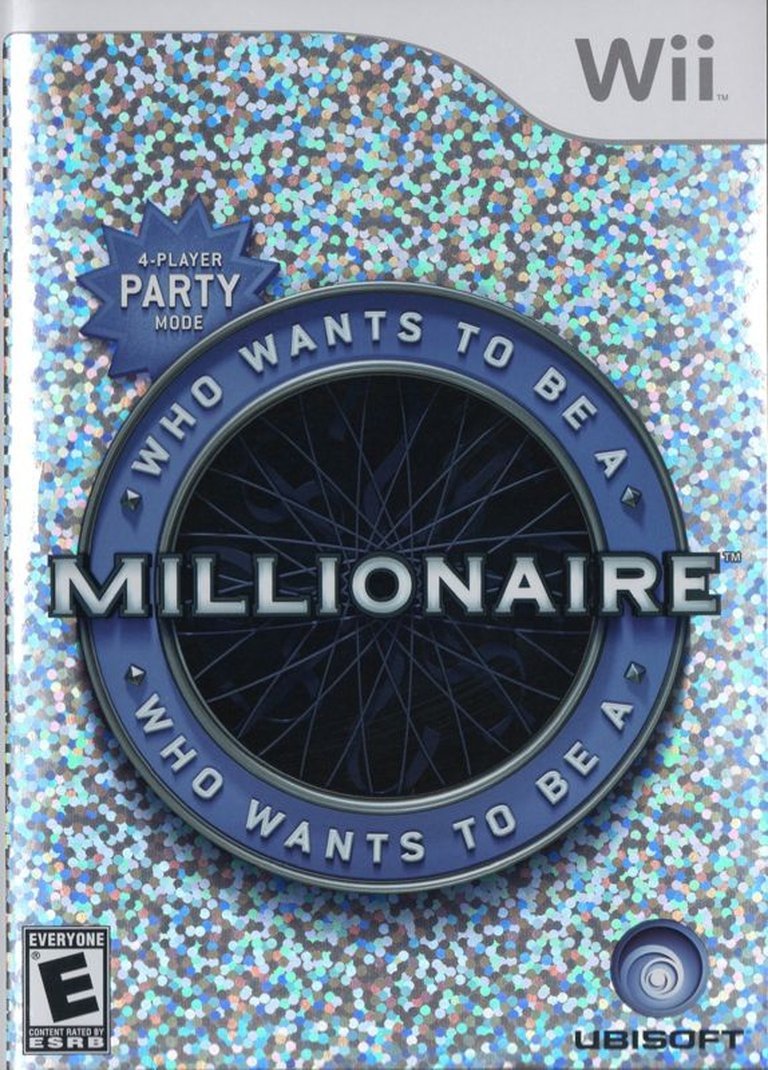
Ludia’s 2010 adaptation of ‘Who Wants to Be a Millionaire’ faithfully recreates the popular TV game show experience across multiple platforms. Players answer 15 increasingly difficult multiple-choice questions to win virtual cash prizes up to $1 million, using lifelines like Ask the Audience, Double Dip, and Phone a Friend to assist with challenging questions. The game features single-player contests where players track lifetime winnings, along with a Party Mode for up to four competitors who simultaneously answer questions to climb the money ladder. Customizable avatars earn unlockable outfits and awards by completing in-game challenges, while platform-specific controls (like Wii remotes or DS stylus) enhance the interactive experience.
Gameplay Videos
Where to Buy Who Wants to Be a Millionaire
PC
Who Wants to Be a Millionaire Free Download
Who Wants to Be a Millionaire Reviews & Reception
pocketgamer.com : It’s hard to add anything new to a quiz show adaptation, but Glu has made a sincere effort to provide a faithful representation of the TV show along with a few unique features that make the mobile game shine.
metacritic.com (76/100): For $30, it’s not a bad deal to try it out and see how you and your friends can do when in the mood for some trivia.
familyfriendlygaming.com (86/100): Who Wants to Be A Millionaire is one of the most cerebral games I have played all year.
Who Wants to Be a Millionaire Cheats & Codes
Game Boy Color (USA) – Gameshark Codes
Enter codes using a Gameshark device or emulator.
| Code | Effect |
|---|---|
| 014550C2 | Infinite Time |
| 010014C2 | Always Have Lifelines |
| 910E13C2 | Start On 1,000,000$ Question |
PC – Who wants to be a Millionaire? 2nd Edition
Enter the following names when prompted.
| Code | Effect |
|---|---|
| Regis Philbin | Easier questions |
| John Carpenter | Harder questions |
| Dan Blonsky | Regis says ‘I bet!’ and changes name to Wannabe |
| Joe Trela | Regis says ‘Yeah, you wish!’ and changes name to Phony |
| Will Valdez | Harder game |
| mama | So Hard Questions, your Pops Gonna Get Hurt! |
PC – Who wants to be a Millionaire?
Enter the following names when prompted.
| Code | Effect |
|---|---|
| Regis Philbin | Repeated questions |
| John Carpenter | Harder questions |
| Will Valdez | Harder game |
| mama | So Hard Questions, your Pops Gonna Get Hurt! |
Nintendo DS (US) – Action Replay Codes
Use an Action Replay device to enter these codes.
| Code | Effect |
|---|---|
| 22122cdf 00000001 | Infinite Phone a Friend |
| 22122ce0 00000001 | Infinite Poll the Audience |
| 22122ce1 00000001 | Infinite Double Dip |
| 12122ccc 0000de21 1000 Seconds Banked |
Infinite Time to Answer |
| 12122cd4 000003e8 | 1000 Seconds Banked |
| 92122cfa 00000000 22122cfa 0000000e 22110c69 0000000e d2000000 00000000 |
Start at Million Dollar Question |
Who Wants to Be a Millionaire
The television game show “Who Wants to Be a Millionaire?” is a cultural phenomenon that has captivated audiences worldwide since its inception in 1998. Created by David Briggs, Mike Whitehill, and Steven Knight, the show has become the best-selling TV format in television history, paving the way for the boom in reality television. With its unique blend of suspense, drama, and the allure of winning a life-changing sum of money, “Who Wants to Be a Millionaire?” has left an indelible mark on the entertainment industry. This review will delve into the development history, narrative themes, gameplay mechanics, world-building, reception, and legacy of this iconic game show.
Introduction
“Who Wants to Be a Millionaire?” is more than just a game show; it is a cultural touchstone that has revolutionized the way we think about television game shows. From its dramatic lighting and tense music cues to its futuristic set design, the show has set a new standard for entertainment. The premise is simple: contestants answer a series of multiple-choice questions, each with increasing difficulty, to win a substantial cash prize. However, the show’s true genius lies in its ability to create a thrilling and suspenseful atmosphere, making every question feel like a matter of life and death. This review will explore the various aspects of “Who Wants to Be a Millionaire?” that have contributed to its enduring popularity and influence.
Development History & Context
Studio and Creators’ Vision
“Who Wants to Be a Millionaire?” was developed by Celador, a British production company. The creators’ vision was to create a game show that would stand out from the typical quiz shows of the time. They aimed to make the contestant feel uncomfortable and nervous, creating a sense of tension and excitement. The show’s unique format, with its dramatic music and lighting, was designed to mimic the feeling of a thriller movie rather than a typical game show.
Technological Constraints of the Era
When “Who Wants to Be a Millionaire?” first aired in 1998, the technological landscape was vastly different from what it is today. The show’s set design, featuring a Plexiglas floor and a huge dish covered in mirror paper, was cutting-edge for its time. The lighting system was programmed to darken the set as the contestant progressed further into the game, adding to the sense of tension and suspense. The use of spotlights and oil vaporization to create a haze effect was also innovative, making the light beams more visible and adding to the overall atmosphere.
Gaming Landscape at the Time of Its Release
In the late 1990s, the gaming landscape was dominated by traditional quiz shows and game shows that focused on entertainment and light-hearted fun. “Who Wants to Be a Millionaire?” stood out by introducing a new level of drama and suspense. The show’s unique format, with its high-stakes questions and lifelines, captivated audiences and set a new standard for game shows. The success of “Who Wants to Be a Millionaire?” led to a boom in reality television, with many other shows adopting similar formats and styles.
Narrative & Thematic Deep Dive
Plot and Characters
The plot of “Who Wants to Be a Millionaire?” is straightforward: contestants answer a series of multiple-choice questions to win a cash prize. However, the show’s true strength lies in its ability to create a narrative around each contestant’s journey. The contestants themselves become the stars of the show, with their personalities and reactions to the questions driving the narrative. The host plays a crucial role in this, using their charisma and humor to engage the audience and keep the tension high.
Dialogue and Themes
The dialogue in “Who Wants to Be a Millionaire?” is a blend of humor, suspense, and encouragement. The host’s questions and comments are designed to keep the audience on the edge of their seats, while the contestants’ responses add a human element to the show. The themes of the show revolve around the thrill of winning, the fear of failure, and the suspense of not knowing what will happen next. The show’s use of dramatic music and lighting reinforces these themes, creating a sense of urgency and excitement.
Gameplay Mechanics & Systems
Core Gameplay Loops
The core gameplay loop of “Who Wants to Be a Millionaire?” is simple but effective. Contestants answer a series of multiple-choice questions, each with increasing difficulty. The questions are designed to test the contestant’s general knowledge, with topics ranging from history and science to pop culture and current events. The show’s use of lifelines, such as “Ask the Audience,” “Phone a Friend,” and “50:50,” adds an extra layer of strategy and suspense.
Combat and Character Progression
In “Who Wants to Be a Millionaire?”, the combat is mental rather than physical. Contestants must use their knowledge and strategic thinking to answer the questions correctly. The character progression is tied to the contestant’s performance, with each correct answer moving them closer to the top prize. The show’s use of a money tree, with increasing cash prizes for each question, reinforces this sense of progression and achievement.
UI and Innovative or Flawed Systems
The user interface of “Who Wants to Be a Millionaire?” is designed to be simple and intuitive. The questions and answer choices are displayed on a screen in front of the contestant, with the host and audience providing additional cues and encouragement. The show’s use of lifelines is a innovative feature, allowing contestants to seek help when they are unsure of an answer. However, the show’s reliance on general knowledge questions can be seen as a flaw, as it may disadvantage contestants who are not well-versed in certain topics.
World-Building, Art & Sound
Setting and Atmosphere
The setting of “Who Wants to Be a Millionaire?” is a futuristic studio designed to make the contestant feel uncomfortable and nervous. The use of a Plexiglas floor and a huge dish covered in mirror paper creates a sense of depth and mystery. The lighting system is programmed to darken the set as the contestant progresses further into the game, adding to the sense of tension and suspense. The use of spotlights and oil vaporization to create a haze effect makes the light beams more visible and adds to the overall atmosphere.
Visual Direction
The visual direction of “Who Wants to Be a Millionaire?” is characterized by its use of dramatic lighting and futuristic set design. The show’s use of a Plexiglas floor and a huge dish covered in mirror paper is a striking visual element that sets it apart from other game shows. The lighting system, with its programmed darkening and use of spotlights, creates a sense of depth and mystery. The show’s use of a money tree, with increasing cash prizes for each question, is also a visual element that reinforces the sense of progression and achievement.
Sound Design
The sound design of “Who Wants to Be a Millionaire?” is a crucial element of the show’s success. The use of dramatic music cues, composed by Keith and Matthew Strachan, provides a sense of tension and excitement. The music is designed to mimic the sound of a beating heart, with the pitch increasing as the contestant progresses through the game. The show’s use of sound effects, such as the ticking of the game clock, also adds to the sense of urgency and suspense.
Reception & Legacy
Critical and Commercial Reception at Launch
“Who Wants to Be a Millionaire?” was an instant hit when it first aired in 1998. The show’s unique format and dramatic presentation captivated audiences and set a new standard for game shows. The show’s success led to it being aired in over 100 countries, making it the best-selling TV format in television history. The show’s influence can be seen in the boom in reality television that followed its success.
Evolution of Reputation
Over the years, “Who Wants to Be a Millionaire?” has maintained its reputation as a groundbreaking and influential game show. The show’s unique format and dramatic presentation have stood the test of time, with new versions and adaptations continuing to be produced. The show’s influence can be seen in the numerous game shows and reality TV programs that have adopted similar formats and styles.
Influence on Subsequent Games and the Industry
“Who Wants to Be a Millionaire?” has had a significant influence on the gaming industry. The show’s unique format and dramatic presentation have inspired numerous game shows and reality TV programs. The show’s use of lifelines and high-stakes questions has become a staple of modern game shows, with many shows adopting similar features. The show’s success has also paved the way for the boom in reality television, with many shows adopting similar formats and styles.
Conclusion
“Who Wants to Be a Millionaire?” is a cultural phenomenon that has left an indelible mark on the entertainment industry. From its dramatic presentation and high-stakes questions to its unique format and lifelines, the show has set a new standard for game shows. The show’s influence can be seen in the numerous game shows and reality TV programs that have adopted similar formats and styles. “Who Wants to Be a Millionaire?” is more than just a game show; it is a testament to the power of drama, suspense, and the thrill of winning. Its place in video game history is secure, and its legacy will continue to inspire and entertain audiences for years to come.