
- Release Year: 2001
- Platforms: Windows
- Publisher: Swicked Softworks
- Developer: Swicked Softworks
- Genre: Action
- Perspective: 3rd-person
- Game Mode: Single-player
- Gameplay: Shooter, Tank, Vehicular
- Setting: Futuristic, Sci-fi
- Average Score: 58/100
Description
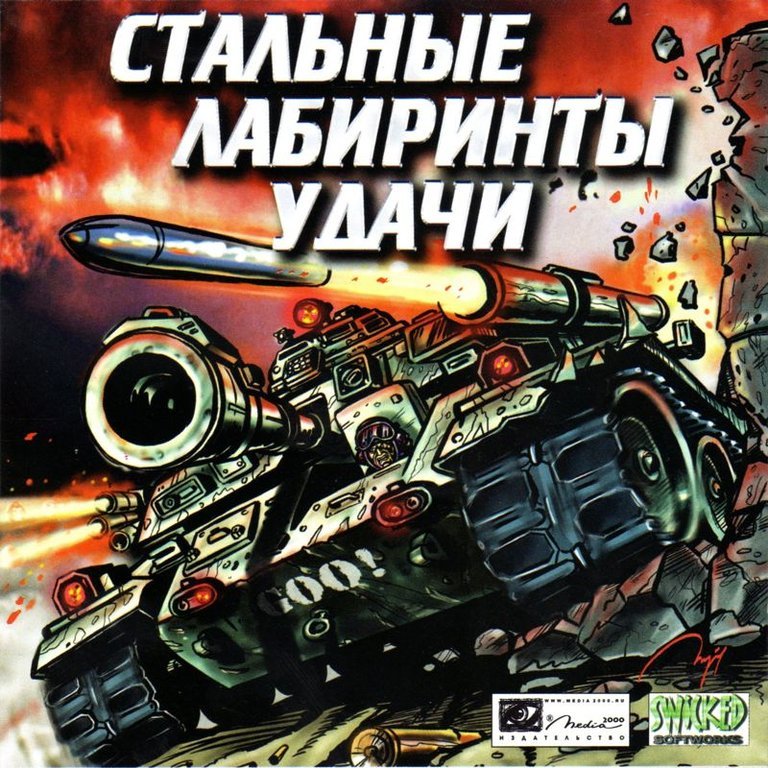
Hard Core is a futuristic 3D tank shooter set in a sci-fi world where players must seize and destroy the rogue supercomputer, Hard Core. Armed with a security tank, players navigate through 50 levels of enemy-filled mazes to regain control of global security, finances, and communications by shutting down the supercomputer and its five reactors. The game is known for its challenging gameplay and vivid, albeit controversial, graphics and sound design.
Where to Buy Hard Core
PC
Hard Core Reviews & Reception
mobygames.com (58/100): You come (into the store), you see (the game), you run (like a madman).
Hard Core Cheats & Codes
PC Version
Enter codes at the options screen.
| Code | Effect |
|---|---|
| CHANGE | Switch tank |
| RETURN | Switch tank |
| ENERGY | Infinite crystals |
| GRAVITY | Low gravity |
| HEAVY | High gravity |
| NORMAL | Normal gravity |
| SKIP1 | Skip 1 level |
| SKIP2 | Skip 10 levels |
| EASYKEY | Get the key |
| DARKNESS | No light |
| BLEAK | Heavy fog |
| MANIC | Go fast |
| REFLECT | Tank reflects |
| RAPID | Rapid fire |
| BOMBS | Fire bombs |
Hard Core Puzzle (PC)
Enter on the keyboard in the game.
| Code | Effect |
|---|---|
| r18 | Unlock adult mode |
| 666 | Unlock adult mode |
Hard Core: A Relic of Ambition and Flaws in the Golden Age of Gaming
Introduction
In the annals of video game history, 2001 stands as a watershed year. Grand Theft Auto III redefined open-world design, Halo: Combat Evolved set new standards for first-person shooters, and Devil May Cry pioneered kinetic action. Yet amidst these titans, Hard Core—a little-known tank shooter by Swicked Softworks—lurks as a curious footnote. Released on August 23, 2001, for Windows, Hard Core billed itself as a “futuristic 3D, power-packed single-player tank shooter,” challenging players to destroy a rogue supercomputer. However, its legacy is one of infamy rather than acclaim. This review argues that Hard Core is a case study in squandered potential, a game hamstrung by technical limitations, poor design choices, and a lack of polish that left it buried under the avalanche of 2001’s classics.
Development History & Context
The Studio and Vision
Swicked Softworks, the developer and publisher of Hard Core, remains an enigma. No prior or subsequent titles are attributed to them, suggesting a short-lived venture. The game’s promotional material touted a high-stakes mission to “shut down Hard Core and its five reactors,” framed as a “suicide mission.” This premise hints at ambitions to blend shooter mechanics with labyrinthine exploration, but the execution fell short.
Technological Constraints
By 2001, PC gaming was evolving rapidly. Titles like Max Payne showcased advanced physics and narrative depth, while Red Faction pioneered destructible environments. In contrast, Hard Core’s visuals—rendered in garish, LSD-inspired colors—betrayed its budgetary constraints. The game relied on rudimentary 3D models and lacked the texture filtering or lighting effects seen in contemporaries. Its shareware distribution model further limited its reach, positioning it as a budget title in an era of AAA ascendance.
The Gaming Landscape
Hard Core debuted alongside revolutionary titles, yet its design felt archaic. While Halo reimagined vehicular combat with the iconic Warthog, Hard Core’s tank controls were described as floaty and imprecise. The game’s maze-like levels and repetitive objectives paled in comparison to the emergent storytelling of Grand Theft Auto III. Swicked Softworks seemed unaware—or unable to adapt to—the seismic shifts in player expectations.
Narrative & Thematic Deep Dive
Plot and Characters
Hard Core’s narrative is paper-thin: a supercomputer threatens global security, and the player—piloting a “security tank”—must infiltrate its complex. There are no named characters, dialogue trees, or plot twists. The manual’s one-page lore dump framed the stakes, but in-game storytelling was nonexistent.
Themes
The game traffics in well-worn sci-fi tropes: rogue AI, dystopian control, and humanity’s last stand. Yet these themes are never explored beyond surface-level set dressing. Unlike Deus Ex (2000), which interrogated transhumanism, Hard Core reduced its premise to a series of repetitive shootouts.
Gameplay Mechanics & Systems
Core Loop
The gameplay revolves around navigating 50 maze-like levels, hunting for randomly placed keys while fending off enemy ships. Gems scattered throughout restore health or ammunition, but progression felt arbitrary. Critic phlux lamented, “The tank maneuvers like its chains are in the air—it floats”—a sentiment echoed by players.
Combat and Controls
The tank’s rapid-fire cannon resembled a “laser beam,” defying logic and physics. Bombs, ostensibly a secondary weapon, had “no real impact,” undermining strategic play. Keyboard and mouse controls were lambasted as unintuitive, with no option for joystick support despite the vehicular focus.
UI and Progression
The UI was functional but bland, offering minimal feedback beyond health and ammo counters. Levels lacked distinct identities, recycling assets and color palettes. With no save system or checkpoints, frustration mounted quickly.
World-Building, Art & Sound
Visual Design
Hard Core’s aesthetic was its most polarizing aspect. Critics compared its visuals to “LSD trips,” with clashing neon hues and low-poly models. Enemy animations were deemed “absolute crap,” and environments lacked detail, resembling flat, labyrinthine grids.
Sound Design
The soundscape was equally panned. Gunfire and explosions were described as grating, with one reviewer warning it could “damage your speakers.” No soundtrack elevated the experience, leaving players with only the soulless hum of machinery.
Reception & Legacy
Critical Response
Reviews were mixed-to-negative. Poland’s GameStar awarded 80%, praising it as a “fun arcade game,” while Russia’s Absolute Games scored it 20%, calling the design “ugly.” Player reviews were harsher, with one declaring, “The Good: Nothing. The Bad: Everything.”
Commercial Performance
No sales figures exist, but its obscurity speaks volumes. It failed to capitalize on the tank-combat niche, overshadowed by Battlezone II and Hostile Waters.
Influence
Hard Core left no meaningful legacy. Its flaws—floaty controls, incoherent art direction—serve as cautionary tales rather than inspiration.
Conclusion
Hard Core is a relic of an era when ambition often outpaced execution. Its poor mechanics, garish visuals, and limp narrative reflect a game out of sync with its time. While 2001 birthed classics that defined genres, Hard Core serves as a reminder that not every title can—or should—be remembered. For historians, it’s a fascinating curio; for players, it’s a lesson in how not to design a game.
Final Verdict: Hard Core is less a “hardcore” experience and more a misfire—a fleeting shadow in the golden age of gaming.