
- Release Year: 2014
- Platforms: Android, iPad, iPhone, Linux, Macintosh, Windows
- Publisher: Bulkypix, Plug In Digital SAS
- Developer: oeFun, Inc.
- Genre: Action
- Perspective: Third-person
- Game Mode: Single-player
- Gameplay: Arcade, Shooter
- Setting: Futuristic, Sci-fi
- Average Score: 49/100
Description
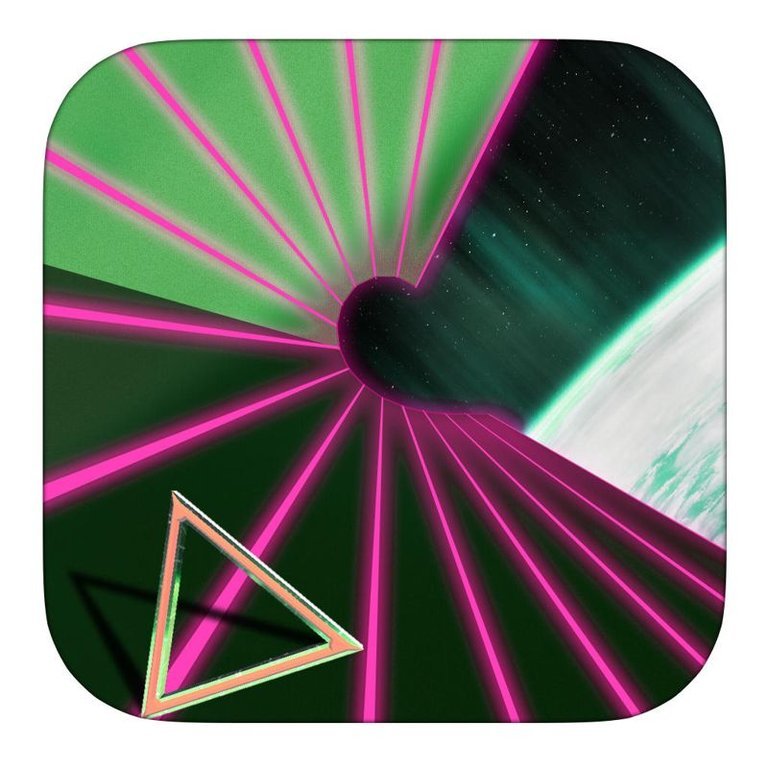
TriBlaster is a retro-inspired 3D tube shooter where players control a triangular spaceship in a sci-fi setting, navigating maze-like lanes to battle geometric enemies including cubes, inverted cones, and octagonal prisms. Drawing inspiration from classics like Tempest, gameplay involves strategic movement between lanes, collecting green power-ups for enhanced firepower, and utilizing evasive jumps across over 100 increasingly challenging levels with periodic checkpoints.
Where to Buy TriBlaster
PC
TriBlaster Patches & Updates
TriBlaster Guides & Walkthroughs
TriBlaster Reviews & Reception
metacritic.com (80/100): While TriBlaster borrows heavily from the arcade classic Tempest, its tinkers with the formula just enough to stand apart as an enjoyable retro blaster.
steambase.io (31/100): TriBlaster has earned a Player Score of 31 / 100.
techbloat.com : TriBlaster emerges as a testament to the enduring appeal of arcade-style gaming.
idownloadblog.com : TriBlaster is an updated version of one of the best vector graphic 3D games of the 1980s, Tempest.
TriBlaster: A Tempest-Inspired Odyssey Through Retro Revival and Repetition
Introduction
TriBlaster, released in 2014 by indie studio oeFun, Inc., is a love letter to the arcade era—specifically, Atari’s seminal 1981 tube shooter Tempest. With its neon-lit vector aesthetics and simplistic yet punishing gameplay, the game aims to capture the essence of coin-op nostalgia while adapting it for modern mobile and PC audiences. But does it transcend its retro inspirations, or does it languish in repetitive design? This review argues that TriBlaster succeeds as a nostalgic homage but falters in delivering lasting depth, offering fleeting fun for devotees of the genre while exposing the limitations of its minimalist ambitions.
Development History & Context
Developed by oeFun, Inc. and published by French studio Bulkypix, TriBlaster arrived during a resurgence of retro-style indie games in the early 2010s. The era saw titles like Super Hexagon and Geometry Wars reinvigorating arcade shooters with minimalist aesthetics and high-score chasing. oeFun’s vision was straightforward: reimagine Tempest’s “tube shooter” formula for touchscreens and modern PCs, leveraging the Unity engine to create a 3D lane-based arena where players dodge and blast geometric foes.
The game’s development was constrained by its small team and budget, evident in its repetitive level design and sparse features. Released on iOS, Android, and PC, TriBlaster targeted mobile gamers seeking quick, high-score-driven sessions. However, its $0.99 price point and lack of microtransactions positioned it as a passion project rather than a commercial juggernaut.
Narrative & Thematic Deep Dive
TriBlaster’s narrative is as minimalist as its visuals. Players control a triangular spacecraft defending a distant galaxy from an onslaught of abstract enemies: cubes, cones, pyramids, and other geometric horrors. The premise channels classic arcade tropes—a lone ship against unknowable alien forces—with no dialogue or cutscenes beyond a bare-bones premise.
Thematic depth is nonexistent, but this aligns with the genre’s roots. The game’s “story” exists only to contextualize its endless shooting galleries. A few playful touches, like a bonus level featuring a geometric face spitting collectible triangles, hint at whimsy, but these moments are fleeting. TriBlaster is less about narrative and more about the primal thrill of survival.
Gameplay Mechanics & Systems
At its core, TriBlaster is a lane-based shooter. Players roll their ship across predefined paths—straight lines, curves, or angular tracks—while auto-firing at enemies advancing from the top of the screen. Movement is tied to touch (on mobile) or keyboard/controller inputs (on PC), with firing automated as long as the ship is in motion.
Core Loop & Combat
- Enemy Variety: Grunts, Scouts, Sentries, and Spikes each have distinct behaviors, but their attacks rarely demand strategic adaptation. Most are dispatched by mindlessly zigzagging while holding fire.
- Power-Ups: Green triangles boost firepower, while a temporary “Beam” weapon clears lanes instantly—a rare moment of catharsis in an otherwise monotonous loop.
- Jump Mechanic: Tapping a button makes the ship leap backward to evade close-range threats, a clever nod to Tempest’s “Jump” button but underutilized due to minimal enemy pressure.
Flaws & Frustrations
- Level Design: Tracks repeat the same three shapes (straight, V-shaped, L-shaped) for the first 15 levels, with incremental twists later failing to offset repetition.
- Checkpoint System: With only three checkpoints across 100 levels (at Levels 25, 50, 75), deaths force grueling replays—a punitive design choice at odds with modern accessibility standards.
- Control Clunkiness: Touch controls are often imprecise, while PC controls feel serviceable but uninspired.
World-Building, Art & Sound
TriBlaster’s strongest suit is its aesthetic. Neon vector graphics evoke Tempest’s hypnotic arcade cabinets, with enemies rendered as glowing polygons against pitch-black space. The influence of 1980s vector displays is unmistakable, though modern flourishes like particle effects and smoother animations lend a contemporary sheen.
The soundtrack merges chiptune beats with pulsating synthwave, creating an auditory backdrop that complements the retro-futuristic vibe. Sound effects—such as the satisfying pew of lasers and the crackle of explosions—are crisp but lack variety. While visually arresting, the art style grows stale as level geometry fails to innovate.
Reception & Legacy
TriBlaster garnered mixed reviews at launch:
– Critics: Scores ranged from 65/100 (Arcade Sushi) to 80/100 (AppSpy), praising its nostalgic appeal but critiquing its repetitiveness. Pocket Gamer called it “a fever dream of a space shooter” but conceded it was “sometimes repetitive.”
– Players: Steam reviews are “Mostly Negative” (31/100), with players lamenting shallow gameplay and a lack of progression. Mobile audiences were kinder, appreciating its pick-up-and-play design.
– Legacy: While TriBlaster hasn’t achieved cult status like Super Hexagon or Geometry Wars, it remains a curio for retro enthusiasts. Its influence is negligible, but it stands as a testament to the challenges of modernizing arcade purity without innovating.
Conclusion
TriBlaster is a conflicted artifact—a game that understands its genre’s past but struggles to evolve it. Its neon-soaked visuals and chiptune soundtrack are undeniably charming, and its core mechanics capture the addictive simplicity of arcade classics. However, repetitive level design, a punishing checkpoint system, and shallow enemy variety undermine its longevity.
For $0.99, it’s a worthwhile diversion for Tempest diehards or mobile gamers seeking a quick retro fix. Yet, as a piece of interactive art, TriBlaster feels more like a tribute than a triumph—a fleeting spark of nostalgia in an industry increasingly defined by reinvention. Its place in history is secure as a minor footnote, a reminder of how difficult it is to recapture the magic of the arcade era without expanding its language.