
- Release Year: 2019
- Platforms: Linux, Macintosh, Nintendo Switch, Windows, Xbox One
- Publisher: PixelNAUTS Inc.
- Developer: PixelNAUTS Inc.
- Genre: Action
- Perspective: 2D scrolling
- Game Mode: Single-player
- Gameplay: Arcade
- Setting: Futuristic, Sci-fi
- Average Score: 76/100
Description
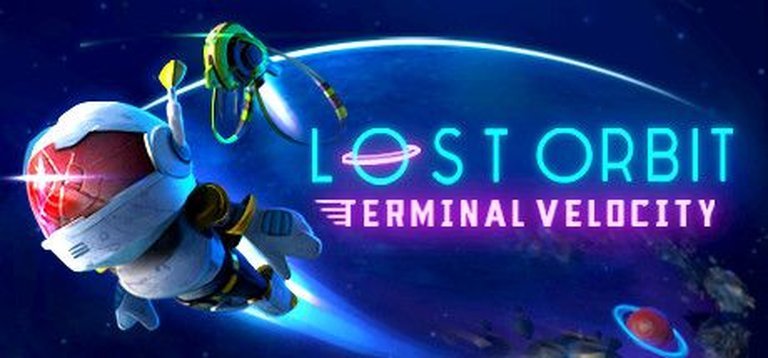
In ‘Lost Orbit: Terminal Velocity’, players take on the role of Harrison, a maintenance worker stranded in deep space after his ship is destroyed. The game is a sci-fi adventure that combines exploration, fast-paced action, and a deeply personal narrative. Harrison must navigate through various interstellar worlds, using gravitational forces to propel himself, while facing challenges that test his survival skills and mental fortitude. The game is known for its unique blend of comedy and tragedy, offering a rich and entertaining experience as Harrison struggles to find his way back to civilization.
Gameplay Videos
Where to Buy Lost Orbit: Terminal Velocity
PC
Lost Orbit: Terminal Velocity Cracks & Fixes
Lost Orbit: Terminal Velocity Reviews & Reception
opencritic.com (85/100): Lost Orbit: Terminal Velocity is a decent game. The gameplay can get slowed down by the story at times, but when upgrading abilities and hitting that Zen moment while speeding through a level, it feels pretty great.
opencritic.com (85/100): If you can imagine Asteroids meets Frogger in Space, you have a fairly good idea of what to expect from LOST ORBIT: Terminal Velocity. The game play is entertaining and the difficulty levels ramp up at a reasonable slope.
opencritic.com (70/100): LOST ORBIT: Terminal is a challenging game based on exploration and with incentives for the players to improve their skills. With its well-humoured plot and emphasis on high scores, LOST ORBIT: Terminal could benefit from having shorter loading times.
opencritic.com (85/100): Lost Orbit: Terminal Velocity is pretty to look at and easy to pick up. It gives you everything you need to challenge yourself and a story that is genuinely moving.
opencritic.com (70/100): Lost Orbit: Terminal Velocity, a rework, and expansion of the original Lost Orbit game, is a short, but fun journey through space. The visuals and musical score are delightful, even if the voice acting and writing are hit-or-miss.
opencritic.com (80/100): Genuinely fun and cute, with a story line and visuals that will keep you enthralled as you play the short campaign.
opencritic.com (75/100): Lost Orbit: Terminal Velocity is a competent action-scroller that often reaches stellar status. It’s a cool little indie with some neat ideas, and definitely worth taking for a spin at $10.
opencritic.com (80/100): Lost Orbit takes a simple premise and builds it into something that is more than the sum of its parts. Load times aside, it is a fantastic portable experience on Switch.
opencritic.com : Although Lost Orbit: Terminal Velocity is merely an update of a 4 year old game, it’s still one unique, challenging, and highly enjoyable narrative space adventure.
opencritic.com (77/100): Lost Orbit: Terminal Velocity has a perfectly poised balance between technical moments and cleansing graceful flight, with a hypnotic and mesmeric feel to it, which makes it engaging and pleasing to play.
opencritic.com (72/100): Delivering gameplay somewhere between an endless runner and a space flight.
metacritic.com (80/100): Although Lost Orbit: Terminal Velocity is merely an update of a 4 year old game, it’s still one unique, challenging, and highly enjoyable narrative space adventure. Mastering its tough campaign is definitely rewarding stuff.
metacritic.com (80/100): Lost Orbit takes a simple premise and builds it into something that is more than the sum of its parts. Load times aside, it is a fantastic portable experience on Switch.
metacritic.com (75/100): Lost Orbit: Terminal Velocity is pretty to look at and easy to pick up. It gives you everything you need to challenge yourself and a story that is genuinely moving.
metacritic.com (70/100): Lost Orbit: Terminal Velocity is a fun game to play. The fast maneuvering as you narrowly avoid before crashing into a rock so hard your skeleton leaves your body, only to forever hurtle through space.
metacritic.com (70/100): LOST ORBIT: Terminal poses several score challenges to the player while featuring a simple and accessible gameplay. The incentives for players to use their skill in order to seek higher scores are the main asset of LOST ORBIT: Terminal.
metacritic.com (60/100): Lost Orbit offers a solid experience, but intermittent performance and some curious design decisions take some of the shine off this title.
nintendoworldreport.com (80/100): Lost Orbit takes a simple premise and builds it into something that is more than the sum of its parts. Load times aside, it is a fantastic portable experience on Switch.
steambase.io (87/100): LOST ORBIT: Terminal Velocity has achieved a Steambase Player Score of 87 / 100, calculated from 31 total reviews which give it a rating of Positive.
Lost Orbit: Terminal Velocity: Review
Introduction
In the unforgiving vacuum of space, survival isn’t just about skill—it’s about momentum, hope, and a morbid sense of humor. Lost Orbit: Terminal Velocity (2019), the definitive edition of PixelNAUTS’ 2015 cult hit Lost Orbit, catapults players into a hauntingly beautiful odyssey of loneliness, determination, and cosmic chaos. This review argues that Terminal Velocity transcends its indie roots to deliver a masterclass in narrative-driven arcade gameplay, blending breakneck speed with existential storytelling. While its core loop echoes the “dodge ’em up” genre, its heart lies in the tragicomic tale of a lone astronaut’s struggle to return home—a journey as mechanically satisfying as it is emotionally resonant.
Development History & Context
Developed by Canadian studio PixelNAUTS using Unity, Lost Orbit: Terminal Velocity arrived in 2019 as an expanded reboot of the original Lost Orbit. Released during an era dominated by open-world epics and battle royales, the game carved a niche by refining the minimalist arcade appeal of its predecessor while doubling down on narrative depth. The studio’s vision was clear: transform a modest score-chasing space jaunt into a cinematic experience, complete with new levels, mechanics, and a gut-punch epilogue.
Technologically, Terminal Velocity leveraged Unity’s flexibility to optimize performance across platforms, including the Nintendo Switch and Xbox One. The 2019 update addressed criticisms of the original’s content brevity, adding 12 story levels, rail-grinding mechanics, and pirate-infested battlegrounds. Its $9.99 price point positioned it as a budget-friendly indie gem in a market increasingly skeptical of low-cost titles.
Narrative & Thematic Deep Dive
Terminal Velocity follows Harrison, a sardonic maintenance worker stranded light-years from home after his ship explodes mid-spacewalk. Narrated by a detached, observational droid, the story is equal parts dark comedy and meditation on mortality. Harrison’s quest—a Homeric Odyssey in a jumpsuit—forces players to confront themes of isolation, familial duty, and reckless perseverance.
The writing shines in its juxtaposition of cosmic horror and slapstick irony. Deaths are frequent and grotesque (Harrison’s skeleton often cartwheels into the abyss), yet the robot narrator’s dry commentary—”Another glorious failure”—underscores the futility of survival in a universe indifferent to human struggle. The new epilogue delves deeper into Harrison’s psyche, revealing his reunion with a sister embroiled in corporate oppression and space-pirate anarchy. Here, the game critiques labor exploitation and refugee crises, themes rarely explored in arcade titles.
Gameplay Mechanics & Systems
At its core, Terminal Velocity is a momentum-based survival game. Players navigate Harrison through 50 levels across five solar systems, dodging asteroids, lasers, and pirates while “orbital boosting” around planets to slingshot forward. The gameplay loop revolves around three scoring pillars:
1. Speed: Finish levels quickly for platinum ranks.
2. Collection: Gather Obtainium crystals to unlock upgrades (e.g., extended boosts, barrel rolls).
3. Precision: Minimize deaths—a single mistimed boost crushes Harrison into viscera.
New mechanics in Terminal Velocity include:
– Drill Attacks: Smash through asteroids.
– Rail Grinding: Ride debris cables to evade pirates.
– Gravity Wells: Manipulate black holes for strategic warp jumps.
The scoring system encourages replayability, but its brilliance lies in risk-reward tension: boosting conservatively ensures survival but sacrifices leaderboard dominance. Conversely, reckless speedrunning often ends in gory slapstick. The 15 challenge levels amplify this tension, demanding pixel-perfect maneuvers through mines and teleporter mazes.
Flaws emerge in occasional repetitiveness—some levels recycle obstacles—and sluggish load times on Switch. Yet, the upgrade system mitigates monotony by letting players tailor Harrison’s abilities to their playstyle.
World-Building, Art & Sound
Terminal Velocity’s universe is a kaleidoscope of sci-fi vignettes. Each solar system dazzles with distinct aesthetics:
– Derelict Mines: Rusted machinery and jagged rocks.
– Vega’s Forests: Bioluminescent flora and aquatic planets.
– Pirate Territories: Crystal geodes and laser barrages.
The 2.5D art style merges minimalist geometry with lavish particle effects, evoking a Super Mario Galaxy meets Dead Cells aesthetic. Death animations—a hallmark of the game—are morbidly detailed, from Harrison’s splattered remains to his ghostly wail echoing into the void.
Sound design elevates the experience. Composer Mike Dopko’s score oscillates between melancholic piano melodies and adrenaline-pumping synth beats, mirroring Harrison’s emotional whiplash. The narrator’s deadpan delivery (think Stanley Parable meets Bastion) juxtaposes humor with existential dread, while sound effects—crunching bones, shattering crystals—punctuate every failure and triumph.
Reception & Legacy
Critics praised Terminal Velocity for its “unique blend of challenge and heart” (Video Chums, 80/100), though some noted its niche appeal. With a Metascore of 76 and “Very Positive” Steam reviews (86%), it struck a chord with fans of precision-platformers and narrative indies. The Switch version’s performance hiccups drew minor criticism, but its portability justified the trade-offs.
Legacy-wise, Terminal Velocity influenced indie darlings like Lonely Mountains: Downhill and Solar Ash, proving that arcade games could marry high-speed gameplay with emotional storytelling. Its leaderboard-driven design also echoed the resurgence of score-chasing in titles like Celeste.
Conclusion
Lost Orbit: Terminal Velocity is a triumph of indie ambition. It transforms a simple premise—”don’t hit the space rocks”—into a poignant exploration of human tenacity, wrapped in razor-sharp mechanics and stunning audiovisual design. While its difficulty and repetition may deter casual players, those who embrace its chaos will find a game that lingers long after the credits roll. In the pantheon of spacefaring adventures, Terminal Velocity earns its place as a cult classic—a reminder that even in the void, stories matter.
Final Verdict: A near-flawless arcade narrative, worthy of its cosmic aspirations. 9/10.