
- Release Year: 2013
- Platforms: Windows
- Publisher: Focus Multimedia Ltd.
- Genre: Card, Compilation, Mahjongg solitaire, Tile game – Shanghai
- Game Mode: Single-player
- Setting: Cities, Temples
Description
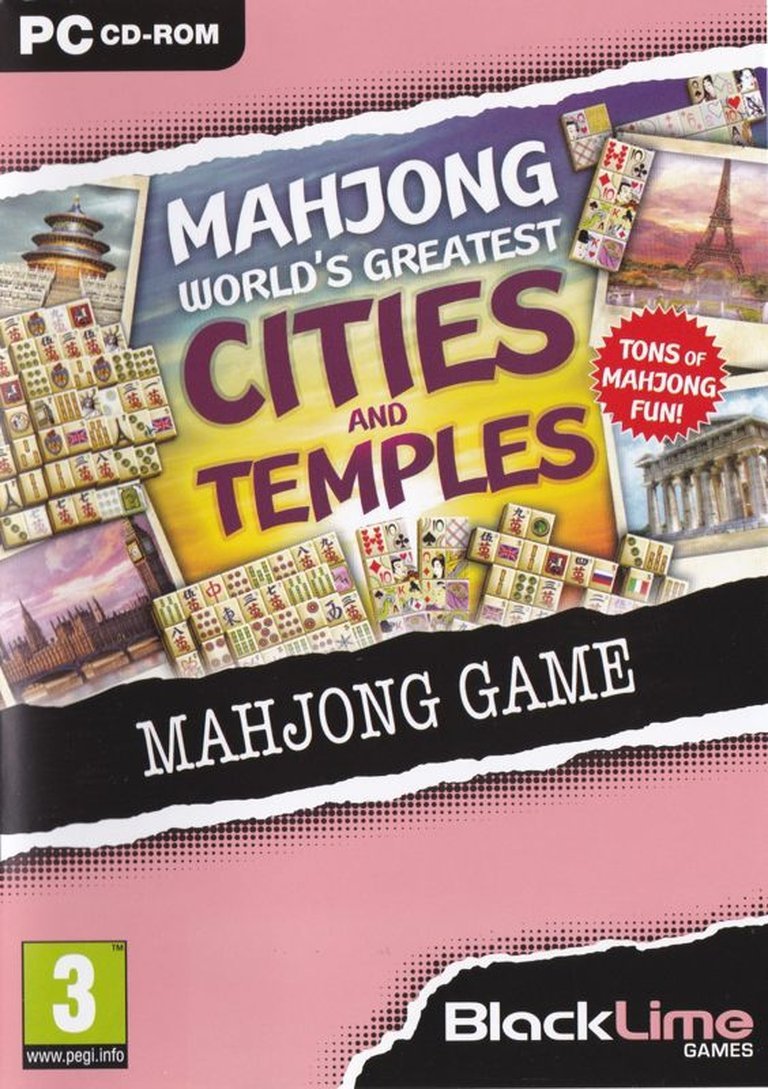
Mahjong World’s Greatest Cities & Temples is a compilation of two standalone Mahjong games, each themed around iconic cities and temples from around the world. Players can enjoy the classic tile-matching gameplay of Mahjong while exploring beautiful and intricate layouts inspired by famous landmarks and architectural wonders. The games can be installed and played separately, offering a rich and engaging experience for Mahjong enthusiasts.
Gameplay Videos
Mahjong World’s Greatest Cities & Temples: A Tranquil Journey Through Timeless Puzzles
Introduction
In an era where video games often prioritize flashy visuals and adrenaline-pumping action, Mahjong World’s Greatest Cities & Temples (2013) stands as a meditation on simplicity. This Windows-exclusive compilation—combining World’s Greatest Cities Mahjong and World’s Greatest Temples Mahjong—offers a serene escape into the timeless puzzle genre. While it doesn’t redefine Mahjong solitaire, it refines the experience with educational overlays and thematic variety, making it a charming artifact of the early 2010s casual gaming boom.
Development History & Context
Developed by Oberon Media and published by Focus Multimedia, Mahjong World’s Greatest Cities & Temples arrived during a transitional period for PC gaming. By 2013, digital storefronts like Steam and GOG were displacing physical CD-ROMs, yet budget-friendly compilations like this still found audiences among casual players and retail shoppers. The game’s structure—repackaging two pre-existing titles—reflects the industry’s trend of monetizing bite-sized, accessible experiences.
Oberon Media, known for 3D Ultra MiniGolf Adventures and Slingo, leveraged its expertise in casual gameplay here. The studio’s vision was clear: marry the soothing mechanics of Shanghai Mahjong (a tile-matching solitaire variant) with light cultural education. While technologically unambitious—the game ran smoothly on even aging Windows XP machines—it catered to a demographic overlooked by AAA titles: older players and puzzle enthusiasts seeking low-stakes engagement.
Narrative & Thematic Deep Dive
Narratively, Mahjong World’s Greatest Cities & Temples is minimalist. There’s no overarching story, no characters, and no dialogue. Instead, its “narrative” resides in its virtual tourism premise. Each level is framed around a real-world location—the Taj Mahal, Angkor Wat, the Roman Coliseum—with brief informational blurbs about their history and significance.
Thematically, the game emphasizes global exploration and cultural appreciation. In World’s Greatest Temples Mahjong, players unlock temples like Turkey’s Göreme Church and China’s Temple of Heaven, while Cities highlights urban landmarks. The educational slant, though superficial, adds a layer of purpose to the tile-matching, encouraging players to linger on each locale’s backdrop. It’s a digital postcard collection disguised as a puzzle game—a cozy, if unchallenging, celebration of human ingenuity.
Gameplay Mechanics & Systems
At its core, Mahjong World’s Greatest Cities & Temples is a standard Shanghai Mahjong experience. Players match pairs of identical tiles, clearing stacked layouts under the constraint that only “free” tiles (those with at least one exposed side) can be selected. However, the compilation spices up the formula with seven distinct game modes:
1. Standard Mahjong: Traditional tile-matching.
2. Bottom Tiles: Match tiles to five fixed targets at the screen’s base.
3. 5 Seconds: Rapidly identify matches before the display refreshes.
4. Domino Game: Pair tiles that sum to seven.
5. Poker Game: Build poker hands (e.g., flushes, straights) from card-themed tiles.
6. Logic: Pair tiles with thematic connections (e.g., a teacup with a teapot).
7. Rainbow: Clear tiles to reveal hidden colored blocks in sequence.
The most inventive mode, Memory, flips tiles Concentration-style, tasking players with recalling positions. Meanwhile, power-ups like shuffle and hint tokens alleviate frustration, though their scarcity maintains a gentle challenge curve.
While the UI is functional—mouse-driven, with crisp tile highlights—it lacks modern flourishes like undo buttons or customizable layouts. The absence of online leaderboards or achievements also dates the experience, anchoring it firmly in the pre-social gaming era.
World-Building, Art & Sound
Visually, the game is a mixed bag. The tile sets are crisp and colorful, drawing from classical Mahjong iconography (bamboos, dragons, winds) and location-specific motifs (e.g., Greek columns for the Temple of Poseidon). However, the backdrop images of cities and temples are static, low-resolution JPEGs that evoke early-2000s screensavers rather than immersive environments.
Sound design is equally utilitarian. The soundtrack leans on generic, looping elevator music—inoffensive but forgettable. Tile clicks and match chimes are satisfyingly tactile, though, echoing the ASMR-like appeal of physical Mahjong sets. Together, these elements create a hybrid digital-analog ambiance, ideal for players seeking a zen-like focus.
Reception & Legacy
Upon release, Mahjong World’s Greatest Cities & Temples garnered little critical attention. No formal reviews exist on Metacritic or MobyGames, and user impressions are scarce—a reflection of its niche appeal. Commercial performance was likely modest, though its bundling in collections like World’s Greatest Mahjong Collection (GameFools, 2014) suggests steady sales among casual audiences.
Its legacy lies in preserving a specific moment in gaming history: the twilight of physical PC casual games. While overshadowed by mobile titans like Mahjong Journey or Shanghai Mahjong, it remains a competent, if unremarkable, iteration of the genre. Its educational tidbits also foreshadowed later “edutainment” hybrids like Monument Valley’s architectural inspirations.
Conclusion
Mahjong World’s Greatest Cities & Temples is not a masterpiece. Its presentation is dated, its innovations incremental, and its cultural insights skin-deep. Yet, it excels as a comfort food game—a stress-free diversion for rainy afternoons or lunch breaks. For Mahjong purists, it’s a redundant addition to their libraries. For casual players craving a globetrotting puzzle retreat, however, it’s a quaint relic worth revisiting.
In the pantheon of video game history, it’s a footnote. But as a window into early-2010s casual design, it’s a snapshot worth developing.