
- Release Year: 2003
- Platforms: Windows
- Genre: Card, Mahjongg solitaire, Puzzle, Shanghai, Tile game
- Perspective: Diagonal-down
- Game Mode: Single-player
- Gameplay: Cards, Tile matching puzzle, Tiles
- Average Score: 69/100
Description
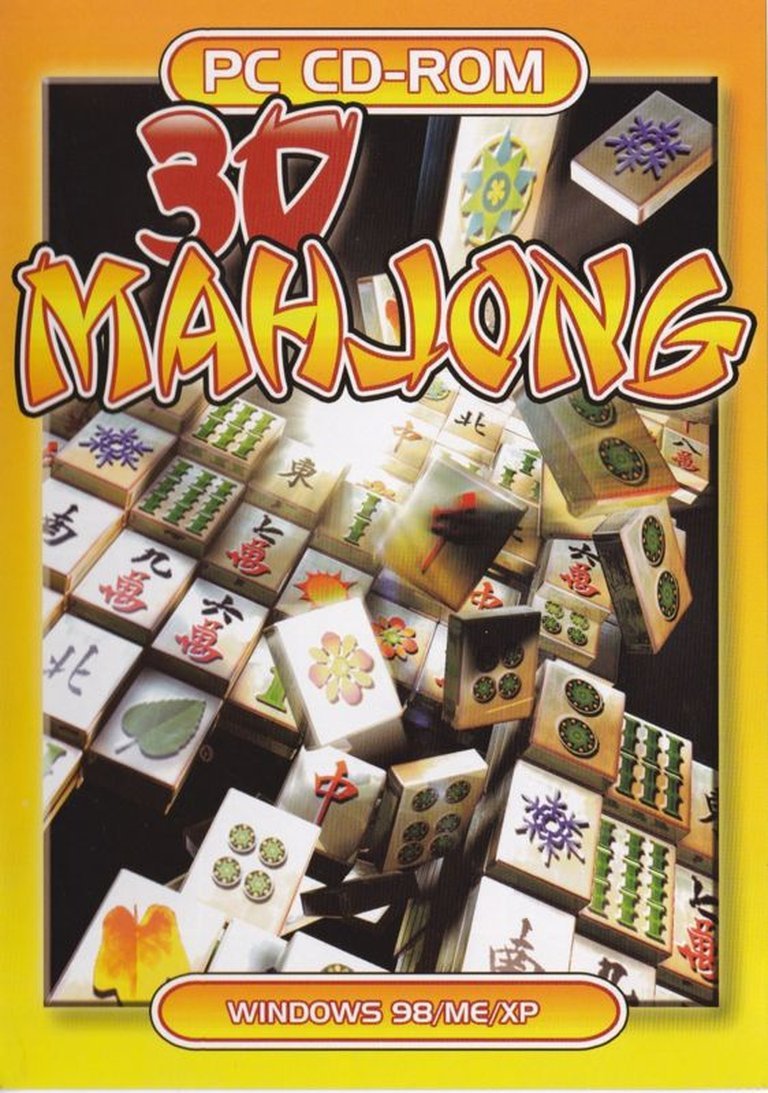
3D Mahjong is a single-player puzzle game based on Mahjong Solitaire, where players match unblocked pairs of tiles to clear intricately layered 3D layouts. Featuring customizable viewing angles via mouse or keyboard, the game includes core mechanics like hints, undo options, and tile shuffling to aid strategy. Players can choose from five distinct tile sets and numerous board configurations, blending classic tile-matching with immersive 3D navigation.
Gameplay Videos
Where to Buy 3D Mahjong
PC
3D Mahjong Free Download
3D Mahjong Reviews & Reception
gamepressure.com (69/100): Mahjongg 3D is a fantastic new version of the famous ancient Chinese solitaire game.
metacritic.com (69/100): This is a robust package that looks good, handles well and will easily address your tile-matching cravings.
metacritic.com (70/100): 3D MahJongg is a clean and simple package for fans of the solitaire version of MahJongg.
3D Mahjong: Review
An Archaeological Dive into Mahjong Solitaire’s Early Steps into Three Dimensions
Introduction
When Tradition Meets Polygons
Emerging in 2003 when the industry grappled with 3D transitions, 3D Mahjong embodies the quiet revolution of digitizing analog classics. Developed by Dutch studio Megaware Multimedia BV, this single-player Mahjong Solitaire variant attempted to elevate the centuries-old tile-matching game beyond flat grids into a spatial puzzle. Though forgotten today, 3D Mahjong foreshadowed modern puzzlers’ obsession with tactile environments and camera control—a bridge between the simplicity of Shanghai (1986) and the immersive tableaus of Zen Studios’ Pinball FX. This review unpacks its ambitions, technological constraints, and legacy as a time capsule of early-2000s puzzle design.
Development History & Context
The Unassuming Birth of an Experimental Era
Megaware Multimedia: A Curiosity in the Puzzler Niche
Founded in the Netherlands in the late 1990s, Megaware Multimedia BV operated far from gaming’s mainstream epicenters. With no prior high-profile titles, the studio specialized in compact digital reinterpretations of board and card games—3D Backgammon, 3D Reversi, and 3D Mahjong among them. Their vision was pragmatic: leverage the accessibility of classic rules while exploring nascent 3D rendering tools of the early 2000s.
2003: An Ecosystem in Flux
The 2003 gaming landscape was dominated by seismic shifts. Pokémon Ruby/Sapphire (2.7M Japanese sales in 2003) and Star Wars: Knights of the Old Republic redefined expectations for narrative depth, while the PC market shrank (-14%) as consoles gained dominance. In this climate, 3D Mahjong’s minimalist scope intentionally defied trends—a budget-priced ($9.99), 55MB download targeting casual players.
Technological Constraints and Innovation
Built for Windows XP and later ported to Nintendo DSi (2010), 3D Mahjong harnessed DirectX 8.1’s fixed-function pipeline. Without modern GPU tessellation or dynamic lighting, environments relied on static orthographic projection with three locked camera angles. The mouse-driven rotation—a novelty—allowed players to pivot boards but lacked true six-axis freedom, a compromise ensuring fluid performance on Pentium III-era integrated graphics.
Narrative & Thematic Deep Dive
The Silent Poetry of Tiles
Where Mechanics Are the Narrative
Mahjong Solitaire (Shanghai, in Western parlance) has no characters or plot. Its storytelling lies in its textures: bamboo stalks, ivory circles, and Chinese characters evoke cultural resonance absent in abstract match-3 games. Megaware doubled down on this heritage, offering five tile sets—from minimalist geometric designs to traditional ink-wash motifs—each crafting micro-mythologies of craftsmanship.
The Ritual of Unblocking
Thematic weight emerges in the quiet tension of patience vs. desperation. Matching tiles (removing unblocked pairs) mirrors archaeological excavation—layers of strategy stripped away via anti-perception puzzles. Unlike competitive riichi mahjong’s social dynamism, 3D Mahjong is meditative; its “solitary monk” ambiance pioneered the Zen Mode sensibilities later commercialized by Monument Valley.
Gameplay Mechanics & Systems
An Interface Between Dimensions
The Core Loop: Spatially Aware Puzzling
Players navigate layouts (dragon, turtle, or custom arrangements) by matching identical tiles unblocked on left/right sides. Staple QoL features—hint, shuffle, undo—anchor the UX, but the 3D perspective introduces depth-based misdirection. A tile seemingly accessible from one angle might be buried when rotated—a spatial riddle absent in 2D predecessors.
Control Scheme: Ambition vs. Execution
Keyboard shortcuts cycle through three static views (top-down, oblique, side), while mouse dragging rotates freely—except “underneath” views, blocked to prevent disorientation. A competent compromise, but imprecise depth perception leads to phantom clicks, exacerbated by the absence of tile highlighting on hover. The UI—spartan menus, tiny text—remained stubbornly 2D, jarring against 3D boards.
Balance and Strategy
Randomized layouts (drawn from Mahjong Solitaire’s classic algorithm) vary in difficulty, but finite shuffles penalize impulsive use. With no scoring system, time pressure, or unlocks, longevity hinges purely on self-challenge—a design choice mirroring early mobile puzzlers like Bejeweled but lacking their systemic hooks.
World-Building, Art & Sound
A Digital Curio Cabinet
Visual Design: Function Over Flair
The 3D boards—functionally abstract grids—lack environmental storytelling (unlike Myst-like puzzle boxes). Tile textures, though serviceable, suffer from early-2000s monotony: 16-bit color depth muddies ornate patterns, while flat shading denies depth. Yet the rotation feature subtly dramatizes scale; zoomed-in angles make tiles feel like monolithic artifacts.
Soundscape: Barebones Ambiance
Minimalist audio defines the experience: a faint shuffle of tiles, a muted click on matches, and absence of music. While unintentional, this silence amplifies the game’s contemplative rhythm—akin to ASMR tile-clearing videos now ubiquitous on YouTube.
Reception & Legacy
The Forgotten Stepping Stone
Launch and Cultural Footprint
No Metacritic scores or contemporary press coverage exist—unsurprising for a budget niche title. Yet archival player forums (e.g., 2005 MyAbandonware comments) reveal polarizing reactions: praised for novices craving 3D experimentation, damned by Mahjong purists as “a tech demo with tiles.”
Echoes in Modern Puzzlers
3D Mahjong’s DNA surfaces in later titles’ spatial gambits. Zen Match (2021) iterated on rotatable match-3 boards; Mahjong Cub3D (Nintendo 3DS) embraced stereoscopic depth. Still, Megaware’s greatest legacy was proving 3D could enhance contemplative puzzling—not merely distract—a thesis Tetris Effect (2018) would perfect.
Conclusion
An Imperfect But Necessary Evolutionary Link
3D Mahjong is no masterpiece. Its presentation is dated, its mechanics unpolished, and its ambition shackled by 2003’s technical ceilings. Yet as archaeology reveals value in broken pottery, critics must contextualize its role—it dared envision Mahjong Solitaire as a spatial art form years before indie auteurs like Jason Roberts (Gorogoa) redefined puzzle storytelling. For historians, it’s a vital artifact; for players, a curious time capsule. In the annals of puzzle gaming, its grade is C+: competently functional, creatively cautious—but an undeniable milestone in the journey from Shanghai’s grids to Monument Valley’s dreamscapes.
Final Verdict:
A modest yet historically significant digitization of Mahjong Solitaire, 3D Mahjong pioneered spatial puzzling but failed to transcend its era’s limitations. Essential for genre archaeologists, skippable for modern players—yet its ghost lingers in every rotatable puzzle board today.