
- Release Year: 2020
- Platforms: Nintendo Switch, Windows
- Publisher: Drix Studios, Keybol Games Pte. Ltd.
- Developer: Drix Studios
- Genre: Adventure, Role-playing (RPG), Strategy, Tactics
- Perspective: Diagonal-down
- Game Mode: Single-player
- Gameplay: characters control, Multiple units, Real-time strategy (RTS)
- Setting: Fantasy
- Average Score: 53/100
Description
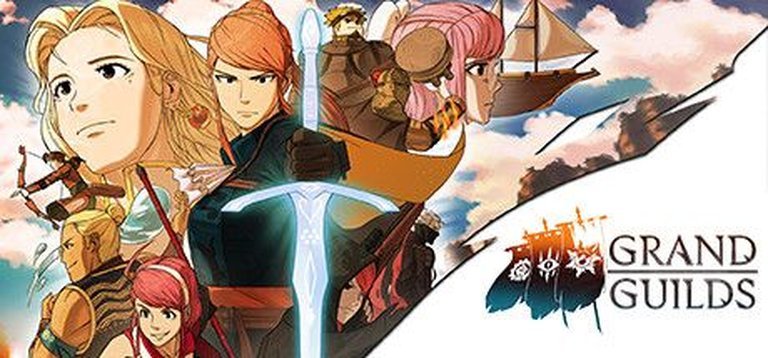
Grand Guilds is a fantasy tactical role-playing game that combines strategic grid-based combat with card-based mechanics, set in a vibrant world divided by powerful guilds. Players assemble a team of heroes, each with unique abilities, and engage in real-time battles using a deck of customizable cards to dictate their actions. The game features an anime-inspired art style and a cinematic camera perspective, blending tactical depth with dynamic gameplay. Despite its innovative approach, the game has faced criticism for its cumbersome interface and performance issues.
Gameplay Videos
Where to Buy Grand Guilds
PC
Grand Guilds Patches & Updates
Grand Guilds Guides & Walkthroughs
Grand Guilds Reviews & Reception
steambase.io (57/100): A game with a mixed reception, achieving a Player Score of 57/100 based on 101 total reviews.
metacritic.com (50/100): There’s very little that is grand about Grand Guilds, as I think the project was just a bit too ambitious for the developer.
saveorquit.com : The right or wrong way to mix two genres?
Grand Guilds: Review
Introduction
In the crowded arena of tactical RPGs, Grand Guilds (2020) arrived with an ambitious promise: marrying genre staples like grid-based combat with card-driven mechanics and anime-inspired storytelling. Developed by Filipino studio Drix Studios and published via Keybol Games, this indie title sought to carve a niche within the Final Fantasy Tactics and Disgaea pantheon. Yet, as our analysis reveals, its legacy is defined by unrealized potential—a game brimming with creativity but hamstrung by technical limitations and design missteps. Thesis: While Grand Guilds delivers a visually charming, narratively earnest experience, its half-baked fusion of card-based tactics and RPG systems undermines its aspirations, leaving it as a footnote rather than a trailblazer in the genre.
Development History & Context
A Studio’s Daunting Ambition
Drix Studios, founded by Justin Hendrix Villegas and Renante Silvestre, embarked on Grand Guilds as a passion project fueled by a successful 2019 Kickstarter campaign. Built in Unreal Engine 4 with a skeletal team (47 core developers credited alongside 1,028 supporters), the project exemplified indie scrappiness. The goal was audacious: to blend tactical RPG fundamentals with deckbuilding depth akin to Slay the Spire, all while competing against 2020 juggernauts like Gears Tactics and XCOM: Chimera Squad.
Technological and Creative Constraints
The team leveraged UE4’s blueprint system to streamline development but faced challenges optimizing for Switch parity. Art assets—hand-drawn character portraits by Rojen Pete Ranosa and 3D maps by Bruce Bryan Villegas—showcased a striking anime aesthetic, yet procedural quests and card mechanics strained the studio’s resources. Sound designer Jose Eduardo Lopez Ochoa’s orchestral score aimed for epic grandeur, but partial voice acting (led by Aimee Smith’s Eliza) highlighted budget limitations.
The 2020 Landscape
Launching March 26, 2020—days into global pandemic lockdowns—Grand Guilds entered a market hungry for escapism. Yet it struggled to stand out amid crowded digital storefronts and juggernaut franchises. Its hybrid design drew comparisons to SteamWorld Quest and Hand of Fate, but lacked their polish.
Narrative & Thematic Deep Dive
Plot and Character Dynamics
The story follows Eliza Halfort, a guild leader navigating political intrigue after mysterious creatures besiege her city of Ozryn. Accompanied by a squad including the stoic Kadmus, the reckless Rei, and the sniper Skyla, her quest unravels a continent-spanning conspiracy. Writer Darrus Myles Jr. crafts archetypal JRPG tropes—found family dynamics, wartime ethics, guild rivalries—with occasional spikes of wit (e.g., profanity-laced banter).
Themes and Execution
Themes of institutional corruption and unity against existential threats echo Fire Emblem, but the narrative’s pacing falters. Early chapters drown in exposition, while late-game twists feel rushed. Dice & D-pads praised its “TV series-like pull,” but Noisy Pixel critiqued uneven dialogue: “scenes drag due to protracted exchanges.” Partial voice acting exacerbates this—characters like Raze (Tom Schalk) emote vividly in combat but fall silent in key moments, creating tonal whiplash.
Characterization
Eliza’s leadership arc shines, though supporting cast members lack development. Rei’s teleportation skills and Skyla’s sniper gameplay mirror their personalities, but emotional beats—like Paco Okami’s (Reece Bridger) moral struggles—are undercooked.
Gameplay Mechanics & Systems
The Card-Combat Experiment
Grand Guilds’ core innovation—replacing traditional ability menus with customizable decks—initially intrigues. Each character wields 15-card decks drawing from 20 skills (e.g., Eliza’s armor buffs, Kadmus’s AOE cleaves). Yet flaws emerge:
– Repetitive Card Pools: As Save or Quit noted, “Eliza’s cards are variations of the same ability”—e.g., tiered armor boosts lacking synergy.
– Shallow Deckbuilding: Passive slots unlock every 5 levels, but choices rarely impact strategy (Dice & D-pads: “deckbuilding isn’t straightforward, but lacks complexity”).
– AP Management: With 5 Action Points per turn, players spam basic attacks once decks deplete, undermining the card system’s purpose.
Tactical Scaffolding
Grid-based combat incorporates elevation and terrain, but lacks foundational mechanics:
– No flanking bonuses, height advantages, or elemental weaknesses (Gamepressure: “No weapon triangles—just armor/resistance stats”).
– Maps feel static; Save or Quit lamented bosses lacking environmental interactions (e.g., “a spider should shoot webs to block movement”).
– Unit balance wobbles: tanks like Eliza struggle with scaling, while debuffers like Lyria arrive too late to shine.
Progression and Quests
Guild reputation unlocks combat perks, yet procedural “Guild Quests” recycle objectives (Steam review: “Grind feels obligatory, not rewarding”). The absence of New Game+ or multiplayer further limits replayability.
World-Building, Art & Sound
Irin: A World Half-Painted
The continent of Irin teases rich lore—warring guilds, ancient magics—but lacks environmental storytelling. Towns like Ozryn are visually lush yet devoid of interactivity, turning hubs into mere mission-select screens.
Visual Splendor, Animated Stiffness
Rojen Pete Ranosa’s character art radiates Valkyria Chronicles-esque charm, with expressive portraits reacting dynamically mid-dialogue. Conversely, 3D models and animations feel rudimentary; combat kills elicit unintentional comedy as enemies “fly off the map” (Dice & D-pads).
Sound Design: Highs and Lows
Jose Eduardo Lopez Ochoa’s score blends orchestral swells with acoustic intimacy, elevating key moments. However, sparse voice acting and “dead air” in cutscenes (Dice & D-pads) undercut immersion.
Reception & Legacy
Launch Reception
Grand Guilds debuted to tepid reviews:
– Critics: Averaged 54% on MobyGames (e.g., Noisy Pixel’s 5/10: “Fails tactical RPG fundamentals”).
– Players: Steam reviews settled at “Mixed” (58% positive)—praised art/story but skewered “shallow” combat.
Commercial Impact
Priced at $14.99 (later discounted to $3.74), it underperformed commercially. Switch performance issues (e.g., framerate drops) compounded woes.
Influence and Retrospection
While not a genre trailblazer, Grand Guilds demonstrated indie daring. Its card-tactics hybrid likely inspired later titles like Wildermyth’s ability-customization, but Drix Studios folded post-release—cementing it as a curio rather than a classic.
Conclusion
Grand Guilds is a bittersweet symphony of ambition and limitation. Its vibrant art, earnest narrative, and genre-blending courage deserve applause, yet clunky card systems, anaemic tactics, and technical stumbles prevent it from greatness. For tactical RPG newcomers, it offers a accessible, 25-hour jaunt; for veterans, it’s a fascinating misfire. In the annals of indie history, it stands as a testament to passion—a flawed but heartfelt swing at reimagining two genres in one flawed gem. Verdict: A poignant “what if?” case study, best appreciated as a bargain-bin curiosity.