
- Release Year: 2010
- Platforms: PlayStation 3, Windows
- Publisher: Square Enix, Inc., Square Enix Limited
- Developer: Square Enix Co., Ltd.
- Genre: Action, Role-playing (RPG)
- Perspective: 3rd-person
- Game Mode: MMO
- Gameplay: Base building, Crafting, Massively Multiplayer, Moral choices, Open World
- Setting: Fantasy
- Average Score: 6/100
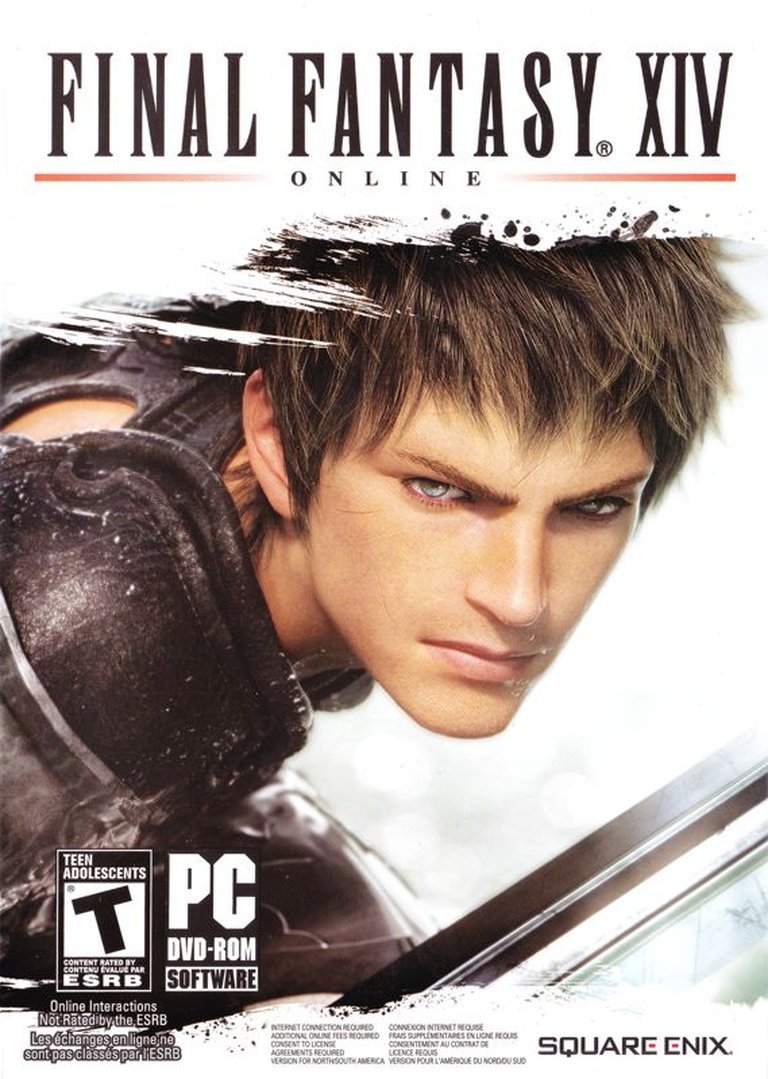
Description
Final Fantasy XIV Online is a massively multiplayer online role-playing game (MMORPG) set in the fantasy world of Eorzea, where players create customizable characters from five distinct races, each with unique clans. Beginning in one of three city-states—Limsa Lominsa, Gridania, or Ul’dah—players choose dynamic classes by equipping weapons or tools, spanning combat, magic, crafting, and gathering. The game features skill-based real-time battles, cooperative party mechanics, and Guildleves for questing, offering rewards like experience points, currency, and items. With a focus on exploration and persistent progression, players engage in a richly detailed world blending Final Fantasy lore with immersive multiplayer gameplay.
Where to Buy Final Fantasy XIV Online
PC
Final Fantasy XIV Online Free Download
Final Fantasy XIV Online Mods
Final Fantasy XIV Online Guides & Walkthroughs
Final Fantasy XIV Online Reviews & Reception
gamefaqs.gamespot.com (6/100): The Greatest Gaming Tragedy of this Generation.
ign.com : A big, beautiful, busted world.
Final Fantasy XIV Online: Review
Introduction
In the pantheon of Final Fantasy titles, Final Fantasy XIV Online stands as a testament to resilience, redemption, and creative reinvention. Launched in 2010 to scathing criticism and player backlash, the game’s journey from infamy to industry triumph is unparalleled in gaming history. Led by Naoki Yoshida, who spearheaded its 2013 rebirth as A Realm Reborn, FFXIV transformed from a cautionary tale into one of the most acclaimed MMORPGs of all time. This review explores how FFXIV’s rebirth reshaped its legacy, weaving deep narrative ambition, innovative mechanics, and artistic brilliance into a living world that continues to evolve.
Development History & Context
A Troubled Genesis
Developed by Square Enix’s Business Division 5, Final Fantasy XIV (2010) was envisioned as a successor to Final Fantasy XI’s MMORPG legacy. However, hampered by the Crystal Tools engine—repurposed from Final Fantasy XIII—the game suffered from technical instability, poor optimization, and a fractured development pipeline. Director Nobuaki Komoto and producer Hiromichi Tanaka prioritized graphical fidelity over gameplay, resulting in a world choked by repetitive textures, clunky UI, and a lack of content. The rushed 2010 release was met with universal panning, including “Worst Game Everyone Played” awards, leading Square Enix to suspend subscriptions and indefinitely delay the PlayStation 3 port.
The Yoshida Revolution
In December 2010, Square Enix appointed Naoki Yoshida—a relative unknown outside Dragon Quest circles—as director and producer. Yoshida’s first act was transparency: he issued public apologies and instituted live “Letter from the Producer” streams to engage players. Behind the scenes, a parallel team rebuilt the game from scratch under the codename “Version 2.0”, leveraging a modified Luminous Engine for improved physics and server stability.
A Realm Reborn: Phoenix from the Ashes
FFXIV’s original servers shut down in November 2012, culminating in a cataclysmic in-game event where players fought the primal Bahamut as the moon Dalamud destroyed Eorzea—a narrative bridge to A Realm Reborn (ARR). The relaunch in 2013 addressed core flaws:
– A complete engine overhaul for seamless zones and higher player visibility.
– Streamlined UI, cross-platform play (PS3/PC), and a content-rich questing system.
– A scrapped Xbox 360 version due to Microsoft’s refusal to allow cross-platform servers.
Narrative & Thematic Deep Dive
The Fall and Rebirth of Eorzea
FFXIV’s story revolves around Eorzea, a continent ravaged by the Seventh Umbral Calamity—a catastrophe triggered by the Garlean Empire’s manipulation of Dalamud, which unleashed Bahamut. Players begin as adventurers emerging five years later, branded “Warriors of Light” destined to unite fractured city-states against imperial and primordial threats.
Characters and Factions
- The Scions of the Seventh Dawn: Led by Minfilia, this group anchors the player’s journey, blending political intrigue (Ul’dah’s Syndicate) and existential threats (Ascian manipulators).
- Grand Companies: Military factions like Limsa Lominsa’s Maelstrom and Gridania’s Twin Adder reflect Eorzea’s cultural diversity, each embroiled in resource wars and primal summonings.
- Antagonists: The Garlean Empire embodies colonial oppression, while Ascians (like Lahabrea) orchestrate calamities to resurrect the dark god Zodiark, opposing the goddess Hydaelyn.
Themes of Redemption and Unity
The narrative mirrors the game’s real-world rebirth: themes of recovery from ruin and collective hope permeate quests. The Echo—a player power enabling visions of the past—symbolizes learning from failures. Expansions (Heavensward, Shadowbringers) deepen this with morally gray conflicts, such as Ishgard’s draconian theocracy and the existential duality of Light/Darkness.
Gameplay Mechanics & Systems
The Armory System and Job Diversity
- Class Flexibility: Swapping weapons changes classes instantly, letting players master all Disciples of War/Magic (e.g., Dragoon, Black Mage) and craft/gather as Disciples of Hand/Land.
- Job Specialization: At Level 30, classes unlock Jobs (Paladin, White Mage) with role-focused abilities but restricted cross-class skills, emphasizing party synergy.
Combat and Progression
- Dynamic Battles: ARR replaced sluggish 1.0 combat with a Global Cooldown (GCD) system, weaving oGCD abilities for fluid rotations. Mechanics like Limit Breaks (party-wide ultimates) and positionals (Monk’s flank attacks) reward coordination.
- Endgame Content: Duty Finder automates matchmaking for dungeons (4-player) and trials (8-player), while Savage Raids and Ultimate Challenges test elite groups.
Economy and Crafting
- Player-Driven Markets: Retainers sell items on the Market Board, with crafters (Alchemists, Blacksmiths) and gatherers (Miners, Botanists) fueling the economy via intricate synthesis mini-games.
- Housing and Social Systems: Free Companies (guilds) can own estates, tend gardens, and launch airship expeditions, fostering communal investment.
World-Building, Art & Sound
Visual Design
- Eorzea’s Diversity: From Limsa Lominsa’s nautical cliffs to Ul’dah’s desert bazaars, zones blend Akihiko Yoshida’s signature painterly style with environmental storytelling. ARR’s overhaul introduced vibrant, scalable landscapes free of 1.0’s copy-paste terrain.
- Character Customization: The Fantasia system allows race/gender changes, with lore-rich options like Miqo’te tribes and Elezen clans.
Soundtrack and Acoustics
- Nobuo Uematsu’s haunting main theme “Answers” (performed by Susan Calloway) anchors a score that expands under Masayoshi Soken, blending orchestral leitmotifs (Stormblood’s Eastern influences) and memetic experimentation (Shadowbringers’ synth-rock).
- Ambient sounds—like Gridania’s rustling leaves or raid-tier boss vocals—immerse players in each locale.
Reception & Legacy
From Disaster to Dominance
- Original Release (2010): Scored 49/100 on Metacritic, lambasted for “unfinished” design, UI clutter, and empty questing.
- A Realm Reborn (2013): Earned 86/100, praised for storytelling depth, polished mechanics, and Yoshida’s player-centric updates.
- Commercial Triumph: By 2021, FFXIV boasted 24+ million players, becoming the most profitable Final Fantasy title, bolstered by COVID-era growth.
Cultural Impact
- Redefined Live Service: Yoshida’s strategy—no loot boxes, free expansions for subscribers, and trust-building—set industry standards.
- Expansion Excellence: Heavensward (2015) and Shadowbringers (2019) are hailed as storytelling masterpieces, while 2024’s Dawntrail signals ambitious new frontiers.
- Community and Adaptations: A mobile version (FFXIV Mobile) is in development, while RP communities and events (Fan Festivals) thrive.
Conclusion
Final Fantasy XIV Online is more than an MMORPG—it is a narrative of perseverance, both in-fiction and in reality. Naoki Yoshida’s visionary leadership salvaged a flawed gem, crafting a world where camaraderie, artistic splendor, and mechanical depth coalesce into an enduring cultural touchstone. From the ashes of 2010’s failure, A Realm Reborn forged a legacy that redefined player trust, proving that even the gravest calamities can birth new eras of brilliance. In the annals of gaming history, FFXIV stands as a testament to the power of redemption—a realm where light ever conquers darkness.