
- Release Year: 2021
- Platforms: Linux, Nintendo Switch, Windows
- Publisher: Glob Games Studio Sp. z o.o., Golden Eggs Studio Sp. z o.o., Ultimate Games S.A.
- Developer: Sons of Welder
- Genre: Adventure
- Perspective: 1st-person
- Game Mode: Single-player
- Gameplay: Puzzle elements
- Setting: Fantasy
- Average Score: 57/100
Description
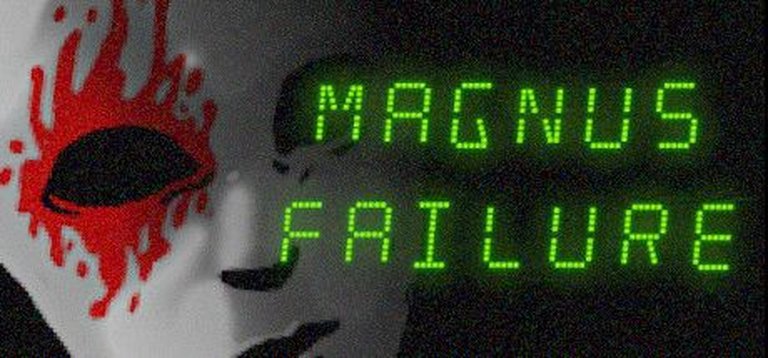
Magnus Failure is the first installment in a surreal point-and-click adventure series from Sons of Welder. Players control a helmeted radio operator navigating a bleak post-apocalyptic fantasy landscape while unraveling a mysterious signal through escape-style puzzles. Presented with 2D isometric visuals and a first-person perspective, this atmospheric yet perplexing game offers under an hour of survival-themed gameplay, blending confounding narrative elements with offbeat aesthetics that set the stage for its sequel.
Gameplay Videos
Where to Buy Magnus Failure
Magnus Failure Guides & Walkthroughs
Magnus Failure Reviews & Reception
metacritic.com : Magnus Failure has an interesting setting with a fairly decent little set of partly illogical puzzles to solve, but really not much more than that.
adventuregamers.com : Magnus Failure is not quite as good as its sequel.
Magnus Failure: A Cryptic Journey Through Isolation and Absurdity
Introduction
In the crowded landscape of indie puzzle-adventures, Magnus Failure (2021) stands out not for its polish or clarity, but for its unapologetic embrace of the surreal. Developed by the obscure Polish studio Sons of Welder, this isometric exploration game—part of the loosely connected Magnus tetralogy—asks players to navigate a desolate world filled with bees, cryptic radio signals, and a protagonist clad in a welding mask. While critics dismissed it as a jumble of half-baked ideas, Magnus Failure has garnered a cult following among players drawn to its eerie atmosphere and experimental design. This review argues that the game is a fascinating failure: a disjointed but oddly compelling artifact of indie ambition constrained by puzzling design choices and narrative opacity.
Development History & Context
Studio Vision & Constraints
Sons of Welder, a small team from Poland, positioned Magnus Failure as the first chapter in a series exploring existential themes through minimalist gameplay. The studio’s name—mirrored in the protagonist’s welding mask—hints at their industrial-artistic ethos. Built on a shoestring budget, the game’s development was shaped by technical limitations: low-poly 3D models, monochrome visuals, and a runtime of under two hours. Released in July 2021, it arrived during a boom of indie narrative games like Kentucky Route Zero, though it lacked their coherence.
The 2021 Indie Landscape
At a time when games like Inscryption and The Forgotten City redefined indie storytelling, Magnus Failure stood apart for its refusal to conform. Its fragmented structure and lack of hand-holding clashed with trends favoring accessibility, but its surreal aesthetic found kinship with cult hits like Hylics.
Narrative & Thematic Deep Dive
Plot: A Radio Signal in the Void
Players control an unnamed, masked figure stranded in a post-apocalyptic wasteland, where their only companions are a malfunctioning computer and aggressive bees. The goal—to decode a mysterious radio signal—serves as a thin pretext for meandering through barren environments. The narrative is deliberately opaque: Why does a human heart unlock a door? Why do bees attack when you misplace a key? These questions remain unanswered, leaving players to project meaning onto the absurdity.
Characters & Dialogue
The protagonist is a silent cipher, their identity obscured by a kabuki-inspired mask—a visual nod to the game’s disjointed cultural references. NPCs are nonexistent, replaced by environmental storytelling (e.g., abandoned buildings, cryptic graffiti). When the game does speak, it’s through fourth-wall-breaking chastisements (“Stop putting random objects in holes!”).
Themes: Existentialism Without Payoff
Magnus Failure gestures toward philosophical musings on isolation and purpose, but its themes are underdeveloped. The radio signal metaphor—a call for connection in a dead world—feels undercooked, and the abrupt ending offers no resolution. Comparisons to Waiting for Godot are apt, but where Beckett’s absurdity resonates, Sons of Welder’s feels accidental.
Gameplay Mechanics & Systems
Core Loop: Fetch Quests in a Wasteland
The gameplay revolves around scavenging items (keys, hearts, beeswax) to solve inventory puzzles. Solutions often defy logic: inserting a heart into a wall to power a generator, or using bees to manipulate machinery. While some puzzles satisfy, many feel arbitrary, relying on trial-and-error.
Combat & Progression
There is no combat, but the sluggish movement—especially on the Nintendo Switch—turns exploration into a chore. Character progression is nonexistent; the protagonist gains no new abilities, and the world unlocks linearly.
UI & Controls
The UI is minimalist to a fault, with no map or objective log. The Switch version’s lack of touchscreen support and clumsy button mappings drew ire.
World-Building, Art & Sound
Setting: Beautiful Desolation
The game’s stark black-and-white isometric vistas evoke a decaying industrial world, with parallax scrolling adding depth to otherwise static environments. Yet the world feels hollow: vast regions contain nothing but empty fields, undermining the sense of discovery.
Visual Style: Kabuki Meets Post-Apocalypse
The protagonist’s mask—an eerie fusion of welding gear and Japanese theater—epitomizes the game’s disjointed aesthetic. While interiors are richly detailed (e.g., crumbling laboratories), the monochrome palette grows monotonous.
Sound Design: Haunting Repetition
The ambient soundtrack, heavy on droning synths and dissonant piano, complements the bleak atmosphere. However, recycled tracks from the sequel (Magnus Imago) suggest budgetary constraints.
Reception & Legacy
Critical Panning, Cult Adoration
Magnus Failure bombed with critics, earning a 36% aggregate score. Reviewers lambasted its “confounding” story and “illogical puzzles” (Adventure Gamers), while the Switch port’s “awkward controls” cemented its reputation as a misfire (eShopper Reviews). Yet Steam users praised its “dreamlike weirdness,” awarding it a “Mostly Positive” rating.
Influence on the Magnus Series
Though far from a commercial hit, Magnus Failure laid groundwork for its sequels—Magnus Imago (2022) and Magnus Positive Phototaxis (2022)—which refined its puzzle design while doubling down on surrealism. Its legacy is that of a flawed but daring experiment, inspiring niche titles like World of Horror.
Conclusion
Magnus Failure is a game at war with itself. Its ambition to meld existential themes with escape-room puzzles is undercut by rushed execution and a disregard for player patience. Yet for all its flaws, it lingers in the memory—a testament to the power of mood over coherence. While it’s hard to recommend to all but the most patient fans of avant-garde indie games, Magnus Failure deserves recognition as a curious footnote in gaming history: a bold misfire that dares players to find meaning in the meaningless.
Final Verdict: A 4/10 experience with 8/10 atmosphere. Approach only if you enjoy unraveling enigmas—or laughing at their unraveling.