
- Release Year: 2013
- Platforms: Windows
- Publisher: Excalibur Publishing Limited
- Developer: Unikron Software Ltd
- Genre: Simulation
- Perspective: 1st-person
- Game Mode: Single-player
- Gameplay: Mission-based, Search and Rescue, Time-based, Vehicular
- Setting: Park, Wilderness
- Average Score: 20/100
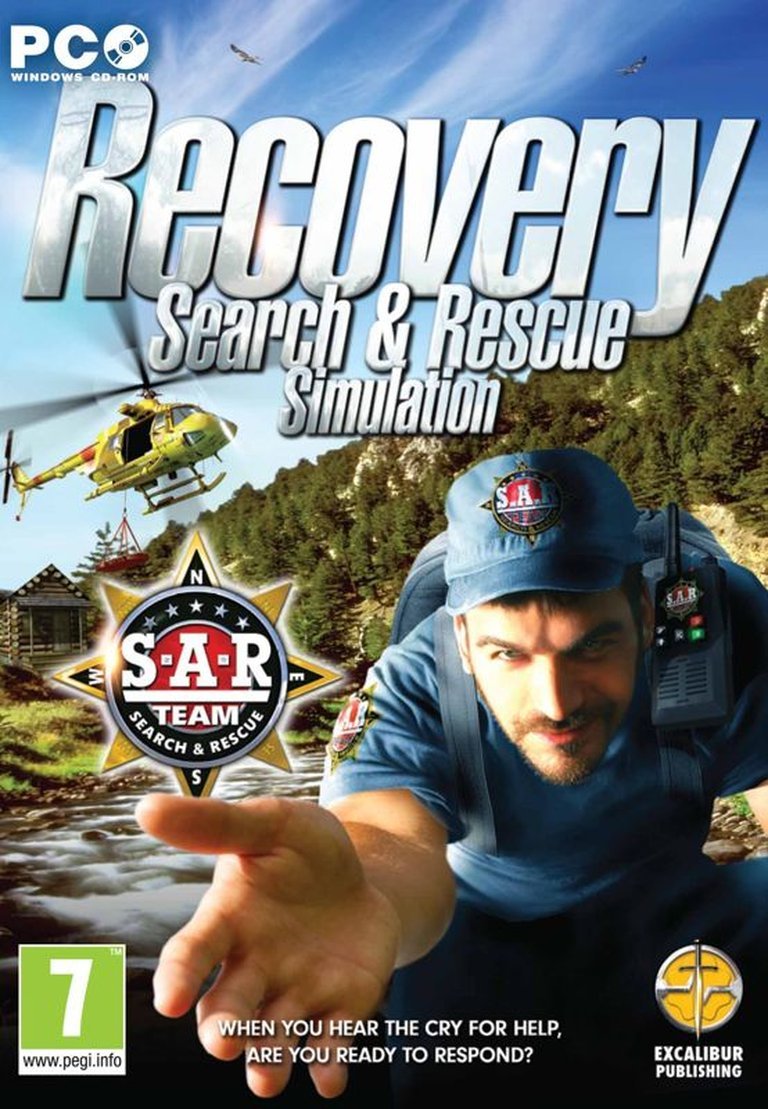
Description
Recovery Search & Rescue Simulation is a single-player, mission-based game set in a wilderness park. Players take on the role of a park ranger, starting as a trainee and progressing to more complex missions as they advance. The game features three difficulty levels and over fifty missions, ranging from finding lost items to rescuing injured hikers and capturing escaped snakes. Players navigate the park on foot, by bike, or via helicopter calls, with missions timed and some taking place at night.
Gameplay Videos
Where to Buy Recovery Search & Rescue Simulation
PC
Recovery Search & Rescue Simulation Cracks & Fixes
Recovery Search & Rescue Simulation Guides & Walkthroughs
Recovery Search & Rescue Simulation Reviews & Reception
metacritic.com (25/100): Recovery: Search and Rescue has absolutely no redeeming qualities.
Recovery Search & Rescue Simulation Cheats & Codes
PC
While playing the game, press [Shift] + C to display the console window. Then, type one of the following codes and press [Enter] to activate the corresponding cheat function. Press [Esc] to close the console window.
| Code | Effect |
|---|---|
| givemoney | +10.000 Euro |
| lessmoney | -10.000 Euro |
Recovery Search & Rescue Simulation: A Wilderness of Missed Opportunities
Introduction
In the vast ecosystem of simulation games, Recovery Search & Rescue Simulation (2013) stands as a peculiar specimen—a low-budget attempt to gamify park ranger duties that garnered infamy for its janky execution and baffling design choices. Developed by Unikron Software and published by Excalibur Publishing, this title promised players the thrill of wilderness rescue operations but delivered an experience that critics and players alike branded as one of the worst games of 2014. This review unpacks its troubled development, skeletal mechanics, and enduring legacy as a cautionary tale in the simulation genre.
Development History & Context
Studio Vision & Constraints
Unikron Software, a lesser-known UK studio, aimed to capitalize on the rising demand for niche simulation games in the early 2010s. Built using Unity—a then-burgeoning engine favored for its accessibility—Recovery Search & Rescue Simulation was constrained by its limited budget, evident in its rudimentary visuals and systems. Excalibur Publishing, known for utilitarian titles like Oil Recovery (1982), positioned the game as part of their “Emergency Services” range, targeting enthusiasts of procedural realism over polish.
The 2013 Gaming Landscape
The game launched into a market saturated with indie experiments and AAA blockbusters. While contemporaries like Euro Truck Simulator 2 (2012) refined the “mundane task as gameplay” formula, Recovery’s lack of depth and technical flaws left it stranded in obscurity. Its November 2013 release date, just ahead of the Steam Winter Sale, buried it under more competitive offerings.
Narrative & Thematic Deep Dive
Paper-Thin Plot & Characters
Players assume the role of a trainee park ranger ascending to full rescue duties across 50 missions. Early tasks involve retrieving tourist litter or a boy’s lost cap; later missions escalate to locating crashed planes and venomous snakes. Dialogue is minimal, with radio commands from a disembodied “Ranger Chief” serving as the only narrative thread.
Themes: Responsibility vs. Absurdity
The game attempts to explore themes of duty and environmental stewardship, but its tone veers into unintentional surrealism. One mission tasks players with finding an antique pocket watch in a tar pit, while another involves rescuing a journalist who “wanted adventure.” The lack of storytelling cohesion transforms earnest scenarios into comedic vignettes.
Gameplay Mechanics & Systems
Core Loop: Seek, Click, Repeat
The gameplay revolves around walking or biking (via the clunky S.A.R. bike) across a sprawling park to locate items or people. Missions are timed, with night operations requiring a flashlight or night-vision goggles. Finding injured hikers triggers a helicopter evacuation—a mechanic stripped of interactivity, as players cannot pilot the chopper.
Innovation vs. Frustration
The inclusion of a mission editor hinted at creative potential, allowing players to design custom scenarios. However, Excalibur’s defunct download portal (archived but non-functional) rendered this feature moot. User reviews lambasted the controls—keyboard movement paired with mouse-based camera pivots—as “floaty” and unresponsive. Collision detection flaws, such as bikes cliping through terrain, compounded the frustration.
UI/UX: Functional but Dated
The interface is a relic of early-2010s design: a minimal HUD with a compass, mission timer, and item log. While functional, it lacks accessibility options or tutorials, leaving players to stumble through unclear objectives.
World-Building, Art & Sound
Aesthetic: Low-Poly Limbo
The wilderness park is a drab expanse of repeated tree assets, rocky outcrops, and placeholder structures like forts and statues. Textures are muddy, and lighting—even after post-launch “improvements”—fails to convey atmosphere. Night missions, ostensibly tense, become an exercise in squinting at poorly rendered shadows.
Sound Design: A Symphony of Silence
Mike Hambly’s audio work—sparse ambient noises and generic radio static—adds little immersion. The lack of voice acting or dynamic music leaves the world feeling sterile.
Reception & Legacy
Critical & Commercial Reception
The game flopped spectacularly:
– Steam reviews sit at 12% positive, with players calling it “the worst game of 2014” (Steam user 211Nickey).
– Metacritic users scored it 2.5/10, citing broken systems and “no redeeming qualities” (Game Revolution).
– Even bargain-bin pricing (now ~$0.08 on key sites) couldn’t salvage its reputation.
Cultural Impact
Recovery became a punchline in gaming circles. Streamers like Phil Kollar turned its glitches into absurdist horror lore, crafting fan theories about eldritch park entities and a “Veil” dimension. This unintended cult status underscores how even flawed games can inspire creativity—albeit unintentionally.
Conclusion
Recovery Search & Rescue Simulation is less a game than a museum piece of developmental missteps. Its ambition to simulate ranger heroism is admirable, but shackled by technical ineptitude and a lack of vision. While its mission editor hinted at player-driven storytelling, the execution stranded it in a no-man’s-land between “so bad it’s good” and “unplayable.” For historians, it’s a case study in how not to design a simulation; for players, it’s a curious relic best experienced through ironic Let’s Plays. In the annals of video game history, Recovery remains a cautionary campfire tale—a reminder that even the wildest ideas need competent execution to survive.