
- Release Year: 2008
- Platforms: Windows
- Publisher: blurredVision
- Developer: blurredVision
- Genre: Action, Puzzle
- Perspective: 3rd-person (Other)
- Gameplay: Action, Level Design, Puzzle-solving, User-generated Content
- Average Score: 77/100
Description
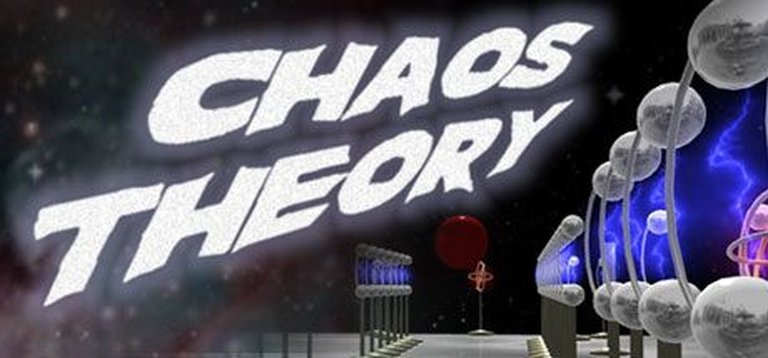
Chaos Theory is a 2008 action-puzzle game developed by blurredVision, offering a third-person perspective with a blend of strategic gameplay and dynamic challenges. Players engage in missions that require both quick reflexes and thoughtful planning, set in a modern, abstract environment. The game includes a built-in level editor allowing players to create and share custom missions, enhancing replayability and community-driven content.
Where to Buy Chaos Theory
PC
Chaos Theory Free Download
Chaos Theory Cracks & Fixes
Chaos Theory Patches & Updates
Chaos Theory Guides & Walkthroughs
Chaos Theory Reviews & Reception
metacritic.com (67/100): A slightly alienating, yet eventually rewarding, game that lets you create your own levels.
gamesradar.com : Manages to get under your skin
mobygames.com (84/100): Chaos Theory had many ups for me, including graphics, storyline, audio, and action.
steambase.io (93/100): Tom Clancy’s Splinter Cell Chaos Theory® has achieved a Steambase Player Score of 93 / 100.
ign.com (65/100): A casual game that does not involve lining up three of a kind.
Chaos Theory Cheats & Codes
PC
Edit the profile’s .ini file in the ‘Application Data/Ubisoft/Tom Clancy’s Splinter Cell Chaos Theory/profiles’ folder. Bind commands to function keys (e.g., F2=Invisible 1).
| Code | Effect |
|---|---|
| Invisible 1 | Invisibility to NPCs |
| Invincible 1 | God Mode |
| ammo | Gives ammunition |
| fly | Flight mode |
| walk | Disables flight/ghost mode |
| playersonly | Freezes enemies |
| health | Restores health |
| killpawns | Kills all enemies |
| ghost | No clipping mode (phase through walls) |
| freecam | Detaches camera from Sam |
| fixecam | Locks camera in place |
| disablehud | Disables HUD elements |
| summon echeloningredient.eflashbang | Spawns flashbang |
| summon echeloningredient.efraggrenade | Spawns frag grenade |
| summon echeloningredient.esmokegrenade | Spawns smoke grenade |
| summon echeloningredient.estickycamera | Spawns sticky camera |
| summon echeloningredient.estickyshocker | Spawns sticky shocker |
| summon echeloningredient.ewallmine | Spawns wall mine |
N-Gage
Hold specific buttons at the profile screen.
| Code | Effect |
|---|---|
| Hold Right + 0 then press 5 | Unlocks all content for the selected profile |
PlayStation 2
Enter button codes at the main menu or during gameplay.
| Code | Effect |
|---|---|
| R2, Circle, Circle, Circle, Circle, Circle, Square | Unlocks Chaos Theory Team Picture |
| playersonly | Freezes all non-player movement |
GameCube
Hold buttons in the Solo/Co-Op menu.
| Code | Effect |
|---|---|
| Hold L + R triggers, press X 5 times, then Y 5 times | Unlocks all levels |
Xbox
Create a new profile with the specified name.
| Code | Effect |
|---|---|
| Profile Name: COOPA22COOL | Unlocks all levels without completing the game |
Chaos Theory: Stealth Perfected – A Masterclass in Tactical Espionage
Introduction
In the pantheon of stealth games, Tom Clancy’s Splinter Cell: Chaos Theory stands as a towering achievement. Released in 2005 by Ubisoft Montreal, this third installment in the Splinter Cell series refined its predecessors’ vision into a near-flawless symphony of shadow, sound, and systemic ingenuity. With its brooding narrative, revolutionary AI, and atmospheric design, Chaos Theory didn’t just iterate—it defined a genre. This review explores how Ubisoft’s technical prowess and artistic ambition forged a game that remains a benchmark for tactical espionage, 20 years after its release.
Development History & Context
The Studio & Vision
Ubisoft Montreal, fresh off 2004’s Pandora Tomorrow, aimed to create a darker, more immersive stealth experience. Directed by Clint Hocking (Far Cry 2), Chaos Theory sought to address fan criticisms—rigid mission structures, binary stealth failure states—while pushing technological boundaries. The studio’s goal: a dynamic, reactive world where players could “make their own luck” through improvisation.
Technological Ambitions
Built on Unreal Engine 2.5, Chaos Theory introduced normal mapping, HDR lighting, and ragdoll physics, advancements that elevated realism. Water rippled dynamically; Sam’s suit grew wet in rain; lights shattered with refractive precision. The AI overhaul allowed guards to collaborate—flanking, using cover, and reacting to environmental changes (e.g., cut wires, moved bodies). These innovations demanded a $10M budget matched by an equal marketing spend, a gamble for a franchise transitioning from niche to mainstream.
The 2005 Landscape
In an era dominated by Resident Evil 4 and God of War, Chaos Theory carved its niche with cerebral gameplay. Its March 2005 release capitalized on Xbox’s Live ecosystem, emphasizing cooperative and competitive multiplayer—a rarity for stealth titles. Controversially banned in South Korea until 2007 for depicting North-South conflict, the game’s geopolitical themes mirrored post-9/11 anxieties about cyber warfare and PMCs.
Narrative & Thematic Deep Dive
Plot: Fractured Alliances
Set in 2007, Chaos Theory follows Sam Fisher as he unravels a conspiracy involving the Masse Kernels—weaponized algorithms developed by the late Phillip Masse (assassinated by Sam in the original Splinter Cell). When Peru’s revolutionary leader Hugo Lacerda tortures programmer Bruce Morgenholt to extract the Kernels, Sam’s mission spirals into a global crisis. False-flag attacks frame North Korea for sinking the USS Clarence E. Walsh, igniting a peninsular war, while Sam’s friend-turned-antagonist Douglas Shetland (leader of PMC Displace International) orchestrates chaos to profit from global destabilization.
Characters & Dialogue
Michael Ironside’s Sam Fisher is career-best: grizzled, wry (“Thanks. I’ve always found it hard to count past 3”), and morally conflicted. The script smartly subverts spy tropes—Shetland’s betrayal isn’t mustache-twirling evil but disillusionment (“We have to tear it all down and start over”). Supporting cast like Anna Grímsdóttir (Claudia Besso) and Irving Lambert (Don Jordan) ground the high-stakes technobabble with human urgency.
Themes: Chaos as Catalyst
The game explores information warfare’s terrifying potential—algorithms blackout cities, hijack missiles—and questions loyalty in a privatized military world. Shetland’s “Chaos Theory” speech argues systemic rot justifies apocalyptic reset, mirroring post-Iraq War cynicism. Meanwhile, Admiral Otomo’s fascistic I-SDF critiques Japan’s remilitarization fears. The story’s pessimism culminates in a UN courtroom epilogue where heroes remain nameless, underscoring espionage’s moral cost.
Gameplay Mechanics & Systems
Core Stealth Loop
Chaos Theory perfected the “light and sound” duality. A noise meter measures Sam’s footsteps against ambient din, while guards now escalate alertness—scattering flares, donning helmets, and sealing doors—if players trigger alarms. Unlike prior games, alarms no longer cause instant failure, rewarding adaptability.
Tools & Combat
- The Combat Knife: Enabled lethal/non-lethal takedowns, lock-picking, and intimidation.
- SC-20K Modular Rifle: Attachable shotgun, sniper barrel, or non-lethal launcher firing Sticky Shockers and Gas Grenades.
- OCP Prototype: A pistol gadget that temporarily disabled electronics, revolutionizing systemic play (e.g., frying cameras to create distractions).
Mission Design & Progression
Missions featured branching paths and optional objectives (e.g., stealing bonds during the Panama bank heist). The post-mission scoring system graded players on stealth, lethality, and exploration—a proto-“Stylish” rank echoing later titles like Dishonored. Difficulty levels altered detection speed and objective complexity, with Expert stripping radar and mandating perfect stealth.
Multiplayer Innovations
- Co-op Campaign: Two-player infiltration across seven missions (e.g., defusing bombs in a North Korean chemical plant), requiring synchronized actions like double-door breaches.
- Spies vs. Mercs: Asymmetric PvP where Spies (stealth, gadgets) hunted Mercs (FPS gunplay). Maps like Aquarius and Museum became classics, fostering a cult competitive scene.
World-Building, Art & Sound
Visual Design
From Peru’s storm-lashed cliffs to Tokyo’s neon-drenched bathhouse, levels blended cinematic spectacle with environmental storytelling. The Kokubo Sosho mission—a submerged server farm—used oppressive blue hues and claustrophobic corridors to amplify tension. Character models showcased Xbox’s power: facial animations conveyed fear during interrogations, while interactive lighting let players shoot bulbs to manipulate guard paths.
Amon Tobin’s Soundtrack
Jazz-infused breakbeats fused with glitchy electronics to create an unnerving auditory palette. Tracks like “Theme from Battery” used sampled metallic groans and sub-bass to mirror Sam’s isolation. Contextual scoring adjusted dynamically—sneaking triggered minimalist drones, while combat erupted into frenzied percussion. Jesper Kyd’s cinematic cuts (e.g., “Otomo’s End”) capped key moments with tragic grandeur.
Atmosphere & Immersion
Ambient dialogue deepened worldbuilding: Guards debated Prince of Persia (“It’s Game of the Year!”), while news reports detailed a concurrent Kesshin band scandal. The Seoul level’s war-torn streets—void of music, filled with drone strikes and distant gunfire—remain a masterclass in horror vacui sound design.
Reception & Legacy
Critical & Commercial Impact
Lauded as “universal acclaim” (Metacritic: 94/100 on Xbox), Chaos Theory sold 2.5 million copies in one month. Official Xbox Magazine awarded it a rare 9.9/10, praising its “lifelike graphics” and emergent gameplay. The PC version’s modding community birthed custom maps, while console players embraced downloadable co-op missions—a trailblazing feature in 2005.
Influence on the Genre
The game’s systemic DNA infected later greats:
– Metal Gear Solid V: The Phantom Pain’s reactive AI.
– Hitman’s non-linear assassination sandboxes.
– Dishonored’s chaos-driven narratives.
Even indies like Intravenous homage its light/shadow mechanics.
Modern Reappraisal
Though overshadowed by Conviction’s mainstream pivot, Chaos Theory’s reputation has aged like wine. 2010’s Splinter Cell Trilogy HD reintroduced it to new audiences, while the 2024 Chaos Theory 4K60 fps fan patch underscores its enduring allure.
Conclusion
Tom Clancy’s Splinter Cell: Chaos Theory remains the apex predator of stealth games—a title that married narrative ambition, mechanical depth, and artistic confidence. Its shadow-drenched corridors and philosophical stakes remind us that true innovation isn’t just about technology, but how systems speak to theme. While later entries chased trends, Chaos Theory stands defiant: a monument to when espionage games trusted players to think, adapt, and vanish into the night. Two decades on, its silence still resonates.
Final Verdict: A masterpiece of the stealth genre, essential for its technical audacity and unmatched atmosphere. 100% stealth rating—no alarms triggered.