
- Release Year: 2019
- Platforms: Nintendo Switch, Windows
- Publisher: Flyhigh Works Co., Ltd.
- Developer: Esquadra, Inc., Marumittu
- Genre: Action, Strategy, Tactics
- Perspective: Side view
- Game Mode: Single-player
- Gameplay: Arcade, Direct control, Platform, Point and select, Puzzle, Space flight, Vehicular
- Setting: Fantasy, Futuristic, Sci-fi
- Average Score: 76/100
Description
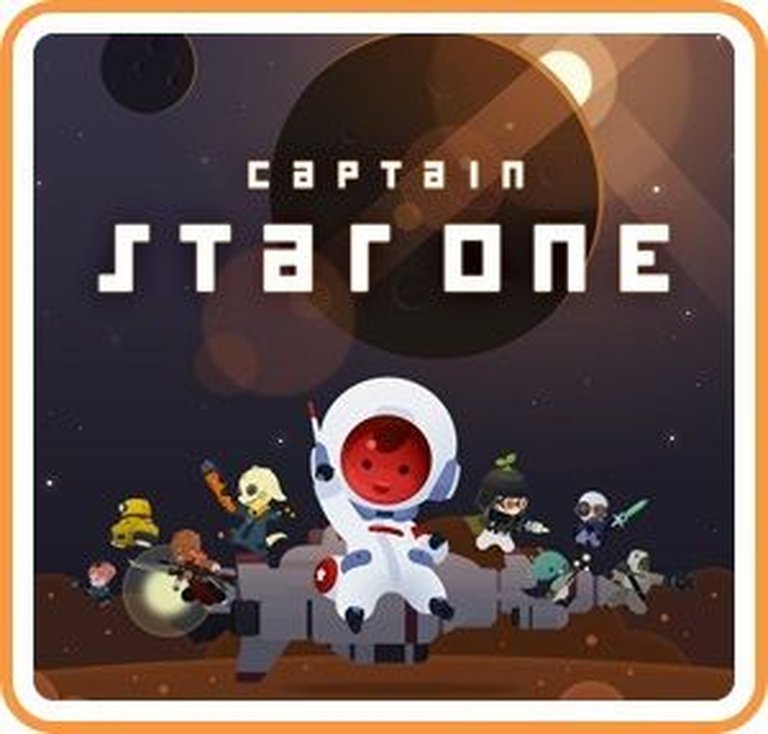
Captain StarONE is a sci-fi/fantasy action-strategy game where players assume the role of a space hero leading an adorable crew against cosmic threats. Blending idle mechanics with tactical intervention, the game lets you pre-plan attack combos and crew formations before watching battles unfold. Set in a whimsical space setting, it emphasizes strategic team management, timely manual inputs to boost attacks, and equipment upgrades as players progress through increasingly challenging monster encounters. Released in 2019 for Nintendo Switch and later for PC, the title offers 2D side-scrolling gameplay with arcade and puzzle elements in a family-friendly package.
Gameplay Videos
Where to Buy Captain StarONE
Captain StarONE Guides & Walkthroughs
Captain StarONE Reviews & Reception
jpswitchmania.com : This game is easy grinding at its finest.
steambase.io (93/100): CAPTAIN STARONE has earned a Player Score of 93 / 100.
eshopperreviews.com (60/100): At its usual $10 price, this game is far too expensive for what’s on offer.
Captain StarONE: Review
Introduction
In the vast cosmos of indie gaming, Captain StarONE orbits as a peculiar anomaly—a family-friendly idle-action hybrid that promised “strategic inaction” but left players divided over its execution. Developed by Esquadra, Inc. and Marumittu, and published by Flyhigh Works in 2019, this Nintendo Switch (and later PC) title dared to redefine grinding as a semi-automated spectacle. Yet, beneath its colorful, cartoonish facade lies a stark lesson in design ambition versus player expectancy. This review dissects its legacy as a cautionary tale of innovation hamstrung by repetition and pricing missteps.
Development History & Context
Studio Vision & Era Constraints
Marumittu and Esquadra, Inc. envisioned Captain StarONE as a whimsical blend of idle mechanics and light strategy, targeting casual gamers seeking low-commitment play. Originally released as Tap! Captain Star on mobile in 2019, its Switch/PC ports aimed to capitalize on the “play anywhere” ethos of the era. Built in Unity, the game leveraged the engine’s 2D flexibility but faced constraints in scaling complexity due to budget limitations. Notably, 2019’s crowded indie landscape—defined by gems like Untitled Goose Game—amplified pressure to stand out.
The Idle Game Boom
Captain StarONE emerged during a surge in idle/clicker titles (AdVenture Capitalist, Cookie Clicker), yet its “automated grinding” pitch clashed with Nintendo’s core audience, who often expect hands-on engagement. Flyhigh Works’ decision to port a mobile-centric experience to consoles at a premium ($9.99 vs. free-to-play mobile norms) reflected a misread of market expectations—a flaw that haunted its reception.
Narrative & Thematic Deep Dive
Plot & Characters: Minimalism as a Double-Edged Sword
The game casts players as Captain StarONE, a cutesy hero defending the galaxy from endless alien waves with a crew of equally charming, personality-lite companions. Dialogue is virtually nonexistent; narrative depth is sacrificed for modular gameplay. Thematically, it echoes Saturday-morning cartoons—bravery, teamwork, and humor—but lacks subtext or emotional stakes.
The “Inaction” Paradox
Its central theme—”blending action and inaction”—becomes a ironic metaphor for player engagement. While promoting strategic delegation, the absence of narrative progression or character arcs reduces the crew to lifeless automata, mirroring the player’s own detachment.
Gameplay Mechanics & Systems
Core Loop: Automation vs. Agency
Gameplay revolves around three pillars:
1. Idle Combat: Crew members auto-attack aliens while players occasionally intervene to reposition them or activate combos.
2. Upgrade Economy: Earn minerals to enhance ship weapons, crew stats, and unlock “Capsules” (temporary buffs like +ATK for 60 minutes).
3. Combo Chaining: Use the D-pad to trigger synchronized attacks, though timing feels inconsequential against the game’s forgiving balance.
Innovations Flaws
– Crew Positioning: Strategic placement boosts relationship meters between characters, granting bonuses—but this devolves into mechanical clustering rather than meaningful tactics.
– UI Clutter: Side menus overwhelm the screen, disrupting flow in handheld mode (a cardinal sin for a portable-first design).
– Absence of Stakes: Enemies never retaliate or threaten crew permadeath, reducing tension to a monotonous loot parade.
As critic Bradford Ekstrom noted, “[It’s] insanity—doing the same things expecting different results.”
World-Building, Art & Sound
Visual Charm, Recycled Content
The 2D art style bursts with vibrancy—think Steven Universe meets Galaga—with chibi aliens and lush, albeit repetitive, space backdrops. However, enemy diversity is scant; palette-swapped foes and looped environments (e.g., asteroid fields, neon nebulae) betray budgetary constraints.
Sound Design: A Symphony of Repetition
The soundtrack’s upbeat synth melodies initially charm but devolve into maddening loops of 15-second tracks. Sound effects—laser blasts, mineral collections, UFO appearances—are serviceable yet relentless. Steam user reviews praised the “comedy” tone, but Switch critics lamented its role in sensory fatigue.
Reception & Legacy
Launch & Evolution of a Divisive Reputation
– Critical Panning: MobyGames aggregated a 42% score from critics, citing repetitive design and overpricing. eShopper Reviews (C-) called it “too expensive for an idle game,” while JP Switchmania (5/10) roasted its “definition of insanity.”
– Player Resilience: Despite this, Steam users rated it 90% positive (10 reviews)—a testament to its niche appeal among idle genre loyalists.
– Legacy: Captain StarONE influenced few successors but remains a case study in porting mobile games to consoles. Its failure to justify a premium price tag underscored industry skepticism toward “low-effort” adaptations.
Conclusion
Captain StarONE is a cosmic paradox: an audacious experiment in passive play that collapses under the weight of its own minimalism. While its cheerful art and novel crew-management hooks offer fleeting joy, the absence of challenge, narrative, and content variety stranded it as a $10 curio rather than a genre pioneer. For idle-game aficionados, it’s a quaint time-passer on sale; for others, a grating reminder that not all stars deserve a solo voyage. In video game history, it orbits as a footnote—a lesson in balancing innovation with execution.