
- Release Year: 2020
- Platforms: PlayStation 4, Windows
- Publisher: Yash Future Tech Solutions Pvt Ltd
- Developer: Yash Future Tech Solutions Pvt Ltd
- Genre: Action
- Perspective: 1st-person
- Game Mode: Single-player
- Gameplay: Direct control, Motion control, Survival horror
- Setting: Fantasy
- Average Score: 46/100
- VR Support: Yes
Description
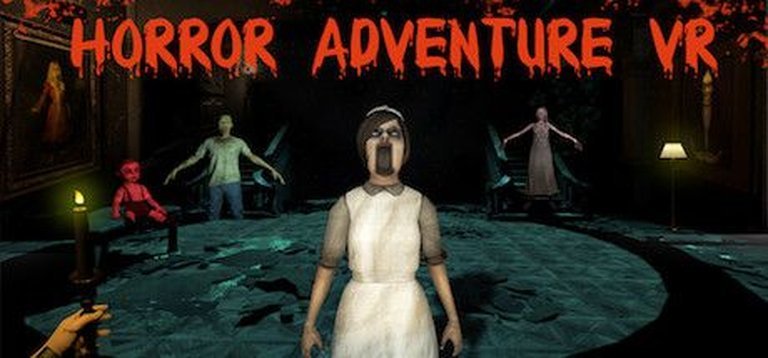
Horror Adventure VR is an immersive, first-person survival horror experience set in a procedurally generated haunted house. Players take on the role of a paranormal investigator, exploring an old abandoned manor filled with random locations and scares. The game features direct and motion control interfaces, allowing players to interact with basic items and limited tools as they unravel the mysteries of the manor.
Where to Buy Horror Adventure VR
PC
Horror Adventure VR Reviews & Reception
steambase.io (50/100): This score is calculated from 22 total reviews which give it a rating of Mixed.
store.steampowered.com (50/100): All Reviews: Mixed (18) – 50% of the 18 user reviews for this game are positive.
metacritic.com (38/100): User Score Generally Unfavorable Based on 8 User Ratings 3.8 38% Positive 3 Ratings 63% Negative 5 Ratings
Horror Adventure VR: A Flawed Descent into Virtual Terror
Introduction
In the overcrowded crypt of VR horror experiences, Horror Adventure VR (2020) lurks as a curious artifact—a low-budget experiment dripping with ambition but shackled by technical limitations. Developed by the under-the-radar Indian studio Yash Future Tech Solutions Pvt Ltd, this procedural haunted-house simulator aimed to capitalize on the era’s VR boom, promising endless scares through dynamically generated terrors. While it succeeds as a proof-of-concept for VR’s visceral power, its legacy is one of missed potential. This review dissects its fractured anatomy: a game that terrifies despite itself, a flawed but fascinating milestone in indie VR horror.
Development History & Context
Studio Background & Vision
Yash Future Tech Solutions, a Pune-based developer with a portfolio of mobile and budget titles (Fast Gear, Snowboard Legends), ventured into VR with Horror Adventure VR—a stark departure from their usual fare. Their goal was simple: create an accessible, replayable horror experience leveraging Unity Engine’s affordability and VR’s immersion. In 2020, the gaming landscape was ripe for such experiments. The PlayStation VR2 was on the horizon, and indie studios like SadSquare Studio (Visage) had proven that small teams could evoke dread through clever design.
Technological Constraints
The game’s procedural generation—a selling point—was both its innovation and Achilles’ heel. Generating randomized rooms and enemy placements required lightweight assets, resulting in repetitive environments and robotic NPC animations. Motion controls, while functional, lacked the polish of contemporaries like Phasmophobia, often leading to janky interactions. The studio’s inexperience with VR optimization manifested in frame rate drops and texture pop-ins, even on recommended specs (GTX 1080).
Narrative & Thematic Deep Dive
Plot & Structure
Players assume the role of Alex, a paranormal investigator searching for missing friends in a procedurally generated manor. The narrative is threadbare, conveyed through environmental snippets: cryptic notes, flickering TVs, and the occasional ghostly whisper. Each playthrough reshuffles key scares—a woman on a ceiling fan, a demonic figure in a hallway—but the lack of a cohesive story undermines the tension. Unlike Silent Hill 2’s psychological depth, Horror Adventure VR relies on jump scares and primal fear.
Themes & Symbolism
The game’s themes revolve around isolation and the unknown. The manor, with its endlessly shifting layout, becomes a metaphor for fractured sanity. Yet, its procedural nature limits symbolic cohesion: a painting of a bleeding eye in one run might vanish in the next, diluting thematic impact. The demons—generic floating specters and zombies—lack the cultural specificity of Pamali’s Indonesian folklore or Fatal Frame’s vengeful spirits.
Gameplay Mechanics & Systems
Core Loop & Interaction
The gameplay hinges on exploration, light puzzle-solving, and surviving scripted encounters. Players wield a flashlight and limited tools (keys, health packs), but combat is nonexistent—a deliberate choice that amplifies vulnerability. VR interactions, like opening drawers or flipping light switches, are immersive but inconsistently responsive. One Steam reviewer noted falling through the floor after opening a door, a glitch emblematic of the game’s instability.
Procedural Generation
The “random house” algorithm shuffles room layouts, item placements, and enemy spawns. While this boosts replayability, the pool of assets is shallow. Players quickly recognize reused props (the same grandfather clock appears in every hallway), breaking immersion. The titular “demonic entities” also suffer from repetition, with only four distinct enemy types documented by players.
UI & Accessibility
The UI is minimalistic, with a wrist-mounted inventory reminiscent of Half-Life: Alyx. However, the lack of subtitles for non-English dialogue (despite supporting 10 languages) and no comfort options for VR newcomers are glaring oversights.
World-Building, Art & Sound
Visual Design
Horror Adventure VR’s aesthetic is a mixed bag. The manor’s decrepit walls and flickering lights achieve a baseline eeriness, but low-res textures and flat lighting betray its budget. Standout moments—like a hallway drenched in crimson light—are overshadowed by jarring asset clashes (e.g., photorealistic furniture alongside cartoonish blood splatters).
Sound Design
The audio is the game’s strongest asset. Spatial audio cues—distant footsteps, disembodied whispers—are expertly implemented, forcing players to physically turn their heads in VR. The soundtrack, a dissonant mix of ambient drones and sudden stingers, elevates even the most predictable scares. A Redditor praised the sound design as “the only reason I kept playing after the third crash.”
Reception & Legacy
Launch & Critiques
Upon release, Horror Adventure VR garnered mixed reviews (50% positive on Steam, 3.8/10 on Metacritic). Critics applauded its VR immersion and sound design but lambasted its bugs and lack of polish. YouTube reviewer FastLawyer encapsulated the consensus: “A diamond in the rough—if you can tolerate the rough.”
Cultural Impact
While not a genre-redefining title like Amnesia: The Dark Descent, it demonstrated the potential of procedural horror in VR. Its approach to randomization influenced later indie titles like The Backrooms Simulator, and its $0.99 price point made it a curious footnote in VR’s democratization.
Conclusion
Horror Adventure VR is a paradoxical creation: a game that terrifies not through mastery of craft, but through VR’s innate ability to amplify even haphazard scares. For all its glitches and repetitions, it offers moments of genuine dread—a flicker of brilliance in a poorly optimized shell. Its place in history is secure as a cautionary tale and a testament to VR’s raw power. For hardcore horror fans with sturdy VR legs and low expectations, it’s worth a brief, shuddering visit. For others, it remains a curiosity—a ghostly echo of what might have been.
Final Verdict: A flawed but fascinating experiment, Horror Adventure VR is best experienced as a museum piece—a glimpse into indie VR’s growing pains.