
- Release Year: 2006
- Platforms: Windows
- Genre: Strategy, Tactics
- Perspective: Top-down
- Game Mode: MMO, Online Co-op, Single-player
- Gameplay: Army management, Base building, Persistent Ranking, Resource Management
- Setting: Futuristic, Sci-fi
- Average Score: 70/100
Description
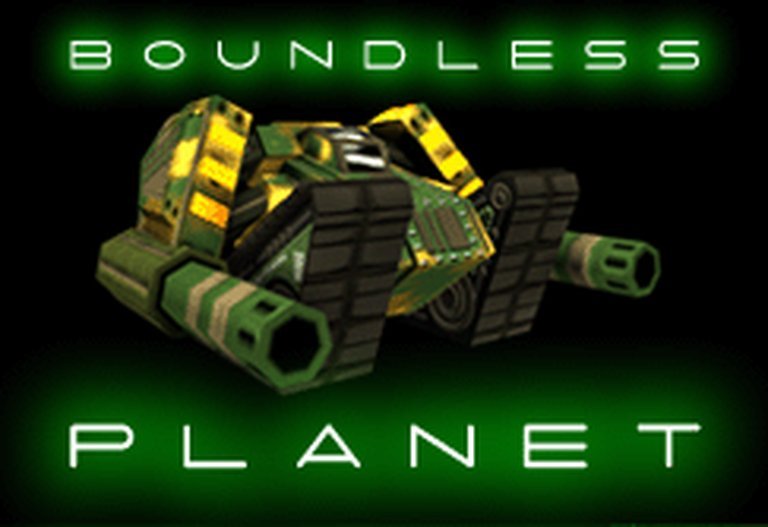
Boundless Planet is a massively multiplayer online real-time strategy game set in a vast, persistent sci-fi universe. Players can battle alone or with allies, build bases, and control resources across enormous virtual planets. The game features a persistent ranking system, on-demand deathmatch games, and a dynamic environment where players can settle resources, build armies, and compete against other empires. Each planet typically stays open for a month before a new one is introduced, allowing for continuous and evolving gameplay.
Boundless Planet Reviews & Reception
mobygames.com (80/100): A massively multiplayer online real time strategy (MMORTS) game with a high degree of persistence.
gamepressure.com (60/100): Build your cities to withstand attack, build your armies to neutralize any threat, and build your empire to inspire fear.
Boundless Planet Cheats & Codes
PC
Open your chat. Put / in front of the emote you want to use. Note: You have to put / front of all emotes.
| Code | Effect |
|---|---|
| /clap | Claps hands. |
| /slowclap | Claps slowly. |
| /facepalm | Puts you hand over your face. |
| /intimidate | Does a fake pounce towards where you are looking. |
| /laugh | Laughs. |
| /point | Points in direction of choice. |
| /salute | Taps your chest twice then puts hand up. |
| /shrug | Shrugs. |
| /sit | Sits on the ground. |
| /yes | Shakes head down and up and gives thumb up. |
| /no | Shakes head right and left then cross waves. |
| /mexicanwave | Waves both hands in the air. |
| /wave | Waves your hand. |
Boundless Planet: A Pioneering yet Forgotten Foray into the MMORTS Frontier
Introduction
In the mid-2000s, as the gaming industry teetered on the brink of the MMO boom, Boundless Planet emerged as a bold experiment—a hybrid of real-time strategy and persistent online multiplayer worlds. Developed by the enigmatic studio Boundless Planet and released in 2006, this sci-fi MMORTS dared to blend territorial conquest, factional politics, and cyclical planetary warfare into a single package. While it never achieved mainstream recognition, its ambition to merge RTS mechanics with a living, breathing multiplayer ecosystem earns it a curious footnote in gaming history. This review unpacks Boundless Planet’s triumphs, limitations, and legacy as a proto-metaverse strategy title that challenged the technological and design norms of its era.
Development History & Context
Studio and Vision
Boundless Planet, the eponymous developer, remains shrouded in mystery, with no public records of its team or prior projects. Their singular game reflects a clear vision: to create a “massively multiplayer online real-time strategy” experience where players could wage eternal wars across procedurally generated planets. At a time when World of Warcraft dominated the MMO scene and Command & Conquer ruled RTS, the studio sought to carve a niche by fusing these genres.
Technological Constraints
Built for Windows PCs, Boundless Planet operated within the limits of mid-2000s hardware. Its modest system requirements (Pentium III, 256MB RAM) prioritized accessibility over graphical fidelity, relying on a top-down perspective and functional 3D assets. The game’s shareware model—a relic of early digital distribution—allowed low barriers to entry but limited monetization potential. Persistent online worlds demanded stable internet connections, a challenge in an era of dial-up and early broadband dominance.
Gaming Landscape
2006 was a transitional year: EVE Online demonstrated the viability of persistent sandboxes, while Star Wars: Empire at War proved RTS could thrive in sci-fi settings. Boundless Planet aimed to sit at this intersection, offering a decentralized, player-driven warzone devoid of NPC factions or scripted campaigns—a risky gambit in a market still enamored with single-player narratives.
Narrative & Thematic Deep Dive
Emergent Storytelling
Unlike contemporaries with scripted lore, Boundless Planet’s narrative was wholly player-driven. The game’s description hints at a Darwinian struggle: “ravage huge areas,” “stake a network for yourself,” and “fight nearby empires” frame a universe where power is seized, not given. Players crafted their own legacies as warlords, diplomats, or scavengers, with faction alliances and betrayals forming organic plotlines.
Themes of Scarcity and Control
Resource scarcity underpinned every decision. Planets—open for roughly a month before resetting—forced players into frenetic sprints to mine materials, fortify bases, and eliminate rivals. This cyclical structure echoed themes of impermanence and greed: empires rose and fell not by destiny, but by sheer attrition. The lack of prescribed factions or morality systems placed players in a nihilistic sandbox where survival justified any means.
Gameplay Mechanics & Systems
Core Loop: Conquer, Expand, Repeat
The gameplay revolved around three pillars:
1. Resource Management: Secure renewable resources to fuel armies and structures.
2. Base Building: Erect defenses to protect assets while expanding territorial influence.
3. Combined Arms Warfare: Deploy land, air, and naval units in real-time skirmishes.
Persistent rankings tracked player dominance, incentivizing relentless aggression. Monthly planet resets ensured parity, though older worlds remained accessible as graveyards of past conflicts.
Innovations and Flaws
The game’s most daring feature was its “on-demand deathmatch” mode, allowing instant PvP matches alongside the persistent campaign. However, this bifurcation diluted focus—neither mode was fully fleshed out. Unit diversity and tech trees were rudimentary compared to Age of Empires or Starcraft, and the absence of AI enemies made solo play feel barren.
UI and Accessibility
The top-down interface prioritized functionality over elegance. Tooltips and minimaps were sparse, leaving players to rely on trial-and-error—a frustration in a game demanding precise coordination.
World-Building, Art & Sound
Aesthetic Minimalism
Boundless Planet’s sci-fi setting leaned on generic tropes: arid planets, metallic bases, and blocky unit designs. The visuals, while serviceable, lacked the polish of peers like Sins of a Solar Empire. Screenshots suggest a muted color palette, with terrain differentiating biomes through rudimentary textures rather than distinct artistry.
Sound Design
No details exist about the soundtrack or effects, but given the era’s constraints, it likely featured looped ambient tracks and basic combat noises—functional but forgettable.
Atmosphere
The true atmosphere emerged from player interactions: the tension of unseen rivals encroaching on your territory, the thrill of discovering a resource-rich zone, and the paranoia of betrayal. These social dynamics compensated for the lack of authored world-building.
Reception & Legacy
Initial Reception
The game garnered scant critical attention, with no professional reviews archived. Its MobyGames score of 4/5 (based on two user ratings) suggests modest approval, likely from niche strategy enthusiasts. Commercial performance is unrecorded, but its obscurity implies limited success.
Long-Term Influence
While Boundless Planet didn’t revolutionize the genre, it presaged trends later seen in Foxhole (persistent warfare) and Planetside 2 (territorial control). Its cyclical planet resets echoed seasonal battle passes, and its focus on emergent storytelling foreshadowed the “stories unplanned” ethos of EVE Online.
Cultural Footprint
The game’s greatest legacy is as a cautionary tale: an ambitious concept hamstrung by technological limitations and underdevelopment. Its failures likely deterred studios from pursuing MMORTS hybrids until infrastructure and design philosophies matured.
Conclusion
Boundless Planet is a fascinating relic—a game that dared to marry RTS precision with MMO scale before either genre was ready for the union. Its lack of polish and narrative depth left it overshadowed, yet its core ideas resonate in today’s live-service landscape. For historians, it offers a glimpse into an alternate gaming timeline where persistence and player agency were prioritized over spectacle. While not a masterpiece, it deserves recognition as a flawed but visionary stepping stone in the evolution of online strategy games.
Final Verdict: A noble experiment best remembered for its ambition, Boundless Planet is a cult classic waiting to be rediscovered—if only as a museum piece of what might have been.