
- Release Year: 2020
- Platforms: Windows
- Publisher: Double Leaf Team, NVLMaker
- Developer: Double Leaf Team
- Genre: Adventure
- Perspective: 3rd-person
- Game Mode: Single-player
- Gameplay: Visual novel
- Average Score: 96/100
Description
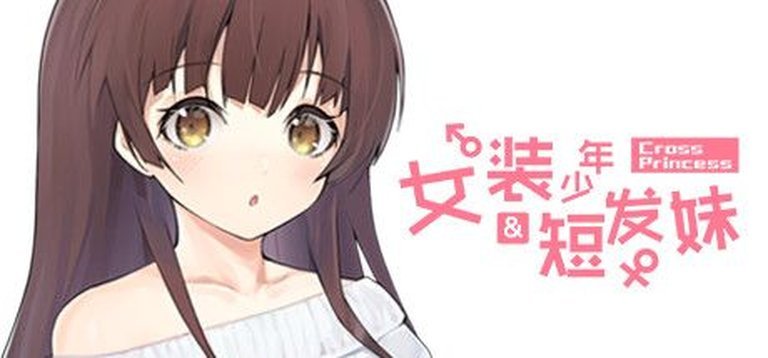
Cross Princess is a short visual novel adventure set in a modern-day anime-inspired world, following the story of Belle, a crossdressing boy who resembles a girl, and Bambi, a tomboyish girl who dresses like a boy. After an unexpected accident, the two find themselves living together, navigating themes of friendship, identity, and budding romance. With fixed-screen 3rd-person perspective gameplay, the game features cute anime-style artwork, full voice acting, and a warm, healing narrative that unfolds over 2-3 hours of playtime.
Where to Buy Cross Princess
PC
Cross Princess Patches & Updates
Cross Princess Guides & Walkthroughs
Cross Princess Reviews & Reception
steambase.io (96/100): A triumphant return to form for the series.
raijin.gg (96/100): A niche favorite with a concise and focused experience.
Cross Princess Cheats & Codes
PC
At the title screen, copy and paste them in the bonus code button, after you activate the items in your avatar so you can put on your boots.
| Code | Effect |
|---|---|
| Best-VA | Unlock April Fools “High-Quality” Voice Acting, you can also disable voice by re inputting the code again. |
| Holiday-Man | Unlock Holiday Man Christmas quest. |
| WoN-Boots | Unlock sparkly boots. (decent stats, mostly fun for the on-screen effects) |
Cross Princess: Review
Introduction
In an era where visual novels often drown in convoluted plots or fetishistic tropes, Cross Princess (2020) arrived as a disarmingly simple yet subversive gem. Developed by the indie studio Double Leaf Team and published by NVLMaker, this two-to-three-hour narrative experiment explores gender identity through the lens of a “healing” romance between a cross-dressing boy and a tomboyish girl. Despite its modest scope, the game struck a chord with players, earning an Overwhelmingly Positive rating (95% of 868 reviews) on Steam for its tender sincerity. This review argues that Cross Princess exemplifies how minimalist design and empathetic storytelling can transcend budget constraints to deliver a quietly revolutionary LGBTQ+ narrative nestled within the visual novel genre.
Development History & Context
Studio Vision & Technological Constraints
Double Leaf Team, a small Chinese developer, leveraged Unity Engine to create a lean, dialogue-driven experience. Released on September 9, 2020, the game emerged during a surge in indie visual novels addressing LGBTQ+ themes (Hush, Butterfly Soup). With no prior major titles, the studio focused on efficiency: character sprites reuse limited animations, backgrounds are static, and interfaces rely on conventional menu structures. This austerity allowed resources to funnel into the game’s standout feature—full voice acting in Simplified/Traditional Chinese—a rarity for Western-published VNs at this price point ($1.94–$2.99).
Cultural & Industry Landscape
The game dodged China’s strict content regulations by publishing internationally via Steam, joining a wave of “borderless” visual novels (Milk outside a bag of milk). Its themes of gender nonconformity resonated globally, particularly as mainstream franchises like Persona still grappled with queer representation. Notably, Cross Princess avoided sensationalism, framing its premise around emotional intimacy rather than titillation—a deliberate contrast to contemporaries like HuniePop or Sakura Dungeon.
Narrative & Thematic Deep Dive
Plot & Characters
The story hinges on a double-layered deception:
– Belle (CV: 小梨), a male cosplayer who presents as feminine, fears exposure will ruin his friendship.
– Bambi (CV: 枫刹若舞), a woman who dresses masculinely, hides her insecurities behind a brash persona.
Their dynamic escalates when an “accident” forces them to cohabitate, blurring lines between performativity and authenticity. The script deftly avoids reducing either character to a punchline. Instead, their shared secrecy becomes a conduit for mutual vulnerability—Belle’s anxiety about passing contrasts with Bambi’s exhaustion at being misgendered, culminating in a quietly radical thesis: identity isn’t a binary but a negotiation between self-perception and societal expectation.
Themes & Dialogue
Cross Princess frames gender as a collaborative performance. Early exchanges—like Belle nervously adjusting his wig while Bambi laments her “unfeminine” hobbies—subtly critique rigid norms. The dialogue’s strength lies in unspoken tension; pauses and vocal inflections (delivered via expressive voice work) convey more than text alone. Notably, romantic progression eschews grand gestures for small affirmations—a shared meal, a swapped hairpin—echoing Bloom Into You’s restraint.
A subtextual strand examines consent as communication. When Bambi discovers Belle’s secret, her anger stems not from betrayal but his assumption of her intolerance—a nuanced take on trust that elevates the narrative beyond superficial “gender-bending” tropes.
Gameplay Mechanics & Systems
Core Structure
As a single-route visual novel with no branching paths, Cross Princess prioritizes accessibility over replayability. The UI employs a standard layout:
– Text log
– Auto-play toggle
– Dialogue history
Playtime averages 2.3 hours (SteamDB), making it a digestible experience. While some critics lamented its linearity (GameFAQs), this focus reinforces thematic cohesion—players, like the protagonists, lack agency to “fix” their identities through choices.
Achievements & Progression
Eight Steam Achievements punctuate key narrative beats (e.g., “First Lie” for concealing Belle’s gender). Their simplicity mirrors the game’s ethos: they reward emotional engagement, not completionism.
Flaws
- Pacing issues: The climax’s resolution feels rushed due to the short runtime.
- Localization quirks: English subtitles occasionally mistranslate tonal nuances (“fake girl” vs. “cross-dresser”).
World-Building, Art & Sound
Visual Aesthetic
Double Leaf Team adopts a bright, pastel-heavy anime style reminiscent of early 2010s “moe” VNs (Nekopara). Characters are expressively designed—Belle’s delicate features and Bambi’s sharp haircut visually reinforce their dichotomies—though limited sprite animations (three poses per character) betray budget constraints. CGS (event illustrations) shine during emotional peaks, with tender compositions amplifying the narrative’s intimacy.
Sound Design
The Chinese voice acting carries the experience. Bambi’s husky, assertive tone contrasts Belle’s soft-spoken reticence, layering subtext onto straightforward lines. Ambient tracks lean on gentle piano melodies, evoking a “warm” atmosphere that borders on saccharine—a rare misstep when darker scenes demand tonal shifts.
Reception & Legacy
Launch & Player Response
Cross Princess initially flew under critics’ radars (Metacritic lists no professional reviews) but thrived via grassroots acclaim. Steam reviewers praised its “genuine” LGBTQ+ representation, with 95% of 940 reviews positive by 2026 (Steambase). Players highlighted emotional catharsis, though some noted the mature tag—triggered by swimsuit CGs—felt unnecessary for a story devoid of explicit content.
Industry Influence
The game’s success catalyzed Double Leaf Team’s Cross Romance franchise, including the follow-up Cross Maid. More broadly, it contributed to a wave of “short-form empathy games” (A Summer’s End, One Night Stand) that prioritize narrative efficiency over scale. Its compassionate handling of gender fluidity also set a benchmark for indie VNs, proving that queer stories need not be tragic or eroticized to resonate.
Conclusion
Cross Princess is a testament to the power of restraint. While its mechanical simplicity and brief runtime may deter genre traditionalists, the game’s emotional intelligence transcends limitations. By centering vulnerability over voyeurism, Double Leaf Team crafted a narrative that feels both personal and universal—a love letter to anyone who’ve ever masked their true self. Its legacy lies not in innovation but authenticity, securing its place as a minor classic in the queer visual novel canon. For $2.99, it remains essential playing for students of narrative design and LGBTQ+ storytelling alike.
Final Verdict: A flawed yet poignant exploration of identity that punches far above its weight. ★★★★☆