
- Release Year: 2017
- Platforms: PlayStation 4, Windows
- Publisher: Digital Domain Interactive, LLC.
- Developer: Digital Domain Interactive, LLC.
- Genre: Action
- Perspective: Third-person
- Game Mode: Single-player
- Setting: Anime, giant robot, Manga, Mecha, Vehicular combat
- Average Score: 68/100
- VR Support: Yes
Description
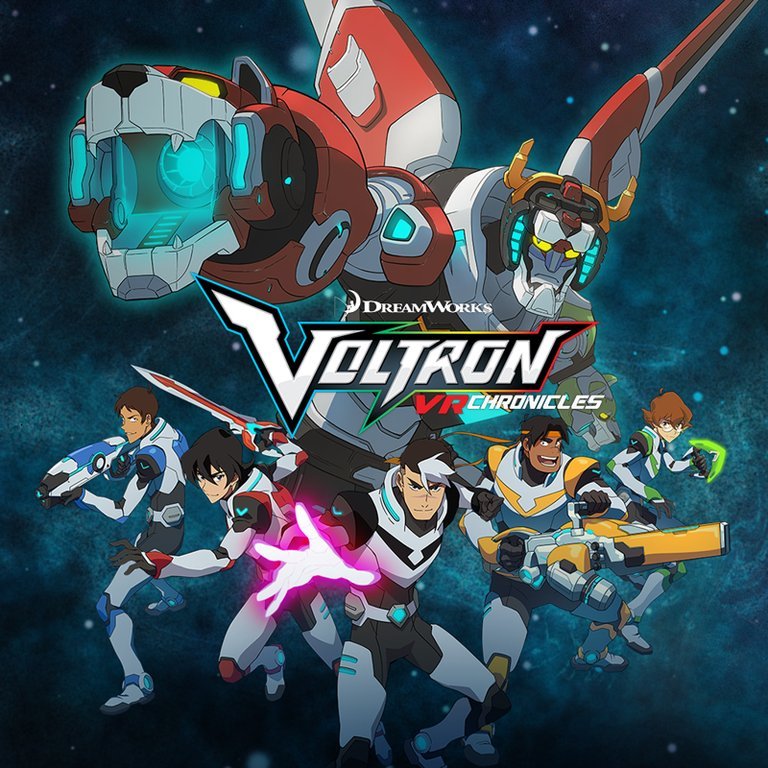
DreamWorks Voltron VR Chronicles immerses players in the world of Voltron, allowing them to experience an episode of the iconic series from within the cartoon’s universe. Players can enjoy a rich narrative filled with action, engaging characters, and stunning visuals, all enhanced by VR technology. The game offers a unique blend of storytelling and limited gameplay, making it an ideal experience for fans of the Voltron: Legendary Defender series.
Gameplay Videos
Where to Buy DreamWorks Voltron VR Chronicles
PC
DreamWorks Voltron VR Chronicles Cracks & Fixes
DreamWorks Voltron VR Chronicles Patches & Updates
DreamWorks Voltron VR Chronicles Reviews & Reception
metacritic.com (80/100): Voltron VR Chronicles is a small and sweet love letter to a great cartoon series.
steambase.io (72/100): DreamWorks Voltron VR Chronicles has earned a Player Score of 72 / 100.
mobygames.com (58/100): Critics Average score: 58%.
gamepressure.com (72/100): 72% STEAM Score.
uploadvr.com (60/100): Dreamworks Voltron VR Chronicles is surprisingly not terrible. In fact, it’s actually a fun, faithful, and polished love letter for fans of the franchise with some awesome moments that anyone would enjoy.
DreamWorks Voltron VR Chronicles: Review
Introduction
In an era where VR promised transformative storytelling but often delivered underwhelming experiments, DreamWorks Voltron VR Chronicles emerged as a fascinating hybrid—a love letter to fans of the Netflix reboot Voltron: Legendary Defender and a test of VR’s capacity to merge passive viewing with interactive spectacle. Released in 2017 by Digital Domain, this title straddles the line between “VR experience” and “game,” leveraging the nostalgic power of the iconic 80s mecha franchise while grappling with the limitations of early VR design. This review argues that Voltron VR Chronicles succeeds as an immersive narrative vehicle but falters as a mechanically substantial game, offering a glimpse into the untapped potential of licensed VR media.
Development History & Context
Developed by Digital Domain Interactive, a studio renowned for its visual effects work (Titanic, The Curious Case of Benjamin Button) and VR experiments (The Martian VR Experience), Voltron VR Chronicles was conceived as a companion piece to Netflix’s critically acclaimed Voltron: Legendary Defender (2016–2018). The team, led by Senior Creative Director Jaime J. Bencia and Senior Lead Designer Dan Kingdom, aimed to translate the show’s kinetic anime-inspired action into VR without alienating mainstream audiences.
At its 2017 release, VR was still in its adolescence: PlayStation VR had sold 2 million units, and high-end headsets like the Oculus Rift and HTC Vive demanded powerful PCs. Digital Domain faced significant constraints, including the need to optimize for smooth performance on mid-tier hardware (e.g., GTX 970 GPUs) while preserving the show’s vibrant art style. The game was priced at $14.99—a contentious decision, given its 60–90 minute runtime—placing it alongside other short-form VR “experiences” like Batman: Arkham VR.
Narrative & Thematic Deep Dive
Voltron VR Chronicles follows Lance, the Blue Paladin, as he uncovers an ancient alien artifact that unleashes a cosmic threat, forcing the Paladins to confront Zarkon’s Galra Empire. The story is an original side narrative, framed as a “lost episode” of the series, complete with the show’s trademark humor and camaraderie.
Characters:
– Lance (Jeremy Shada) serves as the player’s avatar, with his witty, impulsive personality intact.
– The ensemble cast—Allura (Kimberly Brooks), Hunk (Tyler Labine), and Zarkon (Neil Kaplan)—reprise their roles, lending authenticity.
– Themes: The game mirrors the show’s focus on teamwork and sacrifice, though its brevity limits emotional depth. A standout moment involves a moral choice where Lance must prioritize saving allies or securing a weapon—a nod to Voltron’s emphasis on unity.
Weaknesses:
– The plot feels rushed, with abrupt transitions between puzzle-solving and combat.
– Key lore (e.g., the Altean civilization) is glossed over, assuming player familiarity with the show.
Gameplay Mechanics & Systems
Voltron VR Chronicles blends light interaction with passive cinematic sequences, creating a rhythm that oscillates between engagement and observation.
Core Mechanics:
– Puzzle-Solving: Rotating dials, activating switches, and repairing systems using motion controls. These are intuitive but shallow—more tactile fan service than challenge.
– Space Combat: Piloting the Blue Lion in on-rails shooting segments. The controls (tilting Move controllers to steer) are novel but lack stakes due to unlimited health.
– Interactive Cutscenes: Physically dodging debris or aiming cannons during cinematic moments.
Flaws:
– Lack of Voltron Gameplay: The titular robot appears only in a non-interactive finale—a baffling omission that frustrated fans.
– Repetition: Enemy waves and puzzle types recycle relentlessly.
UI/UX:
– A minimalist holographic HUD evokes the show’s aesthetic.
– Tracking issues (especially on PSVR) occasionally break immersion when controllers lose line-of-sight.
World-Building, Art & Sound
Visual Design:
– The cel-shaded art style flawlessly replicates the show’s bold colors and sleek mecha designs.
– Standout environments include the crystalline Olkarion ruins and the Castle of Lions’ bridge, rendered with awe-inspiring scale.
Sound Design:
– The voice acting is pitch-perfect, with Rhys Darby’s Coran stealing scenes as the team’s eccentric mentor.
– A dynamic orchestral score mirrors the show’s heroic motifs, though combat lacks adaptive audio cues.
VR-Specific Flourishes:
– 360° space battles emphasize VR’s spatial strengths, letting players gaze up at towering Robeasts.
– Intimate moments, like sharing a cockpit with Lance, leverage presence brilliantly.
Reception & Legacy
Critical Response:
– Mixed Reviews (58% aggregate): Critics praised its fidelity to the source material (Digitally Downloaded: 60/100) but derided its brevity and simplicity (Video Chums: 57/100).
– Fan Reception: Steam users rated it “Mostly Positive” (72/100), highlighting its value as a VR novelty for Voltron enthusiasts.
Commercial Performance:
– The game sold an estimated 4,000 units—a modest tally reflective of VR’s niche audience at the time.
Legacy:
While Voltron VR Chronicles didn’t revolutionize VR, it demonstrated the potential of licensed narratives in the medium. Its “VR episode” format foreshadowed projects like Vader Immortal, blending cinematic storytelling with light interaction.
Conclusion
DreamWorks Voltron VR Chronicles is a paradox: a visually stunning, narratively authentic extension of the Voltron universe hamstrung by timid design and missed opportunities. As a playable episode for fans, it delivers spectacle and charm, but as a game, it feels undercooked, prioritizing accessibility over depth. Its true legacy lies in proving that VR could be a viable canvas for animated franchises—if developers dare to embrace bolder interactivity. For Voltron devotees, it’s a worthy curio; for VR pioneers, a cautionary tale about balancing immersion with engagement.
Final Verdict: A flawed but fascinating time capsule of VR’s experimental phase—best enjoyed as a guided theme park ride, not a game.