
- Release Year: 2022
- Platforms: Windows
- Publisher: Ultimate Games S.A.
- Developer: Asmodev
- Genre: Action
- Perspective: 1st-person
- Game Mode: Single-player
- Gameplay: Shooter
- Setting: Fantasy
- Average Score: 71/100
Description
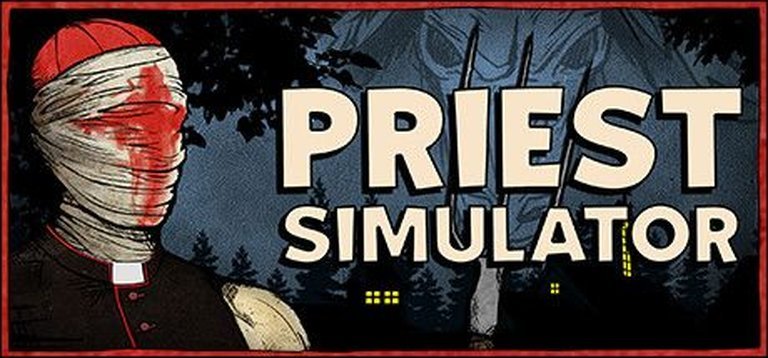
Priest Simulator: Vampire Show is a surreal first-person shooter set in a fantastical version of Poland, where players assume the role of a priest named Orlok navigating absurd religious duties and chaotic combat against supernatural forces. Blending dark humor with grotesque visuals and frenetic gameplay, the experience leans heavily into eccentricity, featuring bizarre storytelling, over-the-top characters, and a commitment to weirdness that borders on grotesque parody. While its mechanics remain relatively basic, the game thrives on its unapologetic embrace of chaos and eccentric style.
Gameplay Videos
Where to Buy Priest Simulator
Priest Simulator Free Download
Priest Simulator Cracks & Fixes
Priest Simulator Mods
Priest Simulator Guides & Walkthroughs
Priest Simulator Reviews & Reception
metacritic.com (80/100): A triumphant return to form for the series.
metacritic.com (75/100): At its best, Priest Simulator: Vampire Show is an unapologetic, genre-mashing ride through the absurd.
metacritic.com (70/100): Priest Simulator is a whacky and odd simulation title. You must complete religious tasks while helping the community.
metacritic.com (60/100): Priest Simulator: Vampire Show is a mostly-enjoyable experience, but it does lose its charm later in the game.
moviesgamesandtech.com : Priest Simulator is a whacky and odd simulation title. You must complete religious tasks while helping the community.
destructoid.com : Priest Simulator is definitely in the latter category, but rather than just having some wacky controls that make the whole performance absurd, it goes a few steps further, into a storm drain, and gets washed out to sea.
indiegamereviewer.com : Priest Simulator: Vampire Show falls heavily into the latter camp.
Priest Simulator Cheats & Codes
PC (Cheat Engine Table)
Start Cheat Engine, ‘Load’ and select the table, ‘Select a process to open’, choose the desired process, select the needed option and check it.
| Code | Effect |
|---|---|
| Money | Edit money |
| Resource | Edit resources |
| Splendor | Edit luxury |
| Benzine | Edit gasoline |
| Black Metal | Edit black metal |
PC (Trainer)
Activate the trainer options by pressing the corresponding Numpad keys.
| Code | Effect |
|---|---|
| Numpad 1 | God Mode |
| Numpad 2 | Healing |
| Numpad 3 | Infinite Resources |
| Numpad 4 | Infinite PLN |
| Numpad 5 | Infinite Gasoline |
PC (PLITCH)
Download and install PLITCH, create an account, open the client, search for the game, and activate the cheats.
| Code | Effect |
|---|---|
| Restore Health | Restore Health |
| Low health | Low health |
| Godmode | Godmode |
| Set Inventory Items Quantity (of all Items!) | Set Inventory Items Quantity (of all Items!) |
| Set Prestige Points | Set Prestige Points |
| Set Splendor | Set Splendor |
| Set Attack | Set Attack |
| Set Defense | Set Defense |
| Set Health Regeneration | Set Health Regeneration |
| Set Holiness | Set Holiness |
| Set Resourcefulness | Set Resourcefulness |
| Set Insurance | Set Insurance |
Priest Simulator: Review
In the vast landscape of video games, few titles stand out as uniquely bizarre and entertaining as Priest Simulator. Developed by Asmodev and published by Ultimate Games S.A., this game is a wild ride through the absurd, blending elements of action, simulation, and dark humor into a cohesive, if somewhat chaotic, experience. Released on October 6, 2022, Priest Simulator has carved out a niche for itself in the gaming world, offering players a chance to step into the shoes of a vampire priest in a small Polish town. This review will delve deep into the game’s development history, narrative themes, gameplay mechanics, world-building, reception, and legacy, providing a comprehensive analysis of what makes Priest Simulator a standout title.
Introduction
Priest Simulator is not your average video game. It is a chaotic blend of genres, a mockumentary-style narrative, and a unique sense of humor that sets it apart from the crowd. The game’s legacy is one of surprise and intrigue, as players are drawn into a world that is equal parts bizarre and engaging. This review aims to explore the depths of Priest Simulator, examining its development, narrative, gameplay, and impact on the gaming industry. The thesis of this review is that Priest Simulator is a groundbreaking title that pushes the boundaries of what a video game can be, offering a unique and unforgettable experience for players who dare to venture into its absurd world.
Development History & Context
Priest Simulator was developed by Asmodev, a Polish studio known for their unconventional and humorous games. The creators’ vision for Priest Simulator was to blend multiple genres into a cohesive experience, combining elements of action, simulation, and dark humor. The game’s development was marked by a desire to push the boundaries of what a video game could be, resulting in a title that is as unique as it is entertaining.
The technological constraints of the era played a significant role in shaping Priest Simulator. The game was developed using a combination of in-house engines and off-the-shelf tools, allowing the developers to create a visually striking and technically impressive title. The gaming landscape at the time of Priest Simulator‘s release was dominated by large-scale, AAA titles, making the game’s unique and unconventional approach all the more striking.
Narrative & Thematic Deep Dive
Priest Simulator‘s narrative is a wild ride through the absurd, blending elements of dark humor, satire, and mockumentary-style storytelling. The game’s protagonist, Orlok, is a vampire who finds himself in the small Polish town of San de Ville, where he is tasked with becoming the local priest. The narrative is filled with twists and turns, as Orlok navigates the challenges of his new role while trying to regain his vampire powers.
The game’s characters are a mix of the bizarre and the familiar, with each character bringing their own unique quirks and personalities to the table. The dialogue is sharp and witty, often veering into the realm of the surreal. The underlying themes of Priest Simulator are complex and multifaceted, exploring issues of identity, morality, and the nature of faith.
The game’s setting is a small Polish town, filled with quirky characters and hidden secrets. The town is brought to life through a combination of detailed environments and engaging dialogue, creating a world that is both familiar and alien. The game’s atmosphere is one of dark humor and surrealism, with each element working together to create a cohesive and immersive experience.
Gameplay Mechanics & Systems
Priest Simulator‘s gameplay mechanics are a blend of action, simulation, and dark humor. The core gameplay loop involves completing missions, fighting Shatanists, and renovating the church. The game’s combat system is fast-paced and engaging, allowing players to dual-wield weapons and use telekinetic powers to take down their enemies.
The character progression system is straightforward, with players earning experience points and unlocking new abilities as they progress through the game. The UI is clean and intuitive, allowing players to easily navigate the game’s menus and systems. The game’s innovative systems include a unique mockumentary-style narrative, which adds an extra layer of depth to the gameplay experience.
The game’s flaws are few but notable. The driving mechanics are clunky and unintuitive, making travel a chore rather than a pleasure. The repetition in the gameplay loop can become tedious, as players are often tasked with completing the same types of missions over and over again. Despite these flaws, Priest Simulator‘s gameplay mechanics are engaging and innovative, offering players a unique and unforgettable experience.
World-Building, Art & Sound
Priest Simulator‘s world-building is a testament to the developers’ attention to detail. The game’s setting is a small Polish town, filled with quirky characters and hidden secrets. The town is brought to life through a combination of detailed environments and engaging dialogue, creating a world that is both familiar and alien.
The game’s visual direction is a blend of the surreal and the familiar, with each element working together to create a cohesive and immersive experience. The art style is unique and striking, with a focus on dark humor and surrealism. The sound design is equally impressive, with a soundtrack that perfectly complements the game’s atmosphere.
The game’s atmosphere is one of dark humor and surrealism, with each element working together to create a cohesive and immersive experience. The world-building, art, and sound design all contribute to the overall experience, creating a game that is as visually striking as it is engaging.
Reception & Legacy
Priest Simulator received a mixed reception upon its release, with critics praising its unique and unconventional approach while noting its flaws. The game’s average critic score is 71%, with reviews highlighting its innovative gameplay mechanics and dark humor. The game’s legacy is one of surprise and intrigue, as players are drawn into a world that is equal parts bizarre and engaging.
The game’s influence on subsequent titles is evident, with many developers citing Priest Simulator as an inspiration for their own unconventional and humorous games. The industry as a whole has taken note of Priest Simulator‘s unique approach, with many developers seeking to push the boundaries of what a video game can be.
Conclusion
Priest Simulator is a groundbreaking title that pushes the boundaries of what a video game can be. Its unique blend of genres, innovative gameplay mechanics, and dark humor make it a standout title in the gaming world. The game’s legacy is one of surprise and intrigue, as players are drawn into a world that is equal parts bizarre and engaging. Priest Simulator‘s place in video game history is secure, and its influence on subsequent titles is undeniable. For those who dare to venture into its absurd world, Priest Simulator offers a unique and unforgettable experience.