
- Release Year: 2018
- Platforms: Linux, Macintosh, Windows
- Publisher: Evil Bite
- Developer: Evil Bite
- Genre: Simulation
- Perspective: Diagonal-down
- Game Mode: Single-player
- Gameplay: Business simulation, City building, construction simulation, Managerial
Description
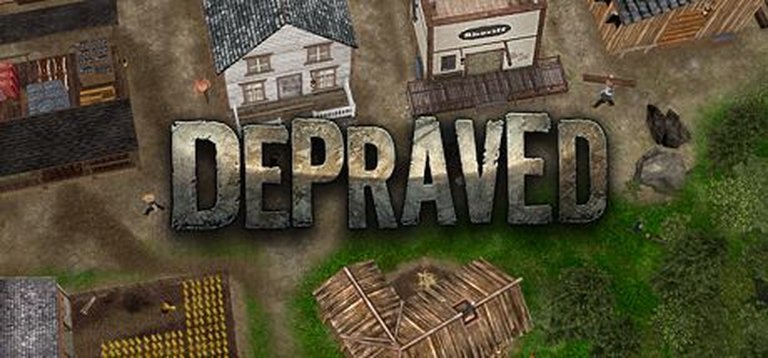
Depraved is a city-building and managerial simulation game set in the Wild West. Players take on the role of a pioneer leader, starting with a single carriage of resources in a procedurally generated world. The goal is to establish a thriving settlement by managing resources, trading, and ensuring the happiness and survival of the residents. Players must provide food, water, shelter, and protection against the elements and diseases to foster town growth.
Gameplay Videos
Where to Buy Depraved
PC
Depraved Cracks & Fixes
Depraved Guides & Walkthroughs
Depraved Cheats & Codes
1.3a.57 (Steam)
Enter codes in-game
| Code | Effect |
|---|---|
| goldrush | Grants $10,000 |
Depraved: A Frontier Settlement Simulator Trapped Between Ambition and Repetition
Introduction
In the vast, often unforgiving landscape of city-building games, Depraved (2018) stands as a curious oddity: a Wild West-themed settlement simulator that blends survival mechanics with procedural generation. Developed by the small German studio Evil Bite, the game casts players as pioneers tasked with carving civilization out of the untamed American frontier. While its thematic premise is refreshing—replacing medieval hamlets or sci-fi colonies with saloons, bandits, and Native American diplomacy—Depraved struggles to escape the shadow of its genre peers. This review argues that the game is a flawed but occasionally compelling experiment, offering moments of strategic depth hampered by repetitive systems and underdeveloped mechanics.
Development History & Context
Evil Bite, a two-person studio, positioned Depraved as a passion project merging the complexity of classics like Banished with the emergent chaos of the Wild West. Built using Unity, the game entered Steam Early Access in July 2018 before a full release in September 2019. At the time, the city-building genre was experiencing a renaissance, with titles like Frostpunk and Surviving Mars redefining player expectations for narrative-driven management games.
Depraved’s development was shaped by its creators’ focus on procedural generation and environmental storytelling. However, technological constraints—evident in its flat AI behaviors and limited biome variety—prevented it from fully realizing its vision. The game’s modest budget is reflected in its reliance on asset reuse and rudimentary animations, which occasionally undermine its atmospheric goals.
Narrative & Thematic Deep Dive
Depraved forgoes traditional storytelling in favor of systemic narratives. Players begin with a lone wagon of supplies and must attract settlers by building housing, saloons, and trading posts. The game’s “story” emerges through survival: famine, bandit raids, and harsh winters test the player’s leadership.
Thematically, Depraved grapples with colonialism and resource scarcity. Native Americans (“Indians” in the game’s outdated terminology) can be befriended through trade or conquered violently, a binary choice that critiques Manifest Destiny’s ethical complexities—albeit superficially. Settlers are not individuals but cogs in a machine, their needs (hunger, thirst, happiness) reduced to meters that demand constant attention.
Dialogue is minimal, consisting mostly of tooltips and event notifications (“Bandits attacked the church!”). While this reinforces the game’s focus on systems over characters, it also strips the world of personality. The result is a thematic framework that hints at deeper commentary but lacks the nuance to deliver it.
Gameplay Mechanics & Systems
At its core, Depraved is a game of interconnected survival loops:
– Resource Management: Players juggle food, water, lumber, and ore while expanding production chains (e.g., hunting → butchering → trading).
– Population Needs: Settlers require varied diets (e.g., bread for farmers, meat for hunters), and neglecting these triggers riots or mass emigration.
– Dangers: Wolves, bandits, and harsh weather threaten progress. Combat is rudimentary—players can deploy armed settlers but lack direct control.
Strengths:
- The procedural map generator creates varied starting locations, from deserts to snowy plains, each with unique challenges (e.g., water scarcity in arid zones).
- Trading with Native Americans or neighboring towns introduces strategic depth, allowing players to specialize in goods production.
Weaknesses:
- Linear Progression: Building unlocks are gated behind population milestones, forcing repetitive playthroughs. After a few hours, each town begins to feel identical.
- Shallow AI: Bandits and wildlife attack predictably, and settlers lack autonomy, often starving next to stockpiled food due to pathfinding issues.
- UI Clunkiness: Critical data (e.g., resource stockpiles) is buried in nested menus, complicating late-game management.
World-Building, Art & Sound
Depraved’s greatest strength is its atmospheric depiction of the Wild West. The art style blends low-poly models with painterly textures, evoking a frontier that feels both rugged and stylized. Settlements buzz with activity: miners haul ore, bakers knead dough, and drunks stumble out of saloons.
The sound design reinforces this immersion. Gusts of wind howl across plains, while the twang of a lone guitar underscores the isolation of early settlements. However, the limited soundtrack and reused ambient effects grow repetitive over time.
Environmental storytelling shines in small details: abandoned graves hint at past failures, and Native American camps react dynamically to player aggression. Yet these moments are rare, and the world often feels static outside scripted events.
Reception & Legacy
Upon release, Depraved received mixed reviews (60% positive on Steam), praised for its setting but criticized for its lack of polish. Critics like Gold-Plated Games noted its “cookie-cutter” progression, while players lamented its steep learning curve and unbalanced difficulty.
The game’s legacy is modest but notable. It paved the way for indie experiments like Going Medieval and Foundation, proving that niche historical settings could find audiences. However, its shortcomings—particularly in AI and replayability—prevented it from achieving the cult status of peers like Banished.
Conclusion
Depraved is a game of unrealized potential. Its Wild West setting and survival mechanics offer a compelling twist on city-building conventions, but repetitive systems, shallow AI, and a lack of narrative depth hold it back. For fans of the genre, it’s worth exploring during a sale—a flawed but earnest tribute to frontier life. In the pantheon of settlement simulators, Depraved is neither a masterpiece nor a disaster, but a middling entry that highlights the challenges of balancing ambition with execution.
Final Verdict: A 6/10 experience—innovative in theme, forgettable in practice.