
- Release Year: 2023
- Platforms: Windows
- Publisher: Warner Music Group
- Developer: Hello There AB
- Genre: Action
- Perspective: Behind view
- Game Mode: Single-player
- Gameplay: Music, rhythm
- Setting: Futuristic, Sci-fi
- Average Score: 73/100
Description
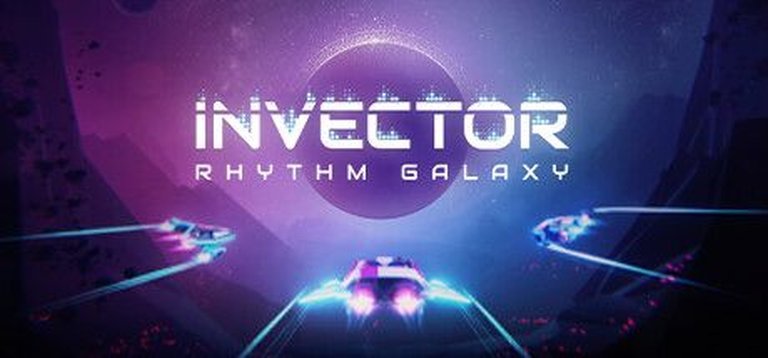
Invector: Rhythm Galaxy is a sci-fi rhythm action game developed by Hello There AB and published by Warner Music Group, where players pilot a ship through dynamic lanes and 3D tunnels, syncing button inputs to the beat of a licensed soundtrack. Set in a futuristic galaxy, the game features a lighthearted campaign mode following a group of friends on a nostalgic journey, though its focus remains on its fast-paced rhythm mechanics, challenging players to navigate shifting note patterns across multi-laned tracks and rotating tunnel segments.
Where to Buy Invector: Rhythm Galaxy
PC
Invector: Rhythm Galaxy Free Download
Invector: Rhythm Galaxy Cracks & Fixes
Invector: Rhythm Galaxy Mods
Invector: Rhythm Galaxy Guides & Walkthroughs
Invector: Rhythm Galaxy Reviews & Reception
opencritic.com (73/100): Invector: Rhythm Galaxy combines rhythm and visual in an excellent musical journey.
gamerescape.com : The core gameplay of Invector is relatively straight-forward: icons representing face buttons or arrows come flying down a lane at your ship, and you hit them when they hit the target icon just in front of said ship.
lifeisxbox.eu : This game had me grinning from ear to ear while playing it the entire time.
gaming.net : If you’ve nothing but fond memories of Hello There Games’ Avicii: Invector—a homage-centric, node-blasting rhythm game that released as a love letter to the memory of Tim Bergling—then you’re probably going to enjoy Invector: Rhythm Galaxy.
Invector: Rhythm Galaxy: A Cosmic Beat Odyssey Caught Between Evolution and Repetition
Introduction
In an era where licensed rhythm games have become endangered species, Invector: Rhythm Galaxy emerges as a neon-lit throwback—a sequel built on the bones of 2019’s Avicii Invector yet burdened by the weight of expectation. Developed by Swedish studio Hello There Games and published by Warner Music Group (WMG), this intergalactic rhythm romp seeks to honor its predecessor’s legacy while forging a new identity through a kaleidoscopic, corporate-curated soundtrack. But does this fusion of chart-topping hits and Audiosurf-inspired traversal elevate the genre, or does it stumble over its own ambition? Our thesis: Rhythm Galaxy is a flawed but fiercely earnest love letter to rhythm gaming, offering transcendent moments of flow marred by inconsistent design and a soundtrack that feels more like a boardroom flex than a cohesive artistic statement.
Development History & Context
Studio Vision & Post-Avicii Pivot
Hello There Games, founded by Oskar Eklund, carved its identity with Avicii Invector, a rhythm game developed in collaboration with the late EDM icon Tim Bergling. After Bergling’s death in 2018, the studio reframed the game as a tribute, blending gameplay with his discography. For Rhythm Galaxy, the studio faced a crossroads: how to evolve beyond a single-artist tribute. Partnering with WMG offered access to a vault of 40+ licensed tracks—a rare coup in an industry where music licensing costs often deter indie projects.
Technological Constraints & The 2023 Landscape
Built in Unity, Rhythm Galaxy inherits the engine-driven fluidity of its predecessor but struggles to innovate visually. Released in July 2023 against rhythm titans like Hi-Fi Rush and resurgent VR titles, it faced scrutiny for its iterative design. Console ports (including Xbox, PlayStation, and Switch) arrived months after its PC debut, leveraging WMG’s distribution muscle but highlighting Hello There’s small-studio limitations. The partnership’s symbiotic goal: WMG sought to cement its gaming footprint, while Hello There aimed to prove Invector could thrive beyond Avicii’s shadow.
Narrative & Thematic Deep Dive
A Story of Forgettable Cosmic Nostalgia
Rhythm Galaxy stitches together a thin narrative about four friends aboard a spacecraft reminiscing about their pasts. Told through static illustrations and text boxes, the dialogue oscillates between saccharine (“Remember when we first saw the nebula?”) and nonsensical, serving only as padding between songs. Characters like the pilot Nova and engineer Dex lack depth, their arcs reduced to unlockable diary entries. Critics universally panned this element—Gameluster dismissed it as “highly forgettable,” while Digital Chumps noted it “adds nothing to the game.”
Themes: Unity Through Music
Thematically, the game gestures at unity—using music as a cosmic connective tissue across galaxies. Neon-drenched planets like “Synthara” and “Bassforge” symbolize musical genres, but the metaphor collapses under the soundtrack’s schizophrenic curation. A Linkin Park deep cut (“Lost”) sits uncomfortably beside TikTok virals like Fifty Fifty’s “Cupid,” undermining any coherent emotional throughline. The result feels less like a journey of discovery and more like a WMG shareholder presentation.
Gameplay Mechanics & Systems
Core Loop: Familiar Yet Finessed
The gameplay apes Avicii Invector’s core: piloting a ship down a 3D track, hitting face buttons (A/B/X), directional inputs, and shoulder-trigger “strums” in sync with descending markers. Three key twists redefine the flow:
1. Lane Shifting: Notes appear across six lanes, demanding manual repositioning.
2. Tunnel Segments: The track morphs into a triangular prism; notes wrap around walls, requiring stick rotations to align.
3. Free-Flight Rings: Interludes replace note-charting with ring-navigation—a divisive “break” that Gamer Escape criticized as “boring and lazy.”
Innovations & Flaws
– Positive: Customizable controls (e.g., remapping strum to D-pad) and four-player local multiplayer inject replayability. Higher difficulties (Hard/Expert) reveal meticulously charted patterns, praised by WayTooManyGames as “addictive.”
– Negative: Tunnel sections obscure upcoming notes due to camera angles, sabotaging sight-reading (New Game Network called this “near impossible”). The non-standard audio calibration—sliding a pulse to match beats instead of tapping—frustrates precision players.
Progression & UI
A campaign mode gates five songs behind planet-hopping missions, with unlocks tied to high scores. The UI modernizes Avicii Invector’s aesthetic with cleaner menus but retains confusing quirks (Easy mode hides leaderboards).
World-Building, Art & Sound
A Neon-Drenched Cosmos
Rhythm Galaxy’s art direction merges Tron-esque grids with psychedelic nebulae. Planets like “Pulsewave” drip with chromatic abrasion, while warp tunnels explode into geometric fractals. Yet asset reuse from Avicii Invector is blatant—some backgrounds feel copy-pasted, diminishing the sequel’s identity.
Soundtrack: Eclectic but Erratic
The 40-track roster spans decades and genres, from Duran Duran’s “Notorious” to PinkPantheress’ “Boy’s a liar.” Standouts include Paramore’s “Ain’t It Fun” and Tiësto’s “Hot In It,” charted with intuitive rhythms. However, glaring omissions (no defining hooks for rock/metal tracks like Disturbed’s “Down with the Sickness”) and questionable curation (German rap outlier “Biturbo”) fracture immersion. As Gamer Escape lamented, the soundtrack “flexes WMG’s rights vault” rather than serving gameplay cohesion.
Sound design shines in detail: each note hit triggers a satisfying thrum, while missed inputs crackle like static. The absence of instrument-specific feedback, however, leaves beats feeling disconnected from the music’s soul.
Reception & Legacy
Launch Controversy & Critical Divide
Rhythm Galaxy polarized critics. Steam users celebrated its “Very Positive” score (81%), praising track variety and local multiplayer. Critics, however, split:
– Praise: WayTooManyGames (9/10) hailed it as “one of the best rhythm games in recent memory.”
– Criticism: GameLuster (5/10) blasted its “identity crisis,” while New Game Network (60/100) cited “unbalanced difficulty.”
Commercial performance remains opaque, though SteamDB estimates ~2K units sold at launch.
Legacy: A Stepping Stone
The game’s true impact lies in proving licensed rhythm games can still thrive post-Rock Band. Its DLC strategy (e.g., “Latin Power Pack”) mirrors mobile monetization, suggesting a live-service future. While unlikely to dethrone giants like Beat Saber, it carves a niche for nostalgia-driven, couch-coop fun.
Conclusion
Invector: Rhythm Galaxy is a cosmic rollercoaster—equal parts exhilarating and uneven. Its genius lies in transforming Warner’s corporate catalog into pulse-pounding gameplay, with local multiplayer and Expert-level charts offering endless challenge. Yet tunnel vision design, a disposable narrative, and a soundtrack at war with itself prevent transcendence. For rhythm veterans, it’s a worthy jukebox with caveats; for newcomers, a dazzling gateway. In the constellation of music games, Rhythm Galaxy burns bright but not alone—a testament to Hello There’s passion, but a reminder that licensed soundtracks need curation, not chaos.
Final Verdict: A 7.5/10 experience—best enjoyed with friends, tempered expectations, and the “Skip Story” button on speed-dial.