
- Release Year: 2016
- Platforms: Macintosh, Windows, Xbox One
- Publisher: Code-Monkeys, LLC
- Developer: Soma Games LLC
- Genre: Puzzle
- Perspective: Not specified
- Game Mode: Single-player
- Gameplay: Orbital mechanics, Physics
- Setting: Futuristic, Sci-fi, Steampunk
- Average Score: 33/100
Description
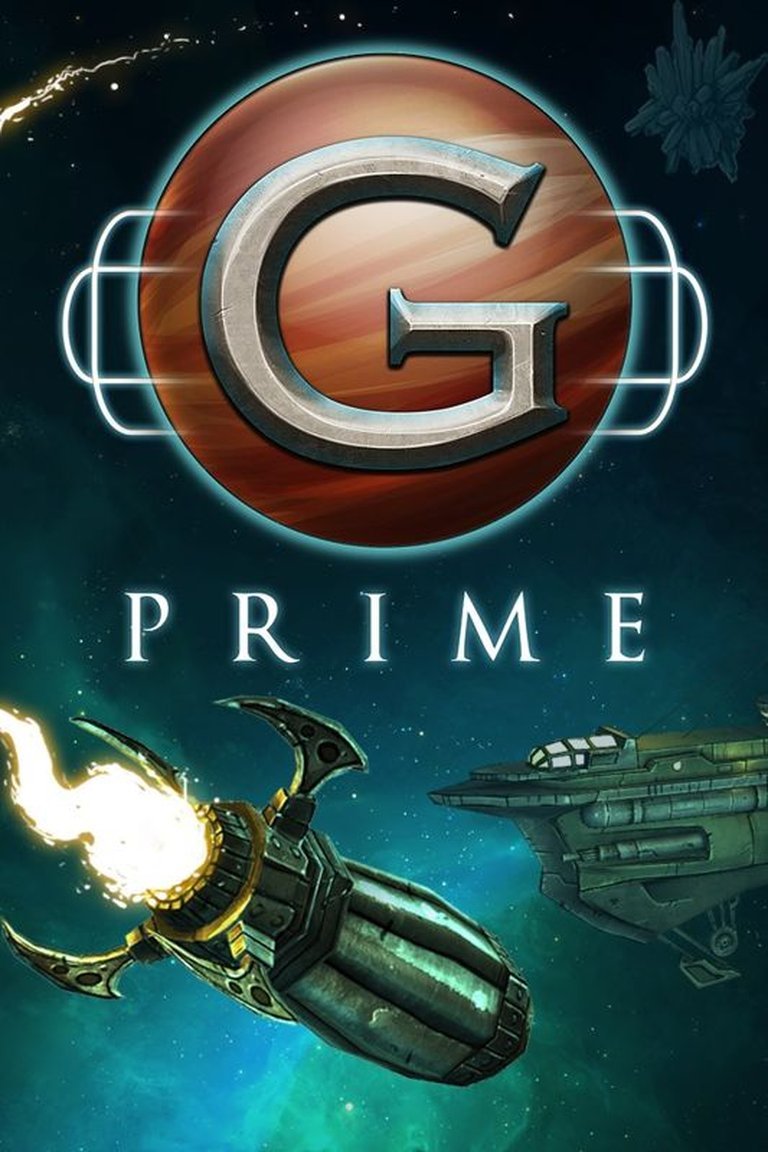
G: Prime – Into the Rain is a sci-fi puzzle game where players navigate orbital mechanics and guide projectiles through space-based levels. Set in a futuristic steampunk-inspired universe, the game challenges players to manipulate trajectories and solve spatial puzzles, serving as a sequel to the mobile game G: Into the Rain. Developed by Soma Games, it blends strategic thinking with a visually distinctive aesthetic across Xbox One, Windows, and Mac platforms.
Gameplay Videos
G: Prime – Into the Rain Cracks & Fixes
G: Prime – Into the Rain Guides & Walkthroughs
G: Prime – Into the Rain Reviews & Reception
opencritic.com (40/100): It’s like the developers assumed everyone would know the game as well as they did, and decided instructions wouldn’t be needed. G Prime really is a confusing mess for new players
metacritic.com (30/100): G Prime Into The Rain has an interesting concept, but it’s also one that has been done much better in other games.
purexbox.com (30/100): Few games are as baffling upfront as Soma Games’ G Prime Into The Rain.
G: Prime – Into the Rain: Review
Introduction
In the crowded landscape of indie puzzle games, G: Prime – Into the Rain (2016) stands as an artifact of unfulfilled ambition—a steampunk-infused gravity puzzler caught between its grand conceptual vision and the harsh realities of execution. Developed by Soma Games (known for niche titles like The Lost Legends of Redwall), G: Prime reboots their 2009 mobile oddity G: Into the Rain into a full 3D experience, promising a “moody-beautiful” fusion of narrative depth and physics-based challenges. This review unpacks the game’s tumultuous journey from iOS curiosity to a flawed console/PC experiment, examining why it failed to resonate broadly despite flashes of brilliance.
Development History & Context
Studio Vision & Technological Constraints
Soma Games, founded by a team blending film industry veterans and tech enthusiasts, positioned G: Prime as a passion project aimed at expanding their 2008 mobile hit into a richer, narrative-driven universe. The original G: Into the Rain garnered modest acclaim for its gravity-slinging mechanics, but limitations of early mobile hardware stifled its scope. The 2016 reboot sought to capitalize on Unity Engine advancements, enabling 3D orbital physics and a hand-painted steampunk aesthetic.
However, the studio’s ambitions outpaced its resources. With a skeleton crew of 20 developers—many multitasking across design, art, and coding—G: Prime struggled with iterative polish. Porting mobile-centric mechanics to Xbox One and PC introduced control-scheme growing pains, while the shift to 3D exacerbated camera and UI issues absent in the 2D predecessor.
Gaming Landscape
Released alongside sleeker indie darlings like The Witness and Inside, G: Prime faced skepticism. Its “gravity golf” premise—reminiscent of Blast Off! and Gears of Gravity—felt dated next to evolving genre hybrids. Worse, Soma’s decision to price the game at $9.99 (Steam/Xbox) clashed with player expectations for deeper content at that tier.
Narrative & Thematic Deep Dive
Plot & Setting
G: Prime casts players as a “sounding officer” aboard Ptolemy Station, launching reconnaissance rockets into “The Rain”—a solar system-spanning debris field packed with iceteroids, theophosphorus clouds, and corporate intrigue. The Rain’s promise of untold resources pits factions like the militaristic Astra Corp and rogue scavengers against each other, with players choosing contracts that alter mission parameters and unlock lore.
Characters & Dialogue
Narrative delivery leans heavily on text logs, with over 100 manual entries expanding the Rain’s mythology—a strength for world-building enthusiasts but a pacing killer for casual players. Dialogue oscillates between pseudoscientific jargon (“sub-etheric trajectories”) and pulpy steampunk melodrama (“Blessing or curse, the Rain changes everything”). While side characters like the cynical station engineer add flavor, voice acting is absent, leaving the story feeling sterile.
Themes
Beneath its space-opera veneer, G: Prime explores corporate exploitation and environmental precarity. The Rain symbolizes both ecological catastrophe and capitalist opportunity—a duality echoed in missions where players prioritize profit (perfect paths for bonuses) over ethical exploration. However, these themes lack narrative heft, often drowned out by cumbersome gameplay.
Gameplay Mechanics & Systems
Core Loop: Gravity Golf, Refined or Ruined?
The gameplay revolves around slingshotting rockets through gravitational fields, using orbital assists to “ping” targets before fuel depletion. Early levels ease players in with guided tutorials, but complexity spikes aggressively: later stages demand mastery of afterburner boosts (limited per mission), quicksand-cloud evasion, and multi-moon gravity wells.
Innovations & Flaws
– Contract System: Choosing a corporate backer (e.g., Astra Corp’s high-risk/high-reward payouts) adds replayability but lacks tangible narrative consequences.
– Physics Simulation: Orbital trajectories feel mathematically sound, rewarding precision—yet controls suffer on Xbox One, where analog-stick input lacks mobile touch’s finesse.
– UI/UX Nightmares: Cluttered HUD elements obscure critical data, while an erratic camera forces constant manual adjustments—fatal in time-sensitive puzzles.
Progression & Difficulty
Unlocking later zones requires grinding “Perfect Paths” (flawless routes), which many players found punitive due to the game’s finicky controls. Community guides (like Steam’s General Tips by JimDeadlock) reveal a steep learning curve the game itself fails to address.
World-Building, Art & Sound
Visual Design
G: Prime’s strongest asset is its art direction. Hand-painted backdrops evoke Victorian-meets-asteroid-belt grandeur: Ptolemy Station’s brass-and-gear interiors contrast with The Rain’s ethereal nebulae and crystalline debris. Particle effects for quicksand clouds and rocket trails are mesmerizing, though low-resolution textures on Xbox One betray budget constraints.
Atmosphere & Sound
Composer Chris Skaggs’ score—a haunting blend of synth pads and choral arrangements—heightens the cosmic melancholy. Ambient winds and creaking station metal deepen immersion, though repetitive rocket-engine SFX grate over time.
Reception & Legacy
Launch Reception
Critics savaged G: Prime’s UX flaws. Pure Xbox’s 3/10 review typified the backlash: “Overly complicated with a terrible first impression.” ICXM and Brash Games conceded its ambition but panned “clumsy controls” and “frustrating difficulty.” The game holds a dismal 30% critic average on MobyGames (based on 1–3 reviews, varying by platform).
Player Response & Redemption
Despite critics, niche audiences praised its aesthetic and lore depth (RAWG user: “Gorgeous… a must-buy for puzzlers”). Steam players noted improvement via patches, yet sales remained tepid—partly due to poor marketing.
Industry Impact
G: Prime’s legacy is cautionary: a testament to how even compelling concepts crumble under technical neglect. Its gravity-puzzle DNA faintly echoes in 2020s titles like Heaven’s Vault, but Soma Games’ Arc Saga dissolved after this installment.
Conclusion
G: Prime – Into the Rain is a dichotomy—a game brimming with artistic soul but hobbled by developmental naiveté. Its steampunk grandeur and physics-driven challenges tempt genre diehards, yet impenetrable systems and lack of polish render it inaccessible to most. For indie historians, it remains a fascinating footnote: a bold reimagining of a mobile cult classic that tragically missed its orbital insertion. While not devoid of merit, G: Prime ultimately serves as a lesson in balancing vision with execution—a celestial daydream undone by terrestrial realities.
Final Verdict: A flawed gem for steampunk enthusiasts and gravity-puzzle masochists; a misfire for everyone else.