
- Release Year: 2007
- Platforms: Windows
- Publisher: Akella, Elektrogames Limited Company
- Genre: Special edition
- Game Mode: Single-player
- Average Score: 74/100
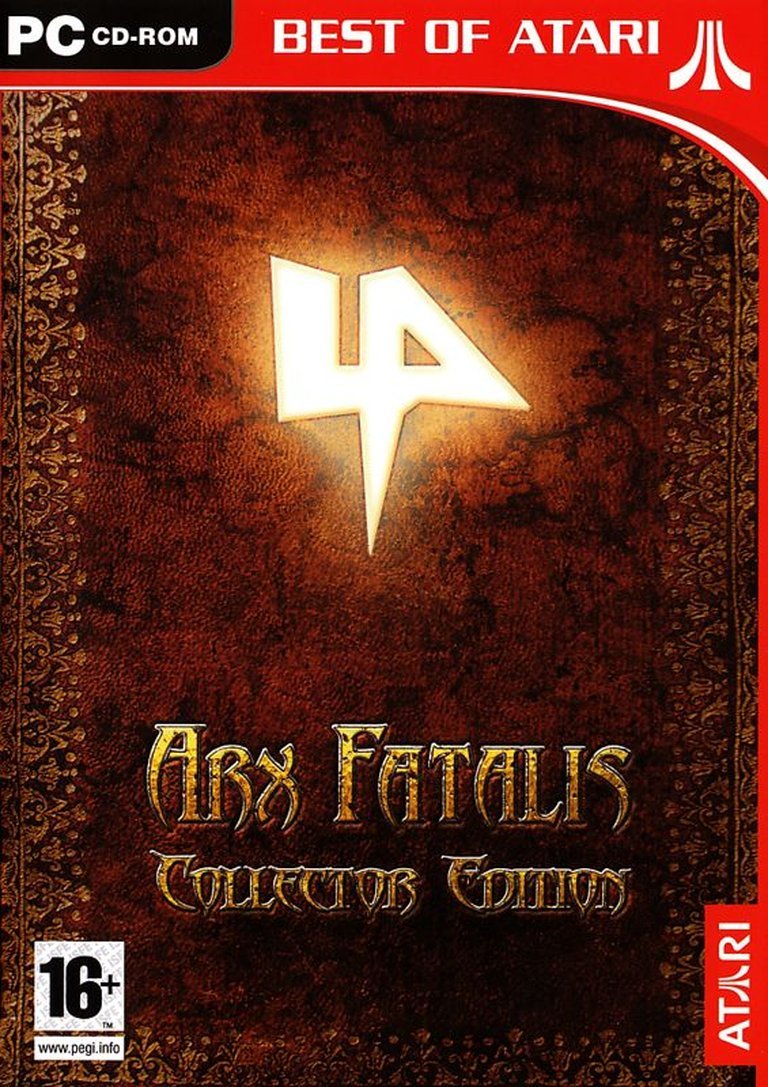
Description
Arx Fatalis: Collector Edition is a re-release of the original game, set in the dark, underground world of Exosta. After the sun stopped shining, humans, orcs, and other races were forced to live in the abandoned dwarven mines of Arx. The perpetual darkness and scarcity of resources led to constant conflict and the rise of Akbaa, the Lord of Destruction. Players take on the role of a guardian sent by the Sybarta to counter Akbaa’s evil and restore balance to the world.
Arx Fatalis (Collector Edition) Cracks & Fixes
Arx Fatalis (Collector Edition) Patches & Updates
Arx Fatalis (Collector Edition) Mods
Arx Fatalis (Collector Edition) Guides & Walkthroughs
Arx Fatalis (Collector Edition) Reviews & Reception
opencritic.com (60/100): There’s plenty of deeply flawed RPGs from the late ’90s/early ’00s that actually people love despite their problems, to the point that it’s almost a tradition of sorts.
mobygames.com : The game is great, a classic even.
Arx Fatalis (Collector Edition) Cheats & Codes
PC
Turn off the ‘Arcade Magic’ option if it is enabled. Press X to cast a spell, then enter one of the following series of runes.
| Code | Effect |
|---|---|
| Mega, Mega, Mega, Mega, Mega, Kaom | Unlimited HP |
| Mega, Mega, Mega, Mega, Mega, Vitae | Character at level 10, 30 stat points, 200 skill points |
| Nhi, Nhi, Nhi, Nhi, Nhi, Vitae | Character at level 0, default stats and skills, no runes |
| Nhi, Rhaa, Aam, Nhi, Rhaa, Aam | Reveal map |
| Spacium, Aam, Mega, Spacium, Aam, Mega | Fire Bow |
| Mega, Aam, Rhaa, Rhaa, Rhaa, Rhaa | Power sword |
| Mega, Tera, Mega, Tera | Disable wall collisions |
| Mega, Mega, Mega, Aam, Vitae, Tera | Summon perfect warrior for a challenge |
| Mega, Rhaa, Mega, Rhaa, Mega, Rhaa | Big head |
PC (Secret Rune Codes)
Hold down CTRL and draw the runes as you cast spells.
| Code | Effect |
|---|---|
| M, A, X | God Mode (All runes, weapons, invincibility, not reversible) |
| S, D, S, D | Makes NPC’s heads huge |
| U, U, W | Makes the graphics look like Ultima Underworld |
| M, A, R | Mariana easter egg (not reversible) |
| P, O, M | Obtain Lord Inut’s Giant Sword |
| R, A, F | Quick movement (not reversible) |
| S, O, S | Reveal Automap in your Journal |
| Stairs rune x 3 | Walk through walls |
Xbox
Make sure the Arcade Magic option is off, Press X to cast a spell, then enter the following series of runes.
| Code | Effect |
|---|---|
| Mega, Rhaa, Mega, Rhaa, Mega, Rhaa | Big Head Mode |
| Spacium, Aam, Mega, Spacium, Aam, Mega | Fire Bow |
| Mega, Mega, Mega, Mega, Mega, Vitae | Level 10 character with 30 stat points and 200 skill points |
| Nhi, Nhi, Nhi, Nhi, Nhi, Vitae | Level zero character with no runes and default stat and skill points |
| Mega, Aam, Rhaa, Rhaa, Rhaa, Rhaa | Power Sword |
| Nhi, Rhaa, Aam, Nhi, Rhaa, Aam | Reveal Map |
| Mega, Mega, Mega, Aam, Vitae, Tera | Summon Perfect Warrior For A Challenge |
| Mega, Mega, Mega, Mega, Mega, Kaom | Unlimited Hit Points |
| Mega, Tera, Mega, Tera | Wall Collisions Disabled |
Arx Fatalis (Collector Edition): Review
A Deep Dive into Arkane Studios’ Underground Masterpiece
Introduction
In the shadowy recesses of early 2000s RPGs lies Arx Fatalis, Arkane Studios’ ambitious debut that dared to resurrect the spirit of Ultima Underworld in a sunless, subterranean world. Released in 2002 and reissued in 2007 as the Collector Edition, this cult classic blends immersive sim design with a haunting narrative, albeit marred by technical growing pains. While commercially overlooked, its legacy as a foundational text for Arkane’s future triumphs—Dishonored, Prey—is undeniable. This review argues that Arx Fatalis is a flawed but fascinating time capsule, a game whose atmospheric depth and innovative systems outweigh its rough edges, especially in its expanded Collector Edition form.
Development History & Context
Arkane Studios, founded in 1999 by Raphaël Colantonio, emerged from a desire to revive the Ultima Underworld ethos. Initially conceived as Ultima Underworld III, the project pivoted to an original IP after Electronic Arts declined licensing. Colantonio’s team, inspired by Looking Glass Studios’ immersive sim philosophy, aimed to create a “living dungeon” where every object had purpose—a vision hampered by tight budgets and publisher turmoil.
Developed with a skeleton crew (never exceeding nine core members), Arx Fatalis faced near-cancellation before JoWooD Productions stepped in. The game released in 2002 to a crowded RPG market dominated by The Elder Scrolls III: Morrowind and Neverwinter Nights. Its 2007 Collector Edition (bundling patch 1.18, an artbook, strategy guide, making-of footage, and a trailer for the cancelled The Crossing) served as a victory lap for a game that had quietly inspired a devout fanbase.
Technologically, Arkane’s custom engine prioritized interactivity: torches flickered dynamically, objects could be stacked or thrown, and spells were cast via mouse-drawn runes—a system so novel it defied genre conventions. Yet the Xbox port (2003) struggled to adapt these mechanics to controllers, stripping away some of the PC version’s tactile magic.
Narrative & Thematic Deep Dive
Set on the dying world of Exosta, where civilizations retreat underground after the sun’s extinction, Arx Fatalis casts players as an amnesiac prophet tasked with thwarting Akbaa, the god of destruction. The plot is archetypal—chosen ones, ancient cults, macguffin hunts—but elevated by its bleak, claustrophobic setting.
The game’s brilliance lies in environmental storytelling. Factions like the oppressed goblins, reclusive trolls, and scheming human nobles are fleshed out through journals, overheard dialogues, and quests that reward curiosity. A standout moment involves mediating a truce between goblin slaves and their human overlords, a morally grey choice with cascading consequences. Themes of survival and decay permeate every damp corridor: crops grow under magical lamps, thieves hoard dwindling resources, and whispers of a “guardian savior” fuel both hope and paranoia.
Though dialogue is minimal, voice acting (added in the Xbox version) lends gravitas to key figures like the traitorous high priest Iserbius. The Collector Edition’s lore-rich artbook deepens this world, revealing cut concepts like expanded Ylside bunkers and early designs for Akbaa’s temple.
Gameplay Mechanics & Systems
Arx Fatalis is a first-person RPG with a focus on systemic interaction:
– Combat: Real-time melee and archery feel weighty but unpolished. Backstabs deal double damage, encouraging stealth, while magic dominates late-game encounters.
– Spellcasting: The gestural rune system—drawing symbols like Yok (fire) or Vitaé (life) with the mouse—is bold but inconsistent. Memorizing sequences helps, yet rushed gestures often fizzle, a frustration mitigated in the Collector Edition’s strategy guide.
– Crafting & Survival: Players cook fish, bake bread, and brew potions using physics-based systems. A fishing rod, for example, requires combining a pole and rope—a satisfying touch.
– Character Progression: Skills like Stealth, Object Knowledge, and Ethereal Link allow flexible builds, though archery and melee are overshadowed by magic’s sheer power.
The Collector Edition’s extras shine here: the making-of footage reveals cut content (e.g., a scrapped multiplayer mode), while the strategy guide demystifies obscure puzzles, like lever-based crypt riddles that previously demanded trial-and-error.
World-Building, Art & Sound
Arx’s underground labyrinth is a masterclass in atmospheric design:
– Visuals: Despite 2002-era textures, the game oozes mood. Fungal forests glow bioluminescently, ice caves refract dim torchlight, and Akbaa’s altars drip with skeletal adornments. The Collector Edition’s artbook showcases early concept art highlighting a more realistic style later scaled back for technical constraints.
– Sound Design: Kemal and Simon Amarasingham’s score blends eerie choirs with metallic drips, amplifying the sense of entombment. Goblin chittering, echoing pickaxes, and distant collapses create a soundscape that feels alive—and unnerving.
– Architecture: Dwarven ruins contrast with human-built shantytowns, each level reflecting its inhabitants’ culture. The trolls’ crypts, adorned with crude carvings, feel distinct from the Sisters of Edurneum’s serpentine temples.
Reception & Legacy
Critics praised Arx Fatalis’ ambition but skewered its jank. PC versions scored higher (77/100 on Metacritic) than Xbox (71/100), with outlets like GameSpot hailing its “genius world-building” while lamenting bugs and pacing. Commercial failure nearly shuttered Arkane, yet the game’s DNA resurfaced in Dark Messiah of Might and Magic and Dishonored’s systemic creativity.
The 2011 open-source release birthed Arx Libertatis, a fan project fixing bugs, adding widescreen support, and porting the game to Linux. Today, Steam and GOG versions bundled with this mod ensure accessibility, while retrospectives cite Arx Fatalis as a progenitor of immersive sims.
Conclusion
Arx Fatalis (Collector Edition) is a relic of a riskier era—a game that prioritizes immersion over polish. Its clunky combat and opaque systems may deter modern players, but for those willing to dig, it offers a rich, tactile odyssey through one of gaming’s most evocative underworlds. As both Arkane’s origin story and a tribute to Ultima Underworld’s legacy, it remains essential for RPG historians and immersive sim devotees. The Collector Edition sweetens the deal, transforming a flawed gem into a comprehensive artifact. In the annals of video game history, Arx Fatalis is no mere footnote; it’s a blueprint for atmospheric storytelling.
Final Verdict: Arx Fatalis is a foundational text in immersive sim design, best appreciated as a historical journey—preferably with the Collector Edition’s extras in hand. 8/10.