
- Release Year: 2014
- Platforms: Windows
- Publisher: United Independent Entertainment GmbH
- Developer: VIS GbR
- Genre: Adventure
- Perspective: 1st-person
- Game Mode: Single-player
- Gameplay: Survival horror
- Average Score: 43/100
Description
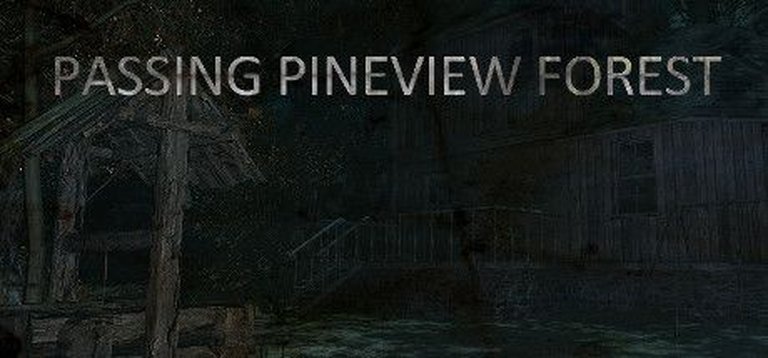
Passing Pineview Forest is a free survival horror adventure game and mini-prequel to Pineview Drive, released in 2014. Set in the ominous Pineview Forest, players navigate a first-person, motion-controlled trek through dark woods haunted by an unseen entity. Explorers must remain calm under scrutiny—any hint of fear triggers deadly consequences as they uncover secrets leading to the abandoned Pineview property. The atmospheric game blends psychological tension with environmental storytelling.
Gameplay Videos
Where to Buy Passing Pineview Forest
PC
Passing Pineview Forest Guides & Walkthroughs
Passing Pineview Forest Reviews & Reception
steambase.io (66/100): A triumphant return to form for the series.
mygametrics.com (0/100): Passing Pineview Forest is a free mini-prequel set in the universe of Pineview Drive. Behind the abandoned house on Pineview Drive lies ominous Pineview Forest.
store.steampowered.com : Passing Pineview Forest is a free mini-prequel set in the universe of Pineview Drive. Behind the abandoned house on Pineview Drive lies ominous Pineview Forest.
Passing Pineview Forest: A Haunting Tech-Demo Prequel Lost in the Woods
Introduction
In the crowded landscape of mid-2010s indie horror, Passing Pineview Forest (2014) lingers like a half-remembered nightmare—a free, experimental prequel to Pineview Drive that promised atmospheric dread and early VR integration but stumbled under the weight of its ambitions. Developed by German studio VIS GbR and published by United Independent Entertainment, this fragmented experience serves as a cautionary tale about the perils of prioritizing tech demos over cohesive design. While it offered a tantalizing glimpse into the mythos of the Pineview universe, its legacy is one of squandered potential: a game remembered more for its bark than its bite.
Development History & Context
Studio Vision & Technological Constraints
Emerging from VIS GbR—a team better known for simulation games like Towtruck Simulator 2015—Passing Pineview Forest marked an uncharacteristic foray into horror. Released in November 2014, it capitalized on two emergent trends: the indie horror boom ignited by Slender: The Eight Pages (2012) and the nascent VR revolution spearheaded by the Oculus Rift DK2, which had launched just months prior. The studio’s decision to integrate DK2 support positioned the game as a “tech demo” (per Steam’s description), ambitiously targeting DX11 systems despite Unity Engine’s then-limited optimization for VR.
The Gaming Landscape
Arriving alongside genre-defining titles like Alien: Isolation and The Forest, Passing Pineview Forest faced fierce competition. Horror was shifting toward systemic dread (Amnesia: The Dark Descent) and open-world survival, yet VIS GbR’s design clung to minimalist, reaction-based mechanics. Its free-to-play model—rare for horror at the time—suggested a focus on funneling players toward the paid Pineview Drive, positioning it less as a standalone experience and more as a marketing curiosity.
Narrative & Thematic Deep Dive
A Fractured Prelude
Set in the ominous woods adjoining the titular mansion from Pineview Drive, the game’s narrative orbits around the disappearance of Linda, a woman who vanished 20 years prior. Players embody an unnamed protagonist whose “every move is watched,” forced to navigate the forest while suppressing fear to avoid annihilation by an unseen entity (“IT”). This thin premise—delivered via expository Steam blurbs rather than in-game storytelling—serves as connective tissue to Pineview Drive’s broader mystery but lacks thematic depth.
Thematic Half-Lights
The game gestures toward ideas of grief and psychological erosion, mirroring Linda’s haunted husband from the main title. Yet these themes remain undercooked, reduced to environmental suggestions: gnarled trees evoke entrapment, while distant whispers hint at Linda’s unresolved fate. Crucially, the absence of dialogue or tangible narrative progression reduces the experience to a mood piece—a haunted house ride without the house.
Gameplay Mechanics & Systems
The Fear Feedback Loop
At its core, Passing Pineview Forest revolves around a singular mechanic: fear management. Players traverse a linear forest path, weaponless and vulnerable, while auditory cues (e.g., twigs snapping, disembodied growls) signal impending danger. To survive, players must:
– Deactivate their flashlight during threats
– Avoid sprinting to minimize noise
– Maintain composure (via unexplained “calmness” metrics)
Failure triggers abrupt death animations—a hallmark borrowed from Slender—but repetition dulls their impact. Steam guides reveal community frustration with inconsistent threat triggers, where seemingly identical actions yielded arbitrary punishments.
VR: Promise vs. Reality
The Oculus DK2 integration, while novel, exacerbated the game’s flaws. Early adopters reported nausea from jarring movement and poorly optimized textures, while non-VR players criticized the clunky mouse/keyboard controls. The decision to lock DK2 support behind a separate launcher further fragmented the experience, rendering it a disjointed showcase rather than a transformative VR horror entry.
World-Building, Art & Sound
Atmosphere Over Substance
The game’s sole triumph lies in its oppressive atmosphere. The forest—a monochrome labyrinth of leafless trees and fog—draws from Silent Hill’s mist-drenched nightmares, with light pollution intentionally muted to deepen isolation. Sound design elevates the tension: wind howls with predatory intent, while Linda’s fragmented whispers (e.g., “Why did you leave me?”) seep through positional audio, suggesting an omnipresent watcher.
Technical Shortcomings
Unity Engine’s limitations stifle immersion. Low-poly foliage and repetitive assets break verisimilitude, while draw distances blur into foggy voids—a cost-cutting measure disguised as stylistic choice. The decision to omit dynamic lighting (even in DK2 mode) reduces fear to binary states: safe (flashlight on) versus hunted (flashlight off).
Reception & Legacy
Launch & Player Sentiment
Upon release, Passing Pineview Forest garnered mixed reviews (65% positive from 1,690 Steam reviews). Praise centered on its “chilling soundscape” and effective jump scares, while criticism targeted its lack of content (beatable in <30 minutes) and shallow mechanics. Steam user guides—like “How to Beat Passing Pineview Forest”—highlighted player confusion over unclear objectives, cementing its reputation as an unfinished curio.
Industry Ripples
Though financially negligible (free, with no microtransactions), the game’s VR experimentation foreshadowed horror’s later embrace of immersive tech. However, its failures—arbitrary difficulty, narrative vagueness—echoed in lukewarm receptions for contemporaries like The Forest’s early access period. Today, it lingers as a footnote: a prototype for Pineview Drive’s stronger (but still flawed) execution, and a cautionary study in prioritizing hype over heft.
Conclusion
Passing Pineview Forest is less a game than a spectral whisper—a brief, atmospheric tremor that tantalizes with unrealized potential. Its sound design and oppressive mood occasionally ascend to genuine horror, but these moments drown under repetitive gameplay, technical jank, and narrative absenteeism. As a free prequel, it succeeds modestly in baiting interest in Pineview Drive; as a standalone experience, it collapses into the very fog it so lovingly渲染. For historians, it offers a snapshot of indie horror’s growing pains in the VR era. For players? A short, forgettable stroll—best left to the pines.
Final Verdict: A tech-demo ghost story with more ambiance than ambition. Approach only as a historical artifact. ★★☆☆☆