
- Release Year: 2005
- Platforms: PlayStation 2, Windows, Xbox
- Publisher: 1C Company, Mastertronic Games Ltd., SCi Games Ltd.
- Developer: Pivotal Games Ltd.
- Genre: Action, Strategy, Tactics
- Perspective: 1st-person / Behind view
- Game Mode: Online Co-op, Single-player
- Gameplay: Shooter, Squad Commands, Stealth, Tactical shooter, Team-based
- Setting: 2000s, Future now past, Historical events
Description
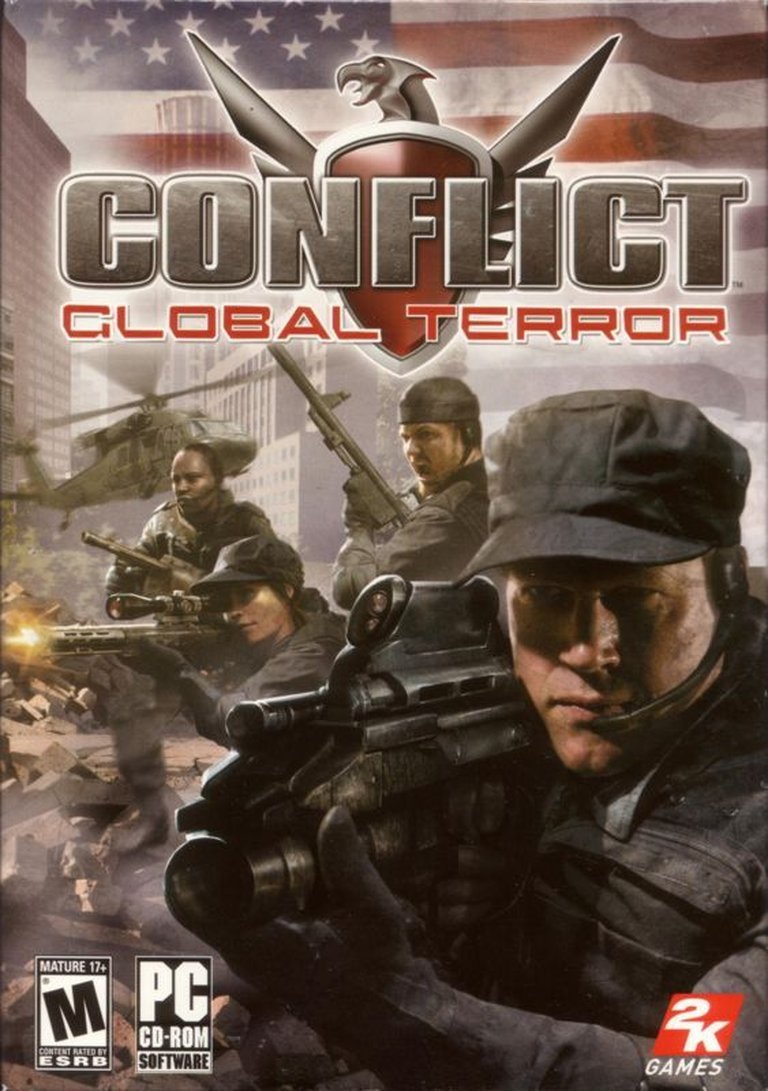
Conflict: Global Terror plunges players into high-stakes counter-terrorism operations as Red Team, an elite squad battling threats across diverse global locations like gas factories, drug production sites, and urban hotels. Offering a blend of close-quarters combat and strategic planning, the game features gadgets like thermal goggles, laser designators for air strikes, and claymore mines for tactical ambushes. Players can choose between aggressive run-and-gun tactics or stealthy approaches, command a four-member team with distinct personalities, and execute coordinated maneuvers. With co-op multiplayer, over 30 unique weapons, and missions ranging from frenetic sieges to methodical breaches, the game delivers flexible gameplay suited for both newcomers and veterans.
Gameplay Videos
Conflict: Global Terror Free Download
Conflict: Global Terror Cracks & Fixes
Conflict: Global Terror Patches & Updates
Conflict: Global Terror Guides & Walkthroughs
Conflict: Global Terror Cheats & Codes
Xbox
Enter codes at the main menu.
| Code | Effect |
|---|---|
| L, R, L, R, X, White, Black, X | Unlock the cheat menu |
PlayStation 2
Enter codes at the main menu.
| Code | Effect |
|---|---|
| L1, R1, L1, R1, Circle, Circle, Circle, Circle | Unlock the cheat menu |
PC
Hold [Shift] and type the code at the main menu.
| Code | Effect |
|---|---|
| confusionexpert | Unlock the cheat menu |
| desertwatch | Unlock the cheat menu |
Conflict: Global Terror: A Tactical Shooter Caught Between Ambition and Execution
Introduction
Conflict: Global Terror (2005) arrives as the fourth installment in Pivotal Games’ Conflict series, thrusting players into post-9/11 counter-terrorism operations with the return of the fan-favorite “Red Team.” Released amid a saturated market of tactical shooters like Rainbow Six 3 and SOCOM, the game ambitiously attempts to evolve the squad-based formula with globetrotting missions and advanced command systems. This review argues that while Global Terror leverages the franchise’s strengths—co-op play and mission diversity—it remains hamstrung by technical limitations, inconsistent AI, and a narrative that fails to transcend military-action clichés.
Development History & Context
Developed by UK-based Pivotal Games (led by industry veterans like Jim Bambra and Marc Curtis) and published by SCi Entertainment, Global Terror emerged during a paradigm shift in military shooters. The mid-2000s saw a surge in games reflecting real-world conflicts, with Call of Duty 2 and Ghost Recon dominating the landscape. Pivotal aimed to refine the Conflict formula established in Desert Storm (2002) by transitioning from historical conflicts to contemporary counter-terrorism—a decision influenced by post-9/11 geopolitical anxieties.
Built for PlayStation 2, Xbox, and PC, the game utilized a rebuilt engine to accommodate destructible environments and enhanced squad AI. However, hardware limitations of the era resulted in compromises: texture pop-in, limited draw distances, and rudimentary character models. Notably, Pivotal prioritized accessibility over realism, designing controls for both “run-and-gun” players and tacticians—a double-edged sword that divided critics.
Narrative & Thematic Deep Dive
The plot follows Red Team—Bradley (leader), Connors (demolitions), Jones (engineer), and sniper Foley (later replaced by Carrie Sherman after his capture)—as they dismantle the terrorist network March 33 across Colombia, Egypt, Ukraine, and Kashmir. The story unfolds via mission briefings and stiffly animated cutscenes, emphasizing 24-esque political intrigue: rogue agents, WMD threats, and betrayed allies (notably Foley’s abduction and subsequent rescue in Denied Ops).
Narratively, the game leans into post-9/11 tropes:
– “Global terror” as a borderless threat, reflected in missions raiding cocaine labs, gas plants, and luxury hotels.
– Shallow character development, though returning voices like Steven Jay Blum (Bradley) inject personality into archetypes.
– Moral simplicity, with villains like Hans Klerbler and Karl Mandel embodying cartoonish evil without nuance.
Themes of loyalty and sacrifice resonate in Foley’s MIA arc and Connors’ brother Alan’s execution, but the writing lacks the emotional weight of contemporaries like Full Spectrum Warrior.
Gameplay Mechanics & Systems
Global Terror blends third-person shooting with squad command, offering flexibility that remains its core strength:
Core Loop
- Mission Structure: 15 operations blending stealth (disable AA guns), escort (protect Senator Maguire), and all-out assault (nuclear disarmament).
- Squad Control: Swap between any team member or issue commands via radial menus. Advanced planning allows synchronized actions (e.g., “Jones breaches the door; Bradley tosses a flashbang”).
- Gadgets & Weapons: Over 30 tools, including thermal goggles for smoke-filled rooms, laser designators for airstrikes, and claymores for ambushes.
Innovations & Flaws
- Co-op Multiplayer: 2-4 players via split-screen, LAN, or online (Xbox Live) transform the experience, mitigating single-player AI woes.
- AI Issues: Teammates frequently pathfind into walls, while enemies alternate between tactical cover use and suicidal charges. German critic 4Players.de noted: “The AI makes the campaign a chore—co-op is the only salvation.”
- Progression & Difficulty: Four difficulty modes and weapon stats (e.g., pistols outperform LMGs in tight spaces) reward experimentation, but checkpoint-only saves punish players.
UI/UX
- Console-Centric Design: Cluttered HUD and radial menus frustrate PC players (GameSpot: “Port-like controls”).
World-Building, Art & Sound
Global Terror’s globetrotting settings provide visual variety but suffer from technical restraints:
- Environmental Design: Snowy Chechen mountains, neon-lit Seoul streets, and Egyptian deserts showcase Pivotal’s ambition. Destructible walls (via C4) add dynamism, but levels remain linear.
- Art Direction: Textures vary from detailed weapon models to blurry foliage. Character faces, criticized as “remarkably ugly” (4Players.de), lack expressiveness.
- Sound Design: Functional but forgettable. Gunfire lacks punch, and David Lodge’s gruff voice acting for Jones outshines generic enemy barks. The score blends militaristic drums with tense synths but rarely elevates scenes.
Reception & Legacy
Upon release, Global Terror earned mixed reviews (Metacritic: 62/100 Xbox, 61/100 PC):
Praise
- Co-op Gameplay: Official Xbox Magazine UK hailed its “loads of fun” multiplayer, awarding 80%.
- Mission Variety: Bonusweb (85%) praised gas factory sieges and jungle ambushes.
Criticism
- AI and Controls: GameSpy (30%) lamented “abysmal AI,” while IGN (6/10) called the PC port “clunky.”
- Formulaic Design: Jeuxvideo.com (65%) deemed it “correct but unremarkable” next to Rainbow Six.
Commercially, it underperformed against 2005 titans like Battlefield 2, but its legacy endures as a cult entry for:
– Co-op nostalgia: Few contemporaries offered seamless 4-player tactical play.
– Influence: Its gadget-driven approach prefigured Ghost Recon: Advanced Warfighter’s drone mechanics.
Conclusion
Conflict: Global Terror encapsulates mid-2000s tactical shooters—ambitious in scope but compromised by execution. Its co-op focus and mission diversity offer fleeting thrills, yet janky AI, dated presentation, and a derivative narrative prevent it from standing alongside genre greats. For fans of the series or co-op enthusiasts, it remains a flawed time capsule. For historians, it exemplifies the challenges of balancing accessibility with depth in an era of military-shooter saturation. Verdict: A mid-tier relic—worth revisiting for its highs but emblematic of its limitations.