
- Release Year: 2018
- Platforms: Nintendo Switch, Windows
- Publisher: Wenkly Studio Sp. z o.o.
- Developer: Wenkly Studio Sp. z o.o.
- Genre: Strategy, Tactics
- Perspective: Top-down
- Game Mode: Single-player
- Gameplay: Tower defense
- Setting: Medieval
- Average Score: 60/100
Description
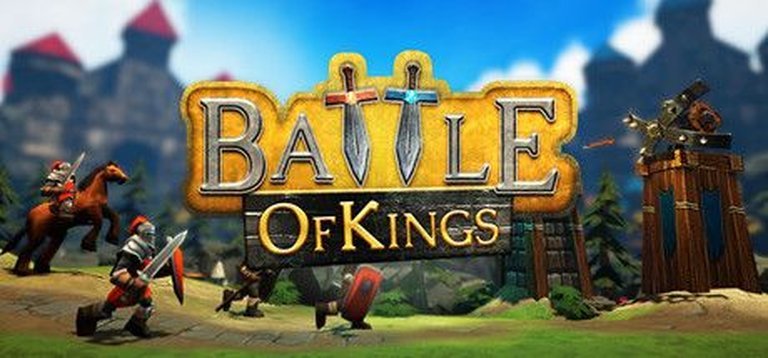
Battle of Kings is a medieval-themed tower defense strategy game where players defend their kingdom against invading forces led by their power-hungry cousin, Marcus, and his dark wizard ally, Arfael. Set across three distinct islands with varying climates, the game challenges players to strategically deploy towers, manage resources, and repel waves of enemies in real-time combat. Despite its simple mobile-like graphics and fixed camera angles, the game emphasizes fast-paced tactical decisions and offers a blend of traditional tower defense mechanics with light storytelling elements.
Where to Buy Battle of Kings
PC
Battle of Kings Guides & Walkthroughs
Battle of Kings Reviews & Reception
metacritic.com (60/100): It certainly doesn’t break out of the tower defense mold but Battle of Kings is an enjoyable and fast-paced strategic experience.
Battle of Kings: Review
Introduction
In the ever-crowded arena of tower defense games, Battle of Kings (2018) from Wenkly Studio stakes its claim with a blend of medieval strategy and asymmetrical PvE/PvP warfare. Released during a resurgence of real-time tactics hybrids, the game aimed to carve out a niche through its “attack while defending” premise, where players alternate between fortifying their kingdom and raiding rivals. While its ambition to merge tower defense and auto-battler mechanics is commendable, Battle of Kings ultimately oscillates between moments of frantic enjoyment and repetitive, formulaic design. This review excavates the game’s triumphs and tribulations, cementing its status as a flawed yet earnest footnote in the genre’s history.
Development History & Context
Studio Vision and Technological Constraints
Developed by Poland-based Wenkly Studio (known for VR titles like Arca’s Path), Battle of Kings was conceived as a non-VR adaptation of their earlier VR prototype. Built on Unity, the game targeted modest hardware—requiring only a dual-core CPU and NVIDIA 9600 GT—enabling wider accessibility but limiting visual complexity. The studio’s pivot to a traditional strategy format reflected a pragmatic response to the oversaturated VR market of 2018, though the transition left the game feeling structurally akin to mobile titles upscaled for PC and Switch.
Gaming Landscape and Genre Competition
At launch, Battle of Kings entered a genre dominated by titans like Kingdom Rush Vengeance and Bloons TD 6. Its attempt to hybridize tower defense with light RTS and auto-battler elements—a burgeoning trend post-Auto Chess—was timely but underdeveloped. The absence of meta-progression or roguelike hooks, staples of contemporary hits, further hampered its longevity.
Narrative & Thematic Deep Dive
A Generic Tale of Feudal Betrayal
The plot centers on a once-peaceful realm fractured by ambition: you rule one kingdom, while your cousin Marcus, allied with the dark wizard Arfael, covets your lands. This boilerplate setup serves solely to contextualize the conflict across three climatically dissonant islands (grassland, desert, and snow), with no character development or thematic depth. Campaign dialogue, narrated by the aptly forgettable Cedric, offers minimal lore, reducing Marcus and Arfael to off-screen boogeymen.
Thematic Undercurrents
Beneath the surface, Battle of Kings gestures at themes of economic stewardship and asymmetric warfare. Your dual role as defender and aggressor mirrors Machiavellian pragmatism—upgrading mines to fund both artillery and invasion forces—but this duality remains undercooked. The narrative’s sole provocation lies in its climatic twist: Marcus’s AI “cheats” in the final battle, flooding waves with unaffordable units—a meta-commentary on unfair odds that frustrated players more than it enlightened.
Gameplay Mechanics & Systems
Core Loop: Juggling Defense and Offense
The game’s backbone is its Battle Mode, where players alternate phases:
1. Defense: Deploy 7 tower types (cannons, flamethrowers, archers) along enemy paths, each with 3 incremental upgrades.
2. Economy: Invest gold into mines to boost income.
3. Offense: Purchase units (knights, siege engines) to assault the opponent’s base.
Victory requires balancing resource allocation—a concept potent in theory but stymied by predictability. Enemies follow fixed paths, towers lack synergy, and unit upgrades (e.g., +10% damage) feel inconsequential.
Campaign and PvP: Two Sides of a Shallow Coin
- PvE Campaign: 15 missions (5 per biome) escalate difficulty artificially via enemy spam, culminating in the infamous, imbalanced final battle.
- PvP Multiplayer: The game’s saving grace, where human opponents inject unpredictability. Still, the limited unit/tower roster (8 and 7, respectively) and absence of fog-of-war led to repetitive rock-paper-scissors strategies.
Critical Flaws
- AI Exploits: As SaveOrQuit noted, late-game AI breaches its own economy, spawning units beyond player income caps.
- Unpolished Systems: Towers inconsistently hit moving targets; cannon projectiles often miss.
- UI/UX Shortcomings: Fixed camera angles and clumsy zoom obscure battlefield visibility, exacerbating chaotic late waves.
World-Building, Art & Sound
Visual Design: Functional but Forgettable
Battle of Kings adopts a bright, cartoonish aesthetic reminiscent of mid-2010s mobile games. Unit animations are wooden—soldiers march rigidly, towers lack destructibility—though environmental diversity (lava fields, icy forts) provides fleeting visual interest. The Switch port’s handheld mode sharpens textures but can’t mask the simplistic geometry.
Audio: Ambition vs. Execution
Sound design is similarly uneven. Localized weapon effects (cannon booms, fiery whooshes) impress, but the generic orchestral score loops tiresomely. Voice acting, notably Cedric’s gravelly narration, leans into self-seriousness that borders on parody, clashing with the game’s whimsical art.
Reception & Legacy
Launch Reception: Tepid Praise
Critics praised the PvP’s fast pace but lambasted the campaign’s repetition and technical jank. Video Chums’ 60% review encapsulated the consensus: “Enjoyable but uninnovative.” Steam reviews echoed this, with 65% positivity citing “cozy” fun undercut by shallow systems.
Post-Launch Evolution and Influence
Post-2020 patches tweaked balance but failed to revitalize the dwindling player base. While precursor to Wenkly’s later Royale Age: Battle of Kings (a tower-defense/auto-chess hybrid), the original game’s legacy is negligible. Its sole contribution remains proof-of-concept for asymmetrical tower defense—a formula later refined by titles like Rogue Tower.
Conclusion
Battle of Kings is a game of unfulfilled promises. Its fusion of defense and offense mechanics hinted at strategic depth, but shallow systems, repetitive design, and technical limitations relegated it to bargain-bin obscurity. While PvP aficionados may find fleeting joy in its skirmishes, the campaign’s artificial difficulty and lackluster narrative offer little redemption. As a historical artifact, it exemplifies indie ambition hampered by scope constraints—an instructive case study, not a crown jewel. For genre completists, it’s a curiosity; for most, a relic best left in the vaults.