
- Release Year: 2003
- Platforms: Dreamcast, Windows
- Publisher: GOAT Store, LLC, The, S+F Software
- Developer: S+F Software
- Genre: Puzzle, Tile matching puzzle
- Perspective: Top-down
- Game Mode: LAN, Single-player
- Gameplay: Combo, Puzzle, Tile matching
- Average Score: 74/100
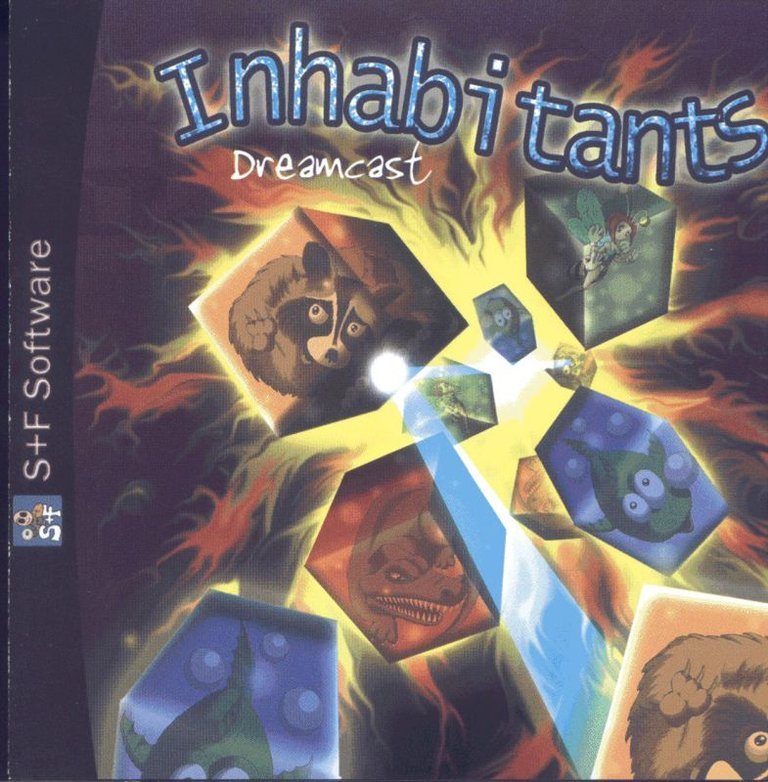
Description
Inhabitants is a puzzle game released in 2003 that challenges players to clear tiles in a unique twist on the classic tile-matching genre. Players must remove tiles that are one away from their current position, with a maximum of five tiles removable at once to achieve a four-way combo. The game supports both single-player and competitive multiplayer modes, offering various gameplay options to unlock.
Where to Buy Inhabitants
PC
Inhabitants Cracks & Fixes
Inhabitants Reviews & Reception
mobygames.com (74/100): Average score: 74% (based on 1 ratings)
Inhabitants: An Unassuming Gem in the Puzzle Genre
Introduction
In an era dominated by blockbuster franchises and 3D epics, Inhabitants (2003) carved out a quiet but memorable niche as a cerebral tile-matching puzzler. Developed by the under-the-radar studio S+F Software, the game combined the accessibility of classics like SameGame with a tactical twist: players could only remove tiles adjacent to their cursor, demanding careful spatial planning over mindless matching. Though overshadowed by flashier contemporaries, Inhabitants garnered a cult following, particularly among Dreamcast collectors, for its deceptive depth and competitive multiplayer. This review explores how a modest freeware project evolved into a polished, underappreciated title that still resonates with puzzle purists.
Development History & Context
Born from the experimental ethos of early 2000s indie development, Inhabitants began as a freeware PC project in 2002 by S+F Software—a small team led by Steve Thompson and Brandon J. Parker. At a time when the gaming industry pivoted toward cinematic experiences (e.g., Half-Life 2, Prince of Persia: The Sands of Time), S+F doubled down on minimalist design, refining their prototype into a commercial release in 2003.
The Dreamcast port, published in 2005 by The GOAT Store, arrived posthumously for the console but capitalized on its enduring indie scene. Technical constraints likely shaped the game’s fixed-screen, grid-based presentation, yet these limitations birthed its core innovation: proximity-based tile removal. Inhabitants’ development mirrors the DIY spirit of early-aughts indie devs, who often repurposed familiar mechanics into fresh hybrids.
Narrative & Thematic Deep Dive
Inhabitants forgoes narrative pretense—no ancient prophecies or alien invasions here. Its “story” is purely mechanical: players cleanse boards of colored tiles through logical deduction. Yet this simplicity belies subtle thematic undertones:
- Isolation & Connection: The adjacency rule mirrors human relationships; you can only influence what’s directly reachable.
- Order from Chaos: Each level starts as a disorganized grid, rewarding players who impose structure.
Dialogue and characters are absent, but the game speaks through its escalating complexity. Later stages introduce “four-way combos” (clearing five tiles at once), turning puzzles into rhythmic dances of cause and effect.
Gameplay Mechanics & Systems
Inhabitants thrives on elegant, interlocking systems:
- Core Loop:
- Navigate a cursor to remove matching tiles adjacent to your position.
- Chains reward multipliers; mismatches penalize score.
- Strategic Depth:
- Unlike Bejeweled’s swap-and-match, Inhabitants demands pathfinding foresight. Optimal play requires planning several moves ahead, akin to chess.
- Multiplayer:
- Up to four players compete on split-screen boards, introducing sabotage via cascading tile collapses.
- Progression:
- Unlockable modes (e.g., timed challenges, infinite puzzles) cater to both casual and completionist players.
The UI is sparse but functional, prioritizing readability over flair. However, the lack of undo/redo options—a baffling omission—marred otherwise fluid gameplay.
World-Building, Art & Sound
- Visual Design: The top-down perspective and vibrant, chunky tiles evoke a board-game aesthetic. While lacking the polish of Lumines, the clean art ensures clarity during frenetic matches.
- Sound Design: Josh Deeb’s soundtrack blends upbeat synth loops with satisfying “pop” effects for tile clears. Audio cues subtly reinforce success/failure without overwhelming the player.
- Atmosphere: Despite minimal flair, the game cultivates a hypnotic zen-like state, amplified by its repetitive yet soothing feedback loops.
Reception & Legacy
Inhabitants earned mixed-to-positive reception:
– Game Freaks 365 (74/100) praised its “addictive quality” but lamented limited Dreamcast visibility.
– Players rated it 3.6/5—commending its innovation while critiquing repetitive late-game stages.
Though not a commercial hit, its legacy persists:
– Inspired indie puzzlers like Hexcells (2014), which adopted similar adjacency-based mechanics.
– Remains a collector’s item for Dreamcast enthusiasts, symbolizing the console’s post-mortem indie support.
Conclusion
Inhabitants is a testament to the power of restraint. By refining a single mechanic—proximity-based matching—it delivered a puzzle experience both accessible and deeply strategic. While its lack of narrative and uneven difficulty curve may deter modern audiences, the game’s purity of design and competitive multiplayer still captivate. For puzzle aficionados and retro collectors alike, Inhabitants stands as a quiet milestone in the genre’s evolution—a reminder that brilliance often lies in simplicity.