
- Release Year: 2000
- Platforms: Windows
- Publisher: dP-Software
- Developer: dP-Software
- Genre: Simulation, Wilderness survival
- Perspective: Isometric
- Game Mode: Single-player
- Gameplay: Base building, Botany, Crafting, Exploration, Farming, Fishing, Gardening, Hunger, Hunting, Survival, Thirst
- Setting: Deserted Island, Tropical Island
- Average Score: 85/100
Description
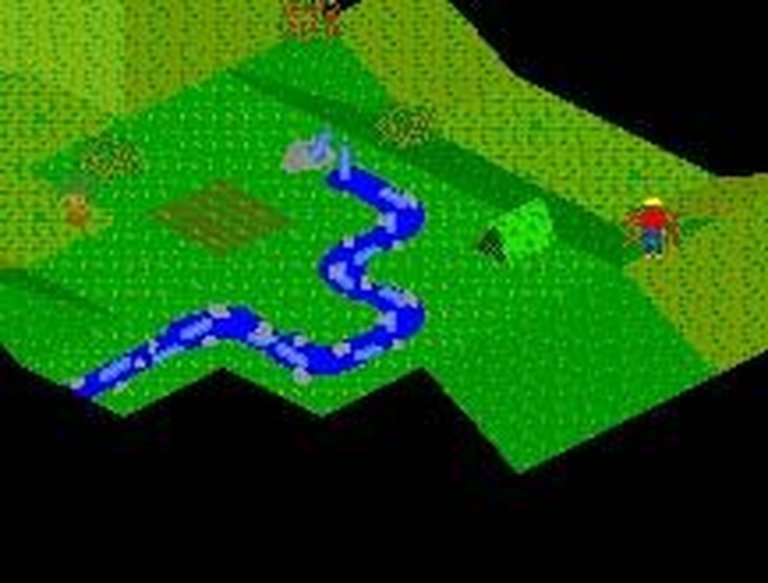
Schiffbruch (‘Shipwreck’) is a freeware survival simulation game set on a randomly generated equatorial island where players control a shipwrecked castaway struggling to survive. Using isometric visuals, players explore the terrain, manage vital resources like food, water, and health, and craft tools, shelters, and SOS signals while racing against time to be rescued. Survival hinges on strategic foraging, careful timing of actions before nightfall (when health deteriorates away from shelter), and a gradually increasing rescue percentage marker.
Schiffbruch Guides & Walkthroughs
Schiffbruch Reviews & Reception
goldenageofgames.com : a fun and refreshing game that will keep you entertained for days.
homeoftheunderdogs.net (81.3/100): a fun and refreshing game that will keep you entertained for days.
Schiffbruch: Review
In the annals of video game history, few titles have managed to capture the essence of survival and exploration as effectively as Schiffbruch. Released in 2000 by dP-Software, this freeware gem thrusts players into the role of a castaway on a randomly generated equatorial island, tasked with subsisting on the island’s meager resources. Despite its humble origins and modest graphical presentation, Schiffbruch stands as a testament to the power of simple, engaging gameplay mechanics and a compelling narrative. This review will delve into the various aspects of Schiffbruch, examining its development history, narrative depth, gameplay mechanics, world-building, critical reception, and enduring legacy.
Introduction
Schiffbruch (“Shipwreck”) is a survival game that epitomizes the genre’s core principles: resource management, exploration, and the relentless struggle for survival. Developed by Dirk Plate and his team at dP-Software, the game was released in 2000, a time when the survival genre was still in its infancy. Schiffbruch distinguishes itself through its procedural generation of the island’s terrain, ensuring that no two playthroughs are alike. The game’s simplicity belies its depth, as players must navigate the island’s challenges while managing their character’s health, hunger, and thirst. The ultimate goal is to be rescued, a task that requires not just survival but also strategic planning and resourcefulness. This review will argue that Schiffbruch is a seminal work in the survival genre, deserving of recognition for its innovative mechanics and enduring appeal.
Development History & Context
The Studio
dP-Software, the studio behind Schiffbruch, was a small, independent developer based in Germany. Led by Dirk Plate, the team consisted of a handful of passionate individuals who were driven by a love for gaming and a desire to create unique experiences. The studio’s modest size allowed for a high degree of creative freedom, enabling them to experiment with new ideas and push the boundaries of what was possible with the technology of the time.
The Creators’ Vision
Dirk Plate, the game’s designer and programmer, envisioned Schiffbruch as a blend of survival, exploration, and strategy. The game’s procedural generation of the island’s terrain was a groundbreaking feature at the time, ensuring that each playthrough offered a fresh experience. Plate’s vision was to create a game that was both challenging and rewarding, where players would have to use their wits and resources to survive and ultimately escape the island.
Technological Constraints
Schiffbruch was developed during a time when the internet was still in its infancy, and game distribution was primarily through physical media. The game’s freeware model was a bold move, allowing it to reach a wider audience without the constraints of traditional publishing. The technological limitations of the era meant that the game had to be designed with a focus on simplicity and efficiency. The isometric graphics, while modest by today’s standards, were a testament to the team’s ability to work within these constraints and create a visually appealing game.
The Gaming Landscape
The early 2000s were a time of transition in the gaming industry. The rise of the internet was beginning to change the way games were distributed and played, and the survival genre was just starting to gain traction. Games like Robinson’s Requiem and Deus had laid the groundwork for survival games, but Schiffbruch offered a unique twist with its procedural generation and focus on resource management. The game’s release in 2000 placed it at the forefront of this emerging genre, and its innovative mechanics and engaging gameplay helped to shape the future of survival games.
Narrative & Thematic Deep Dive
Plot
The narrative of Schiffbruch is deceptively simple. Players take on the role of a castaway who has survived a shipwreck and finds themselves stranded on a deserted island. The game’s opening sequence sets the stage for the player’s journey, as they are left to fend for themselves on the island’s unforgiving terrain. The lack of a traditional narrative is compensated for by the game’s immersive gameplay, which draws the player into the character’s struggle for survival.
Characters
The protagonist of Schiffbruch is a nameless castaway, a silent protagonist whose journey is the focus of the game. The character’s lack of a backstory or personality allows the player to project themselves onto the character, enhancing the game’s immersive experience. The castaway’s resourcefulness and determination are the driving forces behind the game’s narrative, as players must use their wits and ingenuity to survive and ultimately escape the island.
Dialogue
Schiffbruch features minimal dialogue, with the game’s narrative conveyed primarily through the player’s actions and the game’s environmental storytelling. The lack of dialogue allows the game to focus on its core mechanics, with the player’s interactions with the environment serving as the primary means of communication. This minimalist approach to dialogue is a testament to the game’s focus on immersion and player agency.
Themes
Schiffbruch explores several themes, including survival, resourcefulness, and the human spirit’s resilience. The game’s procedural generation of the island’s terrain ensures that each playthrough offers a unique challenge, with players having to adapt to the island’s ever-changing environment. The game’s focus on resource management and strategic planning highlights the importance of preparation and foresight in the face of adversity. The ultimate goal of being rescued serves as a beacon of hope, driving the player’s journey and providing a sense of purpose.
Gameplay Mechanics & Systems
Core Gameplay Loops
Schiffbruch‘s core gameplay loop revolves around exploration, resource gathering, and survival. Players must navigate the island’s terrain, searching for food, water, and other essential resources. The game’s isometric perspective provides a clear view of the environment, allowing players to plan their actions and avoid potential hazards. The game’s procedural generation of the island’s terrain ensures that each playthrough offers a unique challenge, with players having to adapt to the island’s ever-changing environment.
Combat
Combat in Schiffbruch is minimal, with the game’s focus on survival and resource management. Players may encounter hostile creatures or environmental hazards, but the game’s emphasis is on avoiding or outsmarting these challenges rather than engaging in direct combat. The game’s combat mechanics are simple but effective, with players able to use their tools and resources to defend themselves against threats.
Character Progression
Character progression in Schiffbruch is tied to the player’s ability to gather resources and build tools. As players explore the island, they will discover new materials and resources that can be used to craft tools and structures. The game’s crafting system is intuitive and rewarding, with players able to combine different items to create new tools and structures. The game’s progression system is designed to encourage exploration and experimentation, with players rewarded for their ingenuity and resourcefulness.
UI
Schiffbruch‘s user interface is designed to be intuitive and unobtrusive. The game’s interface is divided into several sections, including a mini-map, action commands, and resource meters. The mini-map provides a clear view of the island’s terrain, allowing players to plan their actions and avoid potential hazards. The action commands menu provides quick access to the game’s various actions, while the resource meters provide real-time feedback on the player’s health, hunger, and thirst levels. The game’s interface is designed to be unobtrusive, allowing players to focus on the game’s immersive experience.
Innovative or Flawed Systems
Schiffbruch‘s procedural generation of the island’s terrain is one of its most innovative features. The game’s use of procedural generation ensures that each playthrough offers a unique challenge, with players having to adapt to the island’s ever-changing environment. The game’s crafting system is another innovative feature, with players able to combine different items to create new tools and structures. The game’s focus on resource management and strategic planning is a testament to its innovative design, with players rewarded for their ingenuity and resourcefulness.
World-Building, Art & Sound
Setting
Schiffbruch‘s setting is a randomly generated equatorial island, a desolate and unforgiving environment that serves as the backdrop for the player’s struggle for survival. The island’s terrain is diverse, with players able to explore forests, beaches, and caves. The game’s procedural generation of the island’s terrain ensures that each playthrough offers a unique challenge, with players having to adapt to the island’s ever-changing environment.
Atmosphere
The game’s atmosphere is one of isolation and desperation, with the player’s struggle for survival serving as the driving force behind the game’s narrative. The game’s isometric perspective provides a clear view of the environment, allowing players to plan their actions and avoid potential hazards. The game’s minimalist art style and subdued color palette contribute to its atmospheric immersion, with the game’s visuals serving to enhance the player’s sense of isolation and desperation.
Visual Direction
Schiffbruch‘s visual direction is characterized by its isometric perspective and minimalist art style. The game’s graphics are modest by today’s standards, but they are effective in conveying the game’s atmosphere and setting. The game’s use of procedural generation ensures that each playthrough offers a unique visual experience, with the island’s terrain and features generated randomly. The game’s visuals are designed to be unobtrusive, allowing players to focus on the game’s immersive experience.
Sound Design
The game’s sound design is minimalist but effective, with the game’s audio serving to enhance the player’s sense of immersion. The game’s soundtrack is subtle and unobtrusive, with the game’s audio effects serving to highlight the game’s environmental storytelling. The game’s sound effects are designed to be realistic, with the game’s audio serving to enhance the player’s sense of immersion and engagement.
Reception & Legacy
Critical Reception
Schiffbruch received critical acclaim upon its release, with reviewers praising its innovative mechanics and engaging gameplay. The game’s procedural generation of the island’s terrain was highlighted as a groundbreaking feature, ensuring that each playthrough offered a unique challenge. The game’s focus on resource management and strategic planning was also praised, with reviewers noting the game’s depth and complexity. The game’s minimalist art style and subdued color palette were criticized by some reviewers, but the game’s overall reception was overwhelmingly positive.
Commercial Reception
As a freeware title, Schiffbruch did not have traditional commercial metrics to measure its success. However, the game’s widespread distribution and positive reception among players and critics alike ensured its enduring popularity. The game’s freeware model allowed it to reach a global audience, with players from around the world downloading and playing the game.
Influence on Subsequent Games
Schiffbruch‘s influence on the survival genre is undeniable. The game’s procedural generation of the island’s terrain, focus on resource management, and strategic planning have become staples of the genre. Games like Minecraft, The Forest, and Rust owe a debt to Schiffbruch, with their own mechanics and systems building upon the foundation laid by this pioneering title. The game’s legacy can be seen in the countless survival games that have followed, each seeking to capture the same sense of immersion and challenge that Schiffbruch offered.
Conclusion
Schiffbruch is a seminal work in the survival genre, deserving of recognition for its innovative mechanics and enduring appeal. The game’s procedural generation of the island’s terrain, focus on resource management, and strategic planning have become staples of the genre, influencing countless games that have followed. The game’s minimalist art style and subdued color palette, while criticized by some, contribute to its atmospheric immersion, with the game’s visuals serving to enhance the player’s sense of isolation and desperation. The game’s legacy is a testament to the power of simple, engaging gameplay mechanics and a compelling narrative, with Schiffbruch standing as a beacon of innovation and creativity in the world of video games. Its place in video game history is secure, and its influence will continue to be felt for years to come.