
- Release Year: 2006
- Platforms: Windows
- Publisher: Razor Games
- Genre: Compilation
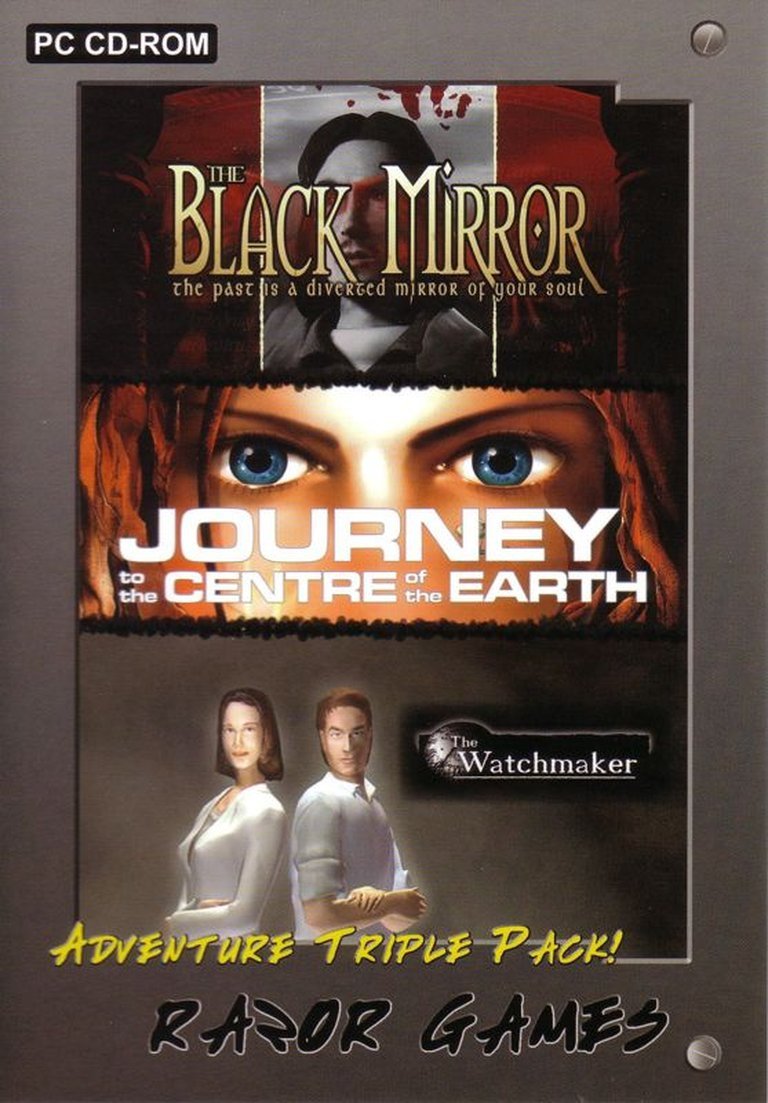
Description
Adventure Triple Pack! is a compilation of three engaging adventure games released in 2006. It includes Journey to the Center of the Earth, The Black Mirror, and The Watchmaker, each offering a unique storyline and puzzles to solve. The games are presented in a third-person perspective, providing an immersive experience for players who enjoy exploration and mystery.
Adventure Triple Pack! Free Download
Adventure Triple Pack!: A Forgotten Relic of Early 2000s Adventure Gaming
Introduction
In the mid-2000s, as the gaming industry pivoted toward action-packed shooters and open-world epics, the humble adventure game seemed destined for obsolescence. Enter Adventure Triple Pack!, a 2006 compilation bundling three European-developed titles: Journey to the Center of the Earth (2003), The Black Mirror (2003), and The Watchmaker (2001). While overlooked in its time, this collection now stands as a poignant artifact of a genre in transition—a bridge between the golden age of point-and-click classics and the experimental narratives of modern indie adventures. This review argues that Adventure Triple Pack!, despite its obscurity, offers a compelling microcosm of early 2000s adventure gaming, showcasing both the genre’s enduring strengths and its struggle to adapt to technological and market shifts.
Development History & Context
The Studios Behind the Saga
Developed by a trio of European studios—Frogwares (Journey), Future Games (The Black Mirror), and Trecision (The Watchmaker)—the compilation reflects the decentralized nature of adventure game development in the 2000s. Frogwares, now known for the Sherlock Holmes series, leaned into narrative-driven mysteries, while Future Games embraced gothic horror. Trecision, a lesser-known Italian studio, specialized in surreal, puzzle-heavy experiences.
Technological Constraints
Released on CD-ROM, the games grappled with the limitations of early 2000s hardware. Pre-rendered backgrounds and fixed camera angles were staples, a holdover from the Myst era, while 3D character models (notably in The Black Mirror) often clashed awkwardly with 2D environments. Voice acting was sparse, relying on text-heavy dialogue—a cost-saving measure that lent the games a quaint, bookish charm.
The Gaming Landscape
By 2006, the adventure genre was in decline, squeezed out by Half-Life 2’s action-driven storytelling and World of Warcraft’s social sprawl. Compilations like Adventure Triple Pack! targeted die-hard fans, offering affordability ($29.99 MSRP) but little marketing fanfare. For Razor Games, the publisher, this was a low-risk bet on nostalgia—one that ultimately faded into obscurity.
Narrative & Thematic Deep Dive
A Trilogy of Tales
1. Journey to the Center of the Earth: Frogwares’ adaptation of Jules Verne’s novel is a globe-trotting expedition brimming with Victorian optimism. Players assume the role of a geologist deciphering cryptic journals to uncover hidden caves and ancient machinery. Thematically, it’s a celebration of scientific curiosity—though its puzzles often devolve into illogical object-combining tropes.
-
The Black Mirror: Future Games’ standout entry is a gothic horror mystery set in a decaying English manor. Protagonist Samuel Gordon investigates his family’s cursed history, uncovering occult rituals and familial betrayal. Its themes of inherited guilt and existential dread echo The Name of the Rose, but its pacing suffers from convoluted plot twists.
-
The Watchmaker: The most avant-garde of the trio, Trecision’s tale follows a amnesiac mechanic unraveling a dystopian city’s time-manipulating secrets. Its narrative explores free will versus determinism, though its abstract storytelling often alienates players.
Shared Themes
All three games grapple with discovery—whether geological, psychological, or temporal. Each protagonist is an outsider piecing together fragmented truths, a metaphor for the player’s own struggle with obtuse puzzles.
Gameplay Mechanics & Systems
Point-and-Click Foundations
The compilation adheres to classic adventure mechanics:
– Inventory Puzzles: The Black Mirror excels here, requiring players to combine items like a “mirror shard + candle” to reveal hidden messages.
– Dialogue Trees: Limited but functional, with The Watchmaker using cryptic exchanges to obscure key clues.
– Pixel Hunting: A notorious flaw in Journey, where crucial items blend into overly detailed backgrounds.
Innovations and Missteps
– The Black Mirror introduced a context-sensitive cursor, reducing frustration.
– The Watchmaker’s time-manipulation puzzles were ambitious but poorly tutorialized.
– Journey’s map navigation felt archaic even for 2003, relying on tedious backtracking.
World-Building, Art & Sound
Visual Styles
– Journey: Vibrant, poster-like environments evoke 19th-century scientific illustrations.
– The Black Mirror: Moody, chiaroscuro lighting heightens the sense of dread.
– The Watchmaker: Surreal, Escher-esque architecture reinforces its themes of disorientation.
Sound Design
– The Black Mirror’s haunting choir motifs elevate its gothic atmosphere.
– Journey’s sparse soundscape—creaking wood, dripping caves—immerses players in subterranean isolation.
– The Watchmaker’s mechanical whirrs and ticking clocks are unnerving yet fitting.
Reception & Legacy
Critical Silence
The compilation garnered no mainstream reviews—a testament to its niche appeal. Individually, The Black Mirror earned praise for its narrative (70/100 on GameSpot), while The Watchmaker was criticized for impenetrable design.
Influence on the Genre
Though commercially ignored, The Black Mirror’s success spawned two sequels, proving demand for story-driven horror adventures. Meanwhile, Frogwares pivoted to Sherlock Holmes, refining the investigative mechanics hinted at in Journey.
A Relic Rediscovered
Today, Adventure Triple Pack! is a cult curiosity, traded among collectors for $15–$30. Its value lies not in innovation, but in preserving three distinct visions of early 2000s adventure design—flaws and all.
Conclusion
Adventure Triple Pack! is no masterpiece. Its games are uneven, its design dated, and its cultural footprint negligible. Yet as a historical document, it’s invaluable—a snapshot of a genre clinging to relevance in an industry racing toward photorealism and multiplayer dominance. For historians, it’s a case study in European game development; for players, a reminder of when puzzles mattered more than polygons. In the annals of gaming history, this compilation is a footnote—but footnotes often harbor the most intriguing stories.
Final Verdict:
A flawed but fascinating time capsule—best appreciated by adventure game archaeologists and patient retro enthusiasts. ★★★☆☆ (3/5)