
- Release Year: 2002
- Platforms: Macintosh, Windows
- Publisher: Elävät Kirjat Oy, Levande Böcker i Norden AB
- Developer: Gravity e-learning AB
- Genre: Driving, Educational, Racing, Simulation
- Perspective: 3rd-person (Other)
- Game Mode: Single-player
- Gameplay: Building, Drag and drop, Puzzle elements
Description
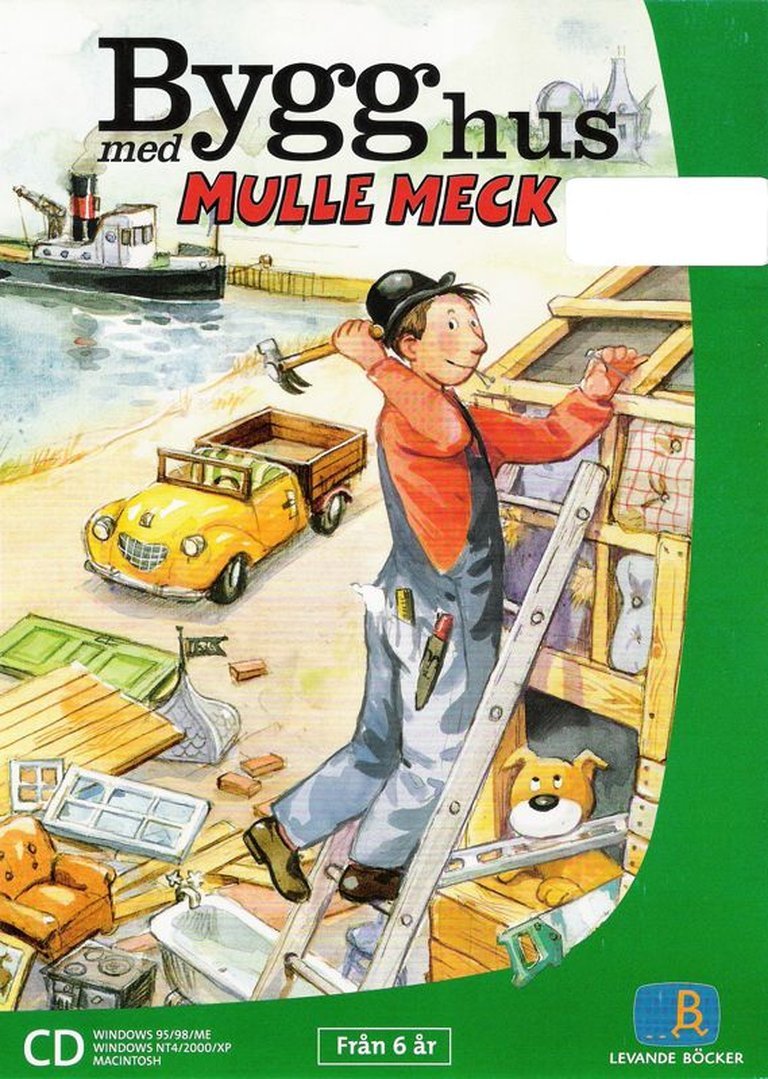
Bygg hus med Mulle Meck is an educational simulation game where players help the beloved children’s book character Mulle Meck (Gary Gadget in the US) rebuild his house after it’s destroyed in a storm. Using a drag-and-drop interface, players combine various parts like walls, floors, and roofs from Mulle’s garage to construct and decorate their dream home. The game also features exploration elements, allowing players to travel by car or boat to meet characters, complete missions, and unlock additional building materials and furnishings.
Gameplay Videos
Bygg hus med Mulle Meck Cheats & Codes
PC
Enter codes in the hangar to receive the corresponding part package.
| Code | Effect |
|---|---|
| junkers | Grants junkers part package |
| bleriot | Grants bleriot part package |
| bonanza | Grants bonanza part package |
| geebee | Grants geebee part package |
| spirit | Grants spirit part package |
| taube | Grants taube part package |
| pipercub | Grants pipercub part package |
| tigermoth | Grants tigermoth part package |
| fokker | Grants fokker part package |
| wright | Grants wright part package |
Bygg hus med Mulle Meck: A Masterclass in Educational Game Design
Introduction
In the early 2000s, the educational gaming landscape was a burgeoning frontier, with developers experimenting with ways to merge entertainment and learning. Among the standout titles of this era was Bygg hus med Mulle Meck, a game that not only captivated young audiences but also set a benchmark for how educational games could be both fun and instructive. Released in 2002, this game was the fourth installment in the Mulle Meck series, a franchise based on the beloved Swedish children’s books by George Johansson and Jens Ahlbom. The game’s premise—helping the eponymous handyman rebuild his house after a storm—might seem simple, but its execution was anything but. Through a blend of creative gameplay mechanics, charming narrative, and meticulous world-building, Bygg hus med Mulle Meck became a cultural touchstone in Scandinavian gaming and a testament to the power of educational software.
Development History & Context
The Studio and Creators’ Vision
Bygg hus med Mulle Meck was developed by Gravity e-learning AB, a studio that specialized in creating educational software. The game was published by Levande Böcker i Norden AB, a company known for its commitment to bringing literature to life through interactive media. The creative team behind the game included Jens Ahlbom and George Johansson, the original creators of the Mulle Meck book series, ensuring that the game stayed true to the spirit of the source material. The project was led by Nikolina Gillgren, who served as both producer and one of the manuscript writers, with Niklas Billström as the project leader and Johan Svensson as the lead programmer.
The vision for Bygg hus med Mulle Meck was to create an immersive experience that would teach children about construction, problem-solving, and creativity. The game was designed to be accessible to children aged six and above, with a focus on intuitive controls and engaging gameplay. The developers aimed to create a world where players could explore, interact with characters, and learn through hands-on activities.
Technological Constraints and Innovations
The early 2000s were a time of rapid technological advancement in gaming, but educational games often lagged behind in terms of graphical fidelity and gameplay complexity. Bygg hus med Mulle Meck was developed for Windows and Macintosh platforms, with a CD-ROM distribution model. The game utilized a top-down perspective for exploration and a third-person view for construction, a design choice that allowed for a clear and intuitive interface.
One of the game’s most innovative features was its drag-and-drop construction system. Players could select various parts from Mulle’s garage and assemble them to build walls, floors, roofs, and furnishings. This system was not only user-friendly but also encouraged creativity, as players could experiment with different combinations to create their dream house. The game also featured a travel mechanic, allowing players to explore the world by car and boat, adding a layer of adventure to the educational experience.
The Gaming Landscape at the Time
In 2002, the gaming industry was dominated by titles like Grand Theft Auto: Vice City, The Elder Scrolls III: Morrowind, and Metroid Prime. Educational games, while not as mainstream, were gaining traction, particularly in Europe. Games like The Sims and RollerCoaster Tycoon had shown that simulation and construction games could be both entertaining and educational. Bygg hus med Mulle Meck fit neatly into this niche, offering a child-friendly alternative to more complex simulation games.
The game’s release was timely, as it capitalized on the growing interest in educational software and the popularity of the Mulle Meck book series. Its success was further bolstered by its localization into multiple languages, including English (as Gary Gadget: Building Houses), German (Willy Werkel: Häuser bauen), and Dutch (De Fantastische Avonturen van Miel Monteur: Huis op Stelten!), making it accessible to a broader audience.
Narrative & Thematic Deep Dive
Plot and Characters
The narrative of Bygg hus med Mulle Meck is straightforward yet engaging. The game begins with Mulle Meck returning home to find his house in ruins after a storm. The player’s mission is to help Mulle rebuild his house by gathering materials, completing tasks for other characters, and constructing the house piece by piece. The story is told through a series of interactions with Mulle’s neighbors and friends, each of whom has their own unique personality and set of tasks for the player to complete.
The characters in the game are vividly brought to life through voice acting and illustrations. Mulle Meck himself is a charming and resourceful handyman, always ready to tackle a new project. His neighbors include a diverse cast of characters, such as Doris Digital, a tech-savvy friend who provides parts for construction, and Erik Erzon, a fellow inventor who offers advice and assistance. The dialogue is witty and engaging, with a touch of humor that appeals to both children and adults.
Themes and Educational Value
At its core, Bygg hus med Mulle Meck is a game about creativity, problem-solving, and perseverance. The game teaches players about the basics of construction, from selecting the right materials to assembling them in a logical order. It also encourages exploration and interaction, as players must venture out into the world to gather resources and complete tasks.
One of the game’s most significant themes is the idea of rebuilding and starting anew. Mulle’s house may be destroyed, but with the player’s help, he can create something even better. This theme of resilience and optimism is woven throughout the game, making it not just an educational tool but also a story of hope and determination.
Gameplay Mechanics & Systems
Core Gameplay Loops
The gameplay of Bygg hus med Mulle Meck is centered around two main activities: construction and exploration. The construction aspect involves dragging and dropping parts from Mulle’s garage onto a template to build the house. Players can choose from a variety of walls, floors, roofs, and furnishings, allowing for a high degree of customization. The exploration aspect involves traveling around the game world by car and boat, meeting characters, and completing tasks to earn more parts and furniture.
The game’s progression is non-linear, allowing players to tackle tasks in any order they choose. This open-ended approach encourages experimentation and creativity, as players can build their house in any way they see fit. The tasks themselves are varied and engaging, ranging from simple fetch quests to more complex puzzles that require problem-solving skills.
Combat and Character Progression
Unlike many games of its time, Bygg hus med Mulle Meck does not feature any combat mechanics. Instead, the focus is on construction, exploration, and interaction. Character progression is tied to the completion of tasks and the acquisition of new parts and furniture. As players complete more tasks, they unlock new areas to explore and new characters to interact with, adding depth and replayability to the game.
UI and Innovative Systems
The user interface of Bygg hus med Mulle Meck is designed to be intuitive and child-friendly. The drag-and-drop construction system is easy to use, with clear visual feedback that helps players understand how different parts fit together. The game also features a building book, which serves as a catalog of all the parts and furniture that players have collected. This system not only helps players keep track of their progress but also encourages them to experiment with different combinations.
One of the game’s most innovative features is its travel mechanic. Players can switch between driving a car and piloting a boat, allowing them to explore different parts of the game world. This mechanic adds a layer of adventure to the game, as players must navigate rivers, roads, and obstacles to reach their destinations.
World-Building, Art & Sound
Setting and Atmosphere
The world of Bygg hus med Mulle Meck is a charming and vibrant place, filled with colorful characters and picturesque landscapes. The game’s setting is a rural Swedish village, complete with forests, rivers, and quaint houses. The atmosphere is warm and inviting, with a sense of community and camaraderie that permeates every interaction.
The game’s art style is a faithful adaptation of the original book illustrations, with bright colors and whimsical designs that appeal to children. The characters are expressive and full of personality, with unique animations that bring them to life. The world is filled with small details, from the rustling of leaves in the forest to the sound of waves lapping against the shore, creating a rich and immersive environment.
Visual Direction and Sound Design
The visual direction of Bygg hus med Mulle Meck is a testament to the game’s commitment to creating a child-friendly experience. The game’s graphics are simple yet effective, with a focus on clarity and readability. The use of bright colors and bold outlines makes it easy for players to distinguish between different objects and characters, while the detailed backgrounds add depth and richness to the world.
The sound design of the game is equally impressive. The music, composed by Örjan Lidén, is cheerful and upbeat, perfectly complementing the game’s lighthearted tone. The voice acting is top-notch, with a cast of talented actors bringing the characters to life. The sound effects are subtle yet effective, adding to the game’s immersive atmosphere.
Reception & Legacy
Critical and Commercial Reception
Bygg hus med Mulle Meck was met with critical acclaim upon its release. Critics praised the game’s charming visuals, engaging gameplay, and educational value. The game was particularly well-received in Sweden, where it became one of the best-selling educational games of 2002. Reviewers highlighted the game’s intuitive controls, creative construction system, and the warmth of its characters.
The game’s success was not limited to Sweden. Its localization into multiple languages allowed it to reach a broader audience, and it received positive reviews in countries like Germany and the Netherlands. The game’s educational value was widely recognized, with many parents and educators praising its ability to teach children about construction and problem-solving in a fun and engaging way.
Influence and Evolution
Bygg hus med Mulle Meck had a significant impact on the educational gaming landscape. Its success demonstrated that educational games could be both entertaining and instructive, paving the way for future titles in the genre. The game’s innovative construction system and open-ended gameplay influenced subsequent educational games, inspiring developers to create more interactive and engaging experiences.
The Mulle Meck series continued to evolve with the release of Upptäck rymden med Mulle Meck in 2004, which expanded the game’s scope to include space exploration. The series’ legacy endures, with many fans fondly remembering the games as a beloved part of their childhood. The game’s influence can also be seen in modern educational games, which continue to draw inspiration from its blend of creativity, exploration, and problem-solving.
Conclusion
Bygg hus med Mulle Meck is a masterclass in educational game design. Its charming narrative, innovative gameplay mechanics, and meticulous world-building create an experience that is both fun and instructive. The game’s success is a testament to the power of educational software, demonstrating that games can be a valuable tool for learning and creativity.
In the annals of video game history, Bygg hus med Mulle Meck stands as a shining example of how to merge entertainment and education. Its legacy endures, not just as a beloved childhood memory for many, but as a benchmark for what educational games can achieve. For its creativity, its charm, and its commitment to teaching through play, Bygg hus med Mulle Meck deserves its place among the greats of educational gaming.