
- Release Year: 2012
- Platforms: Windows
- Publisher: Impossible Mystery Games, Intenium GmbH, media Verlagsgesellschaft mbH
- Developer: Urchin Games
- Genre: Adventure
- Perspective: 1st-person
- Game Mode: Single-player
- Gameplay: Hidden object, Mini-games, Puzzle elements
Description
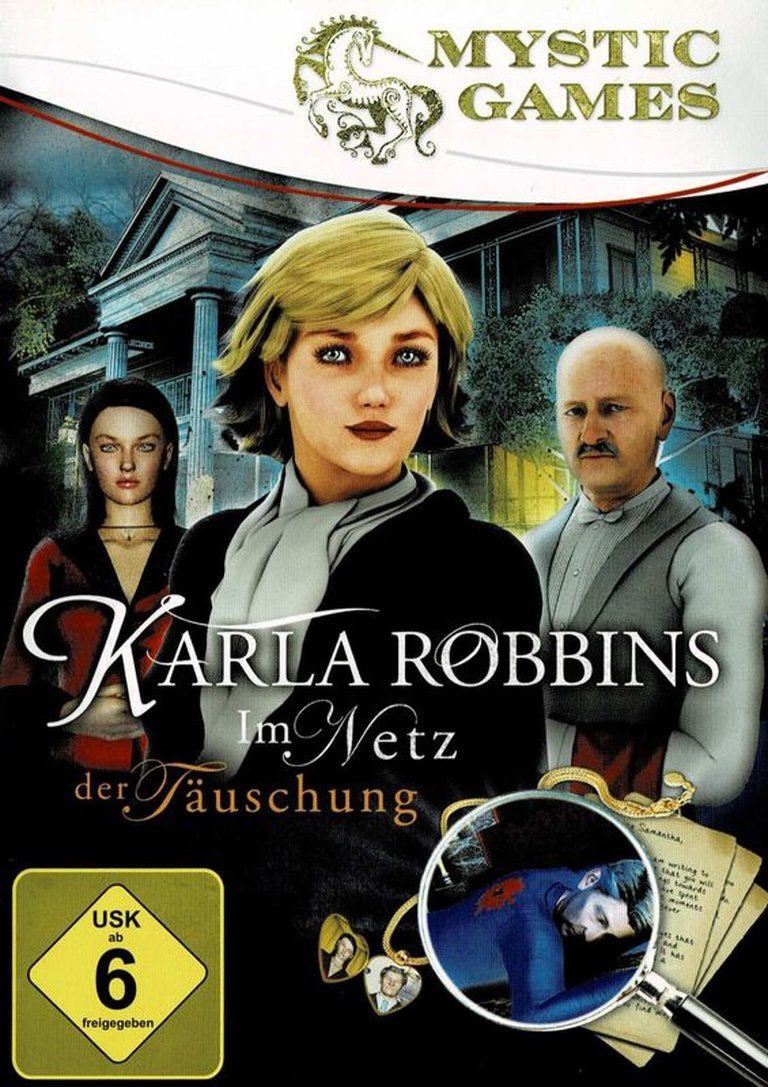
Entwined: Strings of Deception is a first-person hidden object adventure game developed by Urchin Games, where players step into the role of a detective solving a murder mystery in a sprawling, eerie mansion. The game blends classic point-and-click exploration with puzzle-solving and mini-games, challenging players to uncover clues, interrogate suspects, and piece together the truth behind a web of deceit. With two difficulty modes, an interactive case file, and a variety of hidden objects and achievements to collect, the game offers a mix of tension and intrigue set against a gothic backdrop.
Gameplay Videos
Where to Buy Entwined: Strings of Deception
PC
Entwined: Strings of Deception Patches & Updates
Entwined: Strings of Deception Guides & Walkthroughs
Entwined: Strings of Deception Reviews & Reception
gamezebo.com : It’s not good when the first thing you do upon starting a game is sigh.
steamcommunity.com : Not bad. There’s a bit of fun to be had. It’s short and certainly not in the top tier of HOG experiences, but if you can look past the cliché whodunit plot and lack of fast travel, it’s a decent distraction for a couple of hours.
Entwined: Strings of Deception: A Forensic Examination of a Hidden Object Whodunit
Introduction: The Case of the Forgotten Detective
Entwined: Strings of Deception (2012) is a hidden object adventure (HOPA) game that, like the cold case it emulates, has faded into the obscurity of gaming history. Developed by Urchin Games and published by a trio of studios—Intenium GmbH, media Verlagsgesellschaft mbH, and Impossible Mystery Games—it arrived during the golden age of casual detective games, a period when titles like Mystery Case Files and Dark Tales dominated digital storefronts. Yet, unlike its more celebrated peers, Entwined has garnered little critical attention, leaving its legacy as murky as the murder it seeks to solve.
This review aims to exhume Entwined: Strings of Deception from the archives, subjecting it to a rigorous postmortem analysis. Was it a victim of its era’s limitations, or did it possess hidden virtues that time has obscured? Through an examination of its development, narrative, gameplay, and reception, we will determine whether this game deserves a second look—or if it’s best left buried.
Development History & Context: The Birth of a Budget Mystery
The Studio and the Genre’s Golden Age
Urchin Games, the developer behind Entwined, was a relatively small studio specializing in hidden object and puzzle-adventure games. Their portfolio includes titles like Tales of Sorrow: Strawsbrough Town and Scarytales: All Hail King Mongo, games that catered to the burgeoning casual market of the early 2010s. This was an era when digital distribution platforms like Big Fish Games and Steam’s casual section thrived, offering bite-sized mysteries to an audience hungry for quick, engaging experiences.
Entwined: Strings of Deception was released on June 29, 2012, a time when the HOPA genre was at its peak. The market was saturated with games that followed a familiar formula: a murder, a mansion, a cast of suspicious characters, and a player-driven investigation. Urchin Games’ challenge was to differentiate their product in a sea of similitude.
Technological Constraints and Design Philosophy
The game’s technical specifications reveal its modest ambitions:
– OS: Windows XP/Vista/Win7
– CPU: 1.2 GHz
– RAM: 512 MB
– DirectX: 9.0
– Hard Drive: 490 MB
These requirements reflect the limitations of the casual gaming market at the time. Entwined was designed to run on low-end systems, ensuring accessibility for the widest possible audience. This constraint influenced its visual and mechanical design, prioritizing functionality over graphical fidelity.
The development team, comprising 17 individuals (a mix of programmers, 2D/3D artists, and voice actors), worked within these confines to craft a game that balanced simplicity with interactivity. The result is a title that, while not pushing technical boundaries, attempts to deliver a cohesive detective experience.
The Gaming Landscape of 2012
In 2012, the HOPA genre was dominated by a few key trends:
1. The Rise of Hybrid Gameplay: Games increasingly blended hidden object scenes with puzzle-solving and light adventure mechanics.
2. Narrative-Driven Experiences: Players expected more than just item-hunting; they wanted compelling stories with twists and turns.
3. Voice Acting and Production Values: As competition grew, studios invested in voice acting and polished presentations to stand out.
Entwined entered this landscape with a classic whodunit premise—the murder of inventor Christopher Edward—and a promise of multiple suspects, interactive evidence collection, and a “realistic” 1970s setting. However, as we’ll explore, its execution fell short of its ambitions.
Narrative & Thematic Deep Dive: A Mystery Unraveled Too Soon
Plot Summary: The Murder of Christopher Edward
The game opens with the brutal murder of Christopher Edward, a renowned inventor found dead in his mansion under suspicious circumstances. The case file describes his injuries in almost comical detail:
“Having been hit in the head with something heavy and blunt, having fallen down the stairs and having been stabbed in the shoulder.”
The absurdity of this description—paired with the note that the “initial post-mortem could not ascertain the cause of death”—sets an unintentionally humorous tone. Players assume the role of Detective Karla Robbins, tasked with interrogating the five primary suspects:
– Mrs. Edward (the wife)
– The Secretary
– The Butler
– The Housemaid
– The Family Physician
Each suspect has a motive, and the game’s narrative hinges on uncovering which one is the culprit.
Themes: Love, Money, and Power
Entwined attempts to explore classic noir themes:
– Betrayal and Deception: The title itself (Strings of Deception) hints at the web of lies surrounding the murder.
– Class and Privilege: The mansion setting reinforces the disparities between the wealthy Edward family and their servants.
– The Illusion of Justice: The game’s conclusion raises ethical questions about how evidence is obtained (more on this later).
However, these themes are underdeveloped. The story’s biggest flaw is its predictability. As noted in multiple reviews, the culprit becomes obvious early in the game, robbing the narrative of tension. The latter half of the story devolves into repetitive reinforcement of the suspect’s guilt, rather than a dynamic, evolving mystery.
Dialogue and Voice Acting: A Mixed Bag
The game’s voice acting is a standout feature, a rarity in budget HOPAs of the era. Each character has a distinct voice, adding life to the otherwise static interactions. However, the writing and translation issues undermine this strength. Players reported confusion over terms like “aldrop” (a British term for a type of candy), highlighting the game’s localization problems.
The dialogue often feels stilted and expository, with characters delivering information in a way that serves the player’s needs rather than feeling organic. This is a common pitfall in detective games, where narrative must balance player agency with story progression, but Entwined struggles to strike that balance.
The 1970s Setting: A Missed Opportunity
One of the game’s most intriguing (and baffling) choices is its 1970s setting. The era is barely reflected in the game’s aesthetics—characters wear timeless formal attire, and the mansion’s decor is generic. The only indication of the time period is a date in the case file, leading many players to miss it entirely.
This setting could have added depth to the narrative, exploring themes of technological innovation (Edward was an inventor), social upheaval, or Cold War paranoia. Instead, it feels like an arbitrary decision, adding little to the experience.
Gameplay Mechanics & Systems: The Detective’s Toolkit
Core Gameplay Loop: Hidden Objects and Puzzles
Entwined follows the standard HOPA formula:
1. Exploration: Players navigate the Edward mansion and its grounds, clicking on interactive hotspots.
2. Hidden Object Scenes: Players search cluttered environments for items listed at the bottom of the screen.
3. Puzzle-Solving: Mini-games and logic puzzles gate progress, requiring players to use collected items or deduce solutions.
4. Evidence Collection: Fingerprints, jewelry, and key items are gathered to build a case against the suspects.
The game offers two difficulty modes:
– Normal Mode: Faster hint recharges, sparkles on interactive areas, and easier-to-spot collectibles.
– Hard Mode: Slower hints, no sparkles, and more challenging item placement.
Inventory and Case File: A Detective’s Notebook
The inventory system is functional but clunky. Items arrange themselves randomly, making it difficult to track what you’ve collected. The Case File (accessed via the lower-left corner) is more successful, tracking:
– Current objectives
– Suspects and their motives
– Collected evidence
This feature is essential for keeping players oriented, especially given the game’s lack of fast-travel. Backtracking through the mansion can become tedious, though the map system (accessed via the lower-right corner) helps mitigate this.
Puzzles: Logic and Frustration
The puzzles in Entwined are a mixed bag:
– Some are clever, like the scale-balancing puzzle in the Art Gallery, which requires players to place weights strategically.
– Others feel arbitrary, such as the cryptic machinery puzzles that clash with the game’s “realistic” setting.
A recurring criticism is that many puzzles lack contextual justification. For example, why would a detective need to solve a symbol-matching puzzle to open a desk in a 1970s mansion? These moments break immersion and highlight the game’s design inconsistencies.
Collectibles: Fingerprints and Jewelry
The game includes two optional collectible sets:
1. Fingerprints (17 total): Found using fingerprint powder, these serve a narrative purpose in the finale.
2. Jewelry (20 total): Purely for completionists, with no in-game reward.
The fingerprint mechanic is one of the game’s more innovative features, requiring players to:
1. Locate a fingerprint in the environment.
2. Use the Fingerprint Detection Powder from their inventory.
3. Click on the revealed print to collect it.
However, the jewelry collectibles feel like padding, adding little to the experience beyond artificial replay value.
The Hint System: A Double-Edged Sword
The hint system is overly generous, functioning more like a built-in walkthrough than a subtle nudge. Clicking the “?” button outside of hidden object scenes provides:
– A list of current objectives
– Step-by-step instructions for completing them
While helpful for stuck players, this system removes much of the challenge, making the game feel too hand-holdy for experienced HOPA fans.
World-Building, Art & Sound: The Mansion’s Atmosphere
Visual Design: A Dull but Functional Mansion
The Edward mansion is rendered in fixed, first-person perspectives, with pre-rendered backgrounds and 3D character models. The art style is serviceable but unremarkable:
– Textures are flat and repetitive, giving the mansion a sterile, dollhouse-like quality.
– Lighting is minimal, with few dynamic effects to create mood.
– Character animations are stiff, though the 3D models are a step up from the 2D sprites common in other HOPAs.
The hidden object scenes suffer from the same lack of polish. Items are often poorly scaled or awkwardly placed, making some searches more frustrating than satisfying.
Sound Design: Voice Acting Saves the Day
The sound design is adequate, with ambient noises (creaking floors, distant thunder) adding a subtle layer of atmosphere. However, the voice acting is the standout feature:
– Each character has a distinct voice, bringing life to the otherwise wooden dialogue.
– Lip-syncing is surprisingly well-done, a rarity in budget titles.
The music is forgettable, consisting of generic mystery-themed loops that fade into the background.
Atmosphere: A Missed Opportunity for Tension
The game’s 1970s setting and murder-mystery premise could have created a noir-inspired atmosphere, filled with shadowy corridors and suspenseful encounters. Instead, the mansion feels clinical and lifeless, lacking the oppressive dread of classic detective stories.
The lack of dynamic events (e.g., suspects moving around, environmental changes) further drains the world of tension. The mansion is static, a mere backdrop for the player’s actions rather than a living, breathing space.
Reception & Legacy: A Game Lost in the Crowd
Critical Reception: Mediocrity Personified
Entwined: Strings of Deception received little critical attention upon release. The few reviews that exist paint a consistent picture:
– Gamezebo (60/100): Criticized the predictable plot, dull visuals, and lack of innovation, but praised the voice acting and objective clarity.
– Steam User Reviews: Mixed, with some players enjoying the casual detective experience while others found it tedious and buggy.
Common criticisms included:
– The obvious culprit, robbing the mystery of suspense.
– Repetitive hidden object scenes with poorly labeled items.
– Technical issues, such as flickering screens and unresponsive hotspots.
Commercial Performance: A Budget Title’s Fate
The game was not a commercial standout, though it found a niche audience among casual HOPA fans. Its low price point ($5.99 on Steam) and inclusion in bundle packs (e.g., Amazing Hidden Object Games: Women’s Detective Club) ensured it remained accessible.
Legacy: A Footnote in HOPA History
Entwined has had little lasting impact on the genre. It did not spawn a major franchise (though a sequel, Entwined: The Perfect Murder, was released in 2015), nor did it introduce groundbreaking mechanics.
Its most enduring contribution may be its fingerprint collection system, a feature that later games (e.g., Sherlock Holmes: Crimes & Punishments) would refine. However, Entwined itself is largely forgotten, overshadowed by more polished contemporaries like Grim Legends and Dark Parables.
Conclusion: A Case Closed, But Not with a Bang
Entwined: Strings of Deception is a flawed but functional entry in the HOPA genre. It succeeds in delivering a cohesive, if predictable, detective experience, but fails to innovate or excite. Its strengths—voice acting, clear objectives, and a unique fingerprint mechanic—are outweighed by its weaknesses—dull visuals, a lackluster narrative, and repetitive gameplay.
Final Verdict: 5.5/10 – A Forgettable Whodunit
- For HOPA Enthusiasts: Worth a play if found in a bundle, but not a must-own.
- For Detective Game Fans: The predictable plot and lack of tension make it a skip.
- For Casual Gamers: A decent time-waster, but better alternatives exist.
Entwined: Strings of Deception is the gaming equivalent of a procedural crime drama—competent, formulaic, and ultimately forgettable. It solves its own mystery, but not in a way that lingers in the memory.
Case closed.