
- Release Year: 2016
- Platforms: Android, Browser, Linux, Macintosh, Windows
- Publisher: Dice, Nine Square Zone, Visual-Wordplay
- Developer: Dice
- Genre: Adventure, Visual novel
- Perspective: 1st-person
- Game Mode: Single-player
- Gameplay: Menu structures, Visual novel
- Setting: Fantasy, Romance
- Average Score: 86/100
- Adult Content: Yes
Description
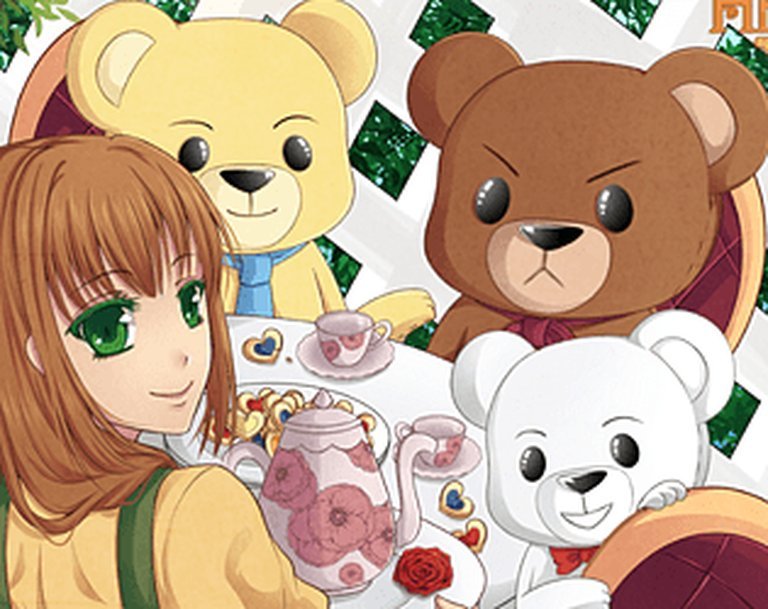
Locked Heart is a fantasy romance visual novel where the protagonist, Aura, finds herself trapped in the haunted De Lockes mansion, inhabited by sentient toys. As she navigates the eerie yet whimsical setting, she must break the curse plaguing the mansion while potentially forming romantic relationships with three of the enchanted bears. The game features anime-style artwork, multiple endings, and a blend of mystery and heartwarming interactions, all set within a fairy-tale-inspired world.
Locked Heart Free Download
PC
Locked Heart Guides & Walkthroughs
Locked Heart Reviews & Reception
forums.fuwanovel.moe (98/100): A triumphant return to form for the series.
evnchronicles.blogspot.com (98/100): A triumphant return to form for the series.
vndb.org (69/100): A solid otome game with a unique premise and charming characters.
mobygames.com (80/100): A solid otome game with a unique premise and charming characters.
Locked Heart: A Fairy Tale of Love, Curse, and Redemption
Introduction: A Hidden Gem in the Otome Genre
Locked Heart (2016) is a free-to-play otome visual novel that weaves a whimsical yet poignant tale of love, curse, and self-discovery. Developed by the Filipino indie studio Dicesuki—the same team behind the critically acclaimed Cinderella Phenomenon—this game stands as a testament to the power of passion-driven storytelling in the often-overlooked Western otome scene. At its core, Locked Heart is a modern retelling of Goldilocks and the Three Bears, infused with the melancholic charm of Beauty and the Beast and the gothic allure of a haunted mansion mystery.
The game follows Aura Renali, a spirited young woman with dreams of becoming a chef, as she stumbles upon the cursed De Lockes mansion—a place shrouded in legend after its noble family vanished seven years prior. Instead of ghosts, she finds three talking plush bears: Deon, Sol, and Royal, each a member of the d’Lockes family trapped in toy form by a malevolent curse. What begins as a quest to break the spell evolves into a deeply personal journey, where Aura must navigate romance, betrayal, and the weight of familial duty.
Locked Heart is more than just a romance simulator; it is a character-driven drama that explores themes of identity, sacrifice, and healing. With its vibrant anime-inspired art, a hauntingly beautiful soundtrack, and a tightly woven narrative, the game carves a niche for itself in the otome genre. Despite its short length (roughly 2–4 hours per route), it delivers an emotional punch that lingers long after the credits roll.
This review will dissect Locked Heart in exhaustive detail—from its development history and narrative depth to its gameplay mechanics, artistic direction, and lasting legacy. By the end, we will determine whether this indie darling deserves its place among the greats of English-language otome games.
Development History & Context: The Birth of a Passion Project
The Studio Behind the Curtain: Dicesuki’s Rise
Locked Heart was developed by Dicesuki, a small but ambitious indie studio based in the Philippines. The team, led by Kooriiko (director, artist, and writer), operated on a shoestring budget, relying on free assets, royalty-free music, and the Ren’Py engine—a popular tool for visual novel creation. Despite these constraints, Dicesuki managed to craft a game that rivaled commercial otome titles in both polish and emotional depth.
Kooriiko’s vision was clear: to create a fairy tale-inspired otome game that subverted expectations. Instead of the typical “princess rescues the prince” trope, Locked Heart presents a curse that is as much psychological as it is magical, with each of the three love interests grappling with their own trauma. The game’s development was a labor of love, with Kooriiko handling the majority of the art, writing, and programming, assisted by Trissia Pelayo (Sitraxis) for GUI and additional programming, and Riku-of-Darkness and beione as co-writers.
Technological Constraints & Creative Solutions
Given its indie roots, Locked Heart faced several technical limitations:
– Engine Limitations: Ren’Py, while powerful, required creative workarounds for certain visual effects.
– Asset Scarcity: The team used royalty-free music (including tracks from Kevin MacLeod and Shota Murasato) and freesfx.co for sound effects, which, while cost-effective, demanded careful selection to maintain atmospheric consistency.
– Multi-Platform Challenges: The game was released on Windows, Mac, Linux, Android, and browser, requiring optimization for varying screen sizes and input methods.
Despite these hurdles, the team’s resourcefulness shines through. The UI design is elegant and intuitive, the character sprites are expressive, and the backgrounds, though limited in number, are richly detailed, evoking the eerie yet cozy ambiance of the De Lockes mansion.
The Otome Landscape in 2016: A Niche Waiting to Be Filled
At the time of Locked Heart’s release, the English otome market was dominated by:
1. Japanese Localizations (Amnesia: Memories, Hakuoki)
2. Mobile Gacha Games (Mystic Messenger, Ikemen Revolution)
3. A smattering of Western indie titles (Cinderella Phenomenon, Seduce Me)
Locked Heart arrived at a pivotal moment when players were hungry for free, high-quality English otome games that didn’t rely on microtransactions. Its fairy-tale aesthetic, strong female protagonist, and emotionally resonant storytelling set it apart from the more formulaic offerings of the time.
The game’s initial release on Android (July 2016) was met with overwhelmingly positive reception, earning a 4.9/5 rating on Google Play before its eventual removal. This success led to ports on itch.io and other platforms, cementing its status as a cult classic.
Narrative & Thematic Deep Dive: A Curse of Heart and Mind
Plot Overview: From Fairy Tale to Gothic Romance
Locked Heart begins with Aura Renali, a determined young woman traveling to a neighboring town to pursue her culinary dreams. After getting lost in the woods, she seeks shelter in the De Lockes mansion, a place rumored to be cursed. Inside, she discovers three sentient plush bears:
– Deon d’Lockes (the mischievous “Baby Bear”)
– Sol d’Lockes (the gentle “Mama Bear”)
– Royal LeBlanc (the stern “Papa Bear” and butler)
Aura soon learns that the bears are, in fact, the cursed heirs of the d’Lockes family, transformed seven years prior by a vengeful witch. The curse can only be broken if someone truly loves them—a condition that proves more complex than it seems.
The Three Routes: Love, Duty, and Redemption
Each route offers a distinct emotional journey, tied to the protagonist’s personal struggles:
1. Deon d’Lockes: The Mask of the Jester
- Archetype: The carefree trickster with a hidden burden.
- Themes: Self-worth, sibling rivalry, and the fear of being overlooked.
- Narrative Focus: Deon’s route reveals his inferiority complex—overshadowed by his brother Sol’s nobility and Royal’s competence, he copes through humor and pranks. His “best ending” hinges on Aura helping him embrace his strengths rather than seeking validation.
- Key Moment: The revelation that Deon sacrificed his humanity to protect his brothers during the curse’s inception.
2. Sol d’Lockes: The Weight of the Crown
- Archetype: The gentle prince with a tragic past.
- Themes: Duty vs. desire, grief, and the cost of leadership.
- Narrative Focus: Sol was unexpectedly named heir after his father’s death, a role he never wanted. His route explores his guilt over his father’s demise and his struggle to balance responsibility with personal happiness.
- Key Moment: The heartbreaking flashback where Sol witnesses his father’s murder and is forced into leadership.
3. Royal LeBlanc: The Knight’s Armor
- Archetype: The stoic butler with a heart of gold.
- Themes: Loyalty, trauma, and learning to accept love.
- Narrative Focus: Royal, an orphan taken in by the d’Lockes, blames himself for his adoptive father’s death. His route is the most gothic and melancholic, delving into his self-loathing and fear of abandonment.
- Key Moment: The revelation that Royal was the one who summoned the witch, albeit unintentionally, leading to the curse.
Themes: More Than Just a Love Story
Locked Heart transcends typical otome tropes by exploring:
1. The Nature of Curses: The curse is not just magical but psychological—each character is trapped by their own guilt, fear, or insecurity.
2. Found Family: Aura, an orphan herself, forms a deep bond with the brothers, highlighting chosen family over blood.
3. Female Agency: Unlike many otome protagonists, Aura is proactive, skilled (a talented cook), and emotionally resilient.
4. The Cost of Sacrifice: Each route forces Aura to confront difficult choices, whether it’s Deon’s self-destructive tendencies, Sol’s duty-bound nature, or Royal’s emotional walls.
Writing & Dialogue: Strengths and Weaknesses
Strengths:
– Sharp, witty banter (especially in Deon’s route).
– Emotionally charged monologues (Royal’s route is a standout).
– Natural character development—each love interest feels distinct.
Weaknesses:
– Some routes feel rushed (particularly the “normal endings”).
– The curse’s resolution is somewhat abrupt—players may wish for more exploration of the post-curse dynamics.
– Aura’s personality can feel inconsistent at times, depending on the route.
Gameplay Mechanics & Systems: A Visual Novel with Heart
Core Gameplay Loop: Choices, Romance, and Unlockables
Locked Heart is a linear visual novel with branching paths determined by player choices. The structure is as follows:
1. Common Route (Short): Introduces the premise and characters.
2. Early Branching: Players are locked into a route based on initial dialogue choices (somewhat unpredictably).
3. Route-Specific Choices: Determine whether the player achieves a “Normal Ending” or “Best Ending”.
Combat & Progression: Nonexistent (And That’s Okay)
As a pure visual novel, Locked Heart lacks traditional gameplay mechanics like:
– Stats or skill trees
– Mini-games
– Combat systems
Instead, progression is narrative-driven, with CG unlocks and multiple endings serving as incentives for replayability.
UI & Navigation: Simple Yet Effective
The game’s interface is clean and intuitive, with:
– A well-organized menu system (save/load, gallery, settings).
– Expressions and sprites that change dynamically based on dialogue.
– A “skip” function for replaying routes efficiently.
Critique:
– No “backlog” feature (a missed opportunity for players who want to revisit dialogue).
– Some CGs are underwhelming—they blend too seamlessly with the regular sprites, diminishing their impact.
Innovations & Flaws
Innovations:
✅ Early route locking (forces players to commit to a character early, enhancing immersion).
✅ Multiple “Best Endings” (each with unique CGs and epilogues).
✅ A protagonist with a defined personality (Aura is not a blank slate).
Flaws:
❌ Overly cryptic “Best Ending” requirements (some choices feel arbitrary).
❌ Short playtime (can be completed in 6–8 hours total).
❌ Lack of post-game content (no bonus scenes or extended epilogues).
World-Building, Art & Sound: Crafting a Gothic Fairy Tale
Setting & Atmosphere: The Haunted Mansion Aesthetic
The De Lockes mansion is the game’s central location, and it is richly realized:
– Gothic architecture with warm, cozy interiors (a contrast between the curse’s darkness and the characters’ humanity).
– A sense of isolation—the mansion feels like a character itself, with its creaking floors and whispered secrets.
Art Direction: Anime-Meets-Fairy-Tale
Kooriiko’s art style is vibrant and expressive, blending:
– Anime-inspired character designs (large eyes, dynamic expressions).
– Western fairy-tale motifs (plush toys, ornate furniture, magical glow effects).
Standout Features:
✔ Character sprites with multiple expressions (from playful smirks to tearful breakdowns).
✔ Detailed CGs (though some are underutilized).
✔ A cohesive color palette (warm browns and golds for the mansion, cooler tones for flashbacks).
Sound Design & Music: A Hauntingly Beautiful Score
The soundtrack, composed by Arpeggio, Kevin MacLeod, and Shota Murasato, is atmospheric and emotive:
– Main Theme: A melancholic piano piece that underscores the game’s bittersweet tone.
– Character Themes:
– Deon: Playful, upbeat strings.
– Sol: Soft, wistful melodies.
– Royal: Dark, brooding cello.
– Ambient Tracks: The creaking of the mansion, howling wind, and distant clock chimes enhance immersion.
Critique:
– Some tracks loop too quickly.
– The sound effects are minimal (more ambient noise would have heightened the mansion’s eerie charm).
Reception & Legacy: From Cult Classic to Otome Staple
Critical & Commercial Reception
Upon release, Locked Heart was praised for its:
✅ Strong writing and character depth.
✅ Gorgeous art and music.
✅ Free-to-play model with no microtransactions.
However, it also faced minor criticisms:
❌ Short length.
❌ Some routes feeling underdeveloped.
Player Reception (itch.io & VNDB):
– 4.6/5 on itch.io (279 ratings).
– 6.94/10 on VNDB (191 votes).
Legacy & Influence
Locked Heart’s impact on the otome genre includes:
1. Proving that Western otome games could rival Japanese titles in quality.
2. Inspiring other indie developers (e.g., Cinderella Phenomenon, Ebon Light).
3. Popularizing the “cursed love interest” trope in English VNs.
Where to Play Today
The game is still available for free on:
– itch.io
– Game Jolt (unofficial ports)
Conclusion: A Masterpiece of Indie Otome Storytelling
Locked Heart is a flawed but brilliant visual novel that punches far above its weight. Its emotional depth, stunning art, and haunting soundtrack elevate it beyond the typical “dating sim” fare, offering a genuine narrative experience that resonates with players.
Final Verdict: 8.5/10 – A Must-Play for Otome Fans
Pros:
✔ Three distinct, well-written romance routes.
✔ Aura is a refreshing, proactive protagonist.
✔ Gorgeous art and immersive soundtrack.
✔ Free with no paywalls.
Cons:
✖ Too short for its ambitious storytelling.
✖ Some routes feel rushed.
✖ Best endings are overly cryptic to unlock.
Who Should Play It?
- Fans of gothic romance and fairy-tale retellings.
- Players who enjoy character-driven narratives.
- Anyone looking for a free, high-quality otome game.
Final Thoughts
Locked Heart is more than just a game—it is a love letter to the power of storytelling. Despite its brevity, it leaves a lasting emotional impact, proving that indie developers can craft experiences just as moving as those from major studios. If you haven’t played it yet, do yourself a favor and download it today.
You won’t just be breaking a curse—you’ll be unlocking a piece of otome history.
End of Review
Would you like any additional sections, such as a comparison to other otome games or a detailed walkthrough guide? Let me know how I can expand this further!