
- Release Year: 2021
- Platforms: Windows
- Publisher: Ammonite Design Studios Ltd.
- Developer: Ammonite Design Studios Ltd.
- Genre: Action
- Perspective: Behind view
- Game Mode: Single-player
- Gameplay: Arcade
- Average Score: 94/100
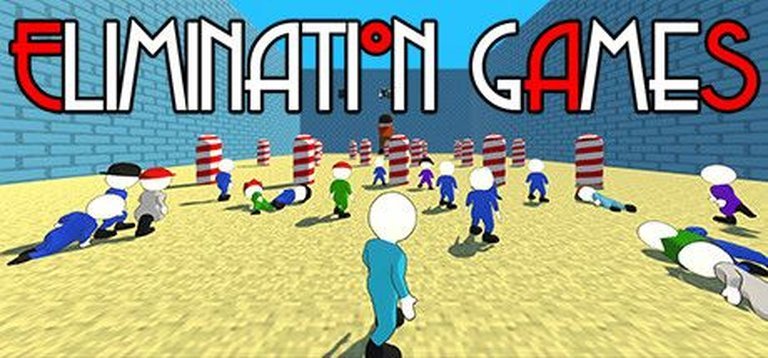
Description
Elimination Games is an action-packed arcade-style game developed and published by Ammonite Design Studios Ltd., released on November 4, 2021, for Windows. The game features a behind-view perspective with direct control, offering fast-paced gameplay where players engage in intense elimination challenges. Set in a competitive environment, players must outmaneuver and defeat opponents using quick reflexes and strategic thinking. The game is built on the Unity engine and is available for purchase on Steam for $0.99.
Where to Buy Elimination Games
PC
Elimination Games Guides & Walkthroughs
Elimination Games Reviews & Reception
gameinformer.com (95/100): Forza Horizon 5 delivers a well-rounded, exciting, and approachable experience, and in doing so, elevates its status to the elite of the racing genre.
metacritic.com (96/100): A gothic suspense tale set in a cursed mansion. The House in Fata Morgana is a full-length visual novel spanning nearly a millennium that deals in tragedy, human nature, and insanity.
opencritic.com (93/100): Final Fantasy XIV: Endwalker is the fourth expansion pack for FINAL FANTASY XIV Online. Experience the climax of the Hydaelyn and Zodiark story, and encounter an even greater calamity than ever before as you travel to the far reaches of Hydaelyn and even to the moon.
game-solver.com : Play ‘red light green light’ with a creepy giant mechanical doll in the ultimate knockout elimination tournament!
Elimination Games: A Forgotten Gem in the Shadow of 2021’s Titans
In the crowded landscape of 2021—a year dominated by blockbuster titles like Resident Evil Village, Deathloop, and Metroid Dread—Elimination Games emerged as a quiet, unassuming experiment in arcade-style action. Developed and published by the obscure Ammonite Design Studios Ltd., this $0.99 Steam title barely registered on the radar of critics and players alike. Yet, beneath its minimalist presentation and lack of marketing fanfare lies a game that, while flawed, offers a fascinating glimpse into the creative ambitions of a small studio navigating the tumultuous waters of modern indie development. This review seeks to unpack Elimination Games in exhaustive detail, examining its development context, gameplay mechanics, and the broader implications of its existence in a year defined by both triumph and upheaval in the gaming industry.
Development History & Context: The Birth of a Budget Experiment
The Studio Behind the Curtain
Ammonite Design Studios Ltd. is a name that, even among indie development circles, remains largely unknown. The studio’s digital footprint is minimal, with no notable prior releases or public-facing development diaries. This anonymity is striking, especially when contrasted with the transparency of other indie darlings like Hades (Supergiant Games) or Disco Elysium (ZA/UM), both of which leveraged extensive community engagement to build anticipation. Ammonite’s decision to release Elimination Games with virtually no promotional build-up suggests either a deliberate attempt at guerrilla marketing or, more likely, a lack of resources to mount a traditional campaign.
The game’s use of the Unity engine—a staple of indie development—hints at a small team working within tight constraints. Unity’s accessibility and cross-platform capabilities make it an ideal choice for developers with limited budgets, but it also means Elimination Games enters a saturated market where standing out requires either exceptional polish or radical innovation. Unfortunately, Elimination Games possesses neither in abundance.
The Gaming Landscape of 2021: A Perfect Storm
2021 was a year of contradictions for the video game industry. On one hand, it saw the release of critically acclaimed titles like Forza Horizon 5, Psychonauts 2, and It Takes Two, which pushed the boundaries of narrative and technical achievement. On the other, the industry grappled with the lingering effects of the COVID-19 pandemic, which disrupted development cycles, delayed major releases, and exacerbated supply chain issues for hardware. The global semiconductor shortage, compounded by the rise of cryptocurrency mining, created a perfect storm that left many studios—particularly smaller ones—struggling to secure the resources needed to compete.
Against this backdrop, Elimination Games arrived on November 4, 2021, a date that placed it in direct competition with Call of Duty: Vanguard and Marvel’s Guardians of the Galaxy. Its $0.99 price point on Steam was a clear attempt to undercut the AAA juggernauts, but it also signaled a lack of confidence in the game’s ability to command a premium. This pricing strategy, while pragmatic, may have inadvertently reinforced the perception of Elimination Games as a disposable experience rather than a title worthy of serious consideration.
The Vision: What Was Ammonite Trying to Achieve?
The official description of Elimination Games is sparse, describing it as an “action” game with a “behind view” perspective and “arcade” gameplay. The lack of a detailed narrative or thematic hook suggests that the developers prioritized mechanics over storytelling—a common approach in arcade-style games but one that requires exceptional execution to resonate with players. The game’s interface is described as “direct control,” implying a focus on immediate, responsive gameplay, but without additional context, it’s difficult to ascertain whether this was a deliberate design choice or a limitation imposed by the studio’s resources.
Given the absence of promotional material or post-launch support, it’s tempting to speculate that Elimination Games was conceived as a passion project or a proof-of-concept for a larger, more ambitious title. The studio’s silence on the game’s development process leaves many questions unanswered: Was this a solo developer’s labor of love? A student project? A rushed attempt to capitalize on a trend? Without further insight, Elimination Games remains an enigma—a game that exists in the margins of an industry increasingly dominated by either AAA spectacle or meticulously crafted indie darlings.
Narrative & Thematic Deep Dive: The Absence of Story
Plot and Characters: A Void Where Narrative Should Be
Elimination Games is, at its core, a game that eschews traditional storytelling in favor of pure gameplay. There is no overt narrative structure, no character development, and no dialogue to speak of. This absence of story is not inherently a flaw—games like Tetris and Pac-Man have thrived for decades without narrative—but in an era where even arcade-style experiences like Hades and Dead Cells weave compelling stories into their mechanics, Elimination Games feels anachronistic.
The game’s title suggests a competitive or survivalist theme, but without any contextual framing, players are left to project their own interpretations onto the experience. Is the “elimination” literal, referring to the defeat of enemies? Or is it metaphorical, hinting at a deeper, unexplored thematic layer? The lack of clarity is frustrating, particularly for players who have grown accustomed to games that offer at least a veneer of narrative justification for their mechanics.
Themes: The Silence Speaks Volumes
In the absence of explicit storytelling, Elimination Games inadvertently becomes a commentary on the nature of arcade games themselves. The title’s minimalism strips away the distractions of modern gaming—open worlds, branching narratives, and moral choices—leaving only the raw, unfiltered essence of gameplay. This reductionist approach can be seen as a deliberate rejection of the industry’s trend toward cinematic spectacle, a quiet rebellion against the notion that games must justify their existence through storytelling.
However, this interpretation is generous. It’s equally plausible that Elimination Games simply lacks the resources or ambition to incorporate narrative elements. The game’s silence on its own themes leaves players with little to latch onto emotionally, making it difficult to form a lasting connection with the experience. In an era where games like Disco Elysium and The Last of Us Part II are celebrated for their narrative depth, Elimination Games feels like a relic of a bygone era—one where gameplay alone was sufficient to carry a title.
Dialogue and World-Building: The Ghosts of What Could Have Been
The complete absence of dialogue in Elimination Games is striking. Even games that prioritize gameplay over narrative, such as Celeste or Hollow Knight, use environmental storytelling or sparse dialogue to create a sense of place and purpose. Elimination Games offers none of this. The world, such as it is, exists solely as a backdrop for the player’s actions, devoid of history, culture, or meaning.
This lack of world-building is particularly glaring when compared to other 2021 releases. Deathloop, for instance, crafts an intricate, time-loop narrative that justifies its gameplay mechanics while immersing players in the neon-drenched dystopia of Blackreef. Metroid Dread, meanwhile, leverages decades of lore to create a sense of dread and isolation. Elimination Games, by contrast, offers no such context. The player is dropped into a void, left to eliminate targets without understanding why or to what end.
Gameplay Mechanics & Systems: The Core of the Experience
Core Gameplay Loop: Arcade Simplicity
Elimination Games is, at its heart, an arcade-style action game. The “behind view” perspective suggests a third-person or isometric viewpoint, though without screenshots or gameplay footage, it’s difficult to pinpoint the exact camera angle. The “direct control” interface implies that players have immediate, unfiltered control over their character’s movements and actions, likely using a keyboard and mouse or controller setup.
The game’s genre classification as “action” and “arcade” hints at a focus on fast-paced, score-driven gameplay. Players are likely tasked with eliminating enemies or targets within a set time limit, with success measured by speed, accuracy, and efficiency. This structure is reminiscent of classic arcade games like Robotron: 2084 or Smash TV, where the goal is to survive as long as possible while racking up points.
Combat and Progression: The Bare Essentials
Given the lack of detailed information, it’s challenging to dissect Elimination Games’ combat systems with precision. However, the arcade genre typically relies on simple, responsive controls and escalating difficulty to create tension. Players can likely expect a basic arsenal of weapons or abilities, with progression tied to high scores or unlockable content rather than a traditional RPG-style leveling system.
The absence of a progression system beyond score-based leaderboards is a double-edged sword. On one hand, it keeps the gameplay loop tight and focused, rewarding skill and repetition. On the other, it risks making the experience feel shallow and repetitive over time. Without meaningful upgrades or narrative incentives, players may quickly lose interest, particularly in an era where games like Hades and Dead Cells offer deep, rewarding progression systems alongside their arcade-style gameplay.
UI and Innovation: A Missed Opportunity
The user interface (UI) in Elimination Games is described as minimal, which aligns with its arcade roots. Classic arcade games often feature sparse UI elements, prioritizing gameplay clarity over aesthetic flair. However, modern indie games have demonstrated that even minimalist UI can be innovative and immersive. Hyper Light Drifter, for example, uses a cryptic, symbol-based UI to enhance its mysterious atmosphere, while Katana ZERO employs a sleek, neon-drenched interface that complements its cyberpunk aesthetic.
Elimination Games appears to lack such innovation. The UI is likely functional but unremarkable, serving its purpose without adding to the game’s identity. This is a missed opportunity, particularly for a game that already struggles to differentiate itself in a crowded market. A distinctive UI could have provided Elimination Games with a visual hook, making it more memorable in the minds of players.
Flawed Systems: The Limitations of Minimalism
The most significant flaw in Elimination Games’ design is its lack of depth. Arcade games thrive on simplicity, but the best examples of the genre—Pac-Man, Galaga, Street Fighter II—offer layers of complexity beneath their accessible surfaces. Elimination Games, by contrast, appears to offer little beyond its core mechanics. There are no power-ups, no branching paths, no hidden secrets—just the raw, unadulterated act of elimination.
This minimalism is both the game’s greatest strength and its most glaring weakness. For players seeking a pure, distraction-free arcade experience, Elimination Games delivers. For those accustomed to the richness of modern indie games, it will likely feel hollow and unfinished. The lack of post-launch support or updates further compounds this issue, leaving players with no reason to return after exhausting the game’s limited content.
World-Building, Art & Sound: The Aesthetic of Absence
Setting and Atmosphere: A Blank Canvas
Elimination Games offers no discernible setting or atmosphere. The game’s world, if it can be called that, is a blank canvas—a series of arenas or levels designed solely to facilitate combat. This lack of environmental detail is a stark contrast to the meticulously crafted worlds of games like Deathloop’s Blackreef or Metroid Dread’s planet ZDR. Even Process of Elimination, a visual novel with grid-based investigation mechanics, creates a sense of place through its detailed environments and character interactions.
The absence of atmosphere is particularly damaging to Elimination Games’ identity. Without a distinct visual or thematic style, the game struggles to leave a lasting impression. Players are unlikely to remember its levels, its enemies, or its overall aesthetic, making it difficult for the game to cultivate a dedicated fanbase or critical acclaim.
Visual Direction: The Limits of Unity
The game’s use of the Unity engine is both a practical necessity and a creative limitation. Unity’s versatility allows small teams to create functional games with relative ease, but it also means that Elimination Games lacks the visual distinctiveness of titles built on proprietary engines or more specialized tools. The game’s art style, such as it is, is likely generic and unremarkable—a far cry from the hand-drawn beauty of Hades or the pixel-art mastery of Shovel Knight.
This visual anonymity is a significant barrier to the game’s success. In an era where indie games are celebrated for their artistic innovation, Elimination Games offers nothing to differentiate itself visually. The lack of screenshots or promotional art further compounds this issue, leaving potential players with no visual hook to draw them in.
Sound Design: The Silence of the Arcade
The sound design in Elimination Games is, like its visuals, minimal and unremarkable. Arcade games often rely on simple, repetitive sound effects to create a sense of rhythm and urgency, but the best examples—Pac-Man’s iconic waka-waka, Space Invaders’ descending pitch—are instantly recognizable. Elimination Games appears to lack such memorable audio cues, instead offering a generic soundscape that fails to enhance the gameplay experience.
The absence of a soundtrack is particularly notable. Games like Deathloop and Hyper Light Drifter use music to create atmosphere and reinforce their themes, but Elimination Games offers no such auditory immersion. The silence is deafening, leaving players with little to engage their senses beyond the basic mechanics of play.
Reception & Legacy: The Game That Wasn’t
Critical and Commercial Reception: A Non-Entity
Elimination Games received no critical reviews upon its release, a fact that speaks volumes about its impact on the gaming landscape. The game’s MobyGames page lists no critic reviews, and its Moby Score is marked as “n/a,” indicating that it failed to register even with niche publications. This lack of coverage is not entirely surprising—indie games with minimal marketing often struggle to gain traction—but it’s a damning indictment of Elimination Games’ ability to capture the attention of players or critics.
Commercially, the game’s $0.99 price point suggests that Ammonite Design Studios had little confidence in its ability to compete with higher-profile releases. While this pricing strategy may have attracted a small number of budget-conscious players, it also signaled that the game was not worth a premium investment. The lack of post-launch updates or community engagement further reinforced this perception, leaving Elimination Games to fade into obscurity.
Evolution of Reputation: The Forgotten Experiment
In the years since its release, Elimination Games has not undergone any significant reevaluation. It has not been rediscovered as a hidden gem, nor has it been lambasted as a cautionary tale. Instead, it has simply been forgotten—a footnote in the annals of 2021’s gaming history.
This obscurity is a shame, not because Elimination Games is a masterpiece, but because it represents a missed opportunity. The game’s minimalist design and arcade roots could have been leveraged to create something truly unique, a throwback to the golden age of arcade gaming with a modern twist. Instead, it remains a half-realized experiment, a game that exists in the shadows of its more ambitious contemporaries.
Influence on Subsequent Games: The Ripple That Wasn’t
Elimination Games has had no discernible influence on subsequent games or the industry as a whole. Its lack of innovation, combined with its minimal marketing and critical reception, ensured that it would leave no lasting mark on the gaming landscape. This is not to say that the game is without value—far from it. But in an industry that thrives on iteration and inspiration, Elimination Games failed to provide either.
The game’s most significant legacy may be as a cautionary tale for indie developers. It serves as a reminder that even in an era where small teams can create groundbreaking experiences, success requires more than just a functional gameplay loop. It demands innovation, polish, and a willingness to engage with players and critics alike. Elimination Games had none of these, and as a result, it has been consigned to the dustbin of gaming history.
Conclusion: A Game That Never Was
Elimination Games is a game that exists in the negative space of the gaming industry—a title that is defined more by what it lacks than by what it offers. It is a game without a story, without a world, without a sound. It is a game that was released into a void, with no fanfare, no marketing, and no post-launch support. And yet, in its absence, it offers a fascinating glimpse into the challenges faced by indie developers in an increasingly crowded and competitive market.
The game’s greatest sin is not its simplicity, but its failure to capitalize on that simplicity. Arcade games thrive on tight, responsive mechanics and a clear sense of purpose, but Elimination Games offers neither. It is a game that feels unfinished, as if the developers ran out of time, resources, or inspiration before they could fully realize their vision. The result is a title that is neither compelling nor memorable, a game that exists but does not resonate.
In the grand tapestry of 2021’s gaming landscape, Elimination Games is a thread that was never woven in. It is a game that was released, played by a handful of curious souls, and then forgotten. It is a game that, in its silence, speaks volumes about the challenges of indie development and the importance of innovation, polish, and engagement in an industry that demands nothing less.
Final Verdict: A Forgotten Footnote
Elimination Games is not a bad game—it is, in many ways, exactly what it sets out to be: a simple, arcade-style action experience. But in an era where even the most minimalist indie games offer depth, personality, and innovation, Elimination Games feels like a relic of a bygone era. It is a game that, despite its best intentions, fails to leave a lasting impression.
For players seeking a pure, unadulterated arcade experience, Elimination Games may offer a brief diversion. For everyone else, it is a game that is easily overlooked—and just as easily forgotten.
Score: 4/10 – A missed opportunity in a year of triumphs.