
- Release Year: 2014
- Platforms: Windows
- Publisher: Daedalic Entertainment GmbH
- Genre: Compilation
- Game Mode: Single-player
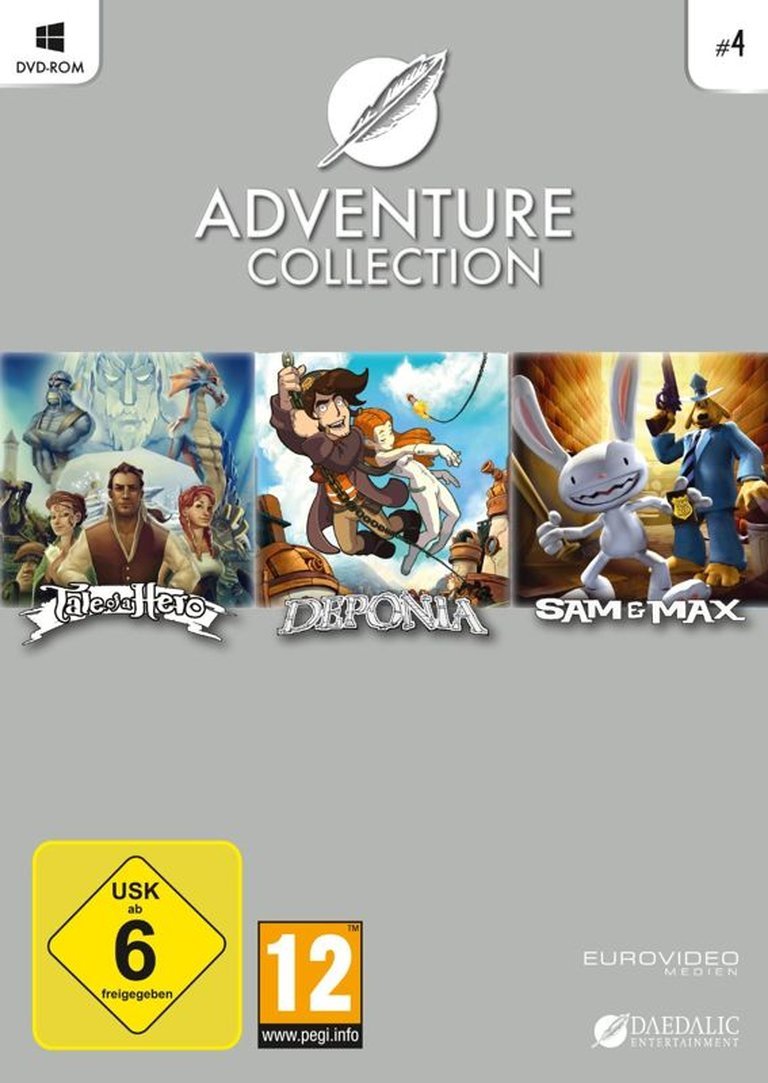
Description
Adventure Collection #4 is a compilation of three critically acclaimed point-and-click adventure games published by Daedalic Entertainment, featuring ‘Deponia,’ a quirky dystopian comedy; ‘Sam & Max: Season One,’ a humorous detective series following the freelance police duo; and ‘Tale of a Hero,’ a classic fantasy adventure. Released in 2014 for Windows, this collection offers diverse storytelling, witty dialogue, and engaging puzzles across distinct settings, from a trash-filled future world to a whimsical detective agency.
Adventure Collection #4: A Curated Journey Through Point-and-Click Mastery
Introduction: The Art of the Anthology
In the vast, ever-expanding universe of video games, compilations often serve as mere footnotes—convenient bundles of disparate titles thrown together for the sake of marketability. Yet, Adventure Collection #4, released in 2014 by Daedalic Entertainment, defies this trend. It is not just a haphazard assembly of games but a meticulously curated anthology that celebrates the golden age of point-and-click adventure gaming. This collection brings together three distinct titles—Deponia (2012), Sam & Max: Season One (2007), and Tale of a Hero (2008)—each a testament to the genre’s enduring appeal, narrative depth, and inventive puzzle design.
At its core, Adventure Collection #4 is a love letter to the adventure game enthusiasts who grew up with the likes of Monkey Island, Day of the Tentacle, and Broken Sword. It is a snapshot of an era when storytelling and player agency were paramount, and where humor, wit, and creativity reigned supreme. This review will dissect the collection’s components, exploring their individual merits, thematic resonances, and mechanical innovations, while also examining their collective impact on the adventure genre and their place in gaming history.
Development History & Context: The Rise, Fall, and Resurgence of Adventure Games
The Studio and the Vision
Daedalic Entertainment, the publisher behind Adventure Collection #4, is a German studio founded in 2007 by Carsten Fichtelmann. From its inception, Daedalic positioned itself as a champion of the adventure genre, a bold move in an industry increasingly dominated by first-person shooters and open-world RPGs. The studio’s early successes, such as The Whispered World (2009) and Edna & Harvey: The Breakout (2008), established its reputation for crafting visually stunning, narratively rich games with a distinct European sensibility.
The inclusion of Deponia in this collection is particularly significant, as it represents Daedalic’s first foray into developing its own intellectual property. Created by a team led by Jan Müller-Michaelis (also known as “Mifumi”), Deponia is a dystopian comedy that blends absurdist humor with biting social commentary. Its development was driven by a desire to revive the classic adventure game formula while infusing it with modern sensibilities—both in terms of storytelling and visual presentation.
Sam & Max: Season One, on the other hand, is a product of Telltale Games, a studio that became synonymous with episodic adventure gaming in the mid-2000s. Telltale’s revival of the Sam & Max franchise, originally created by Steve Purcell in the 1980s, was a risky endeavor. The studio’s founders, many of whom were former LucasArts employees, sought to prove that there was still a market for adventure games, even in an industry that had largely abandoned the genre. The success of Sam & Max: Season One not only validated Telltale’s approach but also paved the way for future episodic series like Tales of Monkey Island and The Walking Dead.
Tale of a Hero, the least known of the three, is a smaller-scale adventure developed by German studio Sproing Interactive Media. Released in 2008, it is a more traditional point-and-click game that draws inspiration from classic fairy tales and folklore. Its inclusion in the collection underscores Daedalic’s commitment to preserving lesser-known gems alongside more mainstream titles.
Technological Constraints and Innovations
The games in Adventure Collection #4 span nearly a decade of adventure game development, and their technical underpinnings reflect the evolution of the genre during this period.
-
Sam & Max: Season One (2006-2007): Developed using Telltale’s proprietary Telltale Tool, this game was designed with episodic distribution in mind. The engine was optimized for quick turnaround times, allowing the studio to release new episodes every few weeks. While the visuals are relatively simple by modern standards, the game’s strength lies in its writing and voice acting, which were prioritized over graphical fidelity.
-
Tale of a Hero (2008): This game employs a more traditional 2D point-and-click engine, with hand-drawn backgrounds and character sprites. Its design is reminiscent of late-1990s adventure games, eschewing the 3D experimentation of the early 2000s in favor of a classic aesthetic.
-
Deponia (2012): By the time Deponia was released, adventure games had begun to embrace more modern technologies. Daedalic’s in-house engine allowed for high-resolution 2D backgrounds with layered parallax scrolling, creating a sense of depth and immersion. The game also features fully voiced dialogue, a rarity in earlier adventure titles, which enhances its comedic timing and character interactions.
The Gaming Landscape of the 2000s and 2010s
The release of Adventure Collection #4 in 2014 coincided with a renaissance of the adventure genre. After years of decline in the late 1990s and early 2000s—largely due to the rise of 3D action games and the perception that adventure games were “niche”—the genre experienced a resurgence thanks to digital distribution platforms like Steam and GOG, as well as crowdfunding campaigns on Kickstarter.
Telltale Games played a pivotal role in this revival. By adopting an episodic model and focusing on strong narratives, the studio demonstrated that adventure games could still find an audience. Meanwhile, Daedalic’s success with Deponia and other titles proved that there was a market for more traditional, puzzle-heavy adventures, particularly in Europe.
The inclusion of Sam & Max: Season One in this collection is particularly noteworthy, as it represents a bridge between the classic adventure games of the 1990s and the modern revival of the 2010s. Telltale’s approach—emphasizing storytelling and accessibility over complex puzzles—helped attract new players to the genre, while Daedalic’s more traditional designs appealed to longtime fans.
Narrative & Thematic Deep Dive: Stories That Stick
Deponia: A Dystopian Comedy of Errors
Deponia is set in a post-apocalyptic world where humanity survives on a massive garbage planet of the same name. The protagonist, Rufus, is a self-centered, lazy, and perpetually unlucky individual who dreams of escaping Deponia to reach the floating city of Elysium, where the wealthy elite reside. His life takes a turn when he encounters Goal, a woman from Elysium who has been exiled to Deponia. What follows is a chaotic, often absurd journey filled with misunderstandings, slapstick humor, and biting satire.
Themes:
– Social Inequality: Deponia’s world is a stark commentary on class divide. The contrast between the squalor of Deponia and the opulence of Elysium mirrors real-world disparities, though the game’s comedic tone softens the critique.
– Environmentalism: The planet itself is a literal garbage dump, reflecting humanity’s disregard for the environment. The game’s humor often stems from the absurdity of living in such a place, but it also serves as a reminder of the consequences of unchecked consumption.
– Self-Delusion and Growth: Rufus begins as a selfish, lazy character, but his interactions with Goal and the challenges he faces force him to confront his own flaws. While he never fully redeems himself, his journey is one of reluctant self-improvement.
Narrative Strengths:
– Humor: Deponia’s humor is its greatest asset. The game is packed with witty dialogue, slapstick moments, and absurd situations that keep players engaged. Rufus’s sarcastic, fourth-wall-breaking commentary adds a layer of meta-humor that will appeal to fans of classic adventure games.
– Character Dynamics: The relationship between Rufus and Goal is central to the story. Their interactions range from comedic to genuinely touching, and the voice acting (in the English localization) brings their personalities to life.
– World-Building: Deponia’s world is richly detailed, with each location—from the scrap-heap streets to the bizarre inventions of the local inhabitants—adding to the game’s unique atmosphere.
Narrative Weaknesses:
– Pacing: The game’s humor and puzzles can sometimes feel disjointed, with abrupt shifts in tone that may not resonate with all players.
– Character Likability: Rufus is intentionally unlikable, which can make it difficult for players to fully invest in his journey. While this is part of the game’s satire, it may alienate some audiences.
Sam & Max: Season One: A Return to Form
Sam & Max: Season One consists of six episodes, each a self-contained adventure that builds on an overarching narrative. The series follows Sam, a canine detective, and Max, a hyperkinetic rabbity thing, as they tackle a variety of bizarre cases, from hypnotized former child stars to a sentient internet.
Themes:
– Absurdity and Satire: The Sam & Max series has always thrived on absurdity, and Season One is no exception. The game satirizes everything from reality TV to political corruption, often with a surreal twist.
– Friendship and Partnership: Despite their differences—Sam is the straight man, Max is the chaotic force—their bond is the heart of the series. Their dynamic is a study in contrasts, with Sam’s pragmatism balancing Max’s anarchic energy.
– Nostalgia and Revival: As a revival of a classic franchise, Season One plays with nostalgia while updating the formula for a modern audience. The game references its predecessors while carving out its own identity.
Narrative Strengths:
– Episodic Structure: The episodic format allows for a variety of settings and scenarios, keeping the gameplay fresh. Each episode introduces new characters and puzzles while advancing the overarching plot.
– Writing and Voice Acting: The dialogue is sharp, witty, and packed with pop culture references. The voice acting, particularly for Sam and Max, is superb, capturing the characters’ personalities perfectly.
– Puzzle Integration: Unlike many modern adventure games that downplay puzzles in favor of narrative, Sam & Max strikes a balance. The puzzles are challenging but fair, and they often tie into the story in clever ways.
Narrative Weaknesses:
– Episodic Pacing: Some episodes feel rushed, with underdeveloped side characters or abrupt resolutions. The format’s strength—variety—can also be a weakness when episodes lack depth.
– Repetitive Humor: While the humor is consistently funny, it can become repetitive over the course of six episodes. Some jokes rely too heavily on Max’s hyperactive antics, which may wear thin for some players.
Tale of a Hero: A Classic Fairy Tale Adventure
Tale of a Hero is the most traditional of the three games, both in terms of its narrative and gameplay. The story follows a young hero named Tale (yes, that’s his name) as he embarks on a quest to rescue a princess from an evil sorcerer. Along the way, he encounters a variety of fairy tale characters, from talking animals to magical beings.
Themes:
– Heroism and Destiny: The game plays with classic hero tropes, subverting them at times while embracing them at others. Tale is an unlikely hero, and his journey is as much about self-discovery as it is about saving the princess.
– Fairy Tale Logic: The world of Tale of a Hero operates on the logic of folklore, where anything is possible and nothing is quite as it seems. This allows for a mix of whimsy and darkness, with moments of genuine emotion amid the absurdity.
– Nostalgia for Classic Adventures: The game’s narrative and aesthetic are a love letter to the adventure games of the 1990s, particularly those with fairy tale settings, like King’s Quest or The Longest Journey.
Narrative Strengths:
– Charming Aesthetic: The hand-drawn visuals and whimsical soundtrack create a cozy, inviting atmosphere that perfectly complements the story.
– Puzzle Design: The puzzles are classic point-and-click fare, with a mix of inventory-based challenges and environmental interactions. They are well-integrated into the narrative, often requiring players to think like a fairy tale hero.
– Character Interactions: The game’s supporting cast is memorable, with each character adding to the story’s charm. The dialogue is lighthearted but not shallow, striking a balance between humor and heart.
Narrative Weaknesses:
– Predictability: The story follows a familiar trajectory, and while it subverts some tropes, it ultimately adheres to the classic hero’s journey. This may feel formulaic to players seeking something more innovative.
– Pacing Issues: Some sections of the game drag, particularly in the middle, where the puzzles can feel repetitive or overly obscure.
Gameplay Mechanics & Systems: The Puzzle at the Heart of Adventure
Core Gameplay Loops
Each game in Adventure Collection #4 adheres to the classic point-and-click adventure formula, but they each put their own spin on the mechanics.
Deponia:
– Inventory-Based Puzzles: Like many adventure games, Deponia relies heavily on combining items in inventive ways. The puzzles are often absurd, reflecting the game’s comedic tone. For example, Rufus might need to create a makeshift parachute out of garbage or distract a guard with a fake mustache.
– Environmental Interaction: The game’s world is filled with interactive objects, many of which are essential for solving puzzles. Players must carefully examine each scene, as clues are often hidden in plain sight.
– Dialogue Trees: Conversations with other characters are a key part of the gameplay. Rufus’s snarky responses often provide hints or open up new puzzle pathways.
Sam & Max: Season One:
– Episodic Puzzles: Each episode introduces a new set of puzzles tied to its unique setting. The puzzles are generally logical but require creative thinking. For example, in Culture Shock, players must use a combination of items to hypnotize a former child star.
– Character Switching: Some puzzles require players to switch between Sam and Max, each of whom has unique abilities. Max, for instance, can squeeze into tight spaces or distract characters with his antics.
– Mini-Games: The series occasionally incorporates mini-games, such as a hypnotism sequence or a courtroom debate, which break up the traditional puzzle-solving.
Tale of a Hero:
– Classic Point-and-Click: The gameplay is straightforward, with a focus on exploring environments, collecting items, and solving puzzles. The puzzles are generally less absurd than those in Deponia or Sam & Max, instead favoring a more traditional, logic-based approach.
– Fairy Tale Logic: The puzzles often require players to think like they’re in a fairy tale. For example, a bridge might only appear if the player sings a specific song or solves a riddle.
– Linear Progression: The game is more linear than the other two, with a clear path from one puzzle to the next. This makes it more accessible but less open-ended.
Combat and Character Progression
None of the games in Adventure Collection #4 feature traditional combat systems, as is typical of the adventure genre. However, they each handle conflict in their own way:
- Deponia: Conflict is resolved through puzzles and dialogue. Rufus’s “combat” often involves outsmarting opponents rather than engaging in physical confrontation.
- Sam & Max: The duo occasionally faces enemies, but these encounters are resolved through quick-time events or puzzle-solving rather than traditional combat.
- Tale of a Hero: The game includes a few sequences where Tale must “fight” enemies, but these are handled through simple mini-games or puzzle mechanics.
UI and Accessibility
The user interfaces of the three games reflect their respective eras and design philosophies:
- Deponia (2012): Features a modern UI with a clean inventory system and context-sensitive cursors. The game also includes a hint system, which can be toggled on or off depending on the player’s preference.
- Sam & Max: Season One (2006-2007): The UI is more minimalist, with a focus on the dialogue and puzzle-solving. The inventory is accessible but unobtrusive, and the game includes a “hint” button that provides subtle guidance.
- Tale of a Hero (2008): The UI is the most traditional of the three, with a classic point-and-click interface. The inventory is straightforward, and the game includes a journal to track objectives.
Innovative and Flawed Systems
While all three games excel in their core mechanics, they each have their share of innovations and flaws:
Deponia:
– Innovation: The game’s use of layered 2D backgrounds creates a sense of depth and immersion that was rare in adventure games at the time.
– Flaw: Some puzzles rely on illogical solutions, which can frustrate players who prefer more straightforward challenges.
Sam & Max: Season One:
– Innovation: The episodic format was groundbreaking at the time, allowing for a more dynamic and evolving narrative.
– Flaw: The lack of a “skip” option for repeated dialogue can make replaying episodes tedious.
Tale of a Hero:
– Innovation: The game’s fairy tale aesthetic and puzzles create a unique atmosphere that sets it apart from more modern adventures.
– Flaw: The linear progression and occasional pixel-hunting can feel dated compared to the other two games.
World-Building, Art & Sound: Crafting Immersion
Setting and Atmosphere
Each game in Adventure Collection #4 creates a distinct world that immerses players in its unique atmosphere.
Deponia:
– Dystopian Absurdity: The world of Deponia is a masterclass in world-building. The planet is a sprawling garbage heap, filled with bizarre inventions and eccentric characters. The art style is a mix of steampunk and post-apocalyptic, with a color palette dominated by browns and greys, punctuated by the occasional splash of color.
– Sound Design: The game’s soundtrack is a mix of whimsical and melancholic tunes, reflecting the duality of its setting. The voice acting is top-notch, with Rufus’s sarcastic delivery being a particular highlight.
Sam & Max: Season One:
– Surreal Noir: The game’s world is a blend of classic noir and absurdist comedy. The settings range from a seedy detective office to a sentient internet, each rendered in a stylized 2D aesthetic. The art style is simple but effective, with a focus on character expressions and animations.
– Sound Design: The voice acting is a standout feature, with the actors perfectly capturing the personalities of Sam and Max. The soundtrack is jazzy and upbeat, complementing the game’s comedic tone.
Tale of a Hero:
– Fairy Tale Whimsy: The game’s world is a storybook come to life, with lush forests, enchanted castles, and magical creatures. The hand-drawn backgrounds are detailed and vibrant, creating a sense of wonder.
– Sound Design: The soundtrack is whimsical and lighthearted, evoking the feel of a classic fairy tale. The voice acting is minimal but effective, with the characters’ personalities shining through their dialogue.
Visual Direction
The visual styles of the three games reflect their respective tones and themes:
- Deponia: The game’s art is detailed and layered, with a focus on creating a believable (if absurd) world. The character designs are exaggerated, reflecting the game’s comedic tone.
- Sam & Max: The visuals are more cartoonish, with a focus on expressive character animations. The backgrounds are simple but effective, allowing the characters to take center stage.
- Tale of a Hero: The art style is the most traditional, with a focus on creating a cozy, inviting atmosphere. The hand-drawn backgrounds are rich in detail, evoking the feel of a classic storybook.
Sound and Music
Sound design plays a crucial role in each game, enhancing the immersion and emotional impact:
- Deponia: The soundtrack is a mix of orchestral and electronic music, reflecting the game’s blend of fantasy and sci-fi elements. The voice acting is superb, with each character having a distinct personality.
- Sam & Max: The jazzy soundtrack complements the game’s noir-inspired setting, while the voice acting brings the characters to life. The sound effects are minimal but effective, adding to the game’s comedic timing.
- Tale of a Hero: The soundtrack is whimsical and lighthearted, evoking the feel of a classic fairy tale. The voice acting is minimal but effective, with the characters’ personalities shining through their dialogue.
Reception & Legacy: The Impact of a Genre Revival
Critical and Commercial Reception
Adventure Collection #4 was released in 2014, a time when the adventure genre was experiencing a resurgence. The collection was well-received by critics and fans alike, though it did not achieve the same level of commercial success as some of the individual games it contained.
- Deponia: Upon its original release in 2012, Deponia was praised for its humor, world-building, and puzzle design. Critics noted its similarities to classic adventure games while appreciating its modern sensibilities. The game’s success led to two sequels, Chaos on Deponia (2012) and Goodbye Deponia (2013), as well as a prequel, Deponia Doomsday (2016).
- Sam & Max: Season One: The series was a critical darling, with reviewers praising its writing, voice acting, and episodic structure. It was particularly noted for its faithfulness to the original comics while updating the formula for a modern audience. The success of Season One led to two additional seasons, as well as other Telltale series like Tales of Monkey Island and The Walking Dead.
- Tale of a Hero: While not as widely recognized as the other two games, Tale of a Hero was praised for its charming aesthetic and traditional adventure gameplay. It developed a cult following among fans of classic point-and-click games.
Evolution of Reputation
Over time, the reputation of Adventure Collection #4 has grown, particularly as the adventure genre has continued to evolve. The collection is now seen as a snapshot of a pivotal moment in the genre’s history, capturing the transition from traditional point-and-click games to more narrative-driven experiences.
- Deponia: The game’s humor and world-building have aged well, and it is now considered a modern classic of the genre. Its sequels, while not as highly regarded, have helped cement its legacy.
- Sam & Max: Season One: The series is often cited as one of the best examples of episodic gaming. Its influence can be seen in later Telltale games, as well as in other narrative-driven adventures like Life is Strange and The Wolf Among Us.
- Tale of a Hero: While it remains a lesser-known title, it has gained appreciation among fans of traditional adventure games. Its inclusion in the collection has helped introduce it to a wider audience.
Influence on Subsequent Games
The games in Adventure Collection #4 have had a significant impact on the adventure genre, influencing both indie developers and larger studios.
- Deponia’s Influence: The game’s success demonstrated that there was still a market for traditional, puzzle-heavy adventure games. Its blend of humor and world-building has inspired other indie developers, such as those behind Thimbleweed Park (2017) and The Book of Unwritten Tales (2009).
- Sam & Max’s Influence: Telltale’s episodic model and focus on narrative have become industry standards. The studio’s approach has influenced games like Life is Strange (2015) and Firewatch (2016), which prioritize storytelling and character development over complex puzzles.
- Tale of a Hero’s Influence: While its impact is less direct, the game’s traditional design has helped keep the classic adventure formula alive. Its inclusion in the collection has reminded players and developers alike of the genre’s roots.
Conclusion: A Timeless Celebration of Adventure Gaming
Adventure Collection #4 is more than just a compilation of games—it is a celebration of the adventure genre’s past, present, and future. Each of the three titles—Deponia, Sam & Max: Season One, and Tale of a Hero—offers a unique take on the point-and-click formula, showcasing the genre’s versatility and enduring appeal.
- Deponia stands out for its absurdist humor, rich world-building, and inventive puzzles. It is a game that rewards exploration and creativity, and its dystopian setting provides a sharp contrast to the more whimsical tones of the other two titles.
- Sam & Max: Season One is a masterclass in episodic storytelling, with sharp writing, memorable characters, and a perfect balance of comedy and mystery. Its influence on the adventure genre cannot be overstated, and it remains one of the best examples of how to revive a classic franchise for a modern audience.
- *Tale of a Hero