
- Release Year: 2021
- Platforms: Nintendo Switch, PlayStation 4, Windows, Xbox One, Xbox Series
- Publisher: Team17 Digital Limited
- Developer: Infinigon S.L.
- Genre: Cooking, Simulation
- Perspective: 1st-person
- Game Mode: Single-player
- Gameplay: Business simulation, Managerial
- Setting: Comedy
- Average Score: 68/100
Description
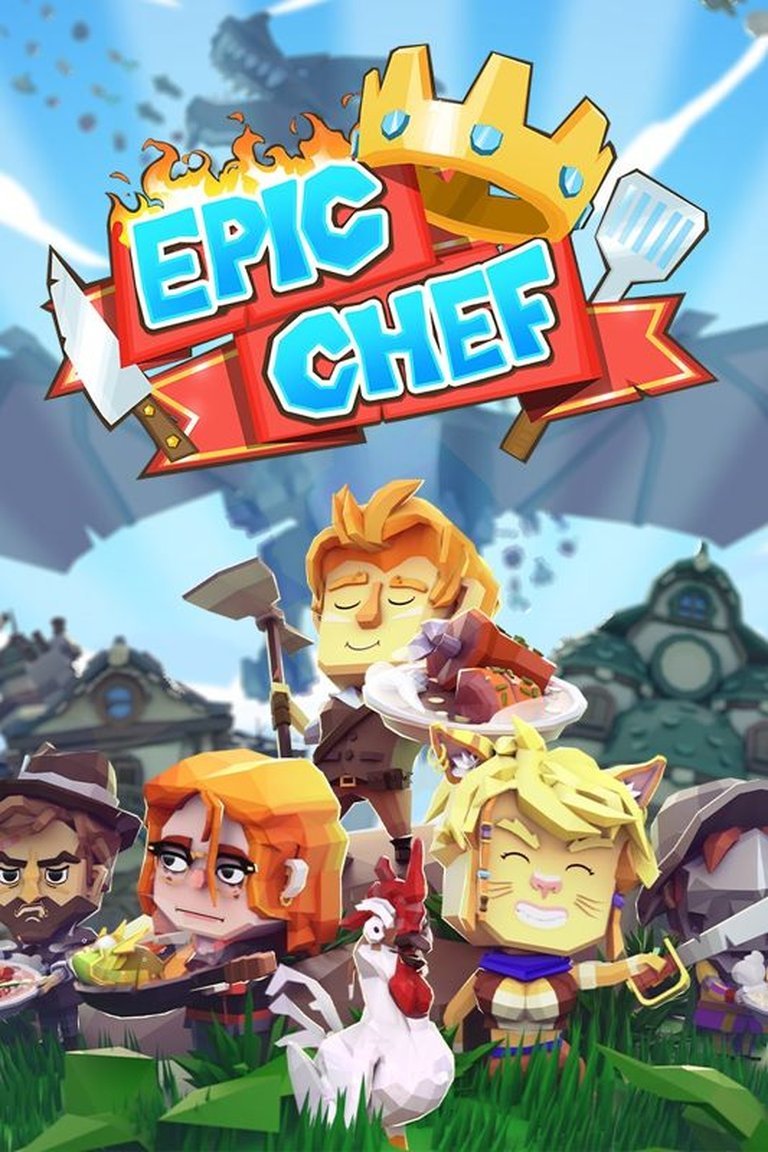
Epic Chef is a comedic cooking and farming simulation game where players take on the role of a budding chef aiming to become the top culinary master in a quirky, fantasy-inspired world. Combining elements of life simulation, farming, and business management, the game tasks players with growing ingredients, crafting dishes, and competing in cooking battles while interacting with eccentric townsfolk. With a blend of humor, lighthearted storytelling, and strategic gameplay, Epic Chef offers a unique twist on the farming/life sim genre, appealing to fans of games like Stardew Valley and Animal Crossing.
Gameplay Videos
Where to Buy Epic Chef
Epic Chef Free Download
Epic Chef Cracks & Fixes
Epic Chef Patches & Updates
Epic Chef Guides & Walkthroughs
Epic Chef Reviews & Reception
opencritic.com (71/100): A triumphant return to form for the series.
switchscores.com (70/100): It does take a little while for the game to really warm up; the opening hours aim to establish quite a lot quite quickly, but once you’re past all that, there’s a pretty solid adventure to enjoy.
monstercritic.com (69/100): Epic Chef’s writing is quite funny, and because of that and its fun cooking gameplay, I’m willing to wave off any serious issues I have with it.
steambase.io (78/100): Epic Chef has earned a Player Score of 78 / 100.
metacritic.com (56/100): Epic Chef is more sweet than sour. A scrumptious addition to the life sim genre.
Epic Chef: A Flavorful but Flawed Culinary Adventure
Introduction: A Dish with Potential, but Missing Key Ingredients
Epic Chef is a game that dares to blend the cozy familiarity of farming simulators with the competitive edge of culinary duels, all wrapped in a whimsical, humor-drenched narrative. Released in November 2021 by Infinigon Games and published by Team17, it positions itself as a quirky alternative to titans like Stardew Valley and My Time at Portia. Yet, despite its ambitious recipe—combining farming, crafting, cooking battles, and a story-driven adventure—Epic Chef struggles to rise above its technical and design shortcomings. This review dissects the game’s strengths and weaknesses, exploring whether it ultimately delivers a satisfying meal or leaves players with a bitter aftertaste.
Development History & Context: A Studio’s Ambitious Gamble
Infinigon Games, a relatively small studio, set out to create a game that would stand out in the crowded life-sim genre. Inspired by the culinary battles of Mister Ajikko and the satirical wit of Terry Pratchett, Epic Chef was designed to be a narrative-driven experience with a side of farming and crafting. The game’s development was ambitious, aiming to merge multiple gameplay systems into a cohesive whole. However, the final product reflects the challenges of balancing these elements, particularly under the constraints of a smaller team and the pressures of a holiday release window.
The game’s launch in November 2021—a notoriously competitive period dominated by AAA titles—likely contributed to its modest commercial performance. Despite its multi-platform release (PC, PlayStation 4, Xbox One, Nintendo Switch, and Xbox Series X/S), Epic Chef failed to capture significant mainstream attention. This oversight is unfortunate, as the game’s unique blend of humor, storytelling, and cooking mechanics deserves recognition, even if its execution is uneven.
Narrative & Thematic Deep Dive: A Feast of Wit and Whimsy
Plot and Characters: A Satirical Culinary World
Epic Chef follows Zest, a fugitive from the kingdom of Luceria who accidentally killed its queen and fled to the culinary capital of Ambrosia. The game’s narrative is a delightful mix of absurdity and satire, poking fun at food culture, political corruption, and societal norms. Zest’s journey from a penniless immigrant to a celebrated chef is filled with eccentric characters, from the arrogant food critic Malvaviscus to the fiery rival Mitrielle, whose rivalry with Zest evolves into a complex friendship.
The writing is the game’s strongest suit, blending sharp wit with genuine emotional depth. Themes of cultural identity, immigration, and the balance between tradition and innovation are explored with surprising nuance. For instance, the conflict between preserving one’s heritage and adapting to a new culture is embodied in the character Frishka, a Nyarian (cat-person) who struggles with her mixed ancestry. These moments elevate Epic Chef beyond a simple farming sim, giving it a narrative weight that rivals more established titles.
Dialogue and Humor: A Double-Edged Spatula
The game’s humor is its most polarizing element. The dialogue is packed with sarcasm, absurdity, and meta-commentary, often landing with hilarious precision. However, not all jokes hit their mark, and some players may find the irreverent tone off-putting, particularly when tackling sensitive topics. That said, the game’s willingness to embrace its eccentricities is commendable, and its comedic highs outweigh its occasional missteps.
Gameplay Mechanics & Systems: A Recipe with Too Many Steps
Cooking Duels: The Heart of the Game
The centerpiece of Epic Chef is its cooking duel system, where players compete against rival chefs in a battle of flavors. Each dish is composed of three ingredients, each contributing to three flavor attributes: Vigor, Spirit, and Sophistication. The synergy between ingredients—such as pairing carrots with tomatoes for a bonus—adds a layer of strategy, as does the use of sauces, which can manipulate judges’ preferences.
The duels are engaging but suffer from repetitive structure. Once a player memorizes the judges’ preferences and optimal ingredient combinations, the challenge diminishes. The lack of deeper mechanical complexity—such as real-time cooking minigames—makes the duels feel more like puzzles than dynamic competitions.
Farming and Crafting: Functional but Shallow
Farming in Epic Chef is straightforward but lacks depth. Players can grow crops, raise livestock (including unicorns), and craft machinery to process ingredients. However, the variety of crops and animals is limited, and the crafting system feels underdeveloped compared to games like Stardew Valley. The absence of seasonal changes or crop rotations further simplifies the farming experience, making it feel more like a chore than a rewarding endeavor.
Progression and Exploration: A Linear Path
The game’s progression is heavily scripted, with a linear narrative that restricts player freedom. While this ensures a tightly controlled story, it limits the sandbox appeal that defines the best life sims. Exploration is similarly constrained, with Ambrosia’s map feeling small and underutilized. The lack of dungeons, mines, or hidden areas reduces the sense of discovery, a critical element in games of this genre.
UI and Usability: A Clunky Kitchen
The game’s user interface is one of its most glaring weaknesses. Key features—such as recipe storage, judge preference tracking, and inventory management—are either missing or poorly implemented. The inability to rebind keys or adjust controls for accessibility is a significant oversight, alienating players who rely on customizable inputs. Additionally, the game’s save system, which only triggers when the player sleeps, is archaic and frustrating, particularly given the potential for long play sessions without saving.
World-Building, Art & Sound: A Whimsical but Unpolished Feast
Visuals: Low-Poly Charm with Mixed Results
Epic Chef employs a low-poly art style that suits its whimsical tone but often feels unfinished. The environments are colorful and vibrant, but character models—particularly their flat, expressionless faces—detract from the immersion. The game’s visual identity is functional but lacks the polish of contemporaries like Animal Crossing or Cozy Grove.
Sound and Music: A Catchy but Repetitive Soundtrack
The game’s soundtrack is one of its highlights, featuring upbeat, jazzy tunes that complement its lighthearted tone. However, the lack of voice acting—while understandable given the game’s indie roots—means players must rely solely on text, which can feel tedious during lengthy dialogue sequences.
Reception & Legacy: A Niche Delight with Limited Appeal
Epic Chef received mixed reviews upon release, with critics praising its humor and narrative while criticizing its technical issues and repetitive gameplay. The game’s Metacritic score of 56 (based on 4 reviews) reflects this divide, with some reviewers hailing it as a charming underdog and others dismissing it as a flawed experiment.
Commercially, the game struggled to find an audience, overshadowed by more established titles in the genre. However, its cult following—evidenced by its 78/100 player score on Steam—suggests that it resonated with a niche audience who appreciated its unique blend of humor and cooking mechanics.
Conclusion: A Game Worth Tasting, but Not a Full-Course Meal
Epic Chef is a game of contradictions: it boasts a brilliant narrative and sharp humor but is held back by clunky mechanics and technical shortcomings. Its cooking duels are innovative but repetitive, its world is charming but underdeveloped, and its UI is functional but frustrating. For players who prioritize story and humor over polished gameplay, Epic Chef offers a delightful, if flawed, experience. However, those seeking a deep, mechanically rich farming sim may find it lacking.
Final Verdict: 7/10 – A flavorful but imperfect dish, best enjoyed by those with a taste for the unconventional.
Epic Chef is not a masterpiece, but it is a game with heart—a culinary adventure that, despite its flaws, leaves a lasting impression. With more polish and refinement, it could have been a contender in the life-sim genre. As it stands, it remains a quirky, underappreciated gem, waiting for the right audience to discover its unique charm.