
- Release Year: 2009
- Platforms: Windows
- Publisher: Aldorlea Games, Degica Co., Ltd.
- Developer: Aldorlea Games
- Genre: Role-playing, RPG
- Perspective: Top-down
- Game Mode: Single-player
- Gameplay: Exploration, Random encounters, Turn-based combat
- Setting: Fantasy
- Average Score: 68/100
Description
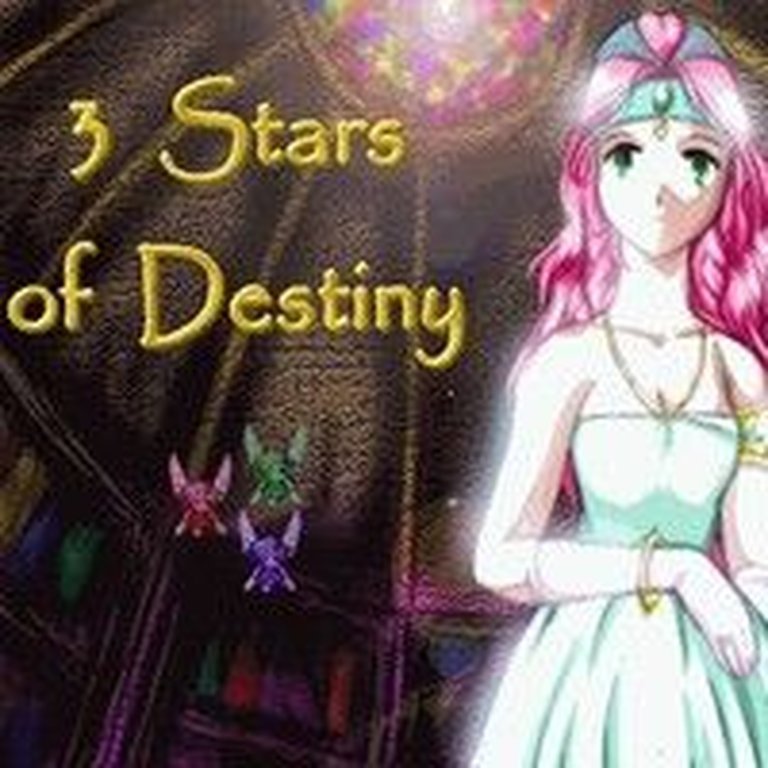
3 Stars of Destiny is a 2D top-down RPG set in the Laxius universe, focusing on the teenage years of beloved characters like Random and Luciana before their iconic adventures. Players explore a fantasy world, uncover treasures, and battle enemies with a team of up to ten characters, all while experiencing a nostalgic, exploration-driven gameplay style reminiscent of classic JRPGs. The game offers three difficulty modes and a mix of familiar faces and new challenges, blending traditional RPG mechanics with a lighthearted, coming-of-age narrative.
Gameplay Videos
Where to Buy 3 Stars of Destiny
PC
3 Stars of Destiny Free Download
3 Stars of Destiny Guides & Walkthroughs
3 Stars of Destiny Reviews & Reception
metacritic.com (86/100): One of my favorite RPG ever, the game that litterally made me discover the genre.
rpgfan.com : 3 Stars of Destiny is an enjoyable RPG, but its enjoyment is definitely proportional to how much the player enjoys old-school.
steambase.io (59/100): 3 Stars of Destiny has earned a Player Score of 59 / 100.
gamepressure.com (59/100): A fantasy-based cRPG game with a traditional turn-based combat system.
niklasnotes.com : The reviews for ‘3 Stars of Destiny’ reveal a polarized reception, with players appreciating its nostalgic charm, humor, and exploration elements while criticizing its lack of depth, repetitive gameplay, and the unconventional naming of the main character.
3 Stars of Destiny: A Retrospective on a Hidden Gem of the RPG Maker Renaissance
Introduction: The Allure of Nostalgia and the Weight of Legacy
In the late 2000s, as the gaming industry hurtled toward high-definition graphics, open-world design, and cinematic storytelling, a quiet revolution was brewing in the indie space. Tools like RPG Maker XP democratized game development, allowing small teams—and even solo creators—to craft experiences that harkened back to the golden age of 16-bit RPGs. Among these, 3 Stars of Destiny (2009) stands as a testament to the power of passion, creativity, and an unapologetic love for the classics. Developed by Aldorlea Games, a French studio with a cult following, this title is both a prequel to the Laxius Force series and a standalone adventure that captures the essence of old-school JRPGs while carving out its own identity.
3 Stars of Destiny is a game that wears its influences on its sleeve—Final Fantasy, Dragon Quest, and Breath of Fire echo through its corridors—but it is not merely a pastiche. It is a labor of love, a game that understands the mechanics, pacing, and charm of its predecessors while attempting to refine and expand upon them. Yet, like many indie RPGs of its era, it exists in a curious limbo: revered by a niche audience but overlooked by the broader gaming community. This review seeks to dissect 3 Stars of Destiny in its entirety—its development, narrative, gameplay, and legacy—to determine whether it is a forgotten masterpiece, a flawed but endearing relic, or something in between.
Development History & Context: The Birth of a Passion Project
The Studio Behind the Stars: Aldorlea Games
Aldorlea Games, founded by Indinera Falls, is a studio that has spent over a decade crafting traditional RPGs using RPG Maker. Their portfolio includes the Laxius Power trilogy, Laxius Force, Millennium, and The Book of Legends, among others. What sets Aldorlea apart from the myriad of RPG Maker developers is their commitment to scope, polish, and world-building. While many indie RPGs built with RPG Maker are short, simplistic, or derivative, Aldorlea’s games are sprawling, often exceeding 30 hours of gameplay, with intricate dungeons, numerous side quests, and a focus on exploration.
3 Stars of Destiny was released in February 2009, sandwiched between Laxius Force (2008) and Laxius Force II (2009). It serves as a prequel to the Laxius series, chronicling the early adventures of Random, Sarah, and Luciana—characters who would later become central to the saga. The game was developed using RPG Maker XP, a tool that, while limiting in some respects, allowed Indinera Falls and their small team to focus on design, storytelling, and gameplay rather than engine development.
The Vision: A Love Letter to Classic RPGs
Indinera Falls, the game’s designer, writer, and character artist, has been vocal about their admiration for classic JRPGs. 3 Stars of Destiny is, in many ways, a distillation of that admiration. The game’s official description emphasizes its old-school credentials: random encounters, turn-based combat, and a focus on exploration. Yet, it also introduces modern conveniences, such as adjustable difficulty settings and encounter rates, which were not common in the SNES-era RPGs it emulates.
The game’s development was a collaborative effort, with contributions from:
– Kaze Zamana (Monster Arts)
– Anon D. (Character Arts, based on Indinera’s designs)
– Thomas Vestergaard (Zeriab) (Scripter)
– DJ Fab (Music)
– Eridani (Translation and miscellaneous help)
This small but dedicated team worked within the constraints of RPG Maker XP to create a game that feels larger than its technical limitations. The use of custom sprites, original monster designs, and a predominantly original soundtrack (composed by DJ Fab) helped elevate 3 Stars of Destiny above the sea of generic RPG Maker projects.
The Gaming Landscape of 2009: A Clash of Eras
2009 was a pivotal year for RPGs. On one hand, the industry was embracing the open-world, action-oriented design of games like Dragon Age: Origins and Demon’s Souls. On the other, indie developers were reviving the turn-based, pixel-art aesthetic of the 16-bit era. 3 Stars of Destiny arrived at a time when games like Cave Story (2004) and Eternal Eden (2007) had already proven that retro-style indie games could find an audience. However, it also faced competition from more polished indie RPGs like Barkley, Shut Up and Jam: Gaiden (2008) and The Witch’s Yarn (2009), which pushed the boundaries of what RPG Maker could achieve.
The shareware model adopted by Aldorlea Games—where players could download a demo and purchase the full game—was also becoming less common as digital distribution platforms like Steam began to dominate. 3 Stars of Destiny would later find its way to Steam in 2014, published by KOMODO, but its initial release was primarily through Aldorlea’s official website.
Technological Constraints and Creative Workarounds
RPG Maker XP, while powerful for its time, imposed certain limitations:
– Resolution and Graphics: The game is locked into a 640×480 resolution, with pixel-art sprites and tile-based environments. While this lent itself to a retro aesthetic, it also meant that Aldorlea had to rely on clever design rather than technical prowess to create immersive environments.
– Scripting Limitations: While RPG Maker XP allowed for custom scripting, complex mechanics (such as real-time combat or physics) were out of the question. 3 Stars of Destiny adheres strictly to turn-based combat and grid-based movement.
– Sound and Music: The game’s soundtrack, while original, is limited by the MIDI-like quality of RPG Maker’s audio engine. DJ Fab’s compositions are ambitious, but they lack the depth and fidelity of modern game music.
Despite these constraints, Aldorlea leveraged RPG Maker’s strengths:
– Mapping and Dungeon Design: The game’s dungeons are labyrinthine, with hidden paths, puzzles, and secrets that reward exploration. The top-down perspective, reminiscent of The Legend of Zelda: A Link to the Past, is used to great effect.
– Character Customization: While not as deep as Final Fantasy’s job system, 3 Stars of Destiny offers a robust progression system with multiple characters, each with unique abilities and equipment.
– Narrative Scope: The game’s story is episodic, with a focus on character-driven vignettes rather than a single, overarching plot. This allows for a more personal, intimate experience.
Narrative & Thematic Deep Dive: A Tale of Three Stars
Plot Overview: Destiny, Deception, and Divine Intervention
3 Stars of Destiny follows the journeys of three teenagers—Random, Sarah, and Luciana—who are unaware that they possess a rare and powerful energy. This energy attracts the attention of Ozur, an evil god who seeks to absorb their power to break free from his divine prison. Unable to interact directly with the mortal world, Ozur manipulates events from the shadows, setting traps and sending minions to ensnare the trio.
The game’s narrative is structured as a series of interconnected vignettes, with each “star” initially pursuing their own goals:
– Random, a brash and reckless swordsman, begins his journey in the Indinera Woods, accompanied by his cowardly but loyal chameleon, Guanidia.
– Sarah, a mischievous elf, is introduced as a free spirit who enjoys teasing Random and exploring the world.
– Luciana, a studious mage, is a bookworm who lives in the library of Rillian University, unaware of the greater destiny awaiting her.
As the story progresses, the three characters’ paths converge, and they must unite to confront Ozur’s schemes. The plot is not particularly original—it follows the classic “chosen ones” trope seen in countless RPGs—but it is executed with charm, humor, and a brisk pace that keeps the player engaged.
Character Analysis: A Motley Crew of Heroes
One of 3 Stars of Destiny’s greatest strengths is its cast of characters. While the main trio is compelling, the game truly shines in its supporting cast, which includes:
– Guanidia: Random’s chameleon companion, whose cowardice and sarcastic remarks provide much of the game’s humor.
– Baretta: A tomb raider obsessed with relics, adding a touch of Indiana Jones to the fantasy setting.
– Sparkz: A fiery, hot-headed warrior who contrasts with the more level-headed Luciana.
– Zelyus: A mysterious and powerful figure whose role in the story is pivotal.
The dialogue is snappy and often humorous, with a tone that balances lightheartedness and drama. Indinera Falls’ writing has improved significantly since earlier Aldorlea titles, which suffered from awkward phrasing due to translation issues. 3 Stars of Destiny avoids the overly bawdy humor of Laxius Force’s Director’s Cut, opting instead for a more family-friendly but still witty approach.
Themes: Fate, Free Will, and the Burden of Power
At its core, 3 Stars of Destiny explores themes of destiny and agency. The three protagonists are fated to wield great power, but the game questions whether their paths are predetermined or shaped by their choices. Ozur’s manipulations serve as a metaphor for the struggle between free will and predestination—a classic philosophical dilemma that resonates throughout the narrative.
The game also touches on themes of friendship and unity. Random, Sarah, and Luciana begin as strangers, each with their own goals and personalities, but their shared struggle against Ozur forges a bond that transcends their individual desires. This is a common trope in RPGs, but 3 Stars of Destiny handles it with sincerity, avoiding the melodrama that often plagues such stories.
Storytelling Strengths and Weaknesses
Strengths:
– Pacing: The game’s narrative is well-paced, with a mix of action, exploration, and character development. Unlike Laxius Force, which suffered from uneven pacing, 3 Stars of Destiny keeps the player engaged with a steady stream of new locations, characters, and challenges.
– Humor and Personality: The dialogue is filled with wit and charm, particularly in the interactions between Random and Guanidia. The game doesn’t take itself too seriously, which makes its more dramatic moments land with greater impact.
– World-Building: While the story is character-driven, the world of 3 Stars of Destiny feels lived-in and expansive. Towns like Rillia and SankT Leona are bustling with NPCs, side quests, and lore that flesh out the setting.
Weaknesses:
– Predictability: The plot follows familiar RPG tropes, and experienced players will likely predict major twists well in advance. The “evil god” premise, while classic, lacks the nuance of more modern narratives.
– Underdeveloped Villain: Ozur, while menacing, remains a distant and abstract threat for much of the game. His motivations are standard fare for an RPG villain, and he lacks the depth of characters like Final Fantasy’s Kefka or Chrono Trigger’s Lavos.
– Point of No Return: The game’s main quest features a point of no return, which can be frustrating for completionists who miss side quests or hidden content.
Gameplay Mechanics & Systems: The Heart of the Experience
Core Gameplay Loop: Exploration and Combat
3 Stars of Destiny is, at its heart, an exploration-driven RPG. The game’s primary loop involves:
1. Traversing the World: Players navigate a top-down overworld, dungeons, and towns, uncovering secrets and completing quests.
2. Engaging in Random Encounters: Combat is turn-based and initiated randomly, though the frequency can be adjusted in the options menu.
3. Progressing Characters: Experience points, equipment, and abilities are earned through combat and exploration, allowing for gradual character growth.
4. Solving Puzzles: Some dungeons feature light puzzle-solving, reminiscent of The Legend of Zelda’s dungeon design.
This loop is classic and comforting, but it also means that 3 Stars of Destiny relies heavily on the strength of its exploration and combat systems to keep players engaged.
Combat System: Turn-Based Tactics
The combat in 3 Stars of Destiny is traditional turn-based fare, with a few twists:
– Party Composition: Players can control up to four characters in battle, with a total of ten playable characters available throughout the game. Each character has unique abilities, strengths, and weaknesses.
– Skills and Spells: Characters learn new skills and spells as they level up, allowing for strategic customization. Magic is divided into offensive, defensive, and support spells, with elemental affinities playing a role in combat.
– Buffs and Debuffs: The game features a robust system of status effects, including buffs (e.g., increased attack power) and debuffs (e.g., poison, paralysis). Mastering these is key to surviving tougher battles.
– Escape Option: Unlike Laxius Force, 3 Stars of Destiny allows players to flee from battles, a welcome quality-of-life improvement.
Strengths of the Combat System:
– Strategic Depth: While not as complex as Final Fantasy Tactics, the combat system rewards thoughtful planning. Boss battles, in particular, require careful use of buffs, debuffs, and elemental weaknesses.
– Character Variety: The ten playable characters offer a wide range of playstyles, from tanky warriors to glass-cannon mages. Experimenting with different party compositions adds replayability.
– Difficulty Options: The game’s adjustable difficulty (Easy, Normal, Hard) and encounter rate (Low, Medium, High) allow players to tailor the experience to their preferences.
Weaknesses of the Combat System:
– Repetition: Random encounters, while a staple of the genre, can become tedious, especially in longer dungeons. The option to reduce encounter rates helps, but it doesn’t eliminate the issue entirely.
– Lack of Innovation: The combat system is functional but not groundbreaking. Players who have experienced more modern takes on turn-based combat (e.g., Divinity: Original Sin 2, Octopath Traveler) may find 3 Stars of Destiny’s battles simplistic.
– Grinding: Some players may feel compelled to grind for levels or gold, particularly on higher difficulties. While not as egregious as in some older RPGs, it can still disrupt the game’s pacing.
Character Progression: Growth and Customization
Character progression in 3 Stars of Destiny is straightforward but satisfying:
– Leveling Up: Characters gain experience points from battles, leveling up and increasing their stats (HP, MP, Attack, Defense, etc.).
– Equipment: Weapons, armor, and accessories can be purchased, found, or crafted. Equipment plays a significant role in character power, with rare and legendary items hidden throughout the world.
– Skills and Abilities: Characters learn new skills automatically as they level up. There is no skill tree or branching path system, which simplifies progression but limits customization.
Strengths of Progression:
– Accessibility: The lack of complex systems makes 3 Stars of Destiny easy to pick up and play, even for RPG novices.
– Reward for Exploration: Many of the best items and abilities are hidden in optional dungeons or awarded for completing side quests, encouraging thorough exploration.
Weaknesses of Progression:
– Linear Growth: The absence of a skill tree or class system means that character development feels somewhat rigid. Players who enjoy deep customization may find the system lacking.
– Imbalance: Some characters are significantly stronger than others, which can lead to an unbalanced party if not managed carefully.
Questing and Side Content: A World Full of Secrets
3 Stars of Destiny excels in its side content. The game is packed with optional quests, hidden dungeons, and secrets that reward curious players. Some highlights include:
– Side Quests: NPCs throughout the world offer a variety of side quests, ranging from fetch quests to multi-step adventures. These quests often provide unique rewards, such as rare equipment or additional lore.
– Hidden Dungeons: Many dungeons feature secret rooms, puzzles, and bosses that are entirely optional but offer powerful rewards.
– Relics and Artifacts: The game features nine relics and artifacts to discover, each with its own backstory and significance.
The quest log helps players keep track of their objectives, and the game’s world is designed to encourage exploration. However, some side quests can feel repetitive, and the lack of a fast-travel system (until later in the game) means that backtracking can become tedious.
UI and Quality of Life: Functional but Dated
The user interface in 3 Stars of Destiny is functional but shows its age. Key features include:
– Menu System: The menu is straightforward, with tabs for items, equipment, skills, and quests. However, it lacks the polish of modern RPGs, with no mouse support (keyboard-only navigation).
– Inventory Management: Managing items and equipment is simple but can become cumbersome as the inventory grows. There is no sorting function, which can make finding specific items a chore.
– Save System: The game uses a save-point system, with save points scattered throughout dungeons and towns. While this adds tension, it can also be frustrating if a save point is poorly placed before a difficult boss.
Quality of Life Improvements:
– Adjustable Encounter Rate: A rare feature in classic-style RPGs, this allows players to reduce the frequency of random battles, mitigating one of the genre’s most common frustrations.
– Party Swapping: Players can easily swap characters in and out of the active party, allowing for flexibility in combat and exploration.
Missing Features:
– Fast Travel: The lack of a fast-travel system until later in the game means that players must manually traverse the world, which can be time-consuming.
– Auto-Save: The game relies entirely on manual saves, which can be punishing if a player forgets to save before a major event.
World-Building, Art & Sound: Crafting a Living Fantasy
Setting and Atmosphere: A World Worth Exploring
3 Stars of Destiny takes place in the world of the Deport, a fantasy realm filled with diverse landscapes, from dense forests to sprawling cities. The game’s world is divided into several key regions:
– Indinera Woods: The starting area, home to Random and Guanidia. This forest is filled with secrets and serves as a tutorial for the game’s mechanics.
– Rillia: A bustling university city where Luciana resides. Rillia is a hub for quests, shops, and lore.
– SankT Leona: A major city with a grand cathedral, serving as a central location for the game’s later acts.
– Witch Woods: A haunted forest filled with dangerous creatures and hidden treasures.
– Mount Zulle: A treacherous mountain range with challenging dungeons and powerful enemies.
The world feels cohesive and lived-in, with each region offering its own unique aesthetic, enemies, and quests. The top-down perspective, while limiting in terms of visual spectacle, allows for intricate level design, with dungeons that twist and turn in satisfying ways.
Visual Design: Pixel Art and Custom Sprites
3 Stars of Destiny’s visuals are a mix of custom and stock RPG Maker assets:
– Character Sprites: The main characters and key NPCs have custom sprites, designed by Anon D. based on Indinera Falls’ concepts. These sprites are expressive and detailed, with distinct animations for walking, attacking, and casting spells.
– Monster Designs: Kaze Zamana’s monster artwork is a standout feature. Many enemies are original creations, with creative designs that range from cute to grotesque. However, some enemies use stock RPG Maker sprites, which can feel out of place alongside the custom designs.
– Environments: The game’s maps are meticulously designed, with a focus on detail and atmosphere. Dungeons feature traps, puzzles, and hidden paths, while towns are filled with NPCs and interactive objects.
Strengths of the Visual Design:
– Charm and Personality: The pixel-art style is charming, with a color palette that evokes the warmth of 16-bit RPGs. The character designs are memorable, particularly Guanidia, whose animations convey his cowardly personality.
– Dungeon Variety: Each dungeon has a distinct visual theme, from the eerie Witch Woods to the volcanic depths of Mount Zulle. This variety keeps exploration fresh.
Weaknesses of the Visual Design:
– Stock Assets: The use of stock RPG Maker tilesets and enemy sprites can make some areas feel generic. While Aldorlea’s custom assets are excellent, the stock elements detract from the game’s overall polish.
– Limited Animation: Due to the constraints of RPG Maker, character and enemy animations are minimal, which can make combat feel static.
Sound Design and Music: An Epic Score in MIDI
The audio design in 3 Stars of Destiny is a mixed bag, with the soundtrack being the standout feature:
– Music: Composed by DJ Fab, the soundtrack is predominantly original, with orchestral and synth-based tracks that evoke the grandeur of classic RPGs. Standout tracks include:
– Title Theme: A sweeping, heroic piece that sets the tone for the adventure.
– Battle Theme: An upbeat, energetic track that keeps combat engaging.
– City Themes: The music for Rillia and SankT Leona is particularly memorable, with a mix of fantasy and modern influences.
– Sound Effects: The sound effects are functional but unremarkable. Spells, attacks, and environmental sounds are serviceable but lack the impact of more modern games.
Strengths of the Audio Design:
– Atmospheric Music: The soundtrack does an excellent job of enhancing the game’s atmosphere. The music swells during key moments, adding emotional weight to the narrative.
– Variety: The soundtrack avoids repetition, with unique tracks for different locations, dungeons, and bosses.
Weaknesses of the Audio Design:
– MIDI Quality: The music, while well-composed, suffers from the limitations of RPG Maker’s audio engine. The MIDI-like quality can feel dated, especially to players accustomed to modern game soundtracks.
– Lack of Voice Acting: While not a dealbreaker, the absence of voice acting means that the game relies entirely on text to convey its story and characters.
Reception & Legacy: A Cult Classic in the Making
Critical Reception: A Divided but Generally Positive Response
3 Stars of Destiny received a mix of critical and player reviews, with an average critic score of 71% (based on five reviews) and a player score of 3.9/5 (based on one rating) on MobyGames. The game’s reception can be summarized as follows:
Positive Reviews:
– RPGFan (87/100): Neal Chandran praised the game as “the smoothest game Aldorlea has created so far and the one I had the most fun with.” He highlighted the game’s exploration, character interactions, and improved writing.
– GameZebo (70/100): The review noted that while the game doesn’t innovate, it delivers a solid, traditional RPG experience that fans of the genre will enjoy.
– Digitally Downloaded (70/100): The game was lauded as “a perfect example of what a classic styled RPG should be like in this day and age.”
Mixed Reviews:
– HonestGamers (50/100): The reviewer criticized the game’s lack of innovation and mediocre storytelling, comparing it unfavorably to the “middling-to-terrible roleplayers in the 16-bit era.”
Player Reception:
– Steam (Mixed, 59/100): Player reviews on Steam are polarized. Many praise the game’s nostalgia, humor, and exploration, while others criticize its repetitive gameplay, lack of depth, and dated presentation.
– Metacritic (User Score: 8.6/10): User reviews on Metacritic are overwhelmingly positive, with players praising the game’s length, soundtrack, and character interactions.
Commercial Performance: A Niche Success
3 Stars of Destiny was not a commercial blockbuster, but it found a dedicated audience among fans of retro-style RPGs. The game’s initial release as shareware on Aldorlea’s website allowed it to reach a global audience, and its later Steam release in 2014 introduced it to a new generation of players. While exact sales figures are not publicly available, the game’s longevity—with active forum discussions and player guides still being created over a decade after its release—speaks to its enduring appeal.
Legacy and Influence: A Blueprint for Indie RPGs
3 Stars of Destiny’s legacy lies in its demonstration of what can be achieved with limited resources and a clear vision. The game proved that:
– RPG Maker Could Be Used for Serious Projects: While many RPG Maker games are amateurish or derivative, 3 Stars of Destiny showed that the engine could be used to create a polished, lengthy, and engaging RPG.
– Retro Aesthetics Could Still Resonate: At a time when indie games were experimenting with pixel art and classic mechanics, 3 Stars of Destiny helped pave the way for titles like Stardew Valley, Undertale, and Octopath Traveler.
– Community and Passion Matter: Aldorlea Games’ close relationship with their fanbase—through forums, updates, and responsive support—created a loyal community that continues to support their games.
The game’s influence can be seen in later Aldorlea titles, such as Laxius Force III and The Book of Legends, which refined and expanded upon 3 Stars of Destiny’s mechanics and storytelling. It also inspired other indie developers to embrace the retro RPG aesthetic, contributing to the resurgence of turn-based, pixel-art RPGs in the 2010s.
Comparisons to Other Games: How Does It Stack Up?
3 Stars of Destiny invites comparisons to other retro-style RPGs, both indie and AAA:
– Final Fantasy VI (1994): Like FFVI, 3 Stars of Destiny features a large cast of characters, a focus on exploration, and a mix of humor and drama. However, FFVI’s storytelling and character depth are more sophisticated.
– Chrono Trigger (1995): Both games emphasize time and destiny as central themes, but Chrono Trigger’s multiple endings and New Game+ features offer greater replayability.
– Eternal Eden (2007): Another RPG Maker title, Eternal Eden shares 3 Stars of Destiny’s retro aesthetic but is more linear and less ambitious in scope.
– The Witch’s Yarn (2009): This indie RPG, also released in 2009, pushed RPG Maker’s capabilities further with more complex scripting and storytelling. However, it lacks 3 Stars of Destiny’s expansive world and side content.
Conclusion: A Flawed but Endearing Masterpiece
3 Stars of Destiny is a game that defies easy categorization. It is not a perfect RPG—its combat is simplistic, its story is predictable, and its presentation is dated. Yet, it is also a game that exudes charm, creativity, and a genuine love for the genre it emulates. Its strengths—exploration, character interactions, and a sprawling world—far outweigh its weaknesses, making it a standout title in the crowded field of indie RPGs.
Final Verdict:
– For Fans of Classic RPGs: 3 Stars of Destiny is a must-play. Its old-school mechanics, nostalgic aesthetic, and lengthy gameplay make it a worthy successor to the 16-bit greats.
– For Modern RPG Enthusiasts: The game may feel dated, with its random encounters, linear progression, and lack of voice acting. However, those willing to embrace its retro charm will find a rewarding experience.
– For Indie Game Developers: 3 Stars of Destiny serves as a masterclass in how to maximize limited resources. Its success proves that passion, creativity, and attention to detail can elevate a game beyond its technical constraints.
Score Breakdown:
– Gameplay: 8/10 – Solid turn-based combat and deep exploration, but held back by repetition and lack of innovation.
– Story: 7/10 – A charming but predictable narrative with memorable characters and witty dialogue.
– Visuals: 7/10 – Charming pixel art and custom sprites, but marred by stock assets and limited animation.
– Sound: 8/10 – A fantastic original soundtrack that elevates the game’s atmosphere, though the MIDI quality shows its age.
– Replayability: 8/10 – Multiple difficulty settings, hidden content, and a large cast of characters encourage replaying.
– Overall: 8/10 – A flawed but brilliant homage to classic RPGs, 3 Stars of Destiny is a hidden gem that deserves to be rediscovered.
In the pantheon of indie RPGs, 3 Stars of Destiny may not be a household name, but it is a game that punches far above its weight. It is a testament to the power of passion, a love letter to the golden age of JRPGs, and a reminder that sometimes, the most memorable adventures are those that embrace the past while forging their own path. For those willing to look beyond its retro trappings, 3 Stars of Destiny offers an experience that is as rewarding as it is nostalgic—a true star in the indie RPG firmament.