
- Release Year: 2016
- Platforms: Linux, Macintosh, Windows
- Publisher: Devolver Digital, Inc.
- Developer: Dennaton Games
- Genre: Compilation, Special edition
- Perspective: Top-down
- Game Mode: Single-player
- Gameplay: Fast-paced combat, Retro Graphics, Stealth
- Setting: Crime, Modern
- Average Score: 84/100
- Adult Content: Yes
Description
Hotline Miami: Special Edition is a limited-time physical compilation that bundles the critically acclaimed top-down action games Hotline Miami and its sequel, Hotline Miami 2: Wrong Number, along with exclusive collectibles. Set in a neon-soaked, hyper-violent 1980s Miami, the games follow masked vigilantes carrying out brutal, fast-paced assassinations while unraveling a surreal, psychological narrative. The Special Edition includes DRM-free versions for multiple platforms, a documentary DVD, a cassette tape of the synthwave soundtrack, a production notebook, cameo cards, a comic, and other physical memorabilia, making it a must-have for fans of the series.
Hotline Miami: Special Edition Reviews & Reception
metacritic.com (85/100): A triumphant return to form for the series.
poormansgeek.wordpress.com (85/100): Hotline Miami is indie video game design at its very best.
metacritic.com (82/100): Two of the best titles of the decade to discover or re-discover for a discerning audience.
gameonreviews.com : Hotline Miami has cemented its place as a gaming classic.
Hotline Miami: Special Edition – A Definitive Retrospective
Introduction: The Neon-Soaked Legacy of a Cult Classic
Few games have left as indelible a mark on the indie landscape as Hotline Miami. A fever dream of synthwave, hyperviolence, and existential dread, it emerged in 2012 as a brutal deconstruction of video game violence, wrapped in the aesthetic of a VHS tape soaked in neon and blood. The Special Edition, released in 2016, wasn’t just a repackaging—it was a love letter to fans, a physical artifact of the game’s cult status, and a testament to its enduring influence. This review dissects Hotline Miami: Special Edition in exhaustive detail, exploring its development, narrative depth, gameplay innovation, and cultural legacy.
Development History & Context: The Birth of a Nightmare
The Dennaton Duo and the Indie Revolution
Hotline Miami was the brainchild of Dennaton Games, the two-person Swedish studio consisting of Jonatan “Cactus” Söderström (design, programming, narrative) and Dennis Wedin (art, music). Before Hotline Miami, Söderström was already a prolific figure in the indie scene, known for experimental, often surreal games like Clean Asia! and Tuning. His work was characterized by a raw, unfiltered creativity that eschewed mainstream conventions.
The duo’s collaboration began with Keyboard Drumset Fucking Werewolf, a promotional game for Wedin’s synthpunk band. Their chemistry was undeniable, but it was the resurrection of Söderström’s abandoned project Super Carnage—a top-down shooter about indiscriminate killing—that laid the foundation for Hotline Miami.
Inspirations: A Cocktail of Cinema and Counterculture
The game’s DNA is a fusion of disparate influences:
– Cinema: The 2011 film Drive (with its neon-lit brutality and existential cool) and the 2006 documentary Cocaine Cowboys (a gritty chronicle of Miami’s drug-fueled crime wave in the 1980s) provided the visual and thematic backbone.
– Music: The synthwave revival of the late 2000s, spearheaded by artists like Perturbator and Carpenter Brut, shaped the soundtrack’s hypnotic, pulse-pounding energy.
– Games: Classic top-down shooters like Gauntlet and Chaos Engine informed the gameplay, while Half-Life’s silent protagonist, Gordon Freeman, inspired Jacket’s minimalist characterization.
Development Struggles: Blood, Sweat, and GameMaker
Developed in nine months using GameMaker, Hotline Miami was a labor of love—and frustration. The team worked 12-hour days, six days a week, often in Wedin’s apartment, fueled by caffeine and creative mania. Technical hurdles abounded:
– AI Quirks: Enemies behaved unpredictably, sometimes ignoring the player entirely. Rather than fix it, Dennaton leaned into the surrealism, making the AI’s inconsistency a deliberate design choice.
– Bugs and Glitches: One infamous bug caused the game to crash if certain printers were connected to the player’s computer. Söderström famously patched pirated versions of the game, ensuring even non-paying players had a smooth experience.
– Depression and Burnout: Wedin was hospitalized for two weeks during development due to a breakup-induced depressive episode. The game’s themes of isolation and psychological unraveling mirrored the developers’ own struggles.
The Indie Boom and Devolver Digital’s Gamble
The early 2010s were a golden age for indie games, with titles like Super Meat Boy, Braid, and Fez proving that small teams could craft experiences as compelling as AAA blockbusters. Devolver Digital, then a fledgling publisher, saw potential in Hotline Miami and signed on to handle distribution.
The game’s 2012 release on Steam was met with immediate acclaim, selling 130,000 copies in its first seven weeks. Its success helped cement Devolver’s reputation as a publisher willing to take risks on unconventional, artistically bold projects.
The Special Edition: A Collector’s Dream
The Special Edition, released in March 2016, was a limited-run physical release crowdfunded through Gamer’s Edition, a now-defunct platform that required a minimum number of preorders to greenlight production. It included:
– DRM-free copies of Hotline Miami and Hotline Miami 2: Wrong Number for Windows, Mac, and Linux.
– A documentary DVD chronicling the game’s development.
– A “notebook” filled with sketches, concept art, and developer notes.
– A 90-minute cassette tape featuring select tracks from the soundtrack.
– Five cameo cards featuring the game’s cast, complete with photos of the real people behind the characters.
– A physical comic based on Hotline Miami 2: Wrong Number.
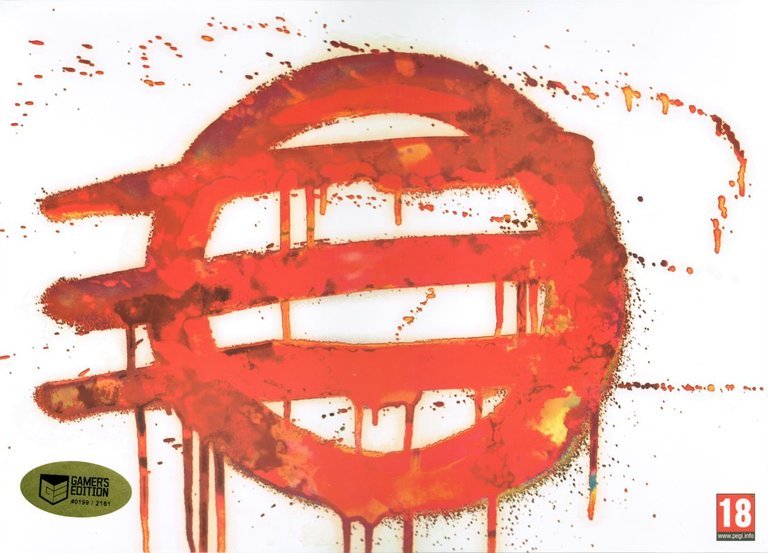
– A spray-paint stencil and a two-sided art card.
This edition wasn’t just a cash grab—it was a time capsule, a tangible celebration of the game’s impact.
Narrative & Thematic Deep Dive: A Descent into Madness
Plot Overview: The Anachronic Nightmare
Hotline Miami’s story is a fragmented, non-linear descent into psychosis, told through the eyes of Jacket, an unnamed protagonist (dubbed by fans) who receives cryptic phone calls instructing him to commit massacres against the Russian mafia in 1989 Miami.
The narrative is divided into five parts, each marked by surreal encounters with three masked figures—Richard (Rooster), Don Juan (Horse), and Rasmus (Owl)—who interrogate Jacket about his actions, his identity, and the nature of his reality. These sequences are meta-commentary, breaking the fourth wall to implicate the player in Jacket’s violence.
Key Themes: Violence, Identity, and the Illusion of Control
-
The Futility of Violence
- Hotline Miami is often misread as a glorification of violence, but its true intent is critique. The game forces players to confront the hollow, repetitive nature of killing by making each level a puzzle of efficiency. The scoring system (grading players on speed, brutality, and style) mocks the player’s complicity, rewarding them for actions that are morally reprehensible.
- The aftermath of each level—where Jacket walks through corpses to the sound of eerie ambiance—serves as a palate cleanser, a moment of reflection that underscores the emptiness of his actions.
-
Dissociative Identity and Psychological Collapse
- Jacket’s hallucinations (talking corpses, shifting environments, the masked trio) suggest dissociative identity disorder or PTSD, likely stemming from his time in the Hawaiian Conflict (a fictional war detailed in Hotline Miami 2).
- The masked personas (Richard, Don Juan, Rasmus) are projections of Jacket’s fractured psyche, each representing a different facet of his guilt, denial, and self-loathing.
- Richard (Rooster): The inquisitor, asking direct questions like “Do you like hurting other people?”
- Don Juan (Horse): The passive observer, offering cryptic wisdom (“Knowing oneself means acknowledging one’s actions.”)
- Rasmus (Owl): The aggressive accuser, embodying Jacket’s self-disgust (“You’re a monster.”).
-
The Illusion of Free Will
- Jacket is a puppet, controlled by 50 Blessings, a shadowy nationalist organization manipulating him (and others) into dismantling the Russo-American Coalition.
- The phone calls he receives are not choices—they are orders, and his compliance is ensured through threats and psychological manipulation.
- The game’s Biker chapters (unlocked after the main story) reveal that even the villains are victims, further blurring the lines of morality.
-
The American Dream as a Lie
- The game’s alternate 1989—where the U.S. is a second-rate power overshadowed by Russia—is a dystopian inversion of the Cold War era.
- The Russian mafia’s dominance in Miami mirrors real-world anxieties about foreign influence and national decline.
- 50 Blessings represents ultra-nationalism, a group willing to sacrifice pawns (like Jacket) for a “greater good” that ultimately leads to nuclear annihilation (as seen in Hotline Miami 2’s ending).
Character Analysis: The Broken and the Manipulated
- Jacket: The empty vessel. His lack of dialogue makes him a cypher for the player, forcing them to project their own morality (or lack thereof) onto him. His comatose state (revealed in Part Four: Connections) suggests that the entire game may be a dissociative fantasy.
- Beard (The Soldier): A war buddy from the Hawaiian Conflict, whose death in a nuclear strike (1986) haunts Jacket. His appearances as a convenience store clerk are hallucinations, a manifestation of Jacket’s grief.
- Richter (The Rat): A fellow assassin for 50 Blessings, who kills Jacket’s girlfriend and leaves him for dead. His prison escape in Hotline Miami 2 reveals him as another tragic figure, manipulated into violence.
- Biker: A rebel who seeks the truth behind the phone calls. His chapters serve as a narrative counterpoint, showing that resistance is possible—but at a cost.
- The Janitors: The true villains, the architects of 50 Blessings’ scheme. Their boredom-driven social experiment (manipulating people into violence) is a scathing critique of authoritarianism.
The Ending: No Redemption, Only Revelation
The game’s climax is a masterclass in narrative subversion:
– Jacket wakes from his coma (July 21, 1989) to find his girlfriend dead and Richter arrested.
– His rampage through the police station is a desperate search for answers, culminating in a confrontation with Richter, who reveals he was also a pawn.
– The final mission—assassinating the Russian mafia’s leadership—ends with Jacket throwing away a photo of himself and Beard, symbolizing his rejection of the past.
– The post-credits sequence (Biker’s story) reveals the Janitors’ true motives, leaving the player with a chilling realization: there are no heroes, only victims.
Gameplay Mechanics & Systems: Brutality as a Puzzle
Core Gameplay Loop: Die, Learn, Adapt
Hotline Miami is a top-down shooter, but calling it merely that is reductive. It’s a game of precision, improvisation, and brutal efficiency. The core loop is:
1. Receive a phone call (mission briefing).
2. Enter a location (apartment, nightclub, police station).
3. Kill everyone (using guns, melee weapons, or environmental hazards).
4. Die repeatedly (enemies kill in one hit).
5. Restart instantly (the game’s fast reset is key to its addictive nature).
Combat: The Art of the One-Hit Kill
- One-Hit Deaths: Both the player and enemies die in a single hit, creating a high-stakes, high-reward system where mistakes are punished instantly.
- Weapon Variety:
- Melee: Baseball bats, knives, lead pipes.
- Guns: Pistols, shotguns, SMGs (all with limited ammo).
- Environmental Kills: Throwing enemies into windows, using doors as shields, or luring them into traps.
- Execution Moves: Finishing off wounded enemies with brutal animations (stomping heads, slashing throats).
Masks: The Game’s Risk-Reward System
Before each level, players can equip animal masks, each granting a unique ability at the cost of higher difficulty:
– Tony (Tiger): Faster movement, but enemies are more aggressive.
– Richard (Rooster): Doors open instantly, but enemies detect you faster.
– Don Juan (Horse): Starts with a knife, but no guns.
– Rasmus (Owl): Can see further, but weapons jam more often.
– Biker (Pig): No special ability, but the game’s hardest mask (used in his chapters).
Masks encourage replayability, as players experiment to find the perfect balance between power and challenge.
Scoring and Grading: The Game’s Meta-Commentary
- Points System: Players earn points for kills, speed, and style (e.g., environmental kills, multi-kills).
- Letter Grades (A-F): Based on performance, with A+ being the highest.
- Playstyle Descriptors: The game judges your morality with tags like:
- “Brutal” (high melee kills).
- “Coward” (relying on stealth).
- “Sadist” (excessive violence).
- “Pacifist” (ironically, for minimal kills).
This system mockingly rewards the player for behavior the game condemns, reinforcing its anti-violence message.
Level Design: A Masterclass in Environmental Storytelling
Each level is a meticulously crafted death trap, designed to be replayed dozens of times. Key features:
– No Two Playthroughs Are the Same: The AI’s unpredictability means enemies react differently each time.
– Multiple Paths: Levels can be approached stealthily, aggressively, or creatively (e.g., using a gun to lure enemies into a choke point).
– Hidden Secrets: Puzzle pieces (for the Biker’s password) and Easter eggs (like the hidden “Highball” level) reward exploration.
Biker’s Chapters: A Narrative and Mechanical Shift
- No Guns, Only Knives: Forces players to adapt to pure melee combat.
- Investigative Gameplay: Biker hacks computers and interrogates enemies to uncover 50 Blessings’ conspiracy.
- The Password Puzzle: Collecting hidden pieces throughout the game unlocks the true ending, where Biker confronts the Janitors.
Flaws and Frustrations
- AI Inconsistencies: Enemies sometimes ignore gunfire or stand idle, breaking immersion.
- Trial-and-Error Design: Some levels require memorization, which can feel unfair rather than challenging.
- Lack of Checkpoints: Dying in later stages means restarting from the beginning, which can be punishing.
World-Building, Art & Sound: A Synthwave Nightmare
Setting: Miami as a Character
Hotline Miami’s Miami is not the real Miami—it’s a fever dream, a neon-drenched hellscape where:
– The Russian Mafia controls the streets.
– 50 Blessings pulls the strings from the shadows.
– The city itself feels alive, with pulsing lights, flickering signs, and an oppressive humidity that seeps into every scene.
The game’s alternate 1989 is a dystopian mirror of the late Cold War, where paranoia and violence are the norm.
Visual Design: Pixel Art as a Weapon
- Low-Resolution Aesthetic: The pixelated blood, blocky sprites, and garish colors evoke 80s arcade games, but with a modern twist.
- Color Psychology:
- Red: Violence, danger, blood.
- Neon Pink/Purple: Surrealism, hallucinations.
- Blue/Green: Calm before the storm (e.g., the metro level’s eerie lighting).
- Gore and Brutality: The exaggerated violence (heads exploding, limbs flying) is cartoonish yet unsettling, reinforcing the game’s satirical edge.
Soundtrack: The Heartbeat of the Nightmare
The soundtrack is not just background music—it’s a character, a narrative device, and a gameplay mechanic. Key tracks:
– “Hydrogen” (M|O|O|N): The opening theme, a hypnotic, pulsing track that sets the tone.
– “Miami Disco” (Perturbator): A euphoric, upbeat song that plays during massacres, creating a jarring contrast.
– “Electric Dreams” (Perturbator): The menu theme, a melancholic synthwave piece that underscores the game’s existential dread.
– “Crystals” (M|O|O|N): Plays during stealth sections, its slow build mirroring the tension.
The music adapts dynamically:
– Combat: Fast, aggressive beats.
– Exploration: Slow, eerie ambiance.
– Death: A sudden silence, followed by the haunting “You Died” screen.
Sound Design: The Unsettling Details
- Gunshots: Loud, crunchy, and visceral.
- Melee Kills: Wet, squelchy sounds that make violence feel uncomfortably real.
- Ambient Noise: Distant sirens, muffled conversations, and static create an atmosphere of paranoia.
Reception & Legacy: From Indie Darling to Cultural Phenomenon
Critical Reception: A Divisive Masterpiece
Hotline Miami was universally praised for its:
– Gameplay: “Addictive, brutal, and unforgiving” (Polygon).
– Soundtrack: “One of the best in gaming history” (PC Gamer).
– Narrative: “A surreal, unsettling critique of violence” (Eurogamer).
However, it also faced criticism:
– Controls: Some found the mouse-and-keyboard scheme clunky (Game Informer).
– Difficulty: The trial-and-error nature frustrated casual players.
– Ambiguity: The non-linear story confused many, leading to debates over its meaning.
Awards and Accolades:
– Golden Joystick Award for Best Indie Game (2012).
– IGN’s Best PC Sound (2012).
– Metacritic Scores: 85/100 (PC), 87/100 (PS3).
Commercial Success and Cultural Impact
- Sales: Over 1.5 million copies sold by 2015.
- Influence: Inspired a wave of indie games, including:
- Katana ZERO (precision-based combat).
- My Friend Pedro (stylish, physics-driven violence).
- Ultrakill (hyper-violent, fast-paced action).
- Synthwave Revival: The soundtrack popularized synthwave in gaming, leading to its use in Cyberpunk 2077, Far Cry 3: Blood Dragon, and Kung Fury.
- Memes and Internet Culture: Phrases like “Do you like hurting other people?” and “Jacket’s comatose revelation” became internet shorthand for existential dread.
The Sequel and Beyond
- Hotline Miami 2: Wrong Number (2015) expanded the lore, introducing new characters (The Fans, Manny Pardo, The Son) and ending with nuclear apocalypse.
- Fan Games and Mods: Projects like Midnight Animal (a Persona-inspired fan game) and Hotline Milwaukee (a Devolver Bootleg parody) kept the franchise alive.
- Legacy: Hotline Miami is now canonized as one of the greatest indie games of all time, appearing on lists by GamesRadar+, Slant Magazine, and PC Gamer.
Conclusion: A Game That Changed Everything
Hotline Miami: Special Edition is more than a collector’s item—it’s a time capsule of a game that redefined indie storytelling, gameplay, and sound design. Its brutal combat, surreal narrative, and hypnotic soundtrack create an experience that lingers long after the credits roll.
Final Verdict: 10/10 – A Masterpiece
– Gameplay: 9.5/10 (Addictive, challenging, but occasionally frustrating).
– Story: 10/10 (A surreal, unsettling critique of violence and control).
– Soundtrack: 10/10 (One of the greatest in gaming history).
– Legacy: 10/10 (Influenced an entire generation of indie games).
Hotline Miami isn’t just a game—it’s a cultural artifact, a philosophical statement, and a testament to the power of indie development. If you haven’t played it, you’re missing out on one of the most important games of the 2010s. Put on the mask. Answer the phone. Embrace the madness.