
- Release Year: 2013
- Platforms: Windows
- Publisher: Paradox Interactive AB
- Developer: Paradox North AB
- Genre: Action
- Perspective: Diagonal-down
- Game Mode: Online PVP
- Gameplay: Customization, Friendly fire, Magic casting
- Setting: Fantasy
- Average Score: 73/100
Description
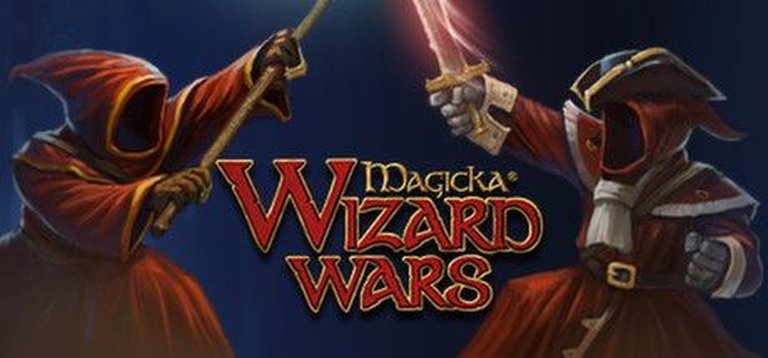
Magicka: Wizard Wars is a fast-paced, player-versus-player battle game set in a fantasy world where wizards engage in chaotic magical combat. Players can duel one-on-one, compete in four-versus-four battles, or defend their base in the Soul Harvest mode, all while customizing their wizard and mastering a complex magic system. The game features friendly fire, strategic depth, and a free-to-play model, offering a mix of skill-based gameplay and humorous, unpredictable spellcasting.
Gameplay Videos
Magicka: Wizard Wars Patches & Updates
Magicka: Wizard Wars Mods
Magicka: Wizard Wars Guides & Walkthroughs
Magicka: Wizard Wars Reviews & Reception
opencritic.com (76/100): A great combat system is restrained by thoughtless multiplayer mode design.
ign.com (64/100): Spellcasting in Magicka: Wizard Wars is good fun, but it’s not a perfect fit with MOBA-style multiplayer.
metacritic.com (69/100): Magicka: Wizard Wars definitely struggles a bit with its steep learning curve and some serious bugs that need to be addressed, but the quick, energetic games are largely worth the struggles.
gamepressure.com (85/100): Shifting the focus of the gameplay on creating the best spells possible, provides fresh experiences, unique only for Magicka: Wizard Wars.
Magicka: Wizard Wars – A Flawed but Fascinating Experiment in Spellcasting PvP
Introduction: The Rise and Fall of a Wizardly Battleground
Magicka: Wizard Wars (2013) stands as one of gaming’s most intriguing “what if?” experiments—a bold attempt to transplant the chaotic, element-mixing magic of Magicka into the competitive crucible of multiplayer online battle arenas (MOBAs). Developed by Paradox North and published by Paradox Interactive, this free-to-play spin-off emerged during the early 2010s MOBA boom, a period dominated by titans like League of Legends and Dota 2. Yet, rather than aping the genre’s conventions, Wizard Wars dared to redefine them, offering a fast-paced, skill-based alternative where mastery of arcane combinations—not last-hitting minions or farming gold—determined victory.
At its core, Wizard Wars was a game about creativity under pressure. Its spellcasting system, lifted from the original Magicka (2011), allowed players to combine eight elemental forces (fire, water, lightning, etc.) into hundreds of unique spells, from flaming tornadoes to icy shields. This depth of mechanical interplay made every duel or team battle a dynamic puzzle, where split-second decisions could turn the tide. However, the game’s ambition was ultimately undone by a combination of technical instability, design missteps, and the harsh realities of live-service gaming. Despite its innovative combat and devoted niche community, Wizard Wars shuttered its servers in July 2016, leaving behind a legacy as a cult classic—a game that, for all its flaws, captured the thrill of magical improvisation in ways few others have.
This review explores Magicka: Wizard Wars in exhaustive detail, examining its development, mechanics, reception, and the lessons it offers about the challenges of adapting a beloved single-player system to the unforgiving world of competitive multiplayer.
Development History & Context: A Studio’s Gambit in the MOBA Gold Rush
The Birth of a Spin-Off
Magicka: Wizard Wars was not the brainchild of Arrowhead Game Studios, the original creators of Magicka, but rather Paradox North, an internal studio under Paradox Interactive. This shift in development hands was pivotal. While Arrowhead had crafted Magicka as a cooperative, comedy-driven action-adventure, Paradox North sought to repurpose its magic system for competitive PvP, a radical departure from the source material’s tone and structure.
The game entered Steam Early Access in October 2013, a period marked by both excitement and skepticism. Early adopters were drawn to the promise of Magicka’s spellcasting in a multiplayer format, but the experience was marred by frequent crashes, matchmaking failures, and balance issues—echoes of the original Magicka’s notoriously buggy launch. These problems persisted even after the full release in May 2014, tarnishing the game’s reputation among critics and players alike.
Technological Constraints and Engine Choices
Wizard Wars was built using the Bitsquid engine (later renamed Stingray), a choice that reflected Paradox’s broader technological strategy at the time. While Bitsquid offered flexibility for rapid iteration—a necessity for a live-service game—it also contributed to the title’s performance inconsistencies, particularly in netcode and server stability. Players frequently reported desync issues, rubber-banding, and abrupt disconnections, problems that plagued the game throughout its lifespan.
The decision to adopt a free-to-play model was equally contentious. Unlike the premium Magicka and its expansions, Wizard Wars monetized through cosmetic robes, staves, and “treasure chests” containing randomized loot—a system that, while not pay-to-win, still drew criticism for its grind-heavy progression. Players could earn in-game currency through matches, but unlocking higher-tier gear required significant time investment or microtransactions, a design choice that alienated some fans of the original’s more straightforward approach.
The MOBA Landscape in 2014
Wizard Wars arrived at a time when the MOBA genre was both saturated and evolving. League of Legends and Dota 2 had cemented their dominance, while newer entries like Heroes of the Storm and SMITE were carving out niches with streamlined mechanics and unique twists. Into this fray stepped Wizard Wars, a game that rejected traditional MOBA tropes—no lanes, no minions, no last-hitting—yet still branded itself as part of the genre.
This identity crisis was perhaps the game’s greatest undone. Critics and players alike struggled to classify Wizard Wars: was it a MOBA, a hero shooter, or a fighting game with team mechanics? The answer was none and all of these, a hybrid that defied easy categorization. While this ambiguity made the game refreshing for some, it also made it hard to market and sustain. Without a clear hook beyond its spellcasting, Wizard Wars struggled to retain players in a genre where meta-depth and esports viability were increasingly expected.
Narrative & Thematic Deep Dive: A World Without Story
The Absence of Lore
Unlike its predecessors, Magicka: Wizard Wars was devoid of narrative context. The original Magicka (2011) and its sequel (2015) were steeped in Norse mythology, absurdist humor, and a self-aware parody of fantasy tropes, complete with a campaign mode and memorable characters like Vlad the vampire instructor. Wizard Wars, by contrast, offered no campaign, no cutscenes, and no dialogue—just a barebones lobby and a handful of arenas.
This omission was a double-edged sword. On one hand, it allowed the game to focus entirely on mechanics, stripping away distractions to create a pure test of spellcasting skill. On the other, it robbed the experience of the charm and personality that made Magicka so beloved. The wizards were faceless avatars, the maps generic battlegrounds, and the only “story” was the one players crafted through their own rivalries and strategies.
Thematic Resonance: Chaos as Gameplay
What Wizard Wars lacked in narrative, it compensated for in thematic cohesion. The game’s core philosophy—controlled chaos—was embedded in every mechanic:
– Friendly fire was always on, meaning a misplaced fireball could incinerate an ally as easily as an enemy.
– Spells could be countered or combined in real-time, rewarding players who could adapt mid-combo.
– No mana system meant battles were frantic, uninterrupted exchanges, where victory hinged on reflexes and foresight rather than resource management.
This design ethos mirrored the original Magicka’s satirical take on wizardly incompetence, where players were as likely to blow themselves up as they were to save the day. In Wizard Wars, that incompetence became a competitive advantage—a player who could exploit their opponent’s mistakes (e.g., casting a water spell into their own lightning shield) could turn the tide of battle.
The Humor of Failure
Even in its multiplayer-focused design, Wizard Wars retained traces of Magicka’s dark humor. The game’s death animations—wizards exploding into gibs, getting vaporized by their own spells, or collapsing into a heap of robes—were deliberately over-the-top, reinforcing the idea that these were not infallible archmages but bumbling apprentices thrown into a gladiatorial arena. The cosmetic items, too, leaned into absurdity, with robes referencing everything from Warhammer 40,000 to Star Trek, and staves shaped like fish or rubber chickens.
Yet, without a narrative framework, these touches felt isolated rather than integrated. The humor existed in spite of the game, not because of it—a missed opportunity to weave the Magicka universe’s satirical edge into the competitive experience.
Gameplay Mechanics & Systems: The Art of Arcane Combat
The Spellcasting System: A Masterclass in Emergent Complexity
At the heart of Wizard Wars was its elemental magic system, a direct evolution of Magicka’s signature mechanic. Players could combine eight base elements (Fire, Water, Lightning, Earth, Shield, Life, Death, and Arcane) in sequences of up to five, creating hundreds of possible spells. The order and combination determined the effect:
– Fire + Earth = Fireball (projectile)
– Water + Cold = Ice Shard (projectile)
– Shield + Arcane = Arcane Barrier (defensive)
– Life + Water = Healing Mist (area effect)
The system’s depth came from elemental hierarchies and interactions:
– Shields overrode projectiles, which overrode beams, which overrode sprays.
– Opposing elements (e.g., Fire vs. Water) could cancel each other out mid-cast.
– Chaining spells (e.g., casting a lightning beam followed by a fire spray) could create synergistic effects, like electrified flames.
This rock-paper-scissors dynamic made every encounter a mental chess match. A player who relied too heavily on fire spells could be countered by an opponent wielding water or shield magic, forcing them to adapt mid-battle. The lack of a mana system meant no cooldowns, only the limitation of human reflexes—a design choice that rewarded creativity over memorization.
Game Modes: Hits and Misses
Wizard Wars launched with three primary modes, each offering a different take on competitive spellcasting:
-
Wizard Warfare (4v4 Control Points)
- The most successful mode, Wizard Warfare was a spawn-ticket-based battle where teams fought to control points on a map.
- Fast-paced and dynamic, it encouraged team coordination and map awareness, with matches typically lasting 10-15 minutes.
- The absence of minions or AI-controlled objectives kept the focus on player skill, making it a pure test of spellcasting prowess.
-
Wizard Duel (1v1)
- A one-on-one arena where players faced off in a small, enclosed space with teleporters for mobility.
- While theoretically the purest form of competition, the mode suffered from compressed spacing, which made melee attacks and spam tactics overly dominant.
- Lacked the strategic depth of team modes, feeling more like a test of reflexes than magical mastery.
-
Soul Harvest (4v4 MOBA Hybrid)
- The most ambitious—and flawed—mode, Soul Harvest attempted to blend MOBA mechanics with Magicka’s spellcasting.
- Teams had to farm “souls” from neutral creeps while defending their base’s effigy.
- Problems abounded:
- No character progression meant teams remained static in power, making late-game pushes repetitive.
- Respawn timers were fixed, removing the snowball effect that makes MOBAs dramatic.
- Friendly fire made teamfights chaotic, often devolving into accidental teamkills.
- Critics widely agreed that Soul Harvest was a misfire, a mode that didn’t understand what made MOBAs compelling.
Progression and Customization: The Grind Behind the Magic
Wizard Wars featured a mastery system where players earned XP and in-game currency through matches. This currency could be spent on:
– Robes, Staves, and Underwear: Cosmetic items that altered spell effects (e.g., a robe that boosted Fire damage but weakened Water).
– Mastery Abilities: Unique ultimate-like powers (e.g., a time-stop spell or a metor shower) that could turn the tide of battle.
– Treasure Chests: Randomized loot boxes containing rare cosmetic items, unlockable with keys purchased via microtransactions.
The system was not pay-to-win—all gameplay-affecting items could be earned through play—but the grind was steep. New players often found themselves outmatched by veterans who had unlocked superior gear, creating a skill gap that felt insurmountable without significant time investment.
The Problem of Friendly Fire
One of Wizard Wars’ most controversial and defining mechanics was permanent friendly fire. Unlike most team-based games, where allies are invulnerable to each other’s attacks, Wizard Wars allowed—and often encouraged—players to accidentally (or intentionally) harm their teammates.
This design choice had profound implications:
– Teamwork required extreme coordination, as a misplaced AoE spell could wipe out an entire squad.
– Trolling was rampant, with griefers deliberately killing allies to sabotage matches.
– No reporting system meant toxic players could act with impunity, a critical oversight in a competitive game.
While friendly fire added realism and chaos, it also undermined teamplay, making Wizard Wars feel more like a free-for-all than a cooperative experience.
World-Building, Art & Sound: Aesthetic Simplicity with Hidden Depth
Visual Design: Functional but Forgettable
Wizard Wars adopted a cartoonish, exaggerated art style that aligned with Magicka’s whimsical tone. Characters were blocky, expressive wizards with oversized robes and staves, while environments were colorful but generic—arenas ranged from floating islands to ruined castles, but none left a lasting impression.
The spell effects, however, were a standout feature. Each elemental combination produced visually distinct results:
– Fire + Lightning created crackling, electrified flames.
– Water + Shield generated swirling, protective bubbles.
– Death + Arcane summoned ghostly, purple tendrils.
These dynamic visuals made battles easy to parse, a crucial advantage in a game where split-second reactions determined survival. However, the lack of environmental variety made matches blend together, especially in Soul Harvest mode, where the repetitive creep camps grew tedious.
Sound Design: The Symphony of Spellcasting
The audio in Wizard Wars was minimalist but effective. Spellcasting produced distinct, punchy sound effects:
– Fire spells hissed and roared.
– Lightning crackled with static.
– Shields emitted a *metallic *clang upon impact.
The absence of voice acting (beyond grunts and death cries) reinforced the game’s focus on mechanics over narrative, though some players missed the witty banter of the original Magicka.
The music, composed of orchestral fantasy themes, was unobtrusive but forgettable, serving more as ambient noise than a driving force. Unlike the original Magicka, which featured memorable, humorous tracks, Wizard Wars’ soundtrack lacked personality, further contributing to its sterile atmosphere.
Reception & Legacy: A Game Caught Between Genres
Critical Reception: Praise for Innovation, Criticism for Execution
Magicka: Wizard Wars received mixed-to-positive reviews, with critics praising its unique spellcasting mechanics but criticizing its technical issues and lack of depth.
Positive Aspects:
– Spellcasting was universally lauded as deep, satisfying, and innovative.
– PC Gamer called it “a great combat system” that made Magicka 2’s mechanics more promising.
– Hooked Gamers praised its “quick, energetic games” and non-intrusive monetization.
– Wizard Warfare mode was highlighted as the standout experience, offering fast-paced, skill-based competition.
– Free-to-play model was fair, with no pay-to-win elements and a generous free currency system.
Negative Aspects:
– Technical instability was a recurring complaint.
– IGN noted frequent crashes, matchmaking failures, and server desyncs.
– GameSpot criticized the “grind-heavy progression” and lack of game modes.
– Soul Harvest mode was widely panned as a failed MOBA hybrid.
– Rock, Paper, Shotgun called it “a smart piece of design” but acknowledged its lack of tactical depth.
– Friendly fire and toxic players made team modes frustrating.
– The absence of a reporting system was a glaring oversight.
Metacritic Score: 69/100 (Mixed or Average)
User Score: 7.3/10 (Mixed or Average)
Commercial Performance and Shutdown
Despite its dedicated niche audience, Wizard Wars struggled to retain players. The game’s peak concurrent player count on Steam rarely exceeded 1,000, a far cry from the millions enjoyed by League of Legends or Dota 2.
In July 2016, less than two years after launch, Paradox Interactive announced the shutdown of Wizard Wars’ servers, citing:
– A dwindling player base that made matchmaking unsustainable.
– High server costs relative to low revenue from microtransactions.
– Shift in focus toward Magicka 2 and other projects.
The shutdown was met with disappointment from fans, many of whom saw Wizard Wars as ahead of its time—a game that could have thrived with better technical support and a clearer identity.
Legacy and Influence
While Wizard Wars itself is no longer playable, its influence can be seen in:
– Spellcasting in Competitive Games:
– Games like Battlerite (2017) and Spellbreak (2020) adopted similar elemental combo systems, though none replicated Wizard Wars’ depth of interactions.
– MOBA Hybrids:
– Wizard Wars proved that not all competitive games need lanes or minions—a lesson later titles like Brawlhalla and Rocket Arena took to heart.
– The Risks of Free-to-Play:
– Its monetization model was fair but unsustainable, demonstrating the challenges of balancing player retention with revenue in niche genres.
Ultimately, Magicka: Wizard Wars remains a fascinating footnote in gaming history—a bold experiment that failed commercially but succeeded in pushing boundaries.
Conclusion: A Flawed Gem Worth Remembering
Magicka: Wizard Wars was not a perfect game, but it was an important one. It dared to challenge the conventions of the MOBA genre, offering a fast-paced, skill-based alternative where creativity and adaptability mattered more than memorized builds or last-hitting minions. Its spellcasting system remains one of the most innovative in competitive gaming, a testament to the power of emergent gameplay.
Yet, for all its strengths, Wizard Wars was undone by its flaws:
– Technical instability made it frustrating to play.
– Design missteps (like Soul Harvest mode) diluted its appeal.
– Lack of narrative or personality made it feel sterile compared to its predecessors.
– Friendly fire and toxic players undermined teamwork.
In the end, Magicka: Wizard Wars was a game ahead of its time—one that deserved a larger audience but lacked the polish and support to find it. Its shutdown was a loss for competitive gaming, but its legacy endures as a reminder of the risks and rewards of innovation.
Final Verdict: 7.5/10 – A Brilliant but Flawed Experiment
Magicka: Wizard Wars was not for everyone, but for those who mastered its magic, it offered some of the most exhilarating PvP combat of its era. It stands as a cautionary tale about the challenges of adapting a beloved single-player system to the harsh realities of live-service multiplayer—and a testament to the enduring appeal of chaotic, creative gameplay.
For fans of deep mechanics, fast-paced competition, and magical mayhem, Wizard Wars was a hidden gem. For the broader gaming world, it remains a fascinating “what if?”—a game that could have been great, if only the stars had aligned.
Rest in peace, Wizard Wars. Your magic is missed.