
- Release Year: 2023
- Platforms: Nintendo Switch, PlayStation 4, PlayStation 5, Windows, Xbox Series
- Publisher: Nacon S.A.
- Developer: gameXcite GmbH
- Genre: Strategy, Tactics
- Perspective: Diagonal-down
- Game Mode: Single-player
- Gameplay: Cards, Tiles, Turn-based
- Setting: Classical antiquity, Europe
- Average Score: 50/100
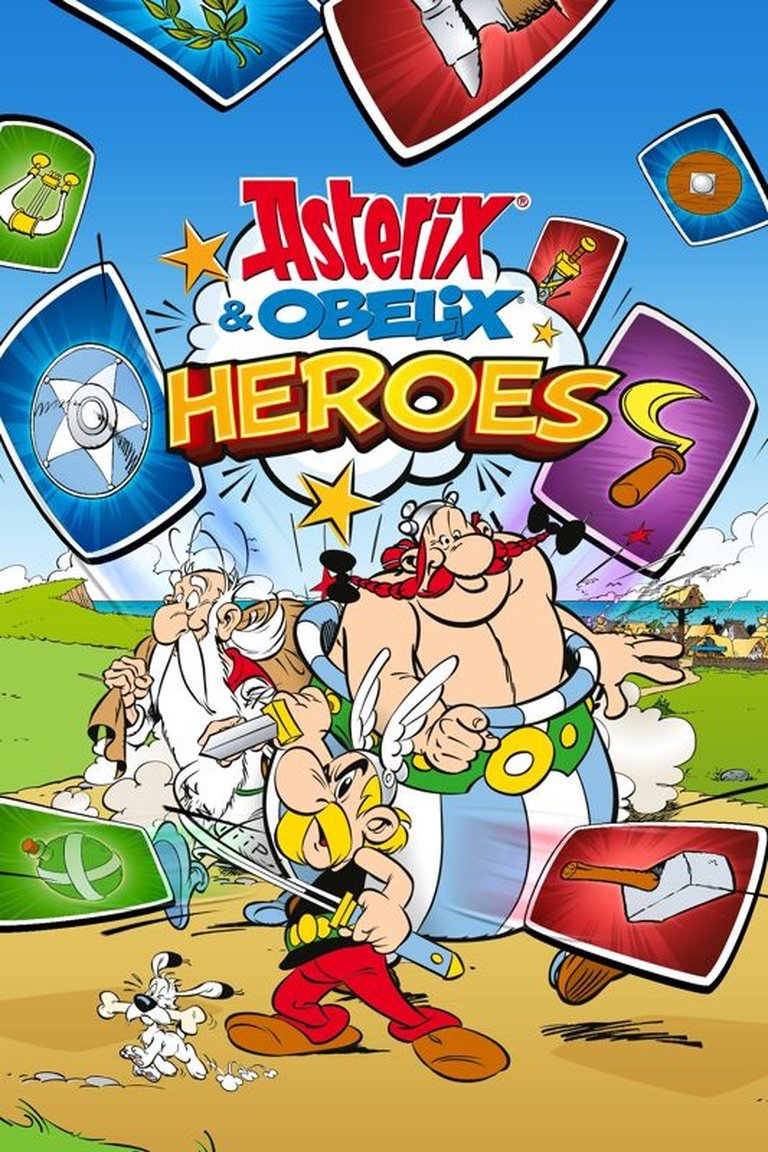
Description
Asterix & Obelix: Heroes is a turn-based strategy game set in classical antiquity, where players assemble a team of beloved characters from the iconic comic series to embark on comedic adventures across Europe. The game features card-based gameplay with isometric visuals, allowing players to explore predetermined maps, unlock secret locations, and utilize unique hero synergies to overcome challenges. While the game offers lighthearted fun and team-based tactics, its simplicity and occasional janky mechanics may not satisfy those seeking a deep or challenging experience.
Gameplay Videos
Where to Buy Asterix & Obelix: Heroes
PC
Asterix & Obelix: Heroes Free Download
Asterix & Obelix: Heroes Cracks & Fixes
Asterix & Obelix: Heroes Patches & Updates
Asterix & Obelix: Heroes Guides & Walkthroughs
Asterix & Obelix: Heroes Reviews & Reception
waytoomany.games : Asterix & Obelix: Heroes isn’t technically broken, glitchy, or even aggressively bad, but it’s completely devoid of life or joy.
digitallydownloaded.net : Asterix & Obelix: Heroes is a Slay The Spire clone with a half-effort Asterix & Obelix coat of paint over it.
gamingboulevard.com (50/100): Asterix & Obelix Heroes was a better fit on the mobile consoles than on the Nintendo Switch or PC.
Asterix & Obelix: Heroes Cheats & Codes
PC
Enter passwords to unlock specific levels.
| Code | Effect |
|---|---|
| dog: girl: wizard: asterix | Unlocks To London (Act 3) |
| asterix: obelix: dog: wizard | Unlocks To The Swiss Frontier (Act 5) |
| dog: chief: girl: wizard | Unlocks To The Mountains (Act 7) |
| girl: chief: obelix: dog | Unlocks To Piraeus (Act 9) |
| girl: dog: chief: wizard | Unlocks To Olympia (Act 11) |
| dog: girl: wizard: chief | Unlocks To The Desert (Act 13) |
| asterix: obelix: dog: chief | Unlocks To The Desert Camp (Act 15) |
| girl: asterix: dog: obelix | Unlocks To The Pirate Ship (Act 17) |
| girl: chief: dog: obelix | Unlocks To The Roman Camp (Act 19) |
PlayStation
Enter passwords to unlock specific levels.
| Code | Effect |
|---|---|
| dog: girl: wizard: asterix | Unlocks To London (Act 3) |
| asterix: obelix: dog: wizard | Unlocks To The Swiss Frontier (Act 5) |
| dog: chief: girl: wizard | Unlocks To The Mountains (Act 7) |
| girl: chief: obelix: dog | Unlocks To Piraeus (Act 9) |
| girl: dog: chief: wizard | Unlocks To Olympia (Act 11) |
| dog: girl: wizard: chief | Unlocks To The Desert (Act 13) |
| asterix: obelix: dog: chief | Unlocks To The Desert Camp (Act 15) |
| girl: asterix: dog: obelix | Unlocks To The Pirate Ship (Act 17) |
| girl: chief: dog: obelix | Unlocks To The Roman Camp (Act 19) |
Asterix & Obelix: Heroes – A Soulless Deckbuilder in Gaulish Clothing
Introduction: The Legacy of Asterix & Obelix in Gaming
The Asterix & Obelix franchise, a cornerstone of Franco-Belgian comics since 1959, has long been a fertile ground for video game adaptations. From the 1983 Atari 2600 title Obelix to the XXL series of 3D platformers, the adventures of the indomitable Gauls have been translated into various genres with varying degrees of success. Asterix & Obelix: Heroes (2023), developed by German studio gameXcite GmbH and published by Nacon, attempts to merge the beloved comic’s humor and charm with the modern deckbuilding craze popularized by Slay the Spire. However, despite its ambitious premise, the game stumbles into a pit of mediocrity, offering a hollow, uninspired experience that fails to capture the spirit of its source material or the depth of its genre.
This review dissects Heroes across its development, narrative, gameplay, aesthetics, and legacy, arguing that it is a missed opportunity—a cash-in that neither respects the Asterix lore nor innovates within the deckbuilding space.
Development History & Context: A Franchise in Search of Identity
The Studio Behind the Game: gameXcite GmbH
GameXcite, a relatively obscure developer, had previously worked on mobile Asterix titles (Asterix & Friends and Asterix: The Secret Mission), which may explain Heroes’ mobile-esque presentation. The studio’s lack of experience in deep strategy or deckbuilding games is evident in Heroes’ shallow mechanics and repetitive design.
The game was developed using Unity, a choice that, while practical for cross-platform releases, contributes to its generic visuals and lack of polish. Funding was partially supported by the German Federal Ministry of Digital and Transport, suggesting an attempt to foster local game development—but the result feels more like a rushed product than a labor of love.
The Gaming Landscape in 2023: Deckbuilders Everywhere
By 2023, the deckbuilding genre had exploded, with Slay the Spire (2019) inspiring countless imitators (Monster Train, Griftlands, Inscryption). Nacon’s decision to jump on the trend was commercially sound but artistically risky. Unlike Roguebook (2021), another Nacon-published deckbuilder that innovated with its grid-based combat, Heroes plays it painfully safe, offering a linear, simplified take on the formula.
Technological Constraints & Design Choices
- Isometric, Turn-Based Combat: The game adopts a diagonal-down perspective, reminiscent of Divinity: Original Sin but without the tactical depth.
- Predetermined Maps: Unlike roguelikes, Heroes features fixed paths, removing replayability.
- Mobile-First Aesthetics: The art style is overly simplistic, with minimal animations and reused assets, suggesting a mobile port despite its console/PC release.
The game’s $19.99 price tag (later discounted to $1.99 on Steam) further underscores its lack of ambition—it feels like a free-to-play mobile game stripped of microtransactions rather than a premium experience.
Narrative & Thematic Deep Dive: A Hollow Retelling of Gaulish Resistance
Plot Summary: Caesar’s Treasure Hunt
The game’s premise is faithful to the comics:
– Setting: 50 BC, Gaul, where one village resists Roman occupation.
– Conflict: Caesar seeks a mystical treasure that could finally conquer Gaul.
– Objective: Asterix, Obelix, and their allies must find the treasure first, battling Romans, pirates, Egyptians, and Vikings along the way.
However, the execution is lifeless:
– Dialogue: Delivered via static text boxes with no voice acting, draining the comics’ signature wit.
– Characterization: The 24 playable heroes (including Cacofonix, Dogmatix, and Cleopatra) are reduced to stat blocks with generic abilities.
– Humor: The game fails to capture the satire of Goscinny and Uderzo, instead relying on rehashed jokes and clichéd scenarios.
Themes: Resistance Without Depth
The Asterix comics thrive on anti-authoritarian humor, mocking Roman bureaucracy and celebrating Gaulish ingenuity. Heroes superficially references these themes but lacks substance:
– Roman Oppression: Reduced to generic enemy encounters with no political weight.
– Gaulish Unity: The deckbuilding mechanic (where characters synergize) could have reinforced this, but the shallow combat makes it feel mechanical rather than thematic.
Missed Opportunities
- No Branching Story: Despite multiple regions (Gaul, Egypt, Britain), the narrative is linear and predictable.
- No Meaningful Choices: The board game-like map could have allowed for strategic decisions, but paths are arbitrary and unrewarding.
- No Comic Book Charm: The art style is a pale imitation of Uderzo’s iconic illustrations, lacking the expressive, dynamic visuals of the source material.
Gameplay Mechanics & Systems: A Deckbuilder Without Depth
Core Gameplay Loop: Slay the Spire Lite
Heroes borrows heavily from Slay the Spire but strips away the elements that made it great:
1. Deck Construction:
– Players build two decks (one for three fighters, one for a support character).
– 150 cards are available, but most are uninspired (e.g., “Menhir Strike,” “Getafix’s Potion”).
– No Synergy: Unlike Slay the Spire, where decks evolve dynamically, Heroes’ cards feel interchangeable.
-
Combat:
- Turn-based, with energy points limiting card plays.
- No Roguelike Elements: Runs are predictable, with no randomness in enemy encounters.
- Motivation System: A stamina meter depletes with each battle, forcing tedious backtracking to restore it.
-
Progression:
- Experience Points: Characters level up, but stats increase minimally.
- Unlockable Heroes: New characters are gated behind grind, with no unique gameplay to justify collecting them.
Flawed Systems
- Targeting Issues: Cards often misfire, hitting the wrong enemy due to clunky UI.
- No Challenge: The game is too easy, even on higher difficulties.
- Repetitive Grind: Replaying regions to unlock all paths feels pointless, as rewards are underwhelming.
What Works? (Barely)
- Team Synergies: Some characters (e.g., Unhygienix + Fulliautomatix) have special combos, but these are rare and underdeveloped.
- Accessibility: The simplified mechanics make it easy for beginners, but boring for veterans.
Verdict on Gameplay
Heroes is not broken, but it is bland, uninspired, and lacking in depth. It fails as both a deckbuilder and an Asterix game, offering neither strategic complexity nor narrative charm.
World-Building, Art & Sound: A Gaulish Village Without Life
Visual Design: A Mobile Game in Disguise
- Art Style: A watered-down version of the comics, with flat, stiff character models.
- Animations: Minimal and repetitive—characters slide across the map like board game pieces.
- Environments: Generic and uninspired, lacking the vibrant, detailed worlds of the comics.
Sound Design: Silence in Gaul
- Music: Barely noticeable, with low-quality loops that feel stock.
- Sound Effects: Cheap and sparse—attacks lack impact, and victory jingles are underwhelming.
- Voice Acting: Nonexistent, a glaring omission for a franchise known for its witty dialogue.
Atmosphere: A Hollow World
The game fails to immerse players in its setting:
– No Environmental Storytelling: Locations (Egypt, Britain) are just backdrops with no cultural depth.
– No NPC Interactions: The world feels empty, with no side quests or lore.
– No Comic Book Aesthetic: The panel-like transitions of the comics are absent, making it feel generic.
Reception & Legacy: A Forgotten Footnote
Critical Reception: A Resounding “Meh”
- MobyGames Score: 6.0/10 (Ranked #23,447 out of 27K games).
- OpenCritic: 43/100 (3rd percentile).
- Highest Score: 70% (GLHF) – “A decent intro to deckbuilding, but lacks depth.”
- Lowest Score: 20% (Digitally Downloaded) – “A cheap, tacky cash-in.”
Player Reception: A Niche Audience
- Steam Reviews: Mixed (60%), with complaints about repetition and lack of challenge.
- Parenting Patch: Praised for being kid-friendly, but even young players found it boring.
Legacy: Will It Be Remembered?
- No Influence: Unlike Roguebook or Slay the Spire, Heroes did not innovate or inspire imitators.
- Franchise Impact: It damaged the reputation of Asterix games, following the stronger Slap Them All! series.
- Forgotten Quickly: With no post-launch support and no community, it faded into obscurity within months.
Conclusion: A Missed Opportunity for Gaul’s Finest
Asterix & Obelix: Heroes is not a bad game—it is a mediocre one, and in a genre defined by depth and creativity, mediocrity is damning.
Final Verdict: 5/10 – “A Soulless Clone”
✅ Pros:
– Accessible for deckbuilding newcomers.
– Faithful (if shallow) adaptation of Asterix lore.
– No major bugs—it works, even if it doesn’t excel.
❌ Cons:
– Bland, repetitive gameplay with no strategic depth.
– Ugly, uninspired visuals that dishonor the comics.
– No sound design—silent and forgettable.
– No replay value—linear and grind-heavy.
Who Should Play It?
- Die-hard Asterix fans who must play every adaptation.
- Parents looking for a non-violent, simple game for kids.
- Deckbuilding beginners who want something easier than Slay the Spire.
Who Should Avoid It?
- Fans of deep strategy—this is deckbuilding lite.
- Lovers of the Asterix comics—it lacks their humor and charm.
- Anyone expecting innovation—this is a by-the-numbers clone.
Final Thoughts
Asterix & Obelix: Heroes is not the worst game of 2023, but it may be one of the most forgettable. It fails to justify its existence—neither as a great Asterix game nor as a great deckbuilder. In a world where indie gems like Inscryption and Monster Train push the genre forward, Heroes feels like a step backward—a cash-in that deserves to be lost to history, much like the Roman legions it so poorly depicts.
Final Score: 5/10 – “Asterix & Obelix: Zeroes.”