
- Release Year: 2018
- Platforms: Linux, Macintosh, Windows
- Publisher: Unknown
- Developer: Unknown
- Genre: Adventure, Horror
- Perspective: 1st-person
- Game Mode: Single-player
- Gameplay: Interactive fiction, Text adventure
- Setting: North America
Description
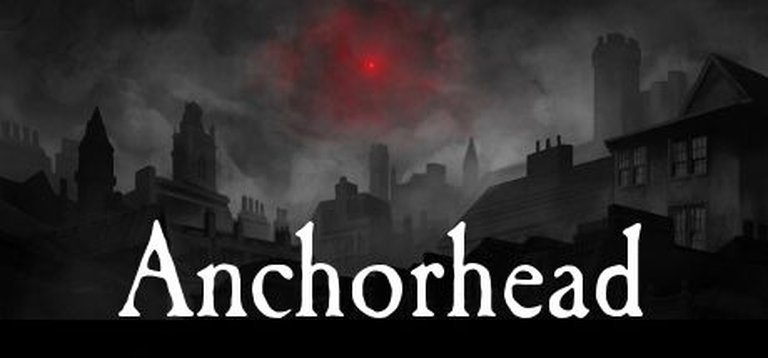
Anchorhead: Illustrated Edition is a Lovecraftian horror interactive fiction game where an unnamed protagonist and her husband move to the eerie town of Anchorhead, Massachusetts, after inheriting a mysterious mansion. As the protagonist investigates the town and her husband’s family history, she uncovers a sinister plot to summon a Great Old One, threatening the world. The game unfolds over three days, blending intricate storytelling, atmospheric descriptions, and puzzle-solving in a first-person, text-based adventure.
Gameplay Videos
Anchorhead: Illustrated Edition Guides & Walkthroughs
Anchorhead: Illustrated Edition Reviews & Reception
reddit.com : Despite all of the frustrations due to the puzzles, I do recommend Anchorhead just because of the fantastic writing and atmosphere.
steamcommunity.com : This is classic parser-based fiction like Infocom’s Zork where commands are typed in, allowing a good amount of player freedom to explore the setting.
intfiction.org : I recommend the new version over the old. (Except the old version is free, and the new version costs money.)
ifdb.org : The original version was and remains freely available.
Anchorhead: Illustrated Edition – A Masterclass in Lovecraftian Interactive Fiction
Introduction: The Enduring Legacy of a Text-Based Horror Classic
Few games in the interactive fiction (IF) canon have left as indelible a mark as Anchorhead. Originally released in 1998 by Michael S. Gentry, this Lovecraftian horror masterpiece redefined what text-based storytelling could achieve, blending atmospheric dread, intricate world-building, and psychological depth into a seamless, immersive experience. Two decades later, the Illustrated Edition (2018) emerged not merely as a remaster but as a meticulous reimagining—polishing prose, refining puzzles, and introducing haunting illustrations by Carlos Cara Àlvarez. This review explores why Anchorhead: Illustrated Edition remains a towering achievement in narrative gaming, a testament to the power of words to evoke terror, and a benchmark for horror in interactive fiction.
Development History & Context: From Z-Machine to Glulx
The Birth of a Classic
Michael S. Gentry, a software engineer and Lovecraft enthusiast based in Austin, Texas, began developing Anchorhead in 1996. Written in Inform 6, the game was compiled for the Z-machine, a virtual machine designed for text adventures, ensuring compatibility with interpreters like Zoom. Gentry’s vision was clear: to craft a Lovecraftian horror experience that rivaled the immersive depth of graphical adventures, using only prose. The original 1998 release, a freeware title, was the culmination of over a year of development, including months of debugging and iterative refinement.
The game’s structure was ambitious for its time. Spanning over 100,000 words and 50+ locations, Anchorhead drew heavily from Lovecraft’s Cthulhu Mythos, particularly The Dunwich Horror, The Music of Erich Zann, and The Festival. Gentry’s personal touch was evident in the protagonists, modeled after himself and his wife, grounding the cosmic horror in a deeply human narrative.
The Evolution: From Freeware to Illustrated Edition
By 2006, Gentry announced plans for a rewrite in Inform 7, aiming to address the original’s technical limitations and enhance interactivity. The project, initially titled Anchorhead: The Director’s Cut Special Edition, stalled due to personal commitments but resumed in 2017. The result was the 2018 Illustrated Edition, a commercial release that:
- Rewrote the codebase in Inform 7, compiled for the Glulx format, allowing for greater detail and interactivity.
- Polished the prose, reflecting two decades of Gentry’s growth as a writer.
- Redesigned puzzles, including a revamped mill sequence and wine cellar interaction, while adding new scenes (e.g., an extended asylum mini-game).
- Introduced 51 black-and-white illustrations by Carlos Cara Àlvarez, unlocking progressively to complement the text.
- Expanded accessibility, supporting browser play via HTML interpreters like Quixe and mobile compatibility through Glulx interpreters.
The Illustrated Edition was priced at $9.99 and released on Steam and itch.io for Windows, macOS, and Linux. While the original remains freely available, the Illustrated Edition stands as the definitive version, blending modern enhancements with the original’s timeless horror.
Narrative & Thematic Deep Dive: A Descent into Cosmic Madness
Plot Overview: Three Days of Dread
Anchorhead unfolds over three in-game days, each structured to escalate tension through a mix of exploration, puzzle-solving, and narrative revelation. The protagonist, an unnamed woman, relocates with her husband, Michael, to the eponymous coastal town after he inherits the Verlac mansion from a long-lost relative. The inheritance, however, is a curse: the mansion is steeped in a generational conspiracy tied to the Cthulhu Mythos, and Michael is slowly being possessed by Croesus Verlac, the patriarch of a cult seeking to summon the Great Old One Ialdabaoloth.
The narrative is divided into distinct phases:
-
Day 1: Arrival and Unease
- The couple arrives in Anchorhead amid a storm, settling into the Verlac mansion.
- The protagonist explores the town, encountering key figures like the ferryman and the librarian, who hint at the town’s dark secrets.
- Early puzzles involve navigating the mansion’s labyrinthine layout and deciphering initial occult references.
-
Day 2: Unraveling the Conspiracy
- Michael’s behavior grows erratic, signaling Croesus’s influence.
- The protagonist delves deeper into the Verlac family’s history, uncovering forbidden tomes and ritualistic artifacts.
- The cult’s preparations for the comet-triggered summoning of Ialdabaoloth become apparent, forcing the protagonist to evade cultists and gather key items.
-
Day 3: The Climax of Horror
- The comet nears, and the protagonist must sabotage the ritual to save Michael and the world.
- The final act involves high-stakes confrontations, including a chase through the slaughterhouse and a showdown at the moors’ obelisk.
- The ending is bittersweet: while the ritual is thwarted, the protagonist discovers she is pregnant, raising the specter of Croesus’s return through her unborn child.
Themes: Cosmic Horror and Psychological Depth
Anchorhead masterfully weaves several themes central to Lovecraftian horror:
-
Cosmic Insignificance
- The protagonist’s struggle against Ialdabaoloth underscores humanity’s futility in the face of indifferent, ancient forces.
- The cult’s rituals and the Verlac family’s curse emphasize the inevitability of cosmic horror, where human agency is meaningless.
-
Inherited Madness
- The Verlac family’s generational possession and incestuous rituals explore the cyclical nature of trauma.
- Michael’s possession and the protagonist’s pregnancy hint at the inescapability of familial curses.
-
Forbidden Knowledge
- The protagonist’s discovery of occult texts and hidden histories mirrors Lovecraft’s theme of knowledge as a curse.
- The Tome of Eldritch Lore in the church, which can drive the protagonist insane, exemplifies the danger of uncovering truths beyond human comprehension.
-
Gender and Psychological Horror
- The female protagonist subverts traditional Lovecraftian narratives, which often center on male scholars.
- Her role as a wife and potential mother adds layers of domestic terror, tying her horror to bodily invasion and loss of autonomy.
- The game’s unreliable narration and dream sequences create a sense of psychological fragmentation, heightening the dread.
Character Analysis: The Protagonist and Michael
- The Protagonist: A featureless yet deeply relatable figure, her lack of a name allows players to project themselves into her role. Her determination and resourcefulness contrast with her vulnerability, making her a compelling Badass Normal in a world of cosmic horrors.
- Michael: Initially a supportive husband, his gradual possession by Croesus serves as a tragic arc, culminating in a heartbreaking confrontation where the protagonist must choose between saving him or the world.
Gameplay Mechanics & Systems: Parser-Based Horror
Core Gameplay Loop
Anchorhead is a parser-based interactive fiction game, where players input text commands (e.g., “examine desk,” “take key”) to navigate the world. The gameplay is structured around:
- Exploration: Players traverse 50+ locations, from the Verlac mansion to the town’s sewers, uncovering clues and interacting with NPCs.
- Puzzle-Solving: Puzzles range from inventory-based challenges (e.g., using a wet towel to open a door) to environmental manipulation (e.g., aligning symbols in a ritual).
- Time Management: The game advances through day-night cycles, with certain areas becoming inaccessible or dangerous after dark.
Combat and Character Progression
- No Traditional Combat: The protagonist is a Non-Action Guy, relying on cleverness and stealth to survive.
- Inventory Management: Players can carry dozens of items, but realistic constraints (e.g., needing free hands) add depth.
- Death Mechanics: The game features multiple ways to die, from insanity to physical harm, each described in vivid, unsettling detail.
UI and Innovation
- Text Parser: The Inform 7 engine allows for natural language input, supporting synonyms and contextual understanding.
- Illustrations: The Illustrated Edition introduces 51 black-and-white images, enhancing immersion without overshadowing the text.
- Anti-Frustration Features: Later versions simplified puzzles and added hints, though the game retains its high difficulty.
Flaws and Criticisms
- Puzzle Difficulty: Some puzzles are obscure, requiring trial-and-error or walkthroughs.
- Unwinnable States: Missing key items (e.g., a wet towel) can lock players out of progression.
- Timed Sequences: Later puzzles impose time limits, which some players find frustrating.
World-Building, Art & Sound: Crafting an Atmosphere of Dread
Setting: The Town of Anchorhead
The game’s setting is a masterclass in atmospheric world-building:
- The Verlac Mansion: A Gothic labyrinth with hidden passages, spooky paintings, and Eldritch Abominations lurking in the attic.
- The Town: A decaying New England fishing village, with foggy docks, crumbling architecture, and hostile locals.
- The Sewers and Caverns: Clammy, foul-smelling tunnels filled with mummified remains and dark monoliths.
Visual Direction: The Power of Prose
- Descriptive Prose: Gentry’s writing evokes multi-sensory dread, from the salty tang of sea air to the grinding of unseen machinery.
- Illustrations: Carlos Cara Àlvarez’s black-and-white art complements the text, depicting haunting scenes like the mansion’s interiors and the town’s decay.
Sound Design: The Silence of Text
- No Audio: The game relies on textual descriptions to convey sound, from distant train whistles to rustling leaves.
- Atmospheric Writing: The absence of sound enhances the isolation, making the protagonist’s solitude palpable.
Reception & Legacy: A Landmark in Interactive Fiction
Critical Acclaim
- 1998 XYZZY Awards: Won Best Setting and was nominated for Best Game, Best Writing, and Best Story.
- IFDB Top 100: Ranked #2 in the Interactive Fiction Database’s Top 100 (as of 2023).
- Player Reviews: Praised for its immersive writing, atmospheric dread, and innovative puzzles, though criticized for its high difficulty.
Influence on the Genre
- Inspired Collaborative Works: Cragne Manor (2018), a tribute anthology, featured contributions from 80+ authors in a shared Lovecraftian universe.
- Academic Recognition: Studied in digital humanities for its narrative techniques and psychological horror.
- Enduring Popularity: Remains a benchmark for horror IF, with ongoing discussions in community forums and retrospective analyses.
Conclusion: A Timeless Masterpiece of Text-Based Horror
Anchorhead: Illustrated Edition is more than a game—it is a literary experience, a haunting journey into the heart of Lovecraftian horror. Its rich prose, intricate puzzles, and atmospheric world-building create an unforgettable narrative that lingers long after the final line. While its high difficulty and obscure puzzles may frustrate some, the reward for perseverance is a masterclass in interactive storytelling.
Final Verdict: 9.5/10 – A definitive edition of a classic horror IF, essential for fans of Lovecraft, narrative-driven games, and text-based adventures. Its legacy is secure, and its influence continues to shape the genre. For those willing to embrace its challenges, Anchorhead offers an unparalleled descent into madness.