
- Release Year: 2020
- Platforms: Windows
- Publisher: Oleg Kazakov
- Developer: Oleg Kazakov
- Genre: Action RPG, Open World, Role-playing (RPG), Sandbox
- Perspective: Behind view
- Game Mode: Single-player
- Gameplay: Character development – Skill distribution, Equipment quick slots, Horse riding, Hunting, Pettable animals, Survival cooking
- Setting: Fantasy, Medieval
- Average Score: 75/100
Description
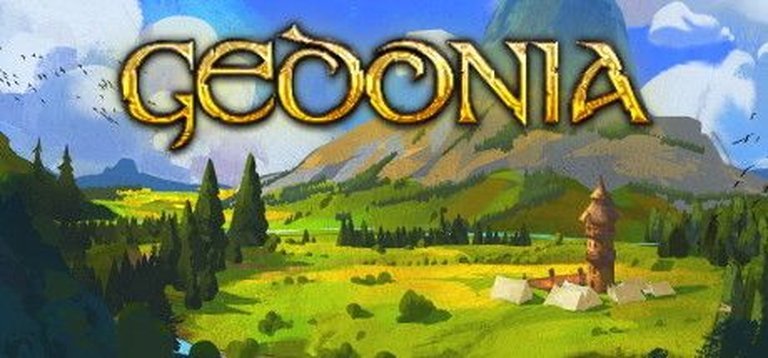
Gedonia is an ambitious open-world RPG developed by a solo creator, Oleg Kazakov, blending retro-inspired visuals with modern mechanics. Set in a sprawling medieval fantasy world, the game offers deep character customization, faction-based gameplay, and sandbox freedom, including home-building and survival elements. Released in 2020, it garnered praise for its nostalgic charm and expansive design, selling hundreds of thousands of copies and earning an 89% positive rating on Steam.
Gameplay Videos
Where to Buy Gedonia
PC
Gedonia Free Download
Gedonia Cracks & Fixes
Gedonia Patches & Updates
Gedonia Mods
Gedonia Guides & Walkthroughs
Gedonia Reviews & Reception
metacritic.com (58/100): Old Elder Scrolls vibe mixed with WoW like mechanics. It’s a real indie gem where you can go really diverse build wise but you cannot be overpowered on all fields which is great.
reddit.com : Gedonia is a really good game which brings back many elements of classic RPG.
steamcommunity.com : With proper expectations managed (single dev etc), it is VERY worth the price of admission and does provide replay value.
steambase.io (87/100): Gedonia has earned a Player Score of 87 / 100.
mobygames.com (80/100): An impressive and nostalgic open-world RPG, especially for a one-man project.
Gedonia Cheats & Codes
PC
Enter codes at the dungeon mode chests.
| Code | Effect |
|---|---|
| 2-4-8-16 | Unlocks a chest in dungeon mode |
| 6-12-18-24 | Unlocks a chest in dungeon mode |
Gedonia: A Solo Developer’s Love Letter to Classic RPGs
Introduction: The Unlikely Triumph of a One-Man Masterpiece
In an era where blockbuster RPGs are forged in the furnaces of hundred-person studios with nine-figure budgets, Gedonia stands as a defiant testament to the power of individual vision. Crafted almost entirely by Russian solo developer Oleg Kazakov, this open-world fantasy RPG emerged from early access in 2022 to become one of the most compelling indie success stories of the decade. With over 3,800 “Very Positive” Steam reviews (87% approval) and hundreds of thousands of copies sold, Gedonia proves that passion, persistence, and a deep understanding of classic RPG design can still captivate modern audiences.
This is not just a game—it’s a time capsule of what made RPGs magical in the early 2000s, rebuilt from the ground up with contemporary mechanics and a sprawling sandbox world. From its Fallout-inspired S.P.E.C.I.A.L. system to its Elder Scrolls-style exploration and World of Warcraft-inspired faction dynamics, Gedonia wears its influences proudly while carving its own identity. Yet beneath its nostalgic veneer lies a game that pushes boundaries in player freedom, emergent gameplay, and solo development ambition.
Development History & Context: The Making of a Modern Classic
The Man Behind the Myth
Oleg Kazakov’s journey to Gedonia is a masterclass in indie perseverance. Beginning his career in 2011 creating browser games for VKontakte (Russia’s Facebook equivalent), Kazakov spent years honing his craft across multiple genres—shooters, horror, strategy—before attempting his “dream game.” His 2018 tactical RPG Galaxy Squad (an XCOM-like) provided the financial runway to embark on Gedonia‘s three-and-a-half-year development marathon.
What makes Gedonia extraordinary isn’t just that it was made by one person, but how it was made. Kazakov employed a meticulous “milestone-based” development philosophy, breaking the massive project into logical chunks to maintain momentum. His daily routine—nine-to-six coding sessions with weekends reserved for family—reveals the discipline required to ship a game of this scale. The project consumed over half a million lines of code, with Kazakov handling everything from core systems to 3D modeling (though he outsourced some assets, voice acting, and writing).
Technological Constraints and Creative Solutions
Built in Unity, Gedonia pushes the engine to its limits while working within them. Kazakov cites dynamic world loading as one of his biggest technical challenges, requiring months of optimization. The game’s visual style—often compared to The Legend of Zelda: Breath of the Wild—emerged organically through iteration rather than direct inspiration. This aesthetic choice became a double-edged sword: while it gave the game instant appeal on platforms like Reddit (where a single GIF earned 82.5k upvotes and 5k wishlists in days), it also led to superficial comparisons that overlooked the game’s mechanical depth.
The development landscape in 2020-2022 presented both opportunities and obstacles. Steam’s algorithmic discoverability favored games with strong visual hooks and active community engagement—two areas where Kazakov excelled. His Reddit marketing strategy (accumulating karma before posting targeted content) became a case study in indie promotion. However, the Russian gaming industry faced growing isolation during this period, with payment processor restrictions and geopolitical tensions complicating distribution.
The Gaming Ecosystem at Launch
Gedonia entered early access on June 1, 2020, during a golden age for indie RPGs. Games like Kingdoms of Amalur: Re-Reckoning (2020) and Baldur’s Gate 3 (2023) proved audiences craved deep, systems-driven experiences. Yet the market was also saturated with asset-flip RPGs and early access vaporware. What set Gedonia apart was its:
– Authentic nostalgia – Not just pixel art or retro filters, but genuine mechanical callbacks to Fallout 1/2 and Morrowind
– Player freedom – True build diversity where a strength-focused brute couldn’t even speak to NPCs (a direct Fallout homage)
– Content density – 40-60 hour campaigns with procedural dungeons, faction wars, and home-building
– Responsive development – Kazakov’s direct engagement with the community (fixing reported bugs within weeks)
The full 1.0 release in October 2022 arrived during a particularly competitive window, yet managed to briefly outsell Elden Ring on Steam’s charts—a David-and-Goliath moment that cemented its cult status.
Narrative & Thematic Deep Dive: A World Worth Saving
The Premise and Its Execution
Gedonia casts players as a humble peasant turned adventurer in a medieval fantasy world on the brink of cataclysm. The premise is deliberately generic—Kazakov wanted players to project their own stories onto the world. What elevates the narrative is its reactive world design and faction system.
The game features eight major factions, each with:
– Unique questlines (some spanning 10+ hours)
– Distinct visual identities and lore
– Dynamic relationships that shift based on player actions
– Territory control mechanics (certain zones become hostile if you anger a faction)
Key narrative strengths:
1. Moral ambiguity – No clear “good vs evil” dichotomy. The “heroic” factions have dark secrets, while “villainous” groups have sympathetic motivations.
2. Environmental storytelling – Abandoned mansions with ghostly inhabitants, dungeons that reveal their histories through puzzles, and NPCs who remember your actions.
3. Consequence without punishment – Choices lock you out of content but never feel arbitrary. Killing a faction leader doesn’t just make their quests unavailable—it triggers cascading political shifts.
Character Depth and Dialogue
While Gedonia‘s writing isn’t Planescape: Torment-level prose, it excels in systemic reactivity. The S.P.E.C.I.A.L.-inspired attribute system (Strength, Perception, Endurance, etc.) doesn’t just affect combat—it fundamentally changes how the world interacts with you:
| Attribute | Narrative Impact Examples |
|---|---|
| Intelligence < 2 | NPCs treat you as mentally disabled; certain dialogue options disappear |
| Charisma 10 | Can talk your way out of most conflicts; faction leaders offer unique quests |
| Strength 8+ | Can break through barred doors; intimidation checks auto-succeed |
| Luck 1 | Merchants overcharge you; traps trigger more frequently |
Notable characters:
– The Forgotten Ghost – A spectral noble in the abandoned mansion who doesn’t remember murdering his family. The quest to help him recall his sins (and then defeat him) is widely considered the game’s narrative peak.
– The Demon Scholar – A recurring antagonist who appears in multiple faction questlines, offering forbidden knowledge at a cost.
– The Wandering Bard – A potential party member whose “music” skill tree lets him buff allies through song (a rare non-combat specialization).
Dialogue system analysis:
– Uses a hybrid of Mass Effect-style wheel selections and Fallout-style skill checks
– Features “hidden” dialogue options that only appear if you meet stat requirements
– Includes a unique “reputation” system where your deeds spread organically (kill a merchant in one town, and guards in another town might recognize you)
Themes: Power, Memory, and Legacy
Beneath its fantasy trappings, Gedonia explores surprisingly mature themes:
-
The Burden of Knowledge
- Multiple quests revolve around characters who choose ignorance (the ghost who forgot his crimes, scholars who destroy dangerous tomes)
- The “Dark Mage” skill tree literally consumes your health for power—mirroring the game’s central question: Is understanding always worth the cost?
-
Cyclical Violence
- Faction wars repeat every generation
- The “endgame” reveals that the player’s actions may have doomed the world to repeat its mistakes
- Environmental details show past civilizations that collapsed from the same conflicts
-
Legacy Through Creation
- The home-building system isn’t just gameplay—it’s thematic. Your house persists after the main quest.
- Crafted items can be inscribed with your character’s name, appearing in later playthroughs
- The sequel’s co-op focus suggests Kazakov views legacy as inherently collaborative
Gameplay Mechanics & Systems: Freedom with Consequences
The Character Progression Labyrinth
Gedonia‘s progression system is its crown jewel—a sprawling web of interdependent mechanics that reward both specialization and experimentation.
The Attribute System (S.P.E.C.I.A.L. Reimagined):
– 7 core attributes (Strength, Perception, Endurance, Charisma, Intelligence, Agility, Luck)
– Each starts at 1, with a soft cap at 10 (hard cap at 15 through rare items)
– No respecs – Choices are permanent, encouraging multiple playthroughs
– Attributes gatekeep entire playstyles:
– Intelligence 3+ required to cast any magic
– Strength 5+ to wield heavy weapons
– Agility 7+ to backstab effectively
The Skill Tree Matrix:
12 skill branches with 5-7 tiers each, featuring:
– Combat (Swordplay, Archery, Heavy Weapons)
– Magic (Fire/Ice/Lightning, Dark Arts, Necromancy)
– Stealth (Lockpicking, Traps, Assassination)
– Social (Persuasion, Intimidation, Deception)
– Crafting (Blacksmithing, Alchemy, Enchanting)
– Survival (Cooking, Hunting, Farming)
– Music (Bardic performances that buff allies)
Notable progression innovations:
– Hybrid builds are viable but require sacrifice – A “Battle Bard” needs to invest in both Music and Swordplay, leaving no points for heavy armor
– Skills improve through use – Swinging a sword levels Swordplay; casting fireballs improves Fire Magic
– Diminishing returns – The first 5 levels in a skill provide massive benefits; levels 6-10 offer marginal improvements
– Hidden synergies – Combining Blood Magic with Necromancy creates a “Vampiric Lich” playstyle that heals from summoning undead
Combat: The Dance of Death
Gedonia‘s real-time combat system is often misunderstood. While it lacks the polish of Dark Souls or The Witcher 3, it offers unparalleled build diversity and emergent complexity.
Core combat mechanics:
– Stamina-based actions – Every attack, dodge, or block consumes stamina (regen rate tied to Endurance)
– Directional blocking – Holding block in the direction of an attack reduces damage by 75%
– Weapon weight classes – Daggers (fast, low damage), Greatswords (slow, high damage), Wands (no stamina cost, magical)
– Elemental interactions – Fire melts ice armor, lightning chains between wet enemies
The controversy around difficulty:
Early reviews criticized Gedonia‘s combat as “clunky” or “unfair,” but this misses the intentional design philosophy:
1. Enemies are deliberately lethal – A common complaint is being “one-shotted,” but this is by design. The game expects you to:
– Use terrain (lure enemies into traps)
– Exploit weaknesses (undead are weak to fire)
– Retreat when outmatched (no shame in running)
2. The learning curve is steep – Unlike modern RPGs that hold your hand, Gedonia assumes you’ll die—often. Death carries minimal penalty (lost progress since last save), encouraging experimentation.
3. Build matters more than skill – A properly specced character can trivialized encounters that would destroy an improperly built one.
Endgame combat innovations:
– Ascended Armor Sets – Each faction offers a unique set that fundamentally changes playstyle:
– Blade Dancer: Lets bards fight in melee without playing instruments
– Dark Knight: Gains armor when using dark magic
– Frozen Sentinel: Creates ice mirrors that reflect projectiles
– Living Weapons – Sentient arms that level up alongside you, gaining new abilities
– Boss design philosophy – Most bosses have:
– A “puzzle” phase (figure out their weakness)
– An “execution” phase (apply the solution under pressure)
– A “desperation” phase (new mechanics at 25% health)
The Open World: Density Over Size
With a map roughly the size of Skyrim‘s, Gedonia prioritizes vertical exploration and systemic interactions over sheer scale.
World design principles:
1. Every inch serves a purpose – No “empty” spaces; even barren deserts hide:
– Underground dungeons
– Dynamic events (sandstorms that reveal ruins)
– Faction patrols with unique dialogue
2. Environmental hazards as gameplay –
– Swamps slow movement but hide rare herbs
– Mountains require climbing gear (or creative magic use)
– Caves have oxygen meters (torches become crucial)
3. The “Gedonia Formula” – Every zone contains:
– 1 major dungeon with a puzzle mechanic
– 3-5 side quests (some procedural)
– 1 faction outpost
– 2-3 “mystery” locations (abandoned camps, cryptic shrines)
Fast travel and immersion:
– No traditional fast travel until you build a Homing Stone in your house
– Early game encourages organic exploration via:
– Mount system (horses, giant birds, even rideable pigs)
– Teleportation spells (high mana cost, limited range)
– Caravan NPCs (pay to hitch a ride between towns)
The Home Building System: More Than a Mini-Game
What begins as a simple housing mechanic evolves into a second progression layer:
Phases of home ownership:
1. The Shack (Early game) – Basic storage and crafting stations
2. The Manor (Mid game) – Multiple rooms with specialized functions:
– Alchemy lab (brewing potions)
– Enchanting altar (imbuing gear)
– Trophy room (displaying boss remains for bonuses)
3. The Estate (Endgame) – A sprawling compound with:
– Farmland (growing rare reagents)
– Mercenary barracks (hiring permanent guards)
– Portal network (custom fast travel points)
Why it works:
– Ties into faction reputation – Certain upgrades require favors from specific groups
– Affects gameplay – A well-decorated home provides passive buffs
– Persists across playthroughs – Your estate remains as a “legacy” in New Game+
World-Building, Art & Sound: Crafting a Believable Fantasy
The Aesthetic: Retro-Reimagined
Gedonia‘s visual style is its most polarizing element—a deliberate throwback that divides players.
Art direction choices:
– Low-poly characters – Not due to technical limitations, but as an artistic statement (Kazakov wanted “doll-like” protagonists that players could project onto)
– Vibrant color palette – Each biome has a distinct hue:
– Gedonia Forest: Emerald greens with golden highlights
– Darklands: Purples and blacks with neon runes
– Northern Kingdoms: Blues and whites with aurora effects
– Exaggerated animations – Combat moves have a “weighty” feel despite the low-poly models
Technical achievements:
– Dynamic lighting – Torches cast real-time shadows that enemies react to
– Weather system – Rain makes surfaces slippery, snow slows movement
– Day/night cycle – Certain enemies only appear at night; some NPCs have different dialogue
The “Zelda Comparison” problem:
While the game’s aesthetic invites Breath of the Wild comparisons, the similarity is superficial. Where BotW prioritizes physics-based interaction, Gedonia focuses on systemic depth. The visual style serves a specific purpose: to make the world feel like a playable diorama—something you manipulate rather than just observe.
Sound Design: The Unsung Hero
With a modest budget, Gedonia‘s audio team (mostly freelancers) created an immersive soundscape through clever techniques:
Ambient sound layers:
1. Biome-specific loops – Forests have bird calls that change with time of day; deserts have distant howling winds
2. Dynamic event triggers – Entering a dungeon adds echo effects; combat triggers heartbeat sounds when low on health
3. Faction audio cues – Different groups have unique musical motifs that play when you enter their territory
The music system:
– Procedural generation – Battle themes remix based on:
– Your current health (more intense when low)
– Number of enemies (additional instrument layers)
– Biome (desert battles have Middle Eastern influences)
– Bardic performances – The Music skill lets you play instruments that:
– Buff allies (lute = +attack speed)
– Debuff enemies (drum = fear effect)
– Trigger environmental effects (harp = calms storms)
Voice acting constraints:
– Limited budget meant prioritizing key story moments
– NPCs use a “bark” system (short phrases) rather than full dialogue
– The sequel promises full voice acting—a testament to the original’s success
Atmosphere: The Sum of Its Parts
What Gedonia lacks in graphical fidelity, it compensates for with atmospheric cohesion. The world feels alive through:
- NPC routines – Shopkeepers close at night; guards change shifts; farmers tend crops
- Dynamic events –
- Random encounters (bandit ambushes, traveling merchants)
- World states (a drought might make water scarce)
- Faction wars (territory changes hands)
- Environmental storytelling –
- Bloodstains that don’t disappear
- Broken weapons embedded in walls
- Skeletons arranged in ritualistic patterns
The game’s greatest atmospheric achievement is making the player feel small but significant—the world exists without you, but your actions leave permanent scars.
Reception & Legacy: From Obscurity to Cult Classic
The Critical Consensus
Gedonia‘s reception follows a familiar indie trajectory: early skepticism giving way to cult adoration.
Early access reception (2020-2022):
– Praised for ambition but criticized for:
– Combat jank (fixed in later patches)
– UI clutter (streamlined post-1.0)
– Balance issues (overpowered early-game grinding)
– The Gameplay (Benelux) review summed it up: “Very ambitious one-man project, but needs more time to cook”
Post-1.0 reception (2022-present):
– Steam: 87% Very Positive (3,800+ reviews)
– Metacritic: 5.8 user score (mixed, but with passionate defenders)
– Common praise:
– “A love letter to classic RPGs” (Dafy Gaming Hub)
– “The freedom to be truly weak in some areas” (Reddit users)
– “Dense with content—no filler” (VGTimes)
– Common criticisms:
– “Combat feels clunky until you ‘get’ it” (Metacritic reviews)
– “Visuals won’t win awards” (Multiple outlets)
– “Endgame grinds too hard” (Steam discussions)
The review evolution:
Early reviews focused on technical rough edges, while later assessments celebrate the emergent storytelling and build diversity. This shift reflects both patches improving the game and players adjusting their expectations for a solo-developed title.
Commercial Performance
By indie standards, Gedonia is a runway success:
– Hundreds of thousands of copies sold (Kazakov has been coy with exact numbers)
– Peak concurrent players: ~1,500 (impressive for a niche RPG)
– Steam revenue: Enough to fund a 6-person team for Gedonia 2
– Price trajectory: Launched at $14.99, frequently discounted to $1.49 (a savvy strategy to build an audience)
Monetization philosophy:
– No microtransactions
– Paid DLC (Northern Kingdoms expansion)
– Cosmetic-only mod support (players can sell custom skins on Steam Workshop)
Industry Impact
Gedonia‘s influence extends beyond sales numbers:
- Proving the solo RPG is viable – Inspired games like Elder Legacy (a Slavic folklore RPG whose developer cited Gedonia as motivation)
- Redefining “AAA polish” – Showed that rough edges can be forgiven if the core experience is compelling
- Community-driven development – Kazakov’s transparency (weekly devlogs, direct bug fixes) set a new standard for indie engagement
- The “Gedonia Effect” – Other solo devs now pitch their games as “Gedonia-like” to signal depth and freedom
Awards and recognition:
– Featured in Steam’s “Hidden Gems” festival
– Nominated for “Best Indie RPG” in multiple Eastern European gaming awards
– Frequently cited in “Underated RPGs” lists (Rock Paper Shotgun, PC Gamer)
Conclusion: A Modern Classic in the Making
Gedonia isn’t just a good game—it’s an important one. In an industry obsessed with photorealism and cinematic storytelling, it proves that mechanical depth, player freedom, and authentic passion still matter more than budget or team size. Oleg Kazakov didn’t just make an RPG; he created a template for what solo development can achieve when paired with relentless iteration and community engagement.
The definitive verdict:
✅ For fans of: Fallout 1/2, Morrowind, Dark Souls (build diversity), Kingdoms of Amalur (combat fluidity)
❌ Avoid if you: Demand AAA polish, prefer linear narratives, or dislike punishing difficulty curves
Legacy score: 9/10 – A flawed masterpiece that will be studied by indie developers for decades. While it may never achieve Elden Ring-level mainstream recognition, its influence on the RPG genre is already profound. The upcoming sequel—with its four-player co-op, full voice acting, and expanded world—could very well be the breakthrough that cements Gedonia as a household name.
Final thought: In a gaming landscape dominated by corporate committee-designed experiences, Gedonia stands as proof that one person’s vision—imperfect, idiosyncratic, and uncompromising—can still change everything.