
- Release Year: 1989
- Platforms: PlayStation 3, PS Vita, PSP, TurboGrafx-16, Wii U, Wii, Windows
- Publisher: extreme Co.,Ltd., Hudson Entertainment, Inc., Konami Digital Entertainment Co., Ltd., Konami Digital Entertainment, Inc., NCS Corporation, NEC Home Electronics (U.S.A.) Inc.
- Developer: NCS Corporation
- Genre: Dungeon crawler, Role-playing (RPG)
- Perspective: 1st-person
- Game Mode: Co-op, Single-player
- Gameplay: Dungeon Crawling, Pseudo-3D exploration, Turn-based combat
- Setting: Fantasy
- Average Score: 37/100
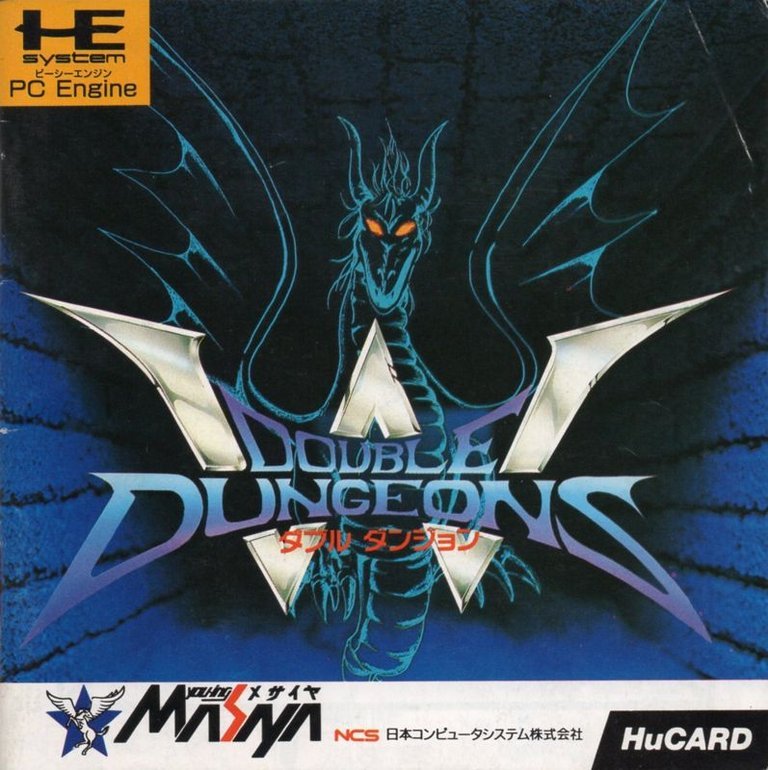
Description
Double Dungeons is a classic dungeon crawler RPG where one or two players explore 20 procedurally generated, maze-like dungeons in a first-person perspective. The game features turn-based combat, automatic leveling, and no overarching narrative—just straightforward dungeon delving with increasing difficulty. Players can find equipment and healing items while battling respawnable enemies, with a split-screen mode for cooperative play.
Double Dungeons Free Download
Double Dungeons Guides & Walkthroughs
Double Dungeons Reviews & Reception
mobygames.com (37/100): The Virtual Console release received poor scores by IGN and Nintendo Life.
videogameden.com : After a while, Double Dungeons is sadly really repetitive, there is not much variety and some of the levels are literally huge!
Double Dungeons Cheats & Codes
Nintendo Wii
Enter passwords at the password screen.
| Code | Effect |
|---|---|
| 2R3KD4RG0J9D3YT0664LJ | Start at the beginning of Level 22 |
| YNzYSMChriGIgLV-ihOdfCGe | Start at the end of Level 22 |
| Player01 or Player02 (with remaining spaces filled with + or -) | Get 65535 HP |
| KKKKKKKKKKKKKKKKKKKKKKKK | Player two invincibility |
| cHR0EScxgoAqiky7ihOfeBGe | In front of the last boss door |
TurboGrafx-16
Enter passwords at the password screen.
| Code | Effect |
|---|---|
| 2R3KD4RG0J9D3YT0664LJ | Start at the beginning of Level 22 |
| YNzYSMChriGIgLV-ihOdfCGe | Start at the end of Level 22 |
| Player01 or Player02 (with remaining spaces filled with + or -) | Get 65535 HP |
| KKKKKKKKKKKKKKKKKKKKKKKK | Player two invincibility |
| cHR0EScxgoAqiky7ihOfeBGe | In front of the last boss door |
Double Dungeons: A Relic of the Dungeon Crawler Era
Introduction
In the annals of video game history, few titles embody the raw, unfiltered essence of the dungeon crawler genre as starkly as Double Dungeons. Released in 1989 for the TurboGrafx-16, this game is a testament to the simplicity and brutality of early RPG design. It strips away the narrative frills and complex mechanics of its contemporaries, offering instead a pure, almost ascetic dungeon-crawling experience. While it may not have achieved the same level of acclaim as other RPGs of its time, Double Dungeons holds a unique place in the hearts of those who appreciate the unadulterated challenge of exploring labyrinthine dungeons and battling relentless foes.
Development History & Context
The Studio and Creators’ Vision
Double Dungeons was developed by NCS Corporation and published by Masaya Games in Japan, with NEC handling its North American release. The game was designed to capitalize on the growing popularity of dungeon crawlers, a genre that had been gaining traction since the early 1980s with titles like Wizardry and The Bard’s Tale. The developers aimed to create a game that was accessible yet challenging, with a focus on exploration and combat.
Technological Constraints and Innovations
The TurboGrafx-16, known as the PC Engine in Japan, was a powerful console for its time, boasting advanced graphics and sound capabilities. However, Double Dungeons did not fully leverage these capabilities, opting instead for a more straightforward and functional approach. The game’s pseudo-3D dungeons were rendered with simple textures and basic lighting effects, reflecting the technological limitations and design philosophies of the era.
One of the game’s most notable innovations was its two-player split-screen mode, a rare feature in dungeon crawlers at the time. This mode allowed two players to explore the dungeons simultaneously, starting from different points and working together to overcome the challenges within. This cooperative gameplay element was a significant selling point and set Double Dungeons apart from its competitors.
The Gaming Landscape of 1989
The late 1980s were a golden age for RPGs, with the genre evolving rapidly on both consoles and personal computers. Games like Final Fantasy and Dragon Quest were redefining the JRPG landscape, while Dungeon Master and Eye of the Beholder were pushing the boundaries of first-person dungeon crawlers. Double Dungeons entered this competitive market with a more stripped-down approach, focusing on core gameplay mechanics rather than narrative depth or graphical sophistication.
Narrative & Thematic Deep Dive
Plot and Characters
Double Dungeons is notable for its lack of a cohesive narrative. The game does not feature a traditional story or character development. Instead, it presents players with a series of dungeons, each with a brief text introduction that sets a simple objective, such as retrieving a treasure for the king or defeating a specific monster. These introductions are minimalistic and serve primarily to provide context for the dungeon-crawling experience.
The player character is a generic warrior, devoid of any backstory or personality. This lack of narrative depth is a deliberate design choice, emphasizing the gameplay over storytelling. The game’s focus is squarely on the dungeon-crawling experience, with the player’s actions and progress driving the game forward.
Themes and Atmosphere
The themes of Double Dungeons are rooted in the classic fantasy tropes of exploration, discovery, and combat. The game’s dungeons are filled with a variety of monsters, from green slimes and giant snakes to orcs and gnomes, each presenting a unique challenge to the player. The atmosphere is one of constant danger and uncertainty, as players navigate the labyrinthine corridors and face off against relentless foes.
The game’s lack of a traditional narrative allows players to project their own stories onto the experience, creating a sense of personal investment in the dungeon-crawling journey. The absence of a detailed plot also contributes to the game’s replayability, as players can approach each dungeon with a fresh perspective and strategy.
Gameplay Mechanics & Systems
Core Gameplay Loop
The core gameplay loop of Double Dungeons is straightforward and repetitive, yet engaging in its simplicity. Players select a dungeon from the available options, each with varying levels of difficulty and enemy strength. The objective is to navigate the dungeon, defeat enemies, collect gold and experience points, and ultimately find the key to unlock the exit.
The game’s dungeons are procedurally generated, with each playthrough offering a unique layout and set of challenges. This randomness ensures that no two playthroughs are the same, adding to the game’s replayability. However, the lack of an auto-map feature can make navigation challenging, requiring players to rely on their memory and the on-screen compass to find their way.
Combat System
The combat system in Double Dungeons is turn-based, with players and enemies taking turns to attack. The system is simple, with players pressing a button to attack and enemies responding in kind. There are no complex combat options or strategic depth, making the combat feel somewhat shallow and repetitive.
Enemies respawn at specific points, adding to the game’s challenge and frustration. Players must be prepared to face the same foes repeatedly, especially in the higher-level dungeons where the enemies are more powerful. The lack of healing or support magic further simplifies the combat, with players relying on healing items and leveling up to restore their health.
Character Progression and Equipment
Character progression in Double Dungeons is automatic, with players leveling up as they gain experience points from defeating enemies. Leveling up increases the player’s stats and restores their health, providing a sense of progression and achievement. However, the lack of manual control over character development can make the progression feel somewhat passive and unengaging.
Players can find and purchase equipment, including weapons, armor, and healing items, to enhance their combat effectiveness. The game features a simple shop system, with players using gold to buy better gear and supplies. The equipment system is straightforward, with no complex crafting or customization options.
User Interface and Controls
The user interface in Double Dungeons is minimalistic and functional, reflecting the game’s focus on core gameplay mechanics. The on-screen display provides basic information, such as the player’s health, level, and current equipment. The controls are simple and responsive, with players using the D-pad to navigate the dungeons and buttons to interact with the environment and engage in combat.
The lack of an auto-map feature is a notable omission, requiring players to rely on their memory and the on-screen compass to navigate the dungeons. This can make the game feel more challenging and immersive, but it can also be frustrating for players who prefer a more guided experience.
World-Building, Art & Sound
Setting and Atmosphere
Double Dungeons is set in a generic fantasy world, with the game’s dungeons serving as the primary setting. The dungeons are filled with a variety of monsters and traps, creating a sense of constant danger and uncertainty. The game’s atmosphere is one of exploration and discovery, with players navigating the labyrinthine corridors and facing off against relentless foes.
The game’s lack of a traditional narrative allows players to project their own stories onto the experience, creating a sense of personal investment in the dungeon-crawling journey. The absence of a detailed plot also contributes to the game’s replayability, as players can approach each dungeon with a fresh perspective and strategy.
Visual Direction
The visual direction of Double Dungeons is simple and functional, reflecting the technological constraints and design philosophies of the era. The game’s pseudo-3D dungeons are rendered with basic textures and lighting effects, creating a sense of depth and immersion. The character and enemy sprites are simple and unassuming, with a focus on functionality rather than graphical sophistication.
The game’s visual style is reminiscent of other dungeon crawlers of the time, such as Dungeon Master and Eye of the Beholder. However, Double Dungeons lacks the graphical polish and detail of these titles, making it feel somewhat dated and unremarkable in comparison.
Sound Design
The sound design in Double Dungeons is minimalistic and functional, with a focus on providing feedback and enhancing the gameplay experience. The game features a simple soundtrack, with a few repetitive tunes that play during exploration and combat. The sound effects are basic and unassuming, with a focus on providing clear and concise feedback to the player.
The game’s sound design is reminiscent of other dungeon crawlers of the time, with a focus on functionality rather than atmospheric immersion. The lack of a memorable or engaging soundtrack is a notable omission, making the game feel somewhat lacking in comparison to other titles of the era.
Reception & Legacy
Critical Reception
Double Dungeons received mixed reviews upon its release, with critics praising its innovative two-player mode but criticizing its repetitive gameplay and lack of narrative depth. The game’s simple combat system and lack of an auto-map feature were also points of contention, with some critics finding the game frustrating and unengaging.
The game’s Virtual Console release on the Wii received similarly mixed reviews, with critics noting that the game had not aged well and was not worth the asking price. However, some critics appreciated the game’s nostalgic appeal and challenging gameplay, making it a worthwhile experience for fans of the genre.
Commercial Performance
Double Dungeons did not achieve significant commercial success, with the game failing to make a major impact on the RPG market. The game’s lack of narrative depth and repetitive gameplay likely contributed to its modest sales, with players preferring more engaging and immersive experiences.
Legacy and Influence
Despite its mixed reception and modest commercial success, Double Dungeons holds a unique place in the history of dungeon crawlers. The game’s innovative two-player mode was a significant selling point and set it apart from its competitors. While it may not have achieved the same level of acclaim as other RPGs of its time, Double Dungeons remains a notable example of the genre’s early evolution.
The game’s legacy is somewhat overshadowed by its more successful contemporaries, but it remains a cult favorite among fans of the dungeon crawler genre. Its simple yet challenging gameplay and innovative two-player mode continue to attract players who appreciate the unadulterated challenge of exploring labyrinthine dungeons and battling relentless foes.
Conclusion
Double Dungeons is a relic of the dungeon crawler era, offering a pure and unfiltered dungeon-crawling experience. While it may lack the narrative depth and graphical sophistication of its contemporaries, the game’s simple yet challenging gameplay and innovative two-player mode make it a notable example of the genre’s early evolution. Its mixed reception and modest commercial success do not detract from its unique place in the hearts of those who appreciate the unadulterated challenge of exploring labyrinthine dungeons and battling relentless foes.
In the annals of video game history, Double Dungeons stands as a testament to the simplicity and brutality of early RPG design. It is a game that strips away the narrative frills and complex mechanics, offering instead a pure and unfiltered dungeon-crawling experience. While it may not have achieved the same level of acclaim as other RPGs of its time, Double Dungeons remains a cult favorite among fans of the genre, a relic of a bygone era that continues to attract players who appreciate the unadulterated challenge of exploring labyrinthine dungeons and battling relentless foes.