
- Release Year: 2011
- Platforms: Android, iPad, iPhone, Macintosh, Windows
- Publisher: Alawar Entertainment, Inc., Big Fish Games, Inc, S.A.D. Software Vertriebs- und Produktions GmbH
- Developer: Alawar Five-BN
- Genre: Adventure
- Perspective: 1st-person
- Game Mode: Single-player
- Gameplay: Hidden object, Puzzle elements
- Setting: Fantasy
- Average Score: 88/100
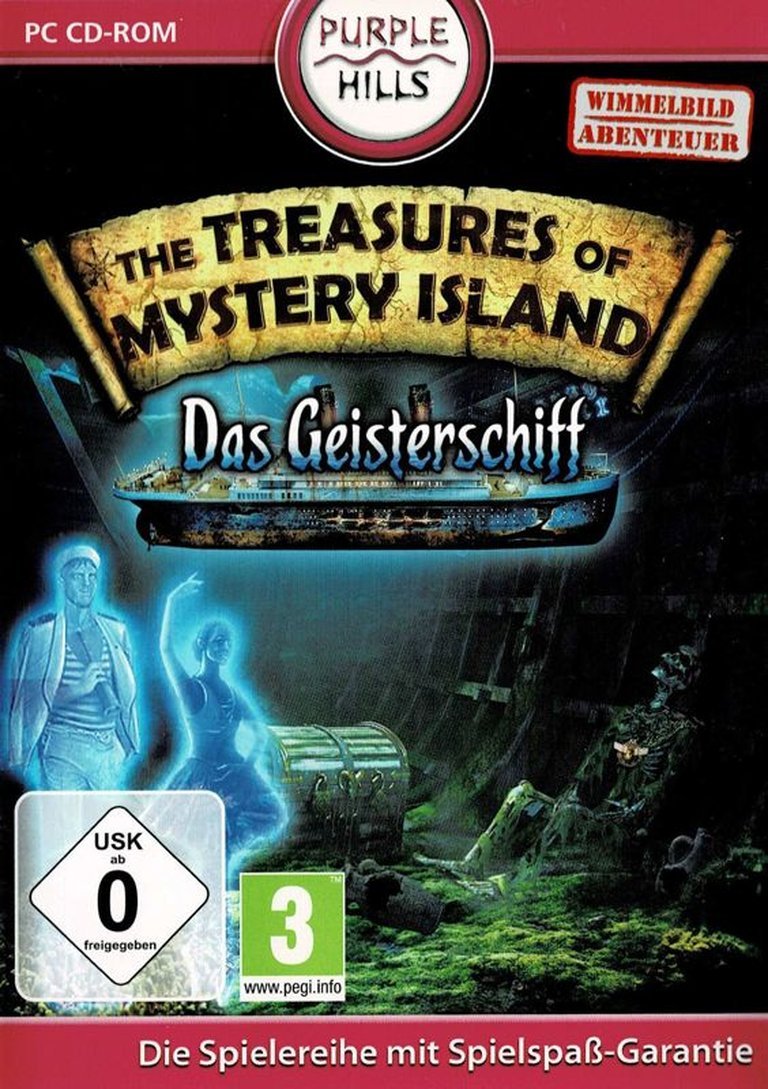
Description
In ‘The Treasures of Mystery Island: The Ghost Ship,’ you play as a writer sent to investigate ghostly occurrences on a Pacific island, where a family’s home was reportedly destroyed by supernatural forces. The game blends adventure and hidden object mechanics, tasking players with finding pieces of objects rather than whole items, which are then used to solve puzzles. With a mix of mini-games, a sprawling map, and a narrative involving ghosts, alien technology, and a looming solar eclipse, the game offers a unique twist on the hidden object genre, emphasizing exploration and logical problem-solving.
Gameplay Videos
The Treasures of Mystery Island: The Ghost Ship Patches & Updates
The Treasures of Mystery Island: The Ghost Ship Guides & Walkthroughs
The Treasures of Mystery Island: The Ghost Ship Reviews & Reception
jayisgames.com (82/100): An adventure of epic proportions. Perfect for young readers.
gamezebo.com (90/100): The Treasures of Mystery Island: The Ghost Ship is easily one of Alawar’s best games to date, and definitely deserves a recommendation.
mobygames.com (90/100): Decent, solid game.
mobygames.com (90/100): I enjoyed this game and recommend it, lots of things to do and not much filler.
The Treasures of Mystery Island: The Ghost Ship – A Masterclass in Hidden Object Adventure Design
Introduction: A Hauntingly Good Time
The Treasures of Mystery Island: The Ghost Ship (2011) is a hidden object adventure game that transcends the genre’s typical constraints, offering a richly layered experience that blends exploration, puzzle-solving, and narrative depth. Developed by Alawar Five-BN and published by Alawar Entertainment, this title stands as a testament to the studio’s ability to craft immersive, atmospheric adventures that appeal to both casual and hardcore players. While the hidden object genre is often dismissed as formulaic, The Ghost Ship defies expectations by integrating its object-hunting mechanics into a cohesive, story-driven framework. The result is a game that feels less like a collection of disjointed puzzles and more like a living, breathing world waiting to be uncovered.
At its core, The Ghost Ship is a game about discovery—not just of objects, but of secrets, histories, and the eerie lore of a cursed island. The premise is deceptively simple: you play as a writer sent to investigate supernatural occurrences on a Pacific island, only to uncover a conspiracy involving a ghostly ship, restless spirits, and an impending apocalypse tied to a solar eclipse. Yet, the execution is anything but simple. The game’s brilliance lies in its ability to make the player feel like an active participant in a grand, unfolding mystery, rather than a passive observer clicking through static scenes.
This review will dissect The Ghost Ship in exhaustive detail, examining its development history, narrative intricacies, gameplay systems, artistic achievements, and lasting legacy. By the end, it will be clear why this game remains a standout in the hidden object adventure genre—a title that not only respects its players’ intelligence but also rewards their curiosity with a world that feels alive with secrets.
Development History & Context: The Rise of Alawar’s Adventure Empire
The Studio Behind the Mystery
Alawar Entertainment, founded in 1999, is a Russian developer and publisher best known for its casual and hidden object games. By the late 2000s, the studio had carved out a niche for itself with titles like The Treasures of Montezuma and Natalie Brooks: The Treasures of the Lost Kingdom. However, it was the Treasures of Mystery Island series that truly cemented Alawar’s reputation as a master of atmospheric adventure games. The Ghost Ship, the second installment in the series (following 2010’s The Gates of Fate), was developed by Alawar Five-BN, a subsidiary specializing in narrative-driven experiences.
The game’s development was spearheaded by a team of 31 individuals, including director Evgeniy Sokolov (Eugene Sokolov) and art producer Maxim Mihaelis (Maxim Michaelis), both of whom had extensive experience in crafting visually rich, story-heavy games. Their vision for The Ghost Ship was clear: to create a hidden object game that prioritized immersion and player agency over rote repetition. This was a bold move in an era where many hidden object games relied on lazy design tropes—endless lists of unrelated items, pixel-hunting, and arbitrary puzzles.
Technological Constraints and Innovations
Released in April 2011, The Ghost Ship was designed for the technological landscape of the time, which was dominated by downloadable casual games and the rising popularity of mobile platforms. The game’s engine was optimized for low-system requirements, ensuring it could run smoothly on the average PC of the era. This was crucial, as the game’s primary audience was casual gamers who might not have high-end hardware.
One of the most notable innovations in The Ghost Ship was its approach to hidden object mechanics. Unlike traditional games in the genre, where players are tasked with finding a laundry list of unrelated items, The Ghost Ship introduced a “fragmented object” system. Instead of searching for complete objects, players hunt for pieces of items, which they then assemble in their inventory. This subtle shift in design philosophy had profound implications:
– Narrative Integration: Every object fragment feels purposeful, as it directly contributes to solving a puzzle or advancing the story.
– Reduced Arbitrariness: The fragmented system eliminates the frustration of finding objects that serve no immediate purpose.
– Enhanced Immersion: Assembling objects makes the world feel more interactive and dynamic.
The game also featured a dual-mode difficulty system (Casual and Expert), which adjusted hint recharge times and the visibility of interactive areas. This was a nod to the game’s broad audience, allowing both newcomers and veterans to enjoy the experience at their preferred pace.
The Gaming Landscape of 2011
The Ghost Ship arrived at a time when the hidden object genre was undergoing a renaissance. Titles like Mystery Case Files and Dark Parables had proven that hidden object games could be more than just mindless clicking—they could tell compelling stories and offer challenging puzzles. However, the market was also flooded with low-effort clones that relied on tired mechanics and uninspired settings.
Alawar’s decision to set The Ghost Ship on a haunted Pacific island, complete with a ghostly vessel and a ticking clock tied to a solar eclipse, was a masterstroke. It tapped into the zeitgeist of supernatural thrillers while also offering a fresh twist on the genre’s typical Gothic European settings. The game’s release on multiple platforms (Windows, Mac, iOS, and Android) further ensured its accessibility, allowing it to reach a wide audience.
Narrative & Thematic Deep Dive: A Tale of Ghosts, Technology, and Apocalypse
Plot Summary: Unraveling the Island’s Secrets
The Ghost Ship begins with a deceptively simple premise: you, a writer, are sent by your boss to investigate reports of ghostly activity on a remote Pacific island. The setup is classic horror—an isolated location, eerie occurrences, and a protagonist who is both an outsider and an investigator. However, the game quickly subverts expectations by revealing that the island’s hauntings are tied to something far more complex than mere spirits.
As you explore the island, you encounter a series of ghosts, each with their own unresolved business. These spectral figures are not mere obstacles; they are characters with backstories, motivations, and connections to the island’s dark history. Your goal is to help them find peace, but this is no simple exorcism. The ghosts are tied to an ancient, otherworldly technology—possibly of Atlantean or alien origin—that threatens to unleash a catastrophic tidal wave during an impending solar eclipse.
The narrative unfolds across four distinct chapters, each representing a different part of the island:
1. Small Island: The initial exploration, where you uncover the basics of the island’s mysteries and restore a tugboat to navigate further.
2. Southern Coast: A more populated area featuring a hotel, a translator’s house, and a series of puzzles tied to musical instruments and Polynesian symbols.
3. Central Island: The heart of the mystery, where you delve into a pyramid, a museum, and a photography studio, uncovering the island’s deeper secrets.
4. Northern Coast: The climax, where you confront the ghost ship itself and race against time to prevent the apocalypse.
The story’s pacing is deliberate, with each chapter introducing new characters, locations, and puzzles that gradually reveal the island’s true nature. The solar eclipse serves as a constant reminder of the stakes, with an in-game timer that occasionally appears to heighten tension. Importantly, the timer is purely atmospheric—it doesn’t actually limit gameplay, allowing players to explore at their own pace without the frustration of a true time constraint.
Characters and Dialogue: Ghosts with Depth
One of The Ghost Ship’s most impressive achievements is its characterization of the island’s spectral inhabitants. Unlike many hidden object games, where characters are little more than quest-givers or obstacles, The Ghost Ship treats its ghosts as fully realized entities with their own personalities and backstories.
- The Ballerina: A tragic figure who lost her ballet shoes and cannot rest until they are returned.
- The Violinist: A musician whose instrument was lost in a fire, leaving him trapped in a loop of sorrow.
- The Shaman: A wise but desperate figure who holds the key to the island’s ancient technology.
- The Sculptor: An artist whose chisel was stolen, preventing him from completing his final masterpiece.
Each ghost is tied to a specific object or puzzle, and helping them is not just a mechanical task—it’s an emotional journey. The game’s dialogue, delivered entirely through text, is surprisingly well-written, avoiding the stilted prose that plagues many casual games. The lack of voice acting is not a detriment; instead, it allows players to immerse themselves in the island’s eerie silence, broken only by the occasional spectral whisper or environmental sound.
Themes: Technology, Myth, and the Weight of History
At its heart, The Ghost Ship is a story about the intersection of myth and technology. The island’s ancient machinery—whether Atlantean, alien, or something else entirely—represents a lost civilization’s attempt to harness forces beyond human comprehension. The solar eclipse, a natural phenomenon imbued with supernatural significance, serves as a ticking clock, reminding players that some forces cannot be controlled, only mitigated.
The game also explores themes of redemption and closure. Each ghost you encounter is trapped in a state of limbo, unable to move on until their unfinished business is resolved. This mirrors the player’s own journey: as you solve puzzles and uncover secrets, you are not just progressing through a game—you are helping souls find peace. The island itself is a character, a place burdened by its past and in need of release.
The ambiguity of the island’s technology is one of the game’s greatest strengths. Is it Atlantean? Alien? A product of an advanced but forgotten human civilization? The game never provides a definitive answer, leaving players to draw their own conclusions. This openness invites speculation and replayability, as players may return to the game to uncover hidden details or reinterpret the story.
Narrative Strengths and Weaknesses
The Ghost Ship’s narrative is not without its flaws. The game’s plot is, as one reviewer put it, “pure nonsensical fluff”—a delightful, over-the-top blend of ghost stories, ancient technology, and apocalyptic stakes. While this lack of realism may frustrate players seeking a grounded experience, it is also the game’s greatest charm. The Ghost Ship embraces its pulp adventure roots, offering a story that is more about atmosphere and discovery than logical consistency.
One potential weakness is the game’s reliance on a “collectathon” structure, where progression is often gated behind finding a specific number of objects or solving a series of puzzles. While this is a staple of the genre, it can sometimes feel repetitive, especially in the later chapters where backtracking becomes more frequent. However, the game mitigates this by ensuring that every object and puzzle feels meaningful, tied directly to the narrative or the island’s lore.
Gameplay Mechanics & Systems: A Masterclass in Puzzle Design
Core Gameplay Loop: Fragmented Objects and Environmental Interaction
The Ghost Ship’s gameplay revolves around a simple but brilliant core loop: find object fragments, assemble them into usable items, and use those items to solve puzzles and progress through the story. This system is a significant departure from traditional hidden object games, which often task players with finding unrelated items from a static list.
The fragmented object system has several key advantages:
1. Purposeful Exploration: Every fragment you find has a clear purpose, whether it’s part of a tool, a key, or a component of a larger machine. This eliminates the frustration of collecting items that serve no immediate function.
2. Dynamic Inventory: Assembled objects are automatically moved to a “Use” tab in your inventory, streamlining the process of applying them to puzzles.
3. Environmental Integration: Object fragments are often hidden in logical places, encouraging players to interact with the environment in meaningful ways. For example, a rusted gear might be found near a broken machine, or a piece of a fishing rod might be located near a body of water.
The game’s puzzles are equally well-designed, ranging from simple item combinations to complex multi-step challenges. Some highlights include:
– The Tugboat’s Locked Cabinet: A puzzle that requires players to set a clock to a specific time (4:30) based on clues found elsewhere in the game.
– The Rune Grid: A symbol-matching puzzle that unlocks a gate, requiring players to arrange runes in a specific pattern.
– The Mask Arrangement: A late-game challenge where players must place five masks in a specific configuration based on a decoded diagram.
These puzzles are not just arbitrary obstacles; they are integral to the game’s narrative and world-building. Solving them feels like unraveling the island’s mysteries, rather than simply checking off a to-do list.
Difficulty and Accessibility
The Ghost Ship offers two difficulty modes: Casual and Expert. The differences between them are subtle but impactful:
– Casual Mode: Interactive areas sparkle, and the hint system recharges every minute. This mode is ideal for players who want a more relaxed experience or who are new to the genre.
– Expert Mode: Interactive areas do not sparkle, and hints take two minutes to recharge. This mode is designed for veterans who prefer a greater challenge and a more immersive experience.
The game’s hint system is well-balanced, providing just enough guidance to prevent frustration without holding the player’s hand. Hints are contextual, pointing players toward the general area of a hidden fragment rather than giving away its exact location. This encourages exploration while still offering a safety net for stuck players.
User Interface and Quality-of-Life Features
The game’s UI is clean, intuitive, and designed with the player’s experience in mind. Key features include:
– Journal and Map: The journal tracks notes, clues, and story updates, while the map provides an overview of the island’s layout and highlights areas with active tasks.
– Inventory Management: The “Use/Find” toggle allows players to quickly switch between assembling objects and applying them to puzzles.
– Visual Feedback: The cursor changes dynamically to indicate interactive areas (e.g., an eye for examination, a gear for item use), reducing guesswork and frustration.
One of the game’s most clever design choices is its handling of “red” object fragments—pieces that require an additional action to retrieve. These fragments glow red in the inventory, signaling to players that they need to revisit a location or solve a secondary puzzle to obtain them. This system prevents the all-too-common issue of players missing a critical item due to unclear feedback.
Innovations and Flaws
The Ghost Ship’s greatest innovation is its fragmented object system, which elevates the hidden object genre by making exploration feel purposeful and rewarding. However, the game is not without its flaws:
– Backtracking: While the game’s map helps mitigate this issue, some players may find the amount of backtracking required in later chapters tedious.
– Repetitive Puzzles: A few puzzles, such as the “arrange the weights” challenge, feel overly familiar and could have been replaced with more unique mechanics.
– Underwater Sections: While the game’s underwater sequences are atmospheric, they are also some of the least engaging, as they rely on standard hidden object mechanics without the environmental interaction that makes the rest of the game so compelling.
Despite these minor issues, The Ghost Ship’s gameplay remains a high-water mark for the genre, offering a blend of exploration, puzzle-solving, and narrative depth that few hidden object games have matched.
World-Building, Art & Sound: Crafting an Island of Mystery
Setting and Atmosphere: A Haunted Paradise
The Ghost Ship’s setting is one of its most compelling features. The game takes place on a seemingly idyllic Pacific island, but beneath its tropical surface lies a dark, supernatural underbelly. The island is divided into distinct regions, each with its own aesthetic and thematic identity:
– Small Island: A mix of natural beauty and eerie abandonment, featuring a crashed plane, a cave system, and a ghostly tugboat.
– Southern Coast: A more civilized area, with a hotel, a translator’s house, and a school bus, all tinged with a sense of decay and forgotten history.
– Central Island: The heart of the mystery, home to a pyramid, a museum, and a photography studio, where the island’s ancient secrets are slowly revealed.
– Northern Coast: The climax of the journey, featuring a ghost ship, cursed rocks, and the final confrontation with the island’s dark forces.
The game’s art direction is a masterclass in atmospheric design. The island is rendered in rich, detailed 2D environments that evoke a sense of both wonder and dread. The color palette shifts subtly depending on the location—warm, golden hues for the tropical areas, cooler blues and grays for the underwater sequences, and eerie, shadowy tones for the caves and ghostly encounters.
Visual Design: A Feast for the Eyes
The game’s visuals are a standout feature, with each location meticulously crafted to immerse players in the island’s mysteries. Key elements include:
– Environmental Storytelling: The island’s history is told through its environments. A crashed plane hints at a failed expedition, while a burned-out hotel suggests a tragic past. These details are not just decorative—they are integral to the game’s narrative.
– Lighting and Shadows: The game uses lighting to great effect, with dynamic shadows and flickering torches creating a sense of unease. The contrast between light and dark is particularly striking in the cave sequences, where players must navigate by the dim glow of a lantern.
– Character Design: The ghosts are rendered in a semi-transparent, ethereal style that sets them apart from the physical world. Their designs are simple but effective, conveying their personalities and backstories without the need for voice acting.
One of the game’s most impressive visual achievements is its use of “Beyond” objects—hidden items that morph between two forms (e.g., a bird that transforms into a hat). These objects are not just collectibles; they are a testament to the game’s attention to detail and its commitment to rewarding exploration.
Sound Design: The Silence of the Island
The game’s sound design is understated but effective, relying on ambient noise and subtle cues to enhance the atmosphere. Key elements include:
– Ambient Sounds: The island is alive with the sounds of nature—waves crashing, birds chirping, and wind rustling through the trees. These sounds create a sense of immersion, making the island feel like a real, breathing place.
– Ghostly Whispers: The game’s spectral inhabitants are accompanied by faint, echoing whispers that add to the sense of unease. These whispers are never intrusive, but they serve as a constant reminder that the island is not as deserted as it seems.
– Music: The game’s soundtrack is sparse but evocative, with haunting melodies that underscore key moments. The music is used sparingly, allowing the ambient sounds to take center stage and heighten the game’s atmospheric tension.
The lack of voice acting is a deliberate choice, one that enhances the game’s sense of isolation. Without the distraction of spoken dialogue, players are free to immerse themselves in the island’s eerie silence, broken only by the occasional spectral murmur or environmental cue.
The Island as a Character
Perhaps the most impressive aspect of The Ghost Ship’s world-building is its treatment of the island itself as a character. The island is not just a backdrop for the game’s puzzles—it is an active participant in the story, with its own history, secrets, and personality. From the crashed plane on the Small Island to the ancient pyramid in the Central Island, every location tells a story, inviting players to piece together the island’s past.
This sense of place is reinforced by the game’s use of Polynesian symbols and lore. The island’s ancient technology is tied to a lost civilization, and players must decipher its language using a Polynesian dictionary found early in the game. This attention to cultural detail adds depth to the island’s backstory, making it feel like a real, lived-in place rather than a generic tropical setting.
Reception & Legacy: A Hidden Gem’s Enduring Appeal
Critical and Commercial Reception
Upon its release in April 2011, The Treasures of Mystery Island: The Ghost Ship was met with widespread acclaim from critics and players alike. The game holds a 90% average score on MobyGames based on two critic reviews, with publications like GameZebo and GadgetSpeak praising its innovative gameplay, atmospheric design, and engaging narrative.
GameZebo’s review highlighted the game’s “variety of items you’ll need to repair” and its “great” hidden object mechanics, concluding that it was “easily one of Alawar’s best games to date.” GadgetSpeak similarly lauded the game’s “high-quality graphics” and “realistic sound effects,” noting that it “should keep you entertained and challenged for many hours.”
Player reception was equally positive, with the game earning a 4.8/5 average rating on MobyGames. Reviewers praised the game’s “solid” design, “logical” puzzles, and “big” sense of scale. One player, piltdown_man, described it as a “decent, solid game” with “lots of things to do and not much filler,” noting that it offered “a good six to seven hours of gameplay.”
Evolution of Reputation
In the years since its release, The Ghost Ship has maintained a strong reputation among fans of the hidden object genre. While it may not have achieved the mainstream recognition of titles like Mystery Case Files or Dark Parables, it has earned a devoted following thanks to its innovative mechanics, rich atmosphere, and rewarding gameplay.
The game’s fragmented object system, in particular, has been cited as a major influence on subsequent hidden object adventures. Many later titles adopted similar mechanics, recognizing that the traditional “laundry list” approach to hidden object games was growing stale. The Ghost Ship proved that the genre could evolve, offering deeper interaction and more meaningful exploration.
Influence on the Genre
The Ghost Ship’s impact on the hidden object genre can be seen in several key areas:
1. Fragmented Object Mechanics: The game’s approach to object assembly has been adopted by numerous subsequent titles, which have embraced the idea of purposeful exploration over arbitrary collection.
2. Narrative Integration: The Ghost Ship demonstrated that hidden object games could tell compelling stories, with puzzles and objects that feel integral to the plot rather than tacked-on obstacles.
3. Atmospheric Design: The game’s emphasis on world-building and environmental storytelling has influenced later titles, which have sought to create immersive, living worlds rather than static backdrops.
While The Ghost Ship may not have single-handedly revolutionized the genre, it stands as a pivotal title—a game that pushed the boundaries of what hidden object adventures could achieve.
The Treasures of Mystery Island Series
The Ghost Ship is the second installment in The Treasures of Mystery Island series, following 2010’s The Gates of Fate and preceding later entries like The Ghosts of the Past. The series as a whole is known for its atmospheric settings, engaging puzzles, and rich narratives, with each game offering a self-contained story while maintaining a consistent tone and style.
The Ghost Ship is often regarded as the high point of the series, thanks to its ambitious scope, innovative mechanics, and memorable setting. While later entries in the series would continue to refine the formula, none have quite captured the same sense of mystery and discovery that The Ghost Ship offers.
Conclusion: A Timeless Adventure
The Treasures of Mystery Island: The Ghost Ship is more than just a hidden object game—it is a masterfully crafted adventure that transcends the limitations of its genre. With its innovative fragmented object system, richly detailed world, and compelling narrative, the game offers an experience that is both challenging and rewarding. It respects its players’ intelligence, offering puzzles that require thought and exploration rather than mindless clicking.
The game’s greatest strength is its ability to make the player feel like an active participant in a grand, unfolding mystery. Every object fragment, every puzzle, and every ghostly encounter feels purposeful, tied directly to the island’s lore and the player’s journey. The result is a game that is as immersive as it is engaging, a rare achievement in the often formulaic world of hidden object adventures.
While The Ghost Ship is not without its flaws—occasional backtracking, repetitive puzzles, and underwhelming underwater sections—these are minor quibbles in the face of its many triumphs. The game’s atmospheric design, haunting soundtrack, and rich narrative make it a standout title, one that continues to resonate with players more than a decade after its release.
In the pantheon of hidden object games, The Treasures of Mystery Island: The Ghost Ship deserves a place of honor. It is a game that dared to innovate, to tell a story, and to immerse its players in a world that feels alive with secrets. For fans of the genre, it is an essential experience—a reminder of what hidden object games can achieve when they aspire to be more than just a collection of puzzles.
Final Verdict: 9/10 – A Masterpiece of Atmospheric Adventure
The Ghost Ship is a must-play for fans of hidden object games, adventure titles, and anyone who appreciates a well-crafted mystery. Its innovative mechanics, rich world-building, and compelling narrative make it a timeless classic, one that continues to haunt and delight players to this day.