
- Release Year: 2000
- Platforms: Windows
- Publisher: Ripcord Games
- Developer: Ripcord Games
- Genre: Compilation
- Perspective: First-person
- Game Mode: Single-player
- Gameplay: Shooting, Tactical
- Setting: Military, Modern
- Average Score: 75/100
Description
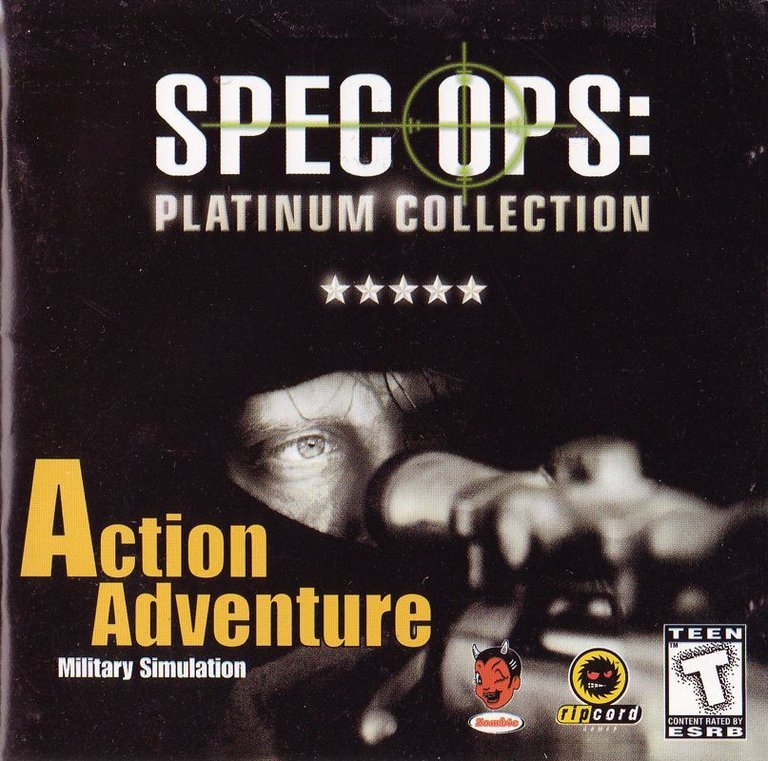
Spec Ops: Platinum Collection is a compilation of tactical shooter games, including Spec Ops: Rangers Lead the Way, Spec Ops: Ranger Team Bravo, Spec Ops II: Green Berets, and the expansion Spec Ops II: Operation Bravo. Set in various military environments like jungles, deserts, and urban areas, the games focus on strategic combat and squad-based missions, with Operation Bravo introducing 25 new missions and refined gameplay mechanics to address bugs from the original releases.
Spec Ops: Platinum Collection Free Download
Spec Ops: Platinum Collection Cracks & Fixes
Spec Ops: Platinum Collection Reviews & Reception
mobygames.com (75/100): This is a collection of the first two Spec Ops games and expansions.
Spec Ops: Platinum Collection: A Tactical Shooter Compilation That Defined an Era
Introduction
In the late 1990s and early 2000s, the tactical shooter genre was still finding its footing. Games like Rainbow Six and SOCOM U.S. Navy SEALs were beginning to carve out a niche for realistic, squad-based combat experiences. Amid this landscape, Spec Ops: Platinum Collection emerged as a defining compilation, bundling together the foundational titles of the Spec Ops series. Released in 2000 by Ripcord Games, this collection brought together Spec Ops: Rangers Lead the Way, Spec Ops: Ranger Team Bravo, Spec Ops II: Green Berets, and the previously downloadable expansion Spec Ops II: Operation Bravo. More than just a repackaging of existing content, Platinum Collection offered a refined, bug-fixed, and expanded experience that showcased the evolution of tactical shooters during this pivotal era.
This review will delve deep into the development history, narrative and thematic elements, gameplay mechanics, world-building, and the lasting legacy of Spec Ops: Platinum Collection. By examining its strengths, flaws, and influence, we can better understand its place in the broader context of video game history.
Development History & Context
The Birth of a Franchise
The Spec Ops series was conceived by Zombie Studios, a developer known for its focus on military simulations and tactical shooters. The first game, Spec Ops: Rangers Lead the Way, was released in 1998 and was met with critical acclaim for its realistic portrayal of special operations missions. The game’s success led to the rapid development of sequels and expansions, including Spec Ops: Ranger Team Bravo (1998) and Spec Ops II: Green Berets (1999). These titles were published by Ripcord Games, a company that specialized in military-themed games and simulations.
The decision to create an ongoing franchise was made early in the development of Rangers Lead the Way. Executive producer Mike Suarez recognized the loyalty of simulation fans, noting that they were a dedicated audience who purchased multiple titles annually. This “evergreen business” model drove the series forward, resulting in a steady stream of releases between 1998 and 2002.
Technological Constraints and Innovations
The late 1990s were a time of rapid technological advancement in gaming. The Spec Ops series was developed during the transition from 2D to 3D graphics, and the games in Platinum Collection reflect this evolution. Rangers Lead the Way and Ranger Team Bravo were built on earlier engines, featuring more rudimentary graphics and simpler AI systems. Spec Ops II: Green Berets, however, introduced more advanced 3D environments and improved squad mechanics, allowing for more complex tactical gameplay.
One of the standout features of Operation Bravo, the expansion included in Platinum Collection, was its attempt to address the bugs and glitches present in Green Berets. The expansion not only added 25 new missions across diverse environments—jungle, desert, arctic, and urban—but also refined the AI and gameplay mechanics. This was a significant step forward, as early tactical shooters often struggled with pathfinding and squad behavior.
The Gaming Landscape of the Late 1990s
The late 1990s and early 2000s were a golden age for tactical shooters. Games like Rainbow Six (1998) and SOCOM U.S. Navy SEALs (2002) were setting new standards for realism and squad-based gameplay. The Spec Ops series fit neatly into this trend, offering a more accessible yet still challenging experience. While Rainbow Six emphasized meticulous planning and execution, Spec Ops focused on real-time tactical decision-making, appealing to players who wanted a balance between strategy and action.
The Spec Ops series also benefited from the growing popularity of multiplayer gaming. Spec Ops II: Green Berets and its expansion supported LAN and internet multiplayer, allowing players to engage in cooperative and competitive missions. This was a major selling point at a time when online gaming was still in its infancy.
Narrative & Thematic Deep Dive
Plot Overview
The Spec Ops series is known for its military realism, and the games in Platinum Collection are no exception. The narratives are straightforward, focusing on the missions of elite special operations teams. Rangers Lead the Way and Ranger Team Bravo follow the exploits of U.S. Army Rangers as they undertake high-stakes missions in various global hotspots. Spec Ops II: Green Berets shifts the focus to the Green Berets, introducing more complex missions and a greater emphasis on squad tactics.
Operation Bravo, the expansion included in Platinum Collection, builds on the narrative of Green Berets by adding new missions that take place in a variety of environments. While the overarching plot remains mission-driven, the expansion introduces more nuanced scenarios, including covert operations and rescue missions.
Characters and Dialogue
The characters in the Spec Ops series are archetypal military personnel, with little in the way of deep characterization. The focus is on the missions and the tactical challenges they present, rather than on the personal stories of the soldiers. Dialogue is functional, serving to convey mission objectives and provide context for the player’s actions.
That said, the series does attempt to create a sense of camaraderie and teamwork. The squad-based gameplay encourages players to think about the roles and strengths of their team members, even if those team members are not deeply developed as characters. This was a common approach in tactical shooters of the era, where the emphasis was on gameplay rather than narrative depth.
Underlying Themes
While the Spec Ops series is not as thematically rich as later entries like Spec Ops: The Line (2012), it does explore themes of duty, sacrifice, and the moral complexities of war. The missions often involve high-stakes decisions, such as whether to prioritize stealth or direct assault, and the consequences of those decisions are reflected in the outcomes of the missions.
The series also touches on the idea of the “fog of war,” the uncertainty and chaos that characterize real-world combat. Players must adapt to changing circumstances, make quick decisions, and deal with the consequences of their actions. This theme is particularly evident in Operation Bravo, where the new missions introduce more unpredictable elements, such as dynamic weather conditions and enemy reinforcements.
Gameplay Mechanics & Systems
Core Gameplay Loops
The Spec Ops series is built around a core gameplay loop of mission planning, execution, and debriefing. Players begin each mission by selecting their squad composition, choosing from a variety of specialized roles such as snipers, demolition experts, and machine-gunners. They then equip their squad with the appropriate weapons and gear before deploying into the field.
Once in the mission, players must navigate the environment, engage enemies, and complete objectives. The games emphasize realism, with features like limited ammunition, realistic weapon handling, and squad-based tactics. Players must use cover effectively, coordinate their team’s movements, and adapt to changing circumstances.
Combat and Squad Mechanics
Combat in Spec Ops is tactical and methodical. Unlike run-and-gun shooters, the series rewards careful planning and precise execution. Players must consider the strengths and weaknesses of their squad members, positioning them to maximize their effectiveness. For example, snipers are best used at long range, while demolition experts can clear obstacles and destroy enemy fortifications.
The AI in Spec Ops is a mixed bag. While the squad members generally follow orders and engage enemies effectively, they can sometimes struggle with pathfinding and situational awareness. This was a common issue in tactical shooters of the era, and Operation Bravo attempted to address some of these problems with improved AI routines.
Character Progression and Customization
The Spec Ops series does not feature deep character progression systems. Instead, players unlock new weapons and equipment as they progress through the missions. This system is straightforward but effective, allowing players to tailor their squad’s loadout to the specific challenges of each mission.
The lack of deep customization is somewhat offset by the variety of missions and environments. Each mission presents unique challenges, requiring players to adapt their strategies and tactics. This keeps the gameplay fresh and engaging, even without a robust progression system.
User Interface and Controls
The user interface in Spec Ops is functional but not particularly innovative. Players use a combination of keyboard and mouse controls to issue orders, navigate the environment, and engage enemies. The interface is designed to be intuitive, with clear indicators for squad status, ammunition levels, and mission objectives.
One of the strengths of the series is its accessibility. While the gameplay is complex and challenging, the controls are relatively straightforward, making it easier for new players to get into the action. This was an important consideration at a time when tactical shooters were still finding their audience.
World-Building, Art & Sound
Setting and Atmosphere
The Spec Ops series is set in a variety of global hotspots, from dense jungles to arid deserts. The environments are designed to be realistic and immersive, with detailed textures and dynamic lighting effects. The games in Platinum Collection feature a mix of urban, rural, and wilderness settings, each with its own unique challenges.
The atmosphere in Spec Ops is tense and immersive. The games do an excellent job of conveying the sense of danger and uncertainty that characterizes real-world combat. The sound design plays a crucial role in this, with realistic weapon sounds, environmental effects, and dynamic music that ramps up during intense firefights.
Visual Direction
The visual direction in Spec Ops is functional rather than groundbreaking. The games feature detailed 3D environments, but the graphics are somewhat dated by modern standards. That said, the art direction is effective, with a focus on realism and immersion. The environments are designed to be believable, with attention to detail in the textures, lighting, and object placement.
One of the strengths of the series is its variety. Each mission takes place in a different environment, from snow-covered mountains to dense urban areas. This variety keeps the gameplay fresh and engaging, and it also showcases the versatility of the game engine.
Sound Design
The sound design in Spec Ops is one of its strongest features. The games feature realistic weapon sounds, environmental effects, and dynamic music that enhances the sense of immersion. The sound effects are particularly impressive, with detailed audio cues for everything from gunfire to explosions.
The voice acting in Spec Ops is functional but not particularly memorable. The dialogue is straightforward and mission-focused, with little in the way of deep characterization. That said, the voice acting is clear and effective, conveying the necessary information without distracting from the gameplay.
Reception & Legacy
Critical and Commercial Reception
Spec Ops: Platinum Collection was well-received by critics and players alike. The compilation was praised for its value, offering four games and an expansion in a single package. The improved AI and bug fixes in Operation Bravo were also highlighted as significant improvements over the original releases.
Critics noted the series’ strengths in tactical gameplay and realism, while also acknowledging its limitations in terms of graphics and AI. The compilation was seen as a strong entry in the tactical shooter genre, offering a challenging and engaging experience for fans of military simulations.
Evolution of the Series
The Spec Ops series continued to evolve after the release of Platinum Collection. Later entries, such as Spec Ops: Stealth Patrol (1999) and Spec Ops: Ranger Elite (2001), introduced new gameplay mechanics and settings. However, these titles were developed by Runecraft Ltd. and were more budget-focused, resulting in lower review scores.
The series took a dramatic turn with Spec Ops: The Line (2012), a reboot developed by Yager Development. This game shifted the focus from tactical realism to narrative depth, exploring themes of morality, psychological trauma, and the consequences of war. While The Line was a critical success, it was a commercial failure, and the series has not seen a new entry since.
Influence on the Genre
The Spec Ops series, and Platinum Collection in particular, had a significant influence on the tactical shooter genre. The games’ emphasis on squad-based tactics, realistic combat, and mission variety set a standard for future titles. Games like Ghost Recon and SOCOM owe a debt to the Spec Ops series, which helped to popularize the genre and establish its core mechanics.
The series also demonstrated the potential for tactical shooters to explore deeper themes. While the early Spec Ops games were more focused on gameplay than narrative, they laid the groundwork for later titles like The Line, which used the genre to explore complex moral and psychological issues.
Conclusion
Spec Ops: Platinum Collection is a landmark compilation that captures the essence of the tactical shooter genre in the late 1990s and early 2000s. The collection offers a refined and expanded experience, showcasing the evolution of the Spec Ops series from its early days to its more polished later entries. While the games are not without their flaws—particularly in terms of AI and graphics—they remain a compelling and challenging experience for fans of military simulations.
The series’ influence on the tactical shooter genre cannot be overstated. Spec Ops helped to establish the core mechanics and themes that would define the genre for years to come. While later entries like The Line would take the series in a more narrative-driven direction, Platinum Collection remains a testament to the strengths of the early Spec Ops games.
For those interested in the history of tactical shooters, Spec Ops: Platinum Collection is an essential play. It offers a glimpse into the genre’s formative years, showcasing the innovations and challenges that shaped its development. While it may not have the polish or depth of modern tactical shooters, it remains a valuable and engaging experience for fans of military simulations.
Final Verdict: 8.5/10 – A must-play for fans of tactical shooters and a defining compilation of the era.