
- Release Year: 2022
- Platforms: Linux, Macintosh, Windows
- Publisher: Diada Novels
- Developer: Bite The Rock
- Genre: Adventure
- Perspective: 3rd-person
- Game Mode: Single-player
- Gameplay: Visual novel
- Setting: Comedy, Horror
- Average Score: 85/100
Description
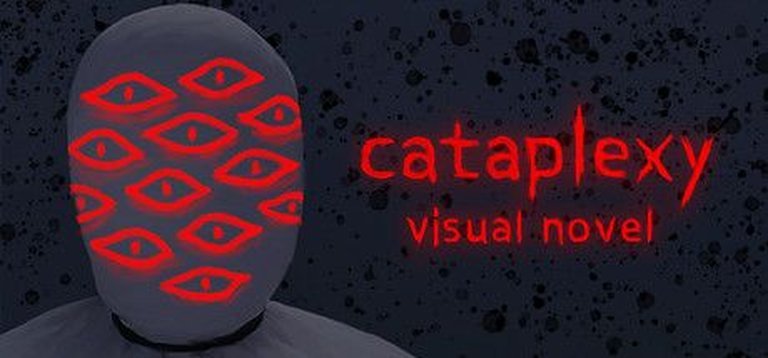
Cataplexy is a short visual novel that blends the seemingly incompatible genres of comedy and horror, offering players a unique narrative experience where the tone shifts based on their interpretation. Set in a surreal world where reality and hallucination intertwine, the game follows a protagonist grappling with the mysterious and often terrifying phenomenon of cataplexy—a real-life medical condition. Players can choose between an ironic or serious mood, encountering otherworldly entities and unsettling backgrounds that challenge their perception of what’s real. With a narrative deeply rooted in personal experiences, the game explores themes of helplessness and absurdity, leaving players to decide whether to laugh or shudder at the unfolding events.
Where to Buy Cataplexy
PC
Cataplexy Guides & Walkthroughs
Cataplexy Reviews & Reception
steambase.io (85/100): A triumphant return to form for the series.
store.steampowered.com (85/100): Positive (85% of 49 user reviews for this game are positive).
undyingjoy.com : Game was a nice, short experience (Dev bias, for me the shorter the better).
Cataplexy: A Hauntingly Unique Visual Novel That Defies Genre Conventions
Introduction: A Game That Lingers Like a Bad Dream
Cataplexy (2022) is a rare gem in the visual novel landscape—a short, surreal, and deeply personal exploration of sleep paralysis, psychological horror, and dark comedy. Developed by Bite The Rock and 12seven, and published by Diada Novels, this Ren’Py-powered experience defies easy categorization. It is, at once, a terrifying descent into the mind’s darkest corners and a wry, self-aware commentary on the absurdity of human fear.
The game’s premise is deceptively simple: a man wakes in the dead of night, paralyzed, as his mind unravels under the weight of hallucinations. But Cataplexy is far more than a mere horror story—it is an interactive meditation on the nature of perception, the fragility of sanity, and the thin line between comedy and terror. With its dual-narrative approach (allowing players to choose between a “serious” or “ironic” tone), psychedelic visuals, and unsettling sound design, Cataplexy carves out a niche that few games dare to occupy.
This review will dissect Cataplexy in exhaustive detail, examining its development context, narrative depth, gameplay mechanics, artistic direction, and cultural impact. By the end, we’ll determine whether this obscure visual novel is a forgotten masterpiece or a fascinating but flawed experiment.
Development History & Context: A Labor of Personal Horror
The Studio Behind the Nightmare
Cataplexy was developed by Bite The Rock, a small indie studio with a focus on narrative-driven experiences, in collaboration with 12seven, a team known for their work in experimental storytelling. The game was published by Diada Novels, a publisher specializing in unconventional visual novels and interactive fiction.
What sets Cataplexy apart from other horror visual novels is its deeply personal origins. According to the developers, much of the game’s content is based on real experiences with cataplexy—a rare neurological condition characterized by sudden muscle weakness, often triggered by strong emotions. This condition is closely related to narcolepsy and sleep paralysis, phenomena that have long been fodder for horror storytelling. By grounding its surreal horrors in medical reality, Cataplexy achieves a level of authenticity that most psychological horror games lack.
Technological Constraints & Design Philosophy
Built using the Ren’Py engine, Cataplexy embraces the limitations of its tools to create a minimalist yet effective horror experience. The game’s fixed/flip-screen perspective and hand-drawn 2D art evoke the feel of a living nightmare, where reality and hallucination blur seamlessly.
The developers made a conscious choice to avoid branching narratives—a staple of many visual novels—in favor of a linear but tonally flexible experience. Players can choose between a “serious” or “ironic” interpretation of events, but the core story remains the same. This design decision reinforces the game’s themes of perception and subjectivity, forcing players to question whether the horrors they witness are real or products of a fractured mind.
The Gaming Landscape in 2022: A Niche Within a Niche
Cataplexy released on January 12, 2022, into a market dominated by AAA blockbusters and high-budget indie darlings. Visual novels, while a beloved niche, often struggle to gain mainstream attention unless they are eroge, dating sims, or part of an established franchise (e.g., Danganronpa, Ace Attorney).
Horror visual novels, in particular, occupy an even smaller subset of the market. Games like The House in Fata Morgana and Saya no Uta have cultivated dedicated followings, but they remain cult classics rather than commercial juggernauts. *Cataplexy’s **ultra-short runtime (under an hour) and abstract storytelling made it an even harder sell to a broader audience.
Yet, its Steam reception (85% positive from 49 reviews) suggests that it found its audience—players who crave experimental, atmospheric, and deeply unsettling experiences.
Narrative & Thematic Deep Dive: A Descent Into the Subconscious
Plot Summary: The Horror of Immobility
Cataplexy follows an unnamed protagonist who awakens in the middle of the night, paralyzed, as his mind spirals into a kaleidoscope of terror. The game wastes no time plunging the player into its nightmarish premise:
- The First Encounter – The protagonist is visited by ghostly women who torment him, ripping out his organs and engaging in necrophilic defilement of his corpse.
- The Breaking Point – He briefly regains mobility, only to be recruited by a cosmic entity (a talking brain) to become a “Watcher”—a being tasked with observing (and eventually killing) his own physical self.
- The Limbo – The protagonist enters a surreal afterlife, where he battles for control of his soul against another fragment of himself.
- The Cliffhanger – The game ends abruptly, with the protagonist meeting a mysterious girl in a tundra, leaving his fate ambiguous.
Themes: Fear, Perception, and the Absurdity of Existence
Cataplexy is not just a horror story—it is a philosophical inquiry into the nature of fear, reality, and self-perception. Its themes include:
- The Unreliable Mind – The game constantly blurs the line between hallucination and reality, forcing players to question what is truly happening.
- The Duality of Horror and Comedy – The “serious” and “ironic” narration modes highlight how fear can be both terrifying and ridiculous when viewed from different angles.
- Medical Horror vs. Supernatural Horror – The game plays with the idea that cataplexy and sleep paralysis have both scientific and mystical explanations, leaving interpretation open.
- Existential Dread – The protagonist’s struggle for control over his own body and soul mirrors real-world anxieties about mortality, free will, and the fragility of the human mind.
Characters & Dialogue: A Cast of Nightmares
- The Protagonist – A faceless, voiceless figure whose inner monologue drives the narrative. His helplessness makes him a compelling (if passive) lens through which to experience horror.
- The Ghostly Women – Grotesque, spectral figures who embody the protagonist’s deepest fears. Their violent and sexualized torment of him suggests repressed trauma or guilt.
- The Talking Brain – A cosmic, Lovecraftian entity that recruits the protagonist as a “Watcher.” Its detached, clinical demeanor contrasts with the visceral horrors it describes.
- The Cow (Ren’Py Default Image) – A meta joke that breaks the fourth wall, reinforcing the game’s self-aware, absurdist tone.
The Ending: A Masterstroke of Ambiguity
Cataplexy’s abrupt, open-ended conclusion has divided players. Some see it as a brilliant narrative choice, leaving the protagonist’s fate to the imagination. Others feel it is too sudden, robbing the story of a satisfying payoff.
However, the cliffhanger ending serves a thematic purpose:
– It mirrors the unpredictability of sleep paralysis—just when you think you’ve escaped, it can strike again.
– It reinforces the game’s cyclical nature, suggesting that the protagonist’s suffering is eternal and inescapable.
– It invites replayability, as players may choose the opposite narration style to see if the ending changes (it doesn’t, but the tone shifts dramatically).
Gameplay Mechanics & Systems: Minimalism as a Strength
Core Gameplay Loop: A Visual Novel with a Twist
Cataplexy is, at its core, a kinetic visual novel—meaning player choices do not alter the story’s outcome. However, it subverts expectations in several ways:
- Dual Narration Modes – Players can select “serious” or “ironic” interpretations of events, which alter the tone but not the plot.
- Serious Mode – A bleak, oppressive experience filled with body horror and existential dread.
- Ironic Mode – A darkly comedic take, where the protagonist mockingly narrates his own suffering.
- No Traditional Choices – Unlike most visual novels, Cataplexy does not feature branching paths or multiple endings. This linearity reinforces the protagonist’s lack of control, mirroring the helplessness of sleep paralysis.
Combat & Progression: Nonexistent by Design
Cataplexy deliberately avoids gameplay mechanics that would distract from its narrative and atmospheric focus. There are:
– No puzzles
– No inventory management
– No combat
– No skill trees
This minimalist approach ensures that the player remains fully immersed in the protagonist’s psychological torment.
UI & Accessibility: Simple but Effective
The game’s user interface is clean and unobtrusive, with:
– Text-based narration (no voice acting, except for distorted, garbled sounds from the protagonist and entities).
– Hand-drawn backgrounds that shift between reality and hallucination.
– A single Steam achievement (a tongue-in-cheek nod to its short length).
The lack of voice acting (beyond eerie sound effects) enhances the unsettling atmosphere, forcing players to fill in the gaps with their imagination.
Innovations & Flaws
✅ Strengths:
– Dual narration system adds replay value despite the linear story.
– Surreal, shifting art style perfectly captures the disorientation of sleep paralysis.
– Short runtime makes it easy to experience in one sitting, heightening its impact.
❌ Weaknesses:
– Extremely short (under an hour), leaving some players wanting more.
– No meaningful choices may disappoint fans of branching narratives.
– Abrupt ending feels unresolved to some.
World-Building, Art & Sound: A Nightmare You Can’t Wake From
Setting & Atmosphere: The Horror of the Mundane
Cataplexy takes place in two primary locations:
1. The Protagonist’s Bedroom – A seemingly ordinary space that becomes a prison of terror as hallucinations take hold.
2. The Limbo/Afterlife – A surreal, dreamlike void where the protagonist battles for his soul.
The game’s atmosphere is oppressive, with:
– Flickering lights
– Distorted, shifting backgrounds
– Unsettling silence punctuated by sudden noises
Visual Design: Hand-Drawn Horror
The art style is sketchy, grotesque, and intentionally rough, evoking:
– The hazy, half-remembered quality of dreams.
– The uncanny valley effect—characters are just human enough to be disturbing.
– Cosmic horror influences (e.g., the talking brain entity).
The use of the Ren’Py default cow image is a brilliant meta-joke, breaking the fourth wall in a way that enhances the game’s absurdist tone.
Sound Design: The Silence That Screams
Cataplexy’s audio is minimal but devastatingly effective:
– Distorted, garbled voice clips (the protagonist’s “speech” sounds like radio static mixed with muffled screams).
– A slow, droning soundtrack that builds tension without relying on jump scares.
– Sudden, jarring sound effects (e.g., a happy birthday tune playing over a newspaper clipping about the protagonist’s death).
The lack of traditional music makes the silence itself a character, amplifying the feeling of isolation and dread.
Reception & Legacy: A Cult Classic in the Making?
Critical & Commercial Reception
Cataplexy flew under the radar upon release, but its Steam reception has been overwhelmingly positive:
– 85% positive reviews (49 total).
– Player Score of 85/100 on Steambase.
– Praised for its atmosphere, writing, and unique premise.
– Criticized for its brevity and abrupt ending.
The game’s Russian audience (which makes up ~60% of its player base) has been particularly receptive, suggesting that Eastern European horror sensibilities may align well with Cataplexy’s bleak, absurdist tone.
Influence & Cultural Impact
While Cataplexy is not a mainstream hit, it has carved out a niche in the psychological horror and experimental visual novel scenes. Its legacy includes:
– Proving that horror can be both terrifying and funny without undermining its impact.
– Demonstrating the power of personal storytelling in game design.
– Inspiring other indie developers to explore medical and psychological horror in unconventional ways.
Comparisons to Other Works
Cataplexy shares DNA with:
– Saya no Uta (body horror, psychological descent).
– The House in Fata Morgana (surreal storytelling, tragic themes).
– LSD: Dream Emulator (abstract, nightmare-logic gameplay).
– Pony Island / Inscryption (meta-commentary, fourth-wall breaks).
However, its focus on sleep paralysis and cataplexy makes it unique even among these influences.
Conclusion: A Flawed but Unforgettable Nightmare
Final Verdict: 8.5/10 – A Masterclass in Psychological Horror
Cataplexy is not a game for everyone. It is short, linear, and deliberately unsettling, with no hand-holding or traditional gameplay. But for those who appreciate experimental storytelling, surreal horror, and dark comedy, it is an absolute must-play.
Pros:
✔ One of the most authentic depictions of sleep paralysis in gaming.
✔ Dual narration system adds depth and replayability.
✔ Unsettling art and sound design create a truly immersive nightmare.
✔ Deeply personal and thematically rich.
Cons:
✖ Extremely short (under an hour).
✖ Abrupt ending may frustrate some players.
✖ No meaningful choices or branching paths.
Where Does It Stand in Gaming History?
Cataplexy is not a game that will redefine the industry, but it is a cult classic in the making—a bold, uncompromising vision that prioritizes atmosphere and theme over commercial appeal. It proves that horror doesn’t need jump scares or elaborate mechanics to be effective—sometimes, the simplest nightmares are the most terrifying.
Final Recommendation:
If you enjoy Lovecraftian horror, surreal storytelling, or games that mess with your head, Cataplexy is well worth the $1.99 price tag. Just don’t play it right before bed.
Score Breakdown:
– Narrative & Themes: 9/10
– Gameplay & Mechanics: 7/10 (Intentional minimalism, but may not satisfy all players)
– Art & Sound Design: 9/10
– Replayability: 7/10 (Dual narration helps, but the linear story limits this)
– Overall Impact: 9/10
Final Score: 8.5/10 – “A Haunting, Unforgettable Experience”