
- Release Year: 2001
- Platforms: Windows
- Publisher: Davilex Games B.V., DreamCatcher Interactive Inc., Monte Cristo Multimedia
- Developer: Cat Daddy Games, LLC
- Genre: Strategy, Tactics
- Perspective: Isometric
- Game Mode: Single-player
- Gameplay: Business simulation, Managerial
- Setting: Casino
- Average Score: 62/100
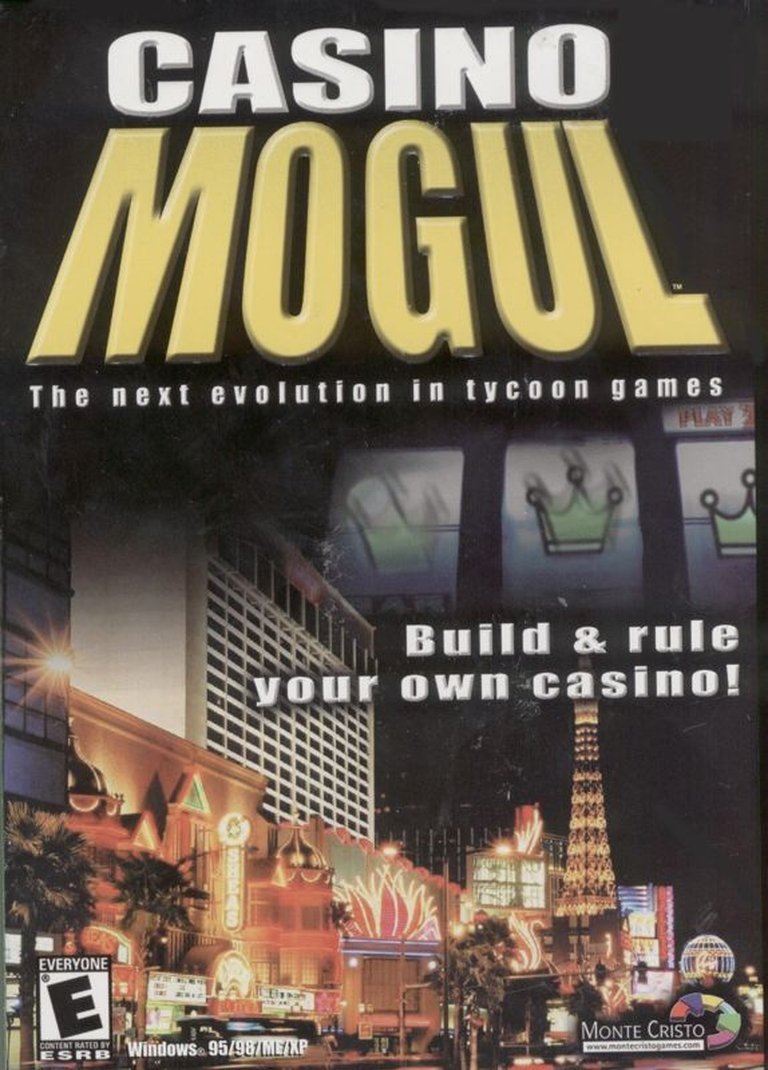
Description
Casino Mogul is a business simulation game where players take on the role of a casino manager, tasked with transforming an empty plot of land into a thriving billion-dollar casino. The game features a variety of classic casino games like Roulette, Black Jack, and Poker, along with amenities such as restaurants, bars, and entertainment stages to attract guests. Players must also hire and manage staff, including dealers, security, and entertainers, to ensure smooth operations and maximize profits.
Casino Mogul Guides & Walkthroughs
Casino Mogul Reviews & Reception
en.wikipedia.org (52/100): Casino Tycoon received mixed to negative reviews from critics upon release.
metacritic.com (61/100): Challenging and fun.
mobygames.com (56/100): Casino Mogul puts you in the shoes of a casino manager.
myabandonware.com (77/100): i remember playing this game as a kid , i loved it
gamespot.com (64/100): Its good premise is almost enough to outweigh its frustrating design flaws.
Casino Mogul Cheats & Codes
PC
Enter codes during gameplay.
| Code | Effect |
|---|---|
| CATDADDY, then press + (Keypad) | More Money |
| Hold [Ctrl] + [Shift] + W | Faster Speed |
Casino Mogul: A Flawed but Fascinating Glimpse into the Tycoon Genre’s Early Days
Introduction: The Allure of the Casino Dream
Few settings in video games are as inherently dramatic as the casino. A place of high stakes, glittering lights, and the constant hum of risk and reward, it’s a natural fit for a management simulation. Casino Mogul (2001), known as Casino Tycoon in Europe, dared to let players step into the shoes of a casino magnate, tasked with transforming an empty plot of land into a billion-dollar empire. Developed by Cat Daddy Games and published by Monte Cristo Multimedia, the game arrived at a time when the “tycoon” subgenre was flourishing, following in the footsteps of classics like RollerCoaster Tycoon and Theme Hospital. Yet, despite its promising premise, Casino Mogul emerged as a deeply flawed but oddly compelling experiment—a game that teased greatness but ultimately fell short of its ambitions.
This review will dissect Casino Mogul in exhaustive detail, exploring its development history, narrative and thematic underpinnings, gameplay mechanics, artistic direction, critical reception, and lasting legacy. Through this analysis, we’ll uncover why the game remains a fascinating artifact of early 2000s simulation design, even as it stumbles over its own potential.
Development History & Context: A Tycoon Game in Transition
The Studio and the Vision
Casino Mogul was developed by Cat Daddy Games, LLC, a studio that, despite its whimsical name, had a clear vision for the project. The team, led by producer Harley Howe IV, sought to create a business simulation that captured the unique allure of casino management. The game’s engine, CatCore, was a proprietary tool designed to handle the complex interactions of a bustling casino floor. However, Cat Daddy Games was not a household name, and Casino Mogul would be one of its few notable releases.
The game was published by Monte Cristo Multimedia, a French studio known for its work on strategy and simulation titles like City Life and Parkan: Iron Strategy. Monte Cristo’s involvement suggested an ambition to blend accessible gameplay with strategic depth—a hallmark of their catalog. Additional publishing support came from Davilex Games B.V. and DreamCatcher Interactive Inc., ensuring the game’s release across Europe and North America.
Technological Constraints and the Early 2000s Landscape
Released in November 2001 (with a North American launch in March 2002), Casino Mogul arrived during a transitional period for PC gaming. The early 2000s saw the rise of 3D acceleration, but many management simulations still relied on isometric or 2D perspectives for clarity and performance. Casino Mogul opted for an isometric view, a choice that balanced visual appeal with the need for precise object placement—a critical feature in any tycoon game.
The game’s system requirements were modest by modern standards but reflective of its era:
– Minimum: Windows 95, Pentium III, 64 MB RAM, 512 MB HDD
– Recommended: Windows XP, 256 MB RAM
These specs placed it within reach of most PC gamers at the time, though some critics noted performance hiccups when casinos grew too large.
The Tycoon Genre’s Golden Age
The late 1990s and early 2000s were a golden age for tycoon and management simulations. Games like:
– RollerCoaster Tycoon (1999)
– Theme Hospital (1997)
– Zoo Tycoon (2001)
– The Movies (2005)
had proven that there was a hungry audience for games that let players build and manage complex systems. Casino Mogul entered this landscape with a unique hook: the casino setting, which promised a blend of high-risk financial management and glamorous entertainment.
However, the game faced stiff competition. Zoo Tycoon, released the same year, set a new standard for accessibility and depth in the genre. Casino Mogul’s developers had to carve out a niche, but as we’ll see, the game struggled to match the polish and innovation of its peers.
Narrative & Thematic Deep Dive: The Rise of a Mogul
Plot and Structure: A Sandbox of Ambition
Casino Mogul does not follow a traditional linear narrative. Instead, it presents players with a sandbox experience, where the “story” emerges from their actions. The game begins with an empty plot of land and a modest budget. From there, players must:
1. Build and expand their casino with tables, slot machines, and amenities.
2. Hire and manage staff, from dealers to security.
3. Attract and retain customers through entertainment and service quality.
4. Compete for prestige, aiming for a five-star rating or accumulating vast wealth.
The lack of a scripted campaign is both a strength and a weakness. On one hand, it allows for emergent storytelling—players create their own narratives through their decisions. On the other, the game lacks the dramatic pacing of titles like Theme Hospital, which used humor and structured scenarios to guide players.
Characters and Cameos: A Touch of Hollywood
One of the game’s more intriguing narrative touches is the inclusion of celebrity cameos, most notably Marlon Brando’s character from The Godfather. This nod to casino culture’s cinematic legacy adds a layer of thematic depth, suggesting that the game’s developers wanted to evoke the glamour and danger of classic casino narratives.
However, these cameos are underutilized. Brando’s presence is more of an Easter egg than a meaningful narrative device. The game misses an opportunity to weave these characters into missions or rivalries, which could have added much-needed drama to the experience.
Themes: Risk, Reward, and the Illusion of Control
At its core, Casino Mogul explores themes of:
– Risk vs. Reward: Every decision, from table placement to staff hiring, carries financial consequences.
– The Illusion of Control: Players must balance their desire for profit with the unpredictable nature of gambling.
– Power and Prestige: The pursuit of a five-star rating mirrors real-world casino magnates’ obsession with status.
The game’s underlying tension—between meticulous planning and the chaos of chance—makes it a fascinating study of the casino as a microcosm of capitalism. However, the execution often feels too clinical, lacking the human drama that defines real casinos.
Gameplay Mechanics & Systems: Building an Empire, One Slot Machine at a Time
Core Gameplay Loop: Construction and Management
Casino Mogul’s gameplay revolves around two primary loops:
1. Construction: Placing tables, slot machines, restaurants, bars, and other amenities.
2. Management: Hiring staff, setting prices, monitoring customer satisfaction, and expanding.
The isometric view allows for precise placement of objects, though the UI can feel clunky by modern standards. Players must consider:
– Traffic flow: Poorly placed tables can create bottlenecks.
– Customer needs: Guests require food, drinks, and entertainment to stay happy.
– Staff efficiency: Understaffed areas lead to dissatisfaction and lost revenue.
Casino Games: Variety Without Depth
The game offers a wide array of casino staples, including:
– Roulette
– Blackjack
– Poker
– Craps
– Keno
– Slot Machines
However, the lack of direct interaction with these games is a glaring omission. Players cannot play the games themselves, a missed opportunity that would have added immersion. Instead, games are treated as passive income sources, with players adjusting payout rates and table limits.
Staff Management: A Double-Edged Sword
Hiring and managing staff is a critical but flawed system. Players can recruit:
– Cocktail waitresses
– Pit bosses
– Security guards
– Entertainers (impersonators, jugglers, magicians)
While the variety is welcome, the AI behavior is often unpredictable. Staff may wander aimlessly or fail to respond to emergencies, leading to frustration. The hiring/firing mechanics are also too simplistic, lacking the depth of later games like Two Point Hospital.
Entertainment and Prestige: The Missing Spark
To attract high rollers, players must build a stage and hire entertainers. Options include:
– Impersonators (e.g., Elvis, Marilyn Monroe)
– Jugglers
– Magicians
These performances boost customer satisfaction, but the impact is superficial. There’s no audience reaction system or dynamic events (e.g., a magician’s trick going wrong). The entertainment feels like a checkbox rather than a living part of the casino.
Economic Systems: A Mixed Bag
The game’s financial model is functional but shallow. Players must balance:
– Income (from games, food, drinks)
– Expenses (staff salaries, building costs, maintenance)
However, the lack of long-term challenges makes the game too easy once players establish a stable income. There are no random events (e.g., economic downturns, rival casinos) to disrupt progress, leading to a monotonous endgame.
UI and Controls: A Product of Its Time
The user interface is serviceable but dated. Menus are cluttered, and tool tips are often unclear. The isometric camera can make precise placement difficult, especially in larger casinos.
World-Building, Art & Sound: The Glamour and the Grind
Visual Design: Isometric Glamour
Casino Mogul’s art direction leans into the glitz and glamour of casinos. The isometric perspective allows for detailed environments, with:
– Neon lights flickering on slot machines.
– Polished marble floors reflecting the overhead chandeliers.
– Crowded tables bustling with animated patrons.
The color palette is rich, with gold, red, and black dominating the aesthetic. However, the character models are stiff and repetitive, lacking the charm of contemporaries like The Sims.
Sound Design: The Symphony of the Casino
The audio design is one of the game’s stronger suits. The ambient sounds of a casino—slot machine jingles, card shuffles, crowd chatter—create an immersive atmosphere. The music, composed by Adgio Hutchings, blends jazz, lounge, and electronic beats, reinforcing the casino’s upscale vibe.
However, the sound effects can become repetitive, and there’s no dynamic audio system to reflect the casino’s mood (e.g., louder cheers during a big win).
Atmosphere: The Illusion of Luxury
The game excels at creating the illusion of a thriving casino, but it lacks depth. The crowds feel generic, and the buildings lack personality. There’s no day/night cycle or seasonal events to break the monotony.
Reception & Legacy: A Mixed Hand
Critical Reception: Praise for Potential, Criticism for Execution
Casino Mogul received mixed to negative reviews, with critics praising its concept but criticizing its execution. Key points from reviews:
| Publication | Score | Key Praise | Key Criticism |
|---|---|---|---|
| Hacker | 80% | Fun concept, engaging early game | Repetitive, lacks depth |
| Jeuxvideo.com | 70% | Original idea, decent management | Weak graphics, shallow mechanics |
| GameStar (Germany) | 64% | Enjoyable at first | Becomes tedious, lacks interaction |
| PC Games (Germany) | 63% | Good initial fun | Micromanagement frustrations |
| ESC Magazine | 60% | Promising concept | Underdeveloped, rushed |
| Adrenaline Vault | 50% | Interesting premise | Boring, lacks player agency |
| Computer Gaming World | 40% | Not horrible | Underdeveloped, lacks polish |
Common Criticisms:
– Lack of direct gameplay interaction (e.g., playing casino games).
– Repetitive mechanics with little long-term challenge.
– Clunky UI and AI issues.
– Shallow economic and staff management systems.
Metacritic Score: 52/100 (based on 4 reviews), indicating “mixed or average” reception.
Player Reception: Nostalgia vs. Frustration
Player scores on MobyGames average 3.3/5, suggesting a divided audience. Some players, like those on My Abandonware, recall the game fondly as a childhood favorite, while others criticize its lack of depth.
Legacy: A Footnote in Tycoon History
Casino Mogul did not revolutionize the tycoon genre, but it paved the way for later casino management games like:
– Casino Inc. (2003)
– Grand Casino Tycoon (2020s)
Its biggest contribution was proving that casino management could be a viable setting for a tycoon game. However, its flaws ensured it would not be remembered as a classic.
Conclusion: A Flawed Gem Worth Remembering
Casino Mogul is a fascinating failure—a game with bold ideas but lackluster execution. Its sandbox casino management is engaging at first, but the shallow mechanics, repetitive gameplay, and lack of player agency prevent it from reaching greatness.
Final Verdict:
⭐⭐⭐☆☆ (3/5) – A flawed but intriguing experiment in the tycoon genre. Worth playing for fans of management sims, but don’t expect depth or longevity.
Place in History:
Casino Mogul remains a cult curiosity, a game that teased the potential of casino management simulations but failed to deliver a polished experience. It’s a time capsule of early 2000s tycoon games—a reminder of how far the genre has come, and how much further it could have gone.
For those willing to overlook its rough edges, Casino Mogul offers a unique glimpse into the high-stakes world of casino management. But for most players, it will remain a missed opportunity—a game that could have been a classic, if only it had dared to gamble a little more.