
- Release Year: 2013
- Platforms: Linux, Macintosh, Windows
- Publisher: Ultra Runaway Games
- Developer: Ultra Runaway Games
- Genre: Role-playing (RPG)
- Perspective: 1st-person
- Game Mode: Single-player
- Gameplay: Defense management, Energy management, Equipment customization, Summoning creatures, Turn-based combat
- Setting: Fantasy
- Average Score: 81/100
Description
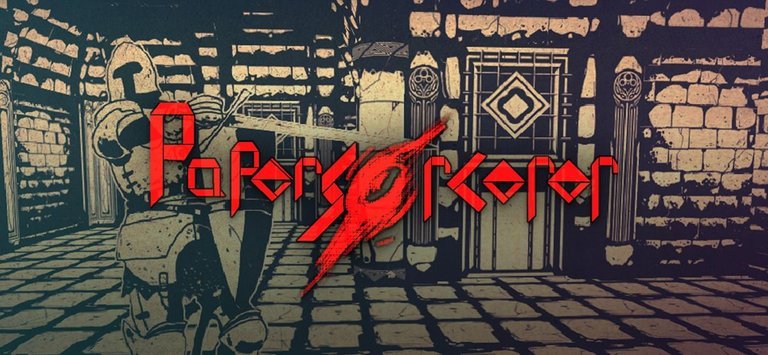
Paper Sorcerer is a turn-based fantasy RPG with a unique hand-drawn ink and pencil art style. Players take on the role of a sorcerer who was once defeated by the kingdom’s heroes and is now attempting to escape captivity with the help of a mysterious ally. After breaking free, the sorcerer can summon creatures to form a party, each with distinct combat abilities, equipment restrictions, and magical skills. The game features strategic turn-based combat with energy and defense management, as well as a linear dungeon-crawling experience with a focus on fighting, equipment upgrades, and skill progression. The story includes twists, such as the player being the villain, and offers a short but challenging adventure with four difficulty levels.
Gameplay Videos
Where to Buy Paper Sorcerer
Paper Sorcerer Cracks & Fixes
Paper Sorcerer Patches & Updates
Paper Sorcerer Mods
Paper Sorcerer Guides & Walkthroughs
Paper Sorcerer Reviews & Reception
metacritic.com (73/100): Genuinely good fun, and a true retro rush for people that grew up with classic RPGs.
fanboydestroy.com (90/100): One of those cool budget-priced games that comes recommended because you’re getting a lot of game for that fiver.
brandesstoddard.com : Displays just how far a game can go on a unique visual aesthetic and a classic format and feel.
Paper Sorcerer: A Love Letter to Classic Dungeon Crawlers
Introduction
In an era where RPGs are often defined by open worlds, real-time combat, and cinematic storytelling, Paper Sorcerer (2013) stands as a defiant throwback to the golden age of turn-based dungeon crawlers. Developed almost entirely by Jesse Gallagher under the Ultra Runaway Games banner, this indie gem is a labor of love that channels the spirit of Wizardry, Dungeon Master, and Shadowgate, while carving out its own identity through a striking visual aesthetic and a subversive narrative twist. It is a game that embraces its limitations—not just in scope, but in its deliberate rejection of modern conventions—and turns them into strengths.
Paper Sorcerer is, at its core, a game about escape. Not just the escape of its protagonist from a magical prison, but an escape from the homogenization of contemporary RPG design. It is a game that dares to be linear, to be difficult, to be unapologetically old-school, and yet it does so with a level of polish and creativity that elevates it beyond mere nostalgia. This review will dissect Paper Sorcerer in exhaustive detail, exploring its development, narrative, gameplay, art, sound, reception, and legacy, to understand why it remains a cult favorite nearly a decade after its release.
Development History & Context
The One-Man Army: Jesse Gallagher and Ultra Runaway Games
Paper Sorcerer is the brainchild of Jesse Gallagher, a developer whose ambition far outstripped the resources at his disposal. The game was crowdfunded via Kickstarter in July 2013, raising $10,335 from 345 backers—a modest sum that nonetheless allowed Gallagher to bring his vision to life. What makes Paper Sorcerer remarkable is that Gallagher handled nearly every aspect of its development: game design, scenario design, art design, character art, music composition, and writing. The only significant contributions came from Kim Crenshaw, who assisted with additional art, animation, and production, and Zack Crenshaw, who handled mobile and Steam integration.
This one-man development approach is both Paper Sorcerer‘s greatest strength and its most glaring weakness. On the one hand, the game’s cohesive vision is unmistakable. Every element, from the hand-drawn ink-and-pencil aesthetics to the turn-based combat mechanics, feels deliberately crafted to evoke a specific mood and gameplay experience. On the other hand, the limitations of a solo developer are evident in the game’s occasional rough edges—bugs, repetitive level design, and an underdeveloped soundtrack that feels disjointed from the game’s tone.
Technological Constraints and the Unity Engine
Paper Sorcerer was built using the Unity engine, a choice that allowed Gallagher to develop the game efficiently across multiple platforms (Windows, Mac, and Linux). Unity’s flexibility enabled the game’s unique visual style, which relies heavily on high-resolution scanned ink-on-paper drawings for characters and monsters, overlaid onto a 3D dungeon environment. This hybrid approach—2D art in a 3D space—gives Paper Sorcerer a distinct look that sets it apart from both retro dungeon crawlers and modern indie RPGs.
However, the use of Unity also introduced some technical limitations. The game’s resolution is locked at 1280×720, and the lack of advanced graphical options (such as anti-aliasing or adjustable field of view) reflects the constraints of a small-scale project. The UI, while functional, is clunky and reminiscent of early RPG Maker games, requiring more clicks than necessary to navigate menus. These limitations are forgivable given the game’s indie roots, but they do occasionally detract from the overall experience.
The Gaming Landscape in 2013
Paper Sorcerer arrived at a fascinating juncture in the evolution of RPGs. The late 2000s and early 2010s saw a resurgence of interest in classic dungeon crawlers, fueled in part by the success of Legend of Grimrock (2012), a modern homage to Dungeon Master and Eye of the Beholder. This revival was driven by a growing nostalgia among gamers who had cut their teeth on the punishing difficulty and grid-based exploration of 1980s and 1990s RPGs.
At the same time, the indie game scene was exploding, with platforms like Steam Greenlight and Kickstarter democratizing game development. Titles like FTL: Faster Than Light (2012) and The Banner Saga (2014) proved that small teams—or even solo developers—could create deeply engaging experiences without the backing of major publishers. Paper Sorcerer fit neatly into this trend, offering a niche experience for fans of old-school RPGs while experimenting with visual and narrative ideas that felt fresh.
Yet, Paper Sorcerer also had to contend with the shadow of its influences. Legend of Grimrock, in particular, had set a high bar for modern dungeon crawlers, with its polished graphics, intricate puzzles, and satisfying combat. By comparison, Paper Sorcerer’s simpler mechanics and more linear design risked being overshadowed. However, where Grimrock leaned into realism and complexity, Paper Sorcerer embraced minimalism and abstraction, carving out its own space in the genre.
Narrative & Thematic Deep Dive
The Premise: A Villain’s Redemption (or Is It?)
Paper Sorcerer opens with a deceptively simple setup: a powerful sorcerer, on the verge of conquering the land, is sealed away in a magical tome by a group of heroes. The player takes on the role of this sorcerer, now imprisoned within the Librum Claustrum (a delightfully pseudo-Latin name that roughly translates to “Book of Confinement”). The goal is straightforward: escape the book by destroying the magical bindings that hold it together, one dungeon level at a time.
What makes this premise compelling is its subversion of traditional RPG tropes. Unlike most games, where the player assumes the role of a hero battling against evil, Paper Sorcerer casts the player as the villain—a ruthless, power-hungry mage who was rightfully imprisoned for their crimes. This inversion is not merely superficial; it permeates the game’s narrative and thematic underpinnings. The player is not saving the world